
When trying to pin down the value of a 1948 one shilling coin, you'll quickly realise there’s no single, straightforward answer. For a coin that has clearly been through the wars, passing through countless hands, you might only be looking at £1.50 to £5. But find a pristine, uncirculated example with the less common Scottish design, and that value could jump to £20 to £30, or potentially even more.
It all comes down to the coin's individual story—its condition and which of the two designs it features.
Unpacking the Value of Your 1948 Shilling
Working out the true 1948 one shilling coin value means looking far beyond its age. Two shillings from that year can look identical at a glance but have completely different price tags in the collector's market.
It's a lot like valuing a vintage car. One might be a daily runner, covered in scrapes and showing its age, while another is a museum piece that’s been perfectly preserved. Their values would be worlds apart, and the exact same principle applies to your coin.
To get a real sense of its worth, you need to understand two key concepts:
- Bullion Value: This is the baseline value of the metal inside the coin. Since the 1948 shilling is made from 50% silver, it has an inherent worth tied to the day-to-day market price of silver. This often acts as the price floor, especially for heavily worn examples.
- Numismatic Value: This is where things get interesting. Numismatic, or collector's, value is driven by things like rarity, historical importance, and above all, condition (also known as 'grade'). A coin in perfect, untouched condition is far harder to find than a well-worn one, making it much more desirable to collectors.
The delicate dance between these factors is what creates such a fascinating market. While circulated 1948 shillings typically trade for just a few pounds, the uncirculated ones—especially those with the rarer Scottish reverse—are the ones that command premium prices.
A coin's journey determines its worth. A shilling that passed through countless hands tells a story of everyday commerce, while an uncirculated one tells a story of preservation and rarity.
Getting to grips with these fundamentals is the first step. To accurately judge what you have in your hands, you need a framework for grading its condition and correctly identifying its design. If you're new to the hobby, you can learn more about the whole process with our complete guide on how to value coins.
At-a-Glance 1948 Shilling Value Estimates
To give you a clearer picture, here’s a quick breakdown of what you might expect based on the coin's grade and design. These are typical market ranges, but remember that prices can fluctuate.
| Condition Grade | English Reverse Value | Scottish Reverse Value |
|---|---|---|
| Well-Worn (VG - Fine) | £1.50 - £3 | £2 - £4 |
| Good Detail (VF) | £4 - £8 | £5 - £12 |
| Almost Uncirculated (EF) | £10 - £20 | £15 - £25 |
| Uncirculated (UNC) | £20+ | £30+ |
As you can see, a coin in exceptional condition can be worth ten times more than a heavily circulated one. It highlights just how crucial grading is in the world of coin collecting.
The Story Behind Post-War British Coinage
To really get a feel for the 1948 one shilling coin value, you need to step back in time. This isn’t just a piece of metal; it’s a direct link to a Britain wrestling with the immense challenges of post-war recovery. The late 1940s was a time of austerity, change, and grit—and this little coin captures that moment perfectly.
After the enormous financial cost of the Second World War, Britain's economy was on shaky ground. The nation had to make some tough choices to rebuild, and one of those decisions hit its currency directly. The metals used for minting coins were no longer a given; they became a matter of national economic survival. It was a major turning point for British coinage, one that began the farewell to silver in everyday money.
A Kingdom in Transition
Every 1948 shilling features the portrait of King George VI, the monarch who had guided the country through its darkest days. His reign is tied to that same spirit of resolve that defined the war and its aftermath. To hold this coin is to hold a small piece of his legacy.
This period was a constant balancing act between clinging to tradition and facing up to reality. For centuries, the silver in British coins was a proud symbol of their value and stability. But the post-war world demanded a more practical approach. The government desperately needed to save precious resources and get its finances in order, which led to a fundamental shift in how coins were made.
The Last Stand of Silver
The 1948 one shilling is a fascinating monetary fossil from this transitional time. While pennies and other small coins had long been made of bronze, the shilling had a prestigious history tied to silver. After 1946, the composition was fixed at 50% silver—a significant drop from earlier issues, but still a respectable amount.
This coin truly represents one of the final chapters for silver in circulating British money. It's a key marker of the post-World War II economic squeeze. Although it was still 50% silver, it was one of the last of its kind before the inevitable switch to the much cheaper cupronickel alloy a few years later. That change would dramatically alter the intrinsic value of UK coins forever.
The 1948 shilling is more than just currency; it's an economic snapshot. It embodies the difficult compromise between upholding a centuries-old tradition of silver coinage and adapting to the stark realities of a nation rebuilding itself from the ground up.
This wasn't just a technical change; it was a powerful sign of the times. Every coin tells a story, and the 1948 shilling speaks volumes about a country on the cusp of a brand-new era. For a deeper dive into how these historical shifts have shaped UK money over the centuries, check out our guide on a brief history of British coins.
Identifying the English and Scottish Designs
The artistry of a coin often tells a story, and the 1948 shilling is special because it tells two distinct tales. To really get a handle on the 1948 one shilling coin value, you first need to know which version you're holding. Thankfully, figuring this out is simpler than it sounds.
It all starts on the "heads" side, or the obverse.
Every single 1948 shilling, regardless of the design on the back, features the same dignified portrait of King George VI. This uncrowned effigy, created by artist Thomas Humphrey Paget, shows the monarch facing left. Encircling the portrait is the inscription "GEORGIVS VI D:G:BR:OMN:REX", a Latin shorthand for "George VI, by the Grace of God, King of all the Britains". This side is your constant.
The real key to unlocking your coin's story—and its potential value—is on the reverse, or "tails" side. This is where you'll find one of two designs, each representing a different part of the United Kingdom.
The Classic English Reverse
The version you're most likely to come across is the English reverse. This design is bold and unmistakably regal, featuring a powerful lion standing proudly atop the St Edward's Crown. The lion, a timeless symbol of English strength, is shown 'passant guardant'—walking forward with its head turned to face you.
This iconic emblem is split by the date "1948" and sits above the denomination "ONE SHILLING". It’s a classic design that projects a real sense of British heritage and royal authority. Since this version was minted in far greater numbers, it's the one most people will find in their collections.
The Scarcer Scottish Reverse
The second design is the Scottish reverse, and this is the one that gets collectors excited. Instead of a standing lion, it features a lion in a seated position, upright and facing forward. This isn't just any lion; it's actively regal, holding a sword in one paw and a sceptre in the other.
This specific imagery is a direct nod to the Royal Banner of Scotland, where the "Lion Rampant" has been a powerful national symbol for centuries. Its inclusion on the shilling was a deliberate choice to honour Scotland's distinct identity within the United Kingdom.
The difference is simple: If the lion is standing on a crown, it's the English design. If the lion is sitting and holding a sword and sceptre, you have the more valuable Scottish variant.
This screenshot from NGC Coin's price guide shows both the English and Scottish reverses side-by-side, making the distinction crystal clear.
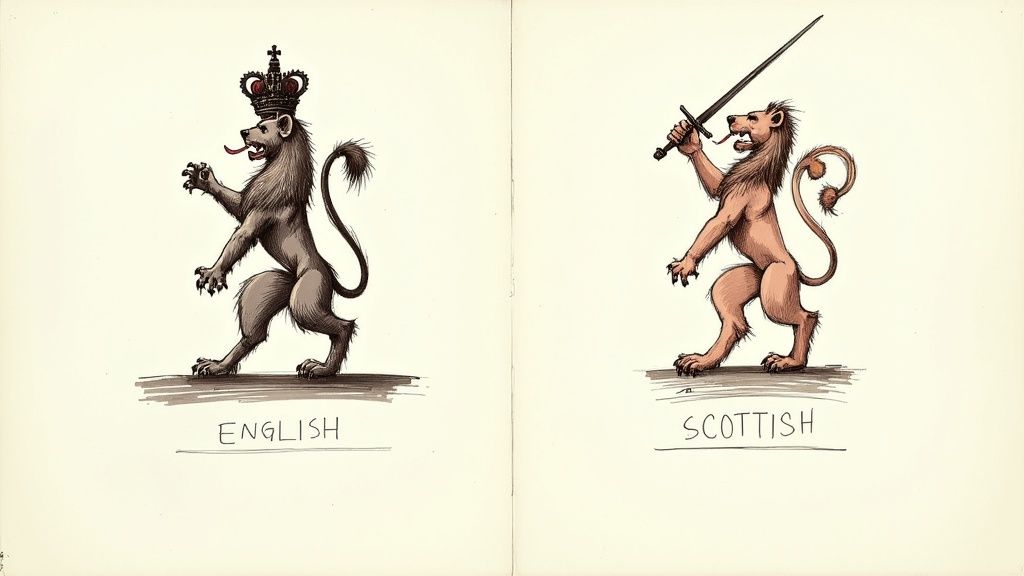
The visual guide perfectly illustrates the different postures and emblems, making it easy to see in a glance which version of the 1948 shilling you possess.
Understanding Mintage Numbers and True Rarity
At first glance, the 1948 one shilling might not seem particularly special. After all, the Royal Mint churned out an enormous number of them. The official tally for the year was a whopping 45,577,000 coins, a figure that makes it sound incredibly common when compared to other British coins of the era.
But that big number is a bit of a red herring. It doesn't tell the whole story. The real secret to the 1948 one shilling coin value is hidden in the details of its survival. Think of it like a classic car; millions might have been produced, but how many are still around today in mint condition? The same logic applies here.
The vast majority of these shillings were thrust into the hustle and bustle of daily life. They passed through countless hands, rattled in tills, and jangled in pockets for years. Most became worn, scratched, and lost that fresh-from-the-mint gleam. So, while finding a 1948 shilling is fairly easy, tracking down a high-grade, uncirculated one is a proper challenge.
The English vs Scottish Mintage Split
Now, here’s where things get really interesting. The key factor that dictates this coin's rarity is the massive imbalance in production between the two designs. The mintages were anything but even; far more English shillings were struck, making the Scottish version significantly scarcer from the very beginning.
This infographic lays out the stark difference in production numbers perfectly.
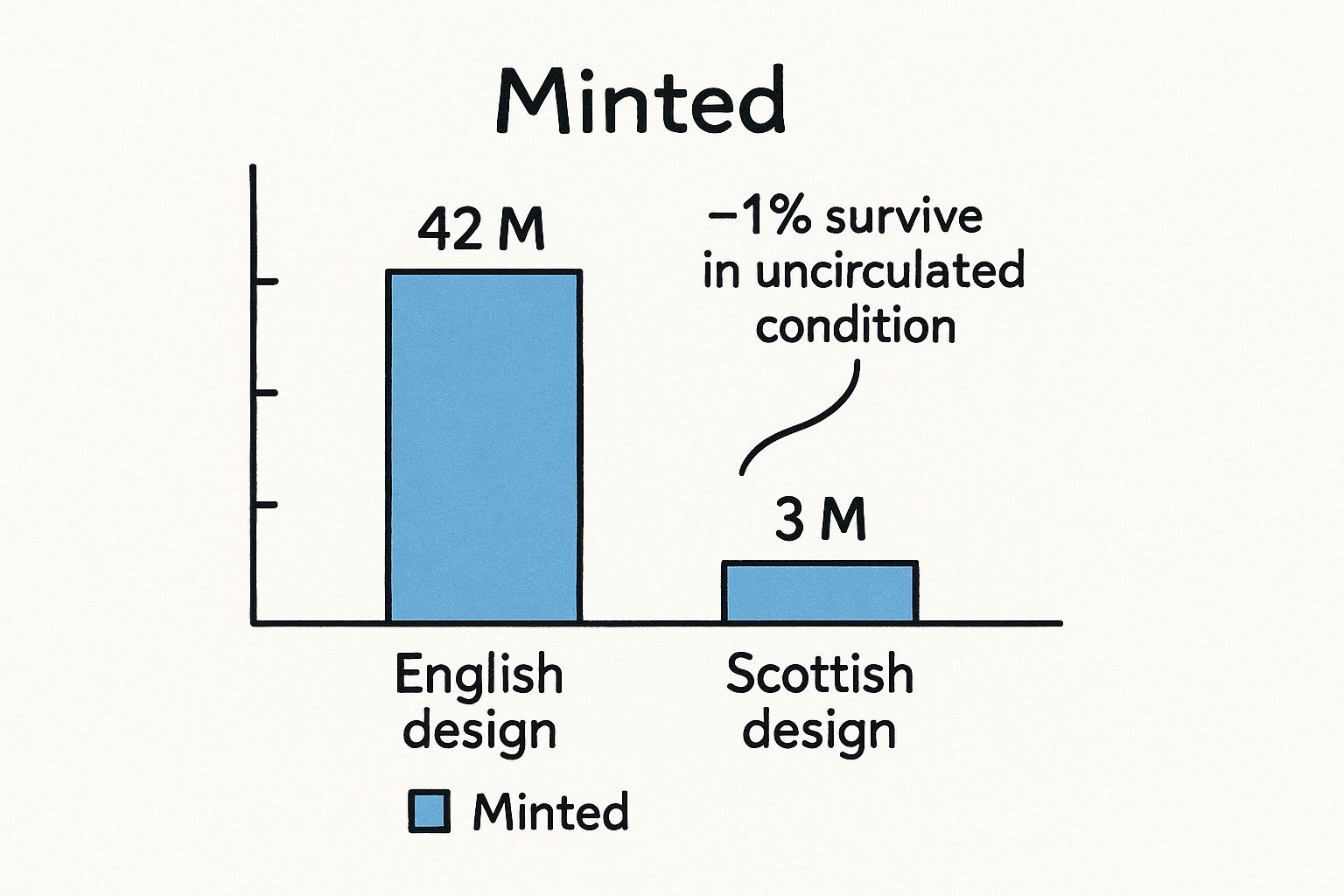
As you can see, the Scottish shilling is roughly 14 times rarer than its English counterpart based on mintage figures alone. When you then consider how few coins survive the rigours of circulation in top condition, the true scarcity of a pristine Scottish shilling really starts to hit home.
A coin's journey from the mint to a collection is one of survival. The high mintage of the 1948 shilling means many were made, but the harsh reality of circulation ensures very few survived in a state that collectors truly desire.
This unusual situation creates a fantastic opportunity for collectors. It makes the 1948 shilling an accessible and affordable piece for newcomers, yet it offers a genuinely rewarding hunt for seasoned experts looking for that top-tier example—especially the Scottish design. It’s a perfect lesson in how "mintage" and "rarity" are two very different things in the world of coin collecting.
How to Grade Your Shilling Like an Expert
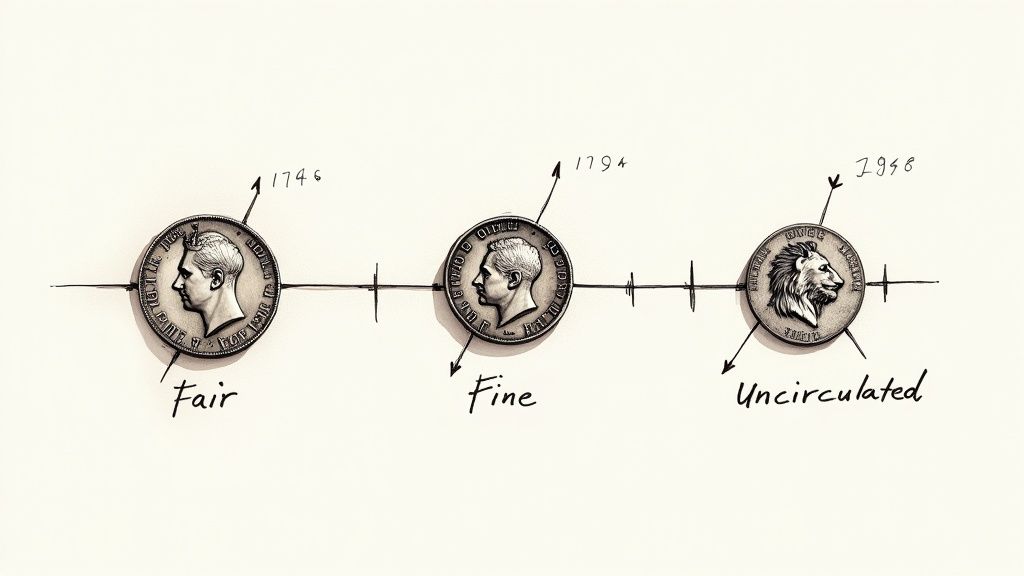
More than any other factor, the coin's condition dictates the 1948 one shilling coin value. It’s the difference between a piece worth a couple of quid and one that commands a serious premium from collectors.
Think of it like being a detective. You’re not just looking at a coin; you're examining the evidence of its life story, searching for the tell-tale clues of wear and tear.
Thankfully, you don't need a high-tech lab to get a good idea of your coin's grade. A good source of light, maybe a simple magnifying glass, and knowing exactly where to look are all it takes to start.
The Key Areas for Inspection
When a coin has been passed from hand to hand, the highest points of its design are always the first to wear down. On the 1948 shilling, there are a few critical spots that tell almost the entire story.
The Obverse (King's Portrait):
- The King's Ear: This is one of the highest points on the portrait. In higher grades, you should see a clear earlobe and sharp inner details. On a well-travelled coin, these features will look flattened and indistinct.
- The Hairline and Eyebrow: Take a close look at the strands of hair just above the ear and the definition of the eyebrow. An Uncirculated coin will show crisp, individual strands, whereas a circulated coin will see these details blend into a smoother surface.
The Reverse (Lion Design):
- The Lion's Mane (English & Scottish): The beautifully intricate lines of the lion's mane are quick to fade. Check for sharp, well-defined tufts of fur.
- The Crown (English): The small cross and jewels atop the crown are prominent high points. If they're worn flat, you know the coin has seen plenty of action.
- The Sword and Sceptre (Scottish): On the much scarcer Scottish design, the hilt of the sword and the very top of the sceptre are the key spots to check for wear.
Coin grading is an art of observation. The story of a coin's journey is written in the subtle flattening of a King's ear or the softening details of a lion's mane. Learning to read these signs is key to understanding its true numismatic value.
From Worn to Flawless: A Grading Breakdown
To give you a clearer picture, here’s a simplified rundown of the main grades you're likely to come across when assessing your shilling.
- Fine (F): The main design is all there, but the finer details have worn away. The King's hair is mostly a flat surface, and the lion's mane is quite smooth.
- Very Fine (VF): You’re starting to see some detail in the hair and the mane, but the very highest points are still clearly worn down. Roughly 50-75% of the original detail is still present.
- Extremely Fine (EF): The coin shows only the slightest bit of wear on its highest points. The details are crisp, and you can still see much of its original mint lustre.
- Uncirculated (UNC): This is a perfect specimen. It shows no signs of wear whatsoever and looks just as it did the day it was struck, with full, brilliant lustre.
Before you start grading, have a look at our quick checklist below. It's a handy way to train your eye on what matters most for both the obverse and reverse designs.
Simple Checklist for Grading Your 1948 Shilling
| Grade | What to Look For on the King's Portrait | What to Look For on the Lion Reverse |
|---|---|---|
| Fine (F) | Ear and hair details are mostly flat. Major outlines are clear. | Lion's mane is smooth. Crown details are worn down. |
| Very Fine (VF) | Some hair strands are visible. Ear shows some definition. | Partial detail in the mane. Crown shows basic shapes. |
| Extremely Fine (EF) | Most hair strands are sharp. Ear is clear. Minor wear on the highest points. | Mane is sharp with only slight friction. Crown jewels are distinct. |
| Uncirculated (UNC) | Every detail is perfectly sharp. Full mint lustre is present. | No wear at all. All details are crisp and clear, as minted. |
This table should give you a solid foundation for judging your coin's condition. For those who want an official, certified grade, using a professional service is the way to go. You can find out more about that process in our guide on how to get coins graded.
Common Questions About the 1948 Shilling
Even after getting to grips with its history and design, you might still have a few questions rattling around about the 1948 shilling. This section is all about giving you quick, clear answers to the most common queries we hear from fellow collectors.
Think of it as a handy guide to bust a few myths and give you some practical, straightforward advice. It's here to make sure you have all the facts at your fingertips.
Is My 1948 Shilling Made of Pure Silver?
This is easily one of the most frequent questions we get, and the answer is a firm no. A 1948 shilling isn't pure silver; it's made of 50% silver, with the other half being a mix of other metals, mostly copper.
This change in composition was a direct result of Britain's post-war economy. Pure silver was simply too expensive for mass-produced currency at the time. While your coin certainly has value from its silver content, it's what we in the collecting world call a "debased" silver coin, not a pure silver bullion piece. That's a crucial distinction when working out its base metal value.
How Do I Spot the Rare Scottish Version?
Thankfully, spotting the rarer Scottish variant is refreshingly simple. All you need to do is flip the coin over to the reverse (the 'tails' side) and have a good look at the lion.
- The common English version shows a lion standing proudly atop a crown.
- The rarer Scottish version features a lion that is sitting upright, facing you, and holding a sword in one paw and a sceptre in the other.
It's a very clear difference, with no ambiguity. If your lion is seated and armed, you're holding the more sought-after Scottish design, which almost always commands a higher 1948 one shilling coin value, whatever its condition.
A simple rule of thumb for identification: a standing lion means English, while a seated lion means Scottish. This quick check is the first step any collector takes to determine rarity and potential worth.
This easy distinction makes the 1948 shilling a fantastic coin for beginners. Identifying the key variety doesn't require any specialist equipment—just a keen eye for the lion's posture.
Should I Clean My 1948 Shilling to Increase Its Value?
The answer to this is an emphatic and absolute no. You should never, under any circumstances, attempt to clean your 1948 shilling, or any collectible coin for that matter. It's one of the most damaging mistakes a new collector can make and will almost certainly destroy its numismatic value.
Cleaning a coin strips away its original surface, what we call its patina. This natural toning develops over decades and is a key part of the coin's history and character. The process also creates thousands of tiny, unnatural scratches that are immediately obvious to any experienced eye. A cleaned coin is often just seen as a damaged coin, and its value will drop dramatically. Preserve its history, don't try to erase it.
Where Is the Best Place to Sell My Coin?
The right place to sell your coin really depends on what you have—its condition and type are key. You'll want to tailor your approach to get the best possible return.
Here’s a quick breakdown of your options:
- For Common, Circulated Coins: If you have a standard English design in a lower grade (Fine or below), online marketplaces like eBay are a perfectly good choice. These sites have a huge audience of casual buyers looking for affordable pieces.
- For High-Grade or Scottish Variants: If you think you have a high-grade example (Extremely Fine or Uncirculated) or the rarer Scottish version, you'll get a much better price by going to a professional. Reputable coin dealers or specialised auction houses can accurately grade your coin and connect you with serious collectors who are actively looking for premium pieces and are willing to pay for quality.
At Cavalier Coins Ltd, we are passionate about helping collectors at every stage of their journey. Whether you are looking to identify a rare find, value a cherished collection, or find that perfect piece to complete a set, our expertise is at your service. Explore our extensive selection of world coins and banknotes by visiting us at https://www.cavaliercoins.com.