
A standard circulated 1967 half penny is typically worth £0.05 to £0.40, while uncirculated examples can reach up to £3. Its massive mintage made it extremely common, so the date alone rarely creates a substantial premium.
The popular advice that “old British coins are valuable” doesn't survive contact with the 1967 halfpenny. This is an old coin with genuine historical interest, but age and value aren't the same thing. Most examples are ordinary survivors from a very large issue, and collectors pay more for sharp preservation, original lustre, verified errors, or exceptional presentation than for the date itself.
Online listings make the situation harder to judge. A seller may ask several pounds for a routine coin, but an asking price isn't evidence that a buyer has paid it. The useful question is not “What is someone advertising this coin for?” but “What would an informed buyer realistically offer for this exact example?”
How the 1967 Half Penny Market Actually Works
The 1967 halfpenny has historical importance, but that does not make every example valuable. It was the last circulating pre-decimal halfpenny and was struck in extraordinary quantity. The recorded mintage was 146,491,000 pieces, with some references listing 146,491,200, the largest mintage in the denomination's run, according to PCGS's account of the final circulating British halfpenny.
That large issue explains the market's pricing. A coin produced in such numbers will not usually receive a rarity premium merely because it predates decimalisation. Historical importance can be high while financial value remains low, particularly for worn coins that are readily available.
Why the date isn't enough
Collectors need to separate three kinds of value:
- Face value in its original context, reflecting the coin's role in pre-decimal Britain.
- Sentimental value, which may matter to someone who remembers using halfpennies.
- Market value, determined by condition, demand, authenticity, and comparable sales.
For an ordinary circulated example, market value is modest. The date provides context, not proof of scarcity. A sharper coin with original surfaces may deserve closer attention, but its premium must be supported by visible quality and genuine buyer interest.
Online retail listings often blur that distinction. A seller can price a routine halfpenny at several pounds because of presentation, postage, platform costs, or simple optimism. Current marketplace listings for 1967 half pennies can show what sellers are asking, but they do not establish what buyers have paid. Current UK marketplace listings for 1967 half pennies are therefore useful for spotting inflated expectations, not for confirming realised value.
Practical rule: Treat an asking price as a claim requiring evidence. Compare the coin's surfaces and detail with completed sales, rather than trusting an ambitious listing title.
A standard example belongs in the “common date, condition-sensitive” category. Dark surfaces, scratches, polishing, and heavy wear usually weaken demand. Strong detail, natural colour, and original-looking surfaces can create a premium, but only when the market recognises that quality. Age alone does not do the work.
Grading Your Coin Accurately
Condition is the most important variable for a high-mintage 1967 halfpenny. Two coins with the same date and design can sit at very different points in the market if one retains crisp detail and natural surfaces while the other has been heavily handled or cleaned.
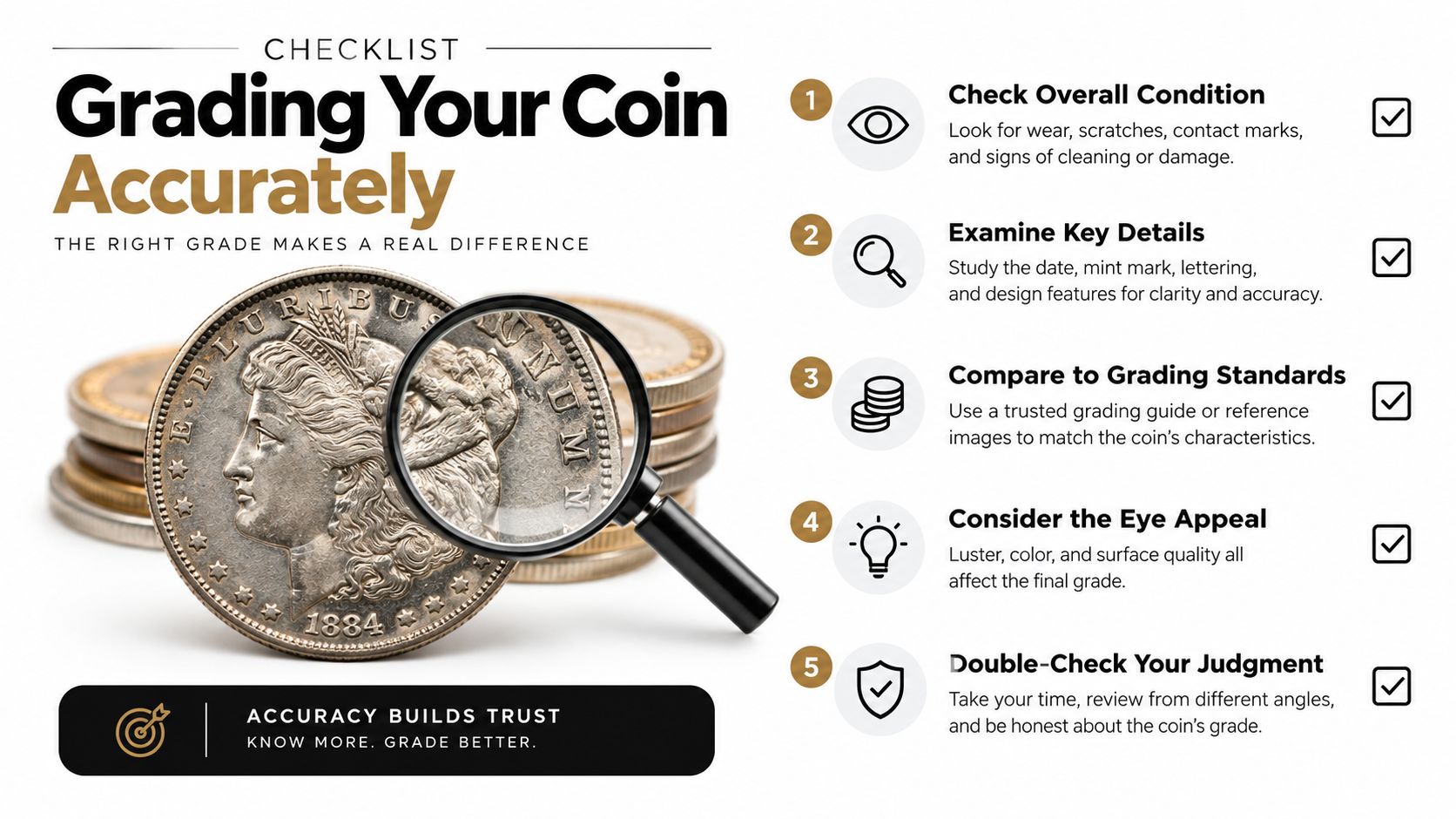
Start with a clean, well-lit inspection. Hold the coin by its edge, preferably over a soft surface, and use a magnifying glass only to clarify details rather than to exaggerate minor marks. Don't rub the coin, polish it, or use a chemical cleaner. Cleaning can remove the original surface that collectors want to see and may leave hairlines that permanently reduce desirability.
A practical inspection sequence
- Check the fields first. The open areas around the portrait and Britannia should show whether the coin has been abraded, scratched, or polished. Brightness alone isn't proof of quality. Artificially polished bronze can look shiny but lack the soft, even appearance of original mint surfaces.
- Examine the highest design points. On the obverse, inspect the Queen's portrait, especially the hair and raised details. On the reverse, look at Britannia's figure, shield, trident, and surrounding design. Wear first appears on exposed high points, where friction removes detail and flattens the texture.
- Look for lustre. An uncirculated coin may retain a rotating sheen when tilted beneath a light. Lustre should move across the surface rather than appear as a uniform mirror-like brightness. A coin can have attractive toning and still be collectible, but dullness, streaking, or unnatural colour changes deserve caution.
- Separate toning from damage. Natural bronze colour variation isn't automatically a fault. Verdigris, active green corrosion, pitting, sticky residue, and rough patches are more serious because they indicate environmental problems or surface deterioration.
- Record the result conservatively. If you can see wear on the raised design, don't describe the coin as uncirculated. If the coin has been cleaned, say so when selling. Accurate descriptions build trust and prevent disputes.
Collectors who want a deeper explanation of the terminology can consult this guide to how coins are graded. The key principle is simple: grade the coin you have, not the grade you hope it will receive.
What separates a better example
A stronger specimen normally combines sharp detail, clean fields, attractive colour, and original-looking surfaces. A single small mark won't necessarily destroy interest, but a pattern of handling marks, rim knocks, or obvious cleaning can move the coin firmly into the ordinary category.
Don't confuse rarity with grade. A common coin in unusually fine condition can be more desirable than a scarce-looking but damaged example, particularly when the alleged scarcity isn't documented. For a 1967 halfpenny, preservation creates most of the realistic upside.
Rarity Factors and Genuine Error Coins
The phrase “rare error” appears frequently in online coin listings, but many supposed errors are only damage acquired after the coin left the Mint. A scratch, edge bruise, dent, stain, or area of corrosion may look dramatic in a photograph, yet none of those features proves a manufacturing error.
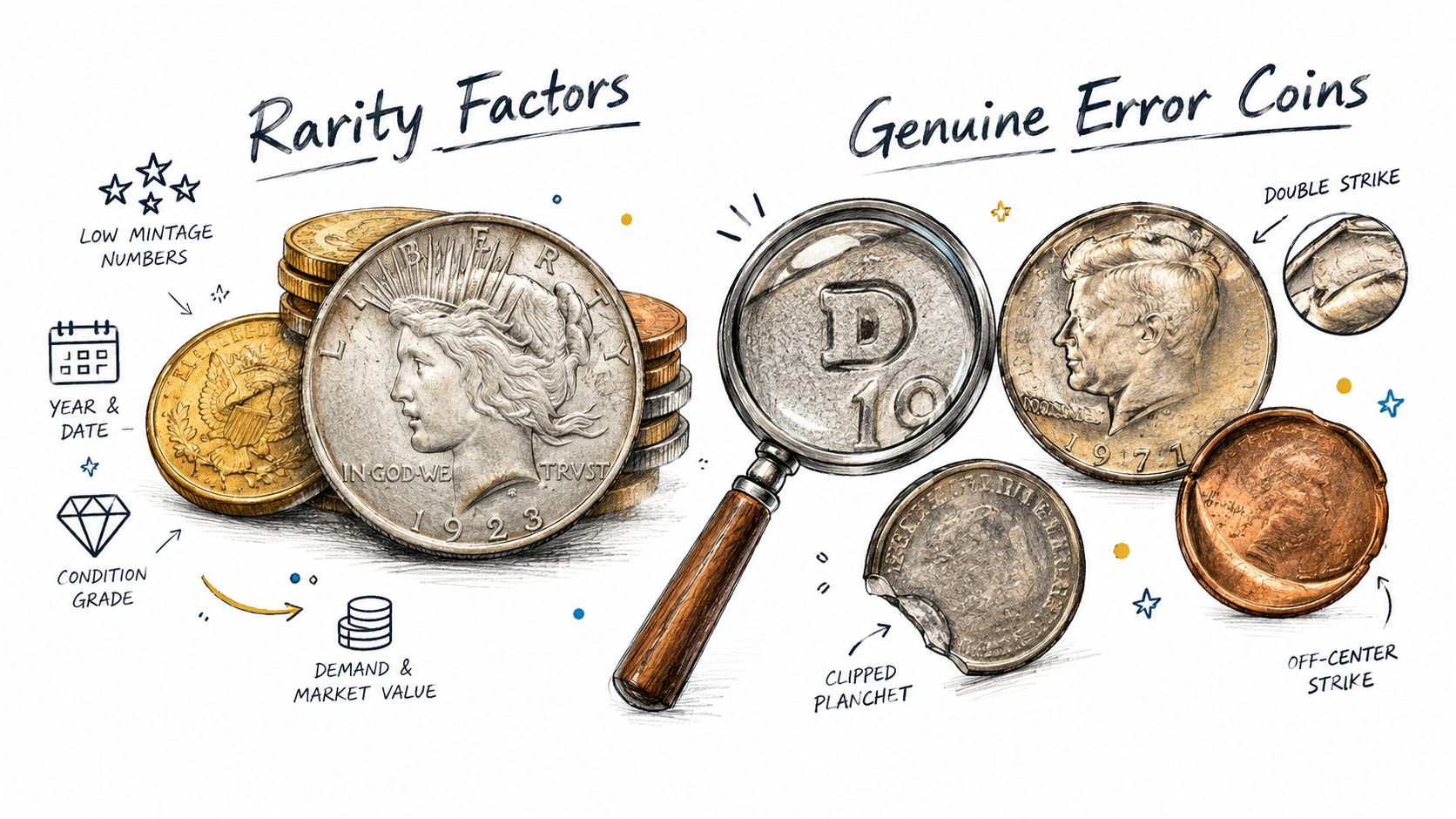
A genuine mint error affects the coin during preparation of the blank, striking, or die production process. Examples collectors may investigate include an off-centre strike, clipped planchet, or die crack. Even then, the feature must be consistent with a minting event and not with later mishandling.
How to test an error claim
Begin with the edge and the shape of the coin. A clipped planchet should show a formed, coherent absence from the blank, not a random gouge made by a tool. An off-centre strike should leave a clear area where the design failed to reach the edge, with the displaced design and rim characteristics supporting a striking explanation.
Then inspect the alleged feature under magnification:
- A die crack usually appears as a raised line or retained metal feature that follows a plausible path from a damaged die.
- A scratch is generally incuse, irregular, and cuts across design elements without producing the raised metal expected from a die fault.
- An edge bump distorts the rim locally and often leaves metal pushed or bruised around the impact point.
- A colour change may indicate toning, corrosion, residue, or cleaning rather than an error.
- A weak design area can have several explanations, including strike quality or wear, so one soft feature isn't enough to establish a variety.
Photographs can help, but they can't always authenticate a premium error. Compare the coin with reliable reference images, inspect both sides, and ask the seller for clear edge photographs. This specialist discussion of valuable error coins is useful background, but a dramatic listing title still isn't independent verification.
Evidence before enthusiasm
The market can attach a much higher asking price to an error-styled listing than to a normal coin. That difference reflects the seller's interpretation, not automatically the coin's proven value. A serious buyer will want a coherent explanation of how the feature formed, consistent images, and, for a substantial claim, an opinion from a recognised numismatic specialist.
Before paying an error premium, ask what physical process created the feature and whether the feature can be seen clearly on both sides.
The date itself doesn't establish an error. Nor does an unusual colour, a small rim mark, or a low-quality photograph. For most 1967 halfpennies, the sensible conclusion remains that the coin is common unless its distinguishing feature can be demonstrated and authenticated.
Market Prices and Auction Realities
The online market creates a misleading picture of 1967 half penny value. Ordinary examples often carry ambitious retail asking prices, while their condition and common date status rarely justify a premium. Museum Victoria's catalogue entry for the denomination is useful for identifying the denomination, but it should not be treated as a UK realised-price guide. For pricing, compare completed UK sales, dealer valuations, and auction results rather than relying on a catalogue description.
A circulated coin usually belongs at the lower end of the market. An uncirculated piece can command more when its detail, colour, and surfaces are convincing, but grade labels vary between sellers and buyers. A dealer also accounts for sorting time, demand, and resale risk. That is why a collector may pay more for one attractive coin than a dealer offers for a loose mixed group.
1967 Half Penny Value by Grade
| Grade Condition | Estimated Value Range |
|---|---|
| Circulated | £0.05 to £0.40 |
| Uncirculated | £0.10 to £3 |
These ranges are working guide figures, not guarantees. A coin near the top of a range needs clearly stronger detail and surfaces than the average example, with no obvious cleaning. Words such as “rare”, “vintage”, and “investment” do not alter the grade or establish demand.
Asking prices versus realised prices
General marketplace listings can show ordinary 1967 half pennies offered for roughly £1 to £7, with error-styled listings reaching the tens of pounds. Those figures describe seller expectations, not confirmed transactions. A listing that remains unsold provides no evidence that buyers accept the price.
The gap between asking and realised value is where common-date inflation appears. Search results often foreground the highest price, encouraging owners to compare a worn coin with a carefully selected or unusually presented example. A sound assessment starts with grade, then checks for a genuine variety, attractive preservation, or another feature that a specialist buyer can defend.
A high asking price is evidence of ambition, not proof of value.
For one ordinary coin, a professional valuation can consume more time than the item justifies. A group with several well-preserved pieces or a suspected error deserves closer review, especially if photographs reveal features that are difficult to assess in person. The practical aim is to separate routine stock from the small number of coins that merit specialist attention, then judge any premium against actual buyer interest rather than the most optimistic listing.
Where and How to Sell Your Coins
Selling strategy should match the coin's likely value and the effort required to present it. A common circulated 1967 halfpenny may attract little practical benefit from an elaborate individual listing, while a sharply preserved example or credible error can justify better photography, detailed description, and specialist exposure.
General marketplaces offer reach, but they also create problems. Sellers must photograph the coin, answer questions, manage postage, account for platform costs, and deal with buyers who may misunderstand grading. A high asking price can sit unsold, tying up time without proving demand.
Choose the route that fits the material
- Mixed low-value coins: Grouping similar pieces can make the transaction more practical, provided the description clearly states that most examples are common.
- A single attractive coin: Use clear obverse, reverse, and edge images, and describe wear candidly rather than relying on promotional labels.
- A suspected mint error: Seek an informed opinion before advertising it as rare. A specialist explanation is more useful than a dramatic title.
- A larger collection: Request more than one valuation route, especially if the group includes proof issues, unusual varieties, or coins in notably strong condition.
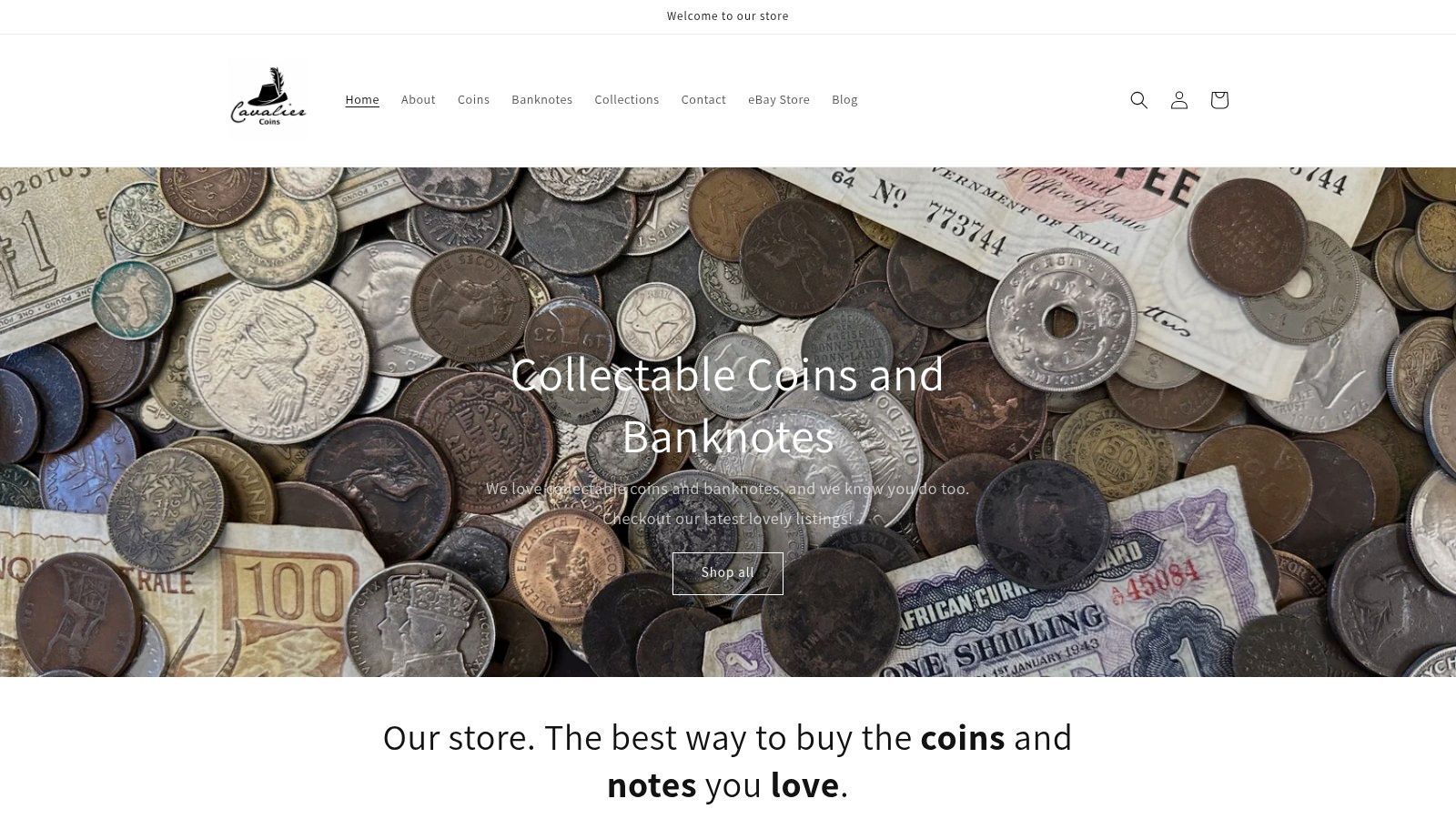
Established specialists can be useful when the collection needs sorting rather than simple listing. Cavalier Coins Ltd sells coins and banknotes, runs weekly eBay auctions, considers bulk purchases, and handles donated currency collections from charities, according to its publisher information. Its relevance here is practical: a collector can discuss whether a 1967 halfpenny belongs in a mixed group, a fixed-price listing, or a broader collection assessment.
Prepare before contacting a buyer
Don't clean the coins before valuation. Put each piece in a suitable non-abrasive holder, keep the obverse and reverse visible, and separate obviously damaged pieces from stronger examples. Make a short inventory noting dates, unusual features, and any coins that retain original-looking lustre.
For photographs, use diffuse light and a neutral background. Avoid heavy filters, glare, and angles that hide scratches. A buyer needs to see the surfaces as they are, not as an edited image presents them.
Before accepting an offer, ask whether it covers the whole group or only selected pieces, and clarify how the buyer handles items with no resale premium. This guide to where to sell old coins provides useful context when comparing direct sales, auctions, and other routes. The right option is the one that balances price, certainty, fees, and the amount of work you're prepared to do.
Preserving and Expanding Your Collection
A low-value coin still deserves sensible storage, particularly if it has attractive original surfaces. Bronze can react badly to damp conditions and unsuitable materials, so avoid loose storage in paper envelopes, plastic that traps moisture, or containers containing softeners and chemicals.
Use inert, archival-quality holders designed for coins. Keep the collection somewhere stable, away from bathrooms, sheds, kitchens, and direct sunlight. Handle each halfpenny by its edge, and don't attempt to improve colour with household products. Verdigris and surface corrosion are much harder to deal with once they become active.
Build from condition, not hype
The 1967 halfpenny makes a good starting point because it teaches the habits that matter across numismatics:
- Record provenance and observations: Note where a coin came from, its visible condition, and any feature that may require later checking.
- Compare surfaces: Learn to recognise original lustre, circulation wear, cleaning lines, and environmental damage.
- Buy selectively: A well-preserved example can be more satisfying than a larger pile of indistinguishable worn pieces.
- Research earlier dates and proof issues: Once grading becomes familiar, consider parts of the pre-decimal series where scarcity or special manufacture may matter more than the common 1967 date.
Don't buy a supposed rarity solely because its listing uses a large price. Ask whether the coin has a documented variety, a clearly superior grade, or a form of issue that collectors actively seek. The same discipline that protects you from inflated marketplace prices will help you build a collection with a clearer purpose.
For the coin already in your hand, the final checklist is straightforward: inspect without cleaning, grade conservatively, separate damage from mint-made features, compare with guide ranges, and choose a selling route that suits the coin's realistic market. That process won't turn a common halfpenny into a rare one, but it will stop you overlooking the occasional well-preserved or unusual example.
If you have a 1967 halfpenny or a wider pre-decimal collection to assess, visit Cavalier Coins Ltd to explore its coin and banknote listings, auction options, and bulk collection enquiries. Prepare clear photographs and an honest inventory so the team can judge whether your coins are best suited to individual sale, auction, or a wider collection purchase.