
You're sorting through the change from a shop when one 20p catches your eye. The familiar date seems to be missing, and suddenly an ordinary coin becomes a possible collector's find. Before you start imagining a four-figure sale, pause. A genuine 20p coin with no date does exist, but the missing date alone doesn't prove you've found it.
The important questions are practical. Why was the date absent? Which obverse and reverse designs should appear together? How can you separate a genuine mint error from wear, polishing, or damage? And once the coin passes those checks, what might influence its market value?
This guide follows the coin from its production history to identification, rarity, pricing, and sale. You'll learn why the error happened, what features to inspect under good light, and why a realistic assessment is more useful than a viral asking price.
Introduction Finding a 20p With No Date in Your Change
The first discovery often happens without any specialist equipment. You pick up a 20p from a till, notice the shield on one side, turn it over, and expect to see a year beneath the portrait. Instead, the area looks blank.
That moment is exciting, but it can also be misleading. A date may be difficult to read because of circulation wear, dirt, poor lighting, or damage. A seller's photograph can create the same confusion by hiding the relevant surface in shadow. The genuine error has a very specific design pairing, so the correct approach is to check the whole coin rather than react to one missing detail.
The 2008 undated 20p is famous because it combines an understandable mistake with an everyday denomination. It isn't a mysterious antique variety that requires specialist knowledge to recognise. The coin resulted from a known change in UK circulating coin design, and examples entered ordinary circulation.
Practical rule: Treat the first find as a question, not a valuation. Authenticate the coin before you decide what it's worth.
You won't need to clean the piece, scrape the surface, or make an immediate listing. Set it aside by the edge, photograph both sides, and compare the designs carefully. Show you what the Royal Mint changed, how the mismatch created an undated coin, which visual features matter most, and how condition affects the market.
What the 20p Coin No Date Actually Is
Collectors call this type of error a mule. In plain language, a mule is a coin made with two dies, the tools that stamp the designs, that weren't intended to be used together. Think of a printer using the front plate from one edition and the back plate from another. Each plate may be genuine, but the finished combination is wrong.
The 2008 redesign changed the arrangement of the 20p. The date moved from the reverse, the side with the older Tudor Rose design, to the obverse, the side carrying the monarch's portrait. The new reverse used the Royal Shield design. During the changeover, the Royal Mint struck a batch using the previous obverse with the new reverse. Neither side supplied a date in the expected position, producing the undated coin.
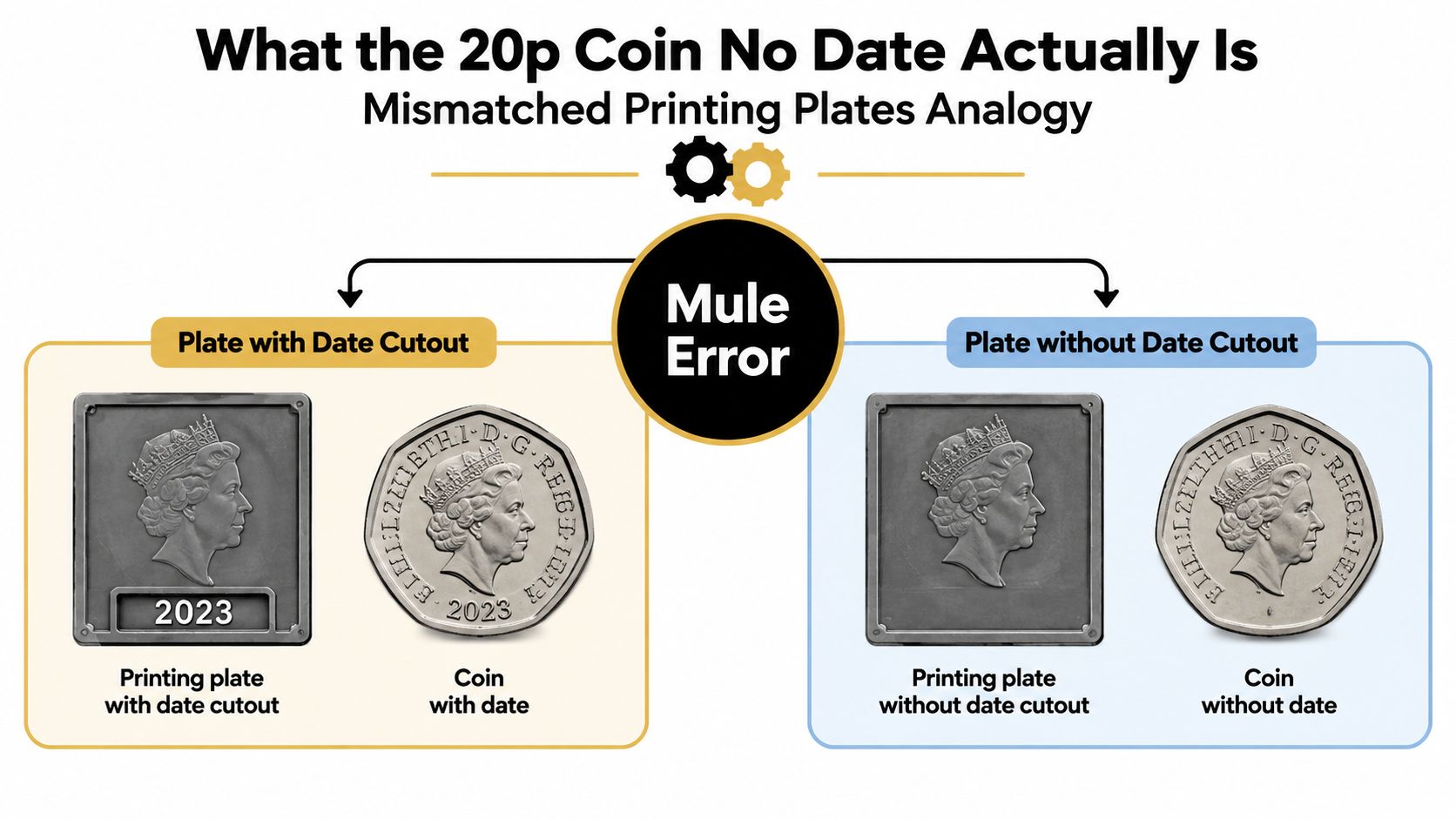
That distinction matters because the coin isn't a normal 20p whose date has worn away. On an authentic mule, the date was never struck onto either side. The surrounding design should still look coherent, with no localised filing, grinding, or polishing where somebody might have removed a date later.
The Royal Mint describes the error as an outcome of its 2008 circulating coin redesign, and confirms that the affected pieces were struck in November 2008. It also identifies them as the first British coins to enter circulation without a date in more than 300 years. You can compare this history with the practical collector discussion in Cavalier Coins' guide to 20p coin value.
The key idea is simple:
- Old obverse: The earlier portrait side was used.
- New reverse: The Royal Shield design came from the redesigned 20p.
- No date: The mismatched dies left no date anywhere on the coin.
Why the 2008 Redesign Created the Undated Error
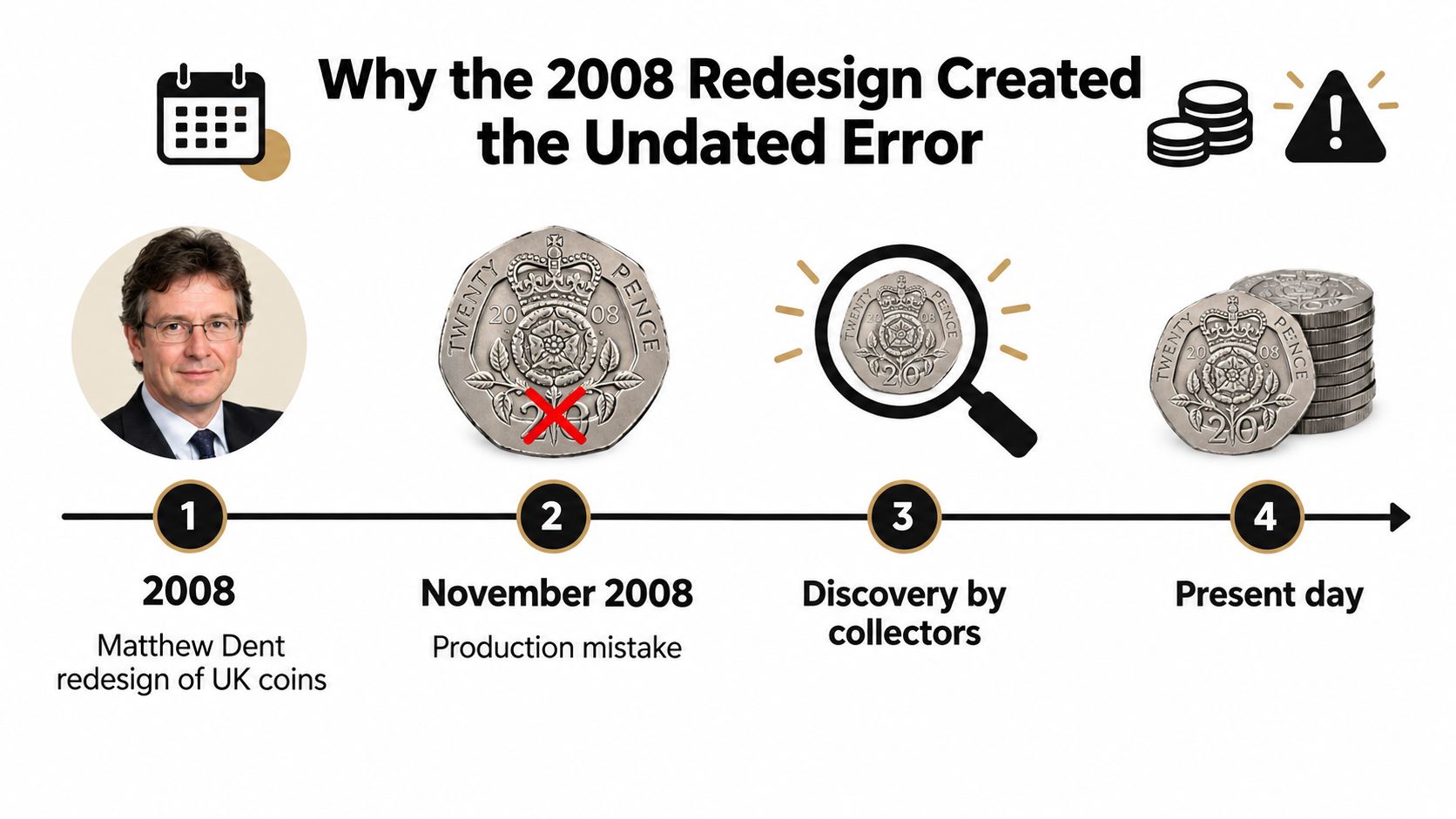
The error began with a planned design change, not with a random failure in an otherwise unchanged production run. In 2008, the Royal Mint redesigned the circulating coinage using designs created by Matthew Dent. The 20p moved from its older reverse arrangement to the Royal Shield design, while the date moved onto the obverse.
That created a transition point. Production teams had to manage older and newer dies during the changeover, and the two systems placed the date in different locations. A normal old-style combination carried the date under the earlier arrangement. A normal redesigned combination carried it on the obverse. The faulty pairing combined an earlier obverse with the new shield reverse.
The Royal Mint says the relevant batch was struck in November 2008, when the previous obverse was used with the new reverse. The resulting coins had no date on either face and entered circulation before the public recognised the mistake.
The visual logic behind the mistake
Look at the coin as a sequence rather than as a curiosity. The old obverse belonged to a dating system in which the date wasn't placed there. The new reverse belonged to the redesigned system, where the date had moved away from that side. When those dies met, the coin lost its date entirely.
The production error was unusual enough to become historically important in British numismatics. The Royal Mint says these were the first British circulating coins without a date in more than 300 years, which explains why the piece attracts attention beyond its face value.
The discovery also felt personal to the public because these coins weren't confined to a presentation set. They went through tills, wallets, and coin jars. That made the error easy to explain and possible to encounter during ordinary spending.
For identification, the history gives you a fixed test. You aren't looking for any dateless 20p. You're looking for the exact meeting of an older portrait side and a newer shield side, with no evidence that the missing date was removed after striking.
How to Identify a Genuine No Date 20p and Avoid Fakes
Start with the reverse, then confirm the obverse. A genuine example needs the new Royal Shield design paired with the older undated obverse. If the coin has the earlier Tudor Rose reverse, it isn't the famous mule. If the shield reverse appears with a dated obverse, it's a normal redesigned 20p.
The absence of the date is the central diagnostic, but it must look natural. Examine the coin under an even light and tilt it slowly. A genuine undated area should have the same general surface character as the surrounding field. A patch that looks scraped, unusually bright, or directionally scratched deserves caution.
A four-point inspection
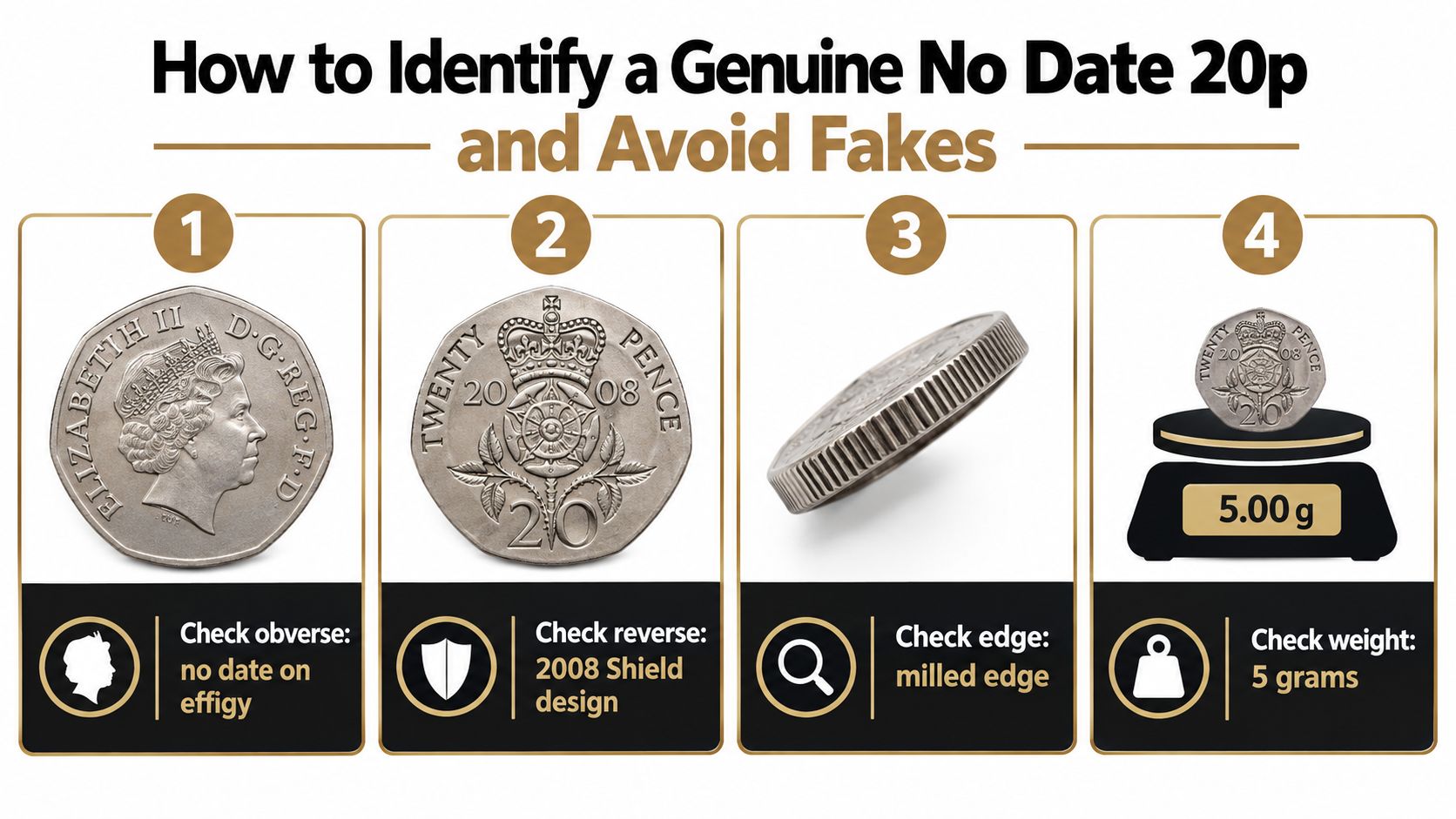
- Inspect the obverse. Check the portrait style and confirm that no date appears on the effigy side. Don't assume a blank-looking area is proof of an error. Wear can make a genuine date hard to read.
- Confirm the shield reverse. The Royal Shield design is essential. A missing date without the correct reverse pairing is not enough.
- Study the edge and shape. The coin should retain the familiar curved heptagonal form and a normal milled edge. An odd edge, severe flattening, or signs of filing may indicate damage or alteration.
- Use physical checks if available. A scale can help confirm that the piece behaves like a normal 20p. The infographic identifies the standard reference weight as 5 grams, but a home measurement should be treated as supporting evidence, not a substitute for the design check.
| Feature to Check | Genuine 2008 Mule | Not Genuine |
|---|---|---|
| Obverse | Older portrait side with no date struck | Later dated obverse, or a surface that looks filed |
| Reverse | New Royal Shield design | Older Tudor Rose reverse |
| Date | Absent from both sides as part of the original strike | Hidden by wear, dirt, polishing, or alteration |
| Edge and shape | Normal curved heptagonal shape and milled edge | Filed edge, severe distortion, or unusual damage |
| Surface | Consistent with the rest of the coin | Localised scratches, scraping, or unnatural smoothing |
For a further general guide to examining suspicious pieces, see Cavalier Coins' methods for detecting counterfeit coins. If the coin still appears convincing after comparison, avoid cleaning it. A dealer or grading service can assess authenticity and condition without you risking the original surface.
How Rare Is the Undated 20p Really
The Royal Mint states that fewer than 250,000 undated coins were affected, compared with 136 million 20p pieces minted in 2008 to 2009. That means the error represented well under 1% of that output, about 0.18% at most, based on the figures supplied by the Royal Mint in its account of the coin's production.
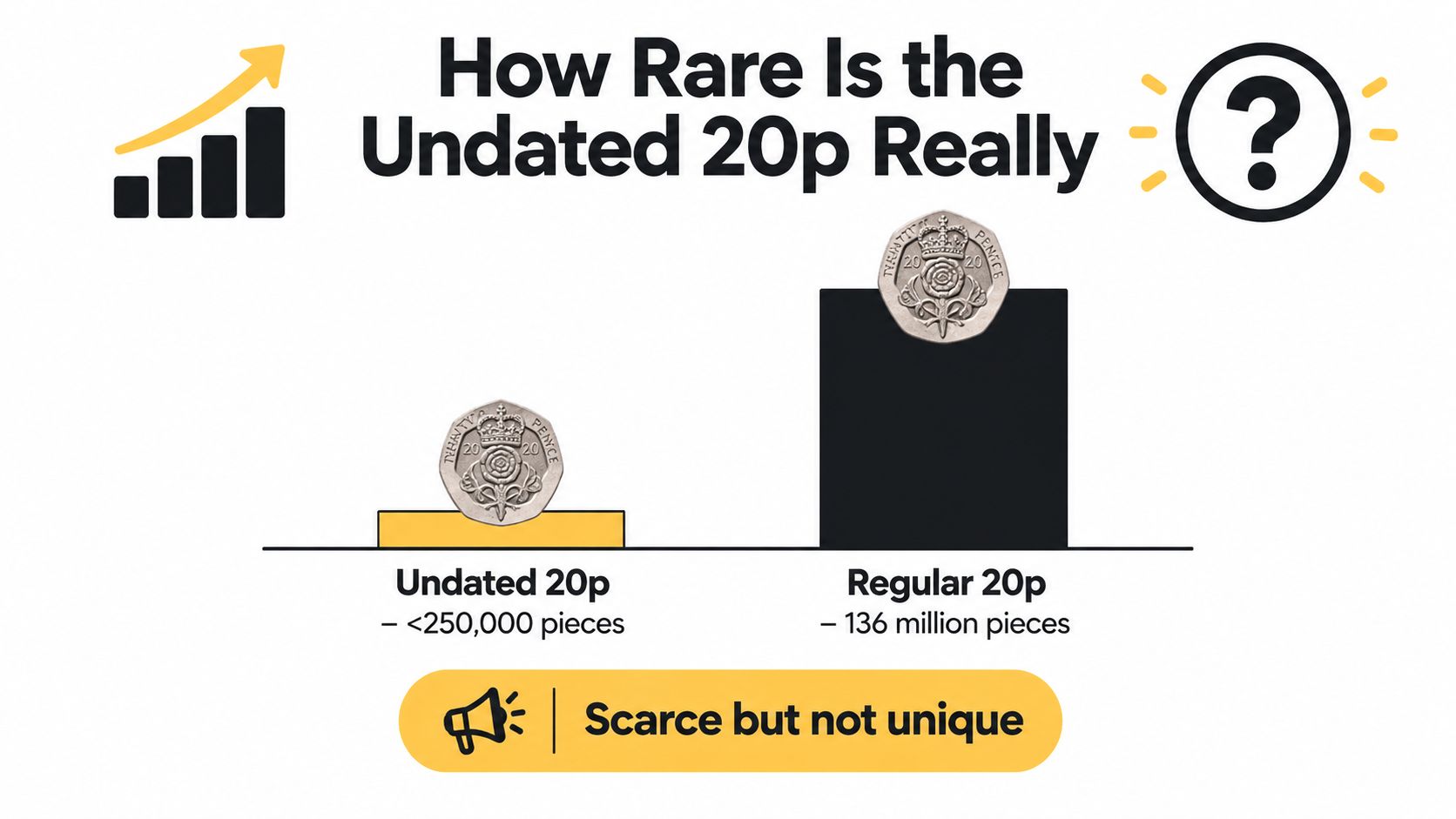
Those figures support a balanced description. The coin is scarce, but it isn't unique. Fewer than 250,000 pieces is a small share of the relevant output, yet it's also a large enough population for examples to remain known and occasionally findable. That distinction matters when you compare the mule with low-mintage issues.
Fame changes how rarity feels
Collectors don't choose pieces by mintage alone. A coin also needs a clear story, recognisable features, and a group of buyers who know what they're seeing. The undated 20p scores strongly on all three. Anyone can understand why a circulating coin without a date is unusual, and the shield-plus-old-obverse pairing gives experienced collectors a firm identification point.
That visibility creates liquidity, meaning buyers and sellers can find each other more easily. A less famous coin may have a smaller recorded mintage but attract fewer searches, fewer bids, and less discussion. Rarity and demand overlap, but they aren't identical.
Recent UK coverage often repeats estimates between 50,000 and 250,000 pieces and headline prices from £50 to £1,400, but those figures can combine different conditions, asking prices, and sale contexts. The Royal Mint's mintage information is more useful for understanding the coin's place among other UK 20p issues than for promising a particular resale figure.
What a 20p Coin No Date Is Worth Today and Where to Trade It
There isn't a single fixed price for a genuine undated 20p. The market can place a circulated example around £50, while a pristine graded piece may exceed £1,000, as reflected in the range of figures repeated in recent UK coverage. Those are broad reference points, not a guaranteed tariff, and the coin's actual result depends on condition, presentation, buyer confidence, and the venue.
A worn coin can still be desirable because the error is visible and famous. However, a high-grade piece has a different audience. Buyers considering a premium example will look closely at surface marks, original lustre, strike quality, and whether the coin has been cleaned. Brightness by itself isn't proof of quality. Polishing can make a coin look shiny while reducing its collector appeal.
Asking price isn't sale price
Online listings often show ambitious prices that tell you what an owner hopes to receive. They don't prove that a buyer paid that amount. Completed auction results are more informative, particularly when the sold coin has similar wear, equally clear photographs, and the same authentication status.
Social posts and media stories can also raise expectations by highlighting the most dramatic number attached to the coin. That number may relate to an unusually attractive example, a graded piece, or an asking price rather than a completed transaction. Compare like with like before deciding whether an offer is fair.
Choosing a selling route
You can approach the market in several ways:
- Specialist dealer: A dealer can provide a quicker assessment and may buy the coin directly, although the offer will reflect the dealer's need to resell it.
- Online auction: Clear photographs and an accurate description let interested collectors compete, but you'll need to handle questions, fees, and delivery securely.
- Coin auctioneer: This route can suit a stronger example or a wider collection where specialist buyers are already watching.
- Collector marketplace: Direct contact may work for experienced sellers who can describe condition accurately and supply detailed images.
Before trading, photograph the obverse, reverse, and edge in even light. Keep the coin uncleaned, store it in a suitable holder, and state any marks or uncertainty plainly. For more UK selling options, consult Cavalier Coins' guide to places for selling old coins. If you're unsure whether the coin is genuine, pay for an expert opinion before making a high-value claim.
Key Takeaways for Collectors and Finders
The 20p coin no date is a genuine Royal Mint mule created during the 2008 redesign. The older obverse was paired with the newer Royal Shield reverse, leaving the coin without a date on either side. The Royal Mint records fewer than 250,000 affected pieces from 136 million 20p coins minted in 2008 to 2009, so the error is scarce without being a one-off rarity.
Your first task is authentication. Confirm the shield reverse, inspect the older obverse, look for a naturally consistent surface, and rule out wear, polishing, filing, or damage. Only then should you assess condition and compare completed sales rather than relying on viral asking prices.
If your coin passes the visual checks, preserve it untouched and seek a specialist opinion before selling. Cavalier Coins Ltd offers collector coins and banknotes, fixed-price listings, and weekly eBay auctions, giving finders and collectors an option for sourcing or trading unusual pieces. Visit Cavalier Coins Ltd to explore its current stock and auction opportunities, then let the evidence on your coin guide the next step.