
Starting a coin collection is a fascinating journey, but finding the right album for coins is about more than just storage—it’s the key to preserving your investment and showing off your treasures. The best album really depends on your collection's scope and value, with options ranging from simple push-fit folders for beginners to archival-safe binder systems for serious numismatists.
Why Your Coin Album Choice Matters
Choosing an album for your coins is one of the most critical decisions you'll make as a collector. It's your first line of defence against environmental damage, accidental scratches, and the natural oils from your hands, all of which can drastically reduce a coin's value. Think of it less like a storage box and more like a carefully selected frame for a piece of art.
A proper album doesn’t just hold your collection; it protects its very integrity. Imagine housing a set of brilliant uncirculated decimal coins in a cheap, flimsy folder. You're simply asking for long-term damage. The materials in low-quality albums can degrade over time, sometimes reacting with and harming the coin's surface.
Beyond Simple Storage
A good album does so much more than just keep things tidy. It gives you a structured way to view and appreciate your collection, turning what might be a shoebox of loose change into a curated exhibit. It helps you instantly spot the gaps in a series, track your progress, and share your passion with others without ever having to risk handling the coins themselves.
A well-chosen album for coins offers:
- Protection: Guarding against fingerprints, moisture, and nasty chemical reactions.
- Organisation: Arranging coins by date, monarch, or series for easy viewing.
- Display: Presenting your collection in an appealing and accessible format.
The single biggest mistake new collectors make is underestimating the impact of storage. An album made with PVC plastic can cause irreversible green residue on a coin's surface in a matter of years, completely destroying its numismatic value.
Aligning an Album with Your Goals
Your collecting goals should directly steer your choice of album. If you're casually collecting modern 50p or £2 coins from your change, a simple push-fit folder is a perfect, and very satisfying, starting point. It's affordable, fun to fill, and gives perfectly adequate protection for common coins.
However, if your collection includes valuable silver pre-decimal coins or rare commemorative pieces, your needs are entirely different. For these kinds of treasures, a binder system with inert, PVC-free pages is non-negotiable. This setup lets you customise layouts, add pages as your collection grows, and ensures archival-safe conditions for the long haul. Investing in the right album from the start saves you from the costly and heartbreaking task of dealing with damaged coins later on.
Matching an Album to Your Collection Style
Finding the perfect home for your coins isn't a one-size-fits-all situation. The ideal choice really hinges on what you collect and how you want to show it off. Let your collection’s unique character be the guide.
For many collectors in the UK, the journey kicks off with a specific series, like the ever-popular Beatrix Potter 50p coins or the A-Z 10p set. This is where push-fit albums really shine. These albums, like the ones from brands such as Whitman, have pre-labelled slots for every single coin in a series. There’s a special kind of satisfaction in pressing that final coin into its designated space and seeing the completed picture.
The Dedicated Series Collector
Let's say you’ve decided to collect every commemorative £2 coin issued since 1997. A push-fit album made just for this series gives you a crystal-clear roadmap. You can see your progress at a glance, and each empty slot is a tempting invitation to continue the hunt. It organises everything for you, visually and thematically, right from the get-go.
Of course, this dedicated structure is also its main drawback. These albums are rigid; you can’t add pages or find a spot for a coin that doesn't belong to that exact series. If your collecting interests start to wander, you’ll find yourself needing a new storage solution pretty quickly.
The Flexible and Growing Collection
But what if your collection is a bit more eclectic? Maybe you’ve got a mix of Victorian pennies, old pre-decimal silver shillings, and some modern commemorative crowns. For this kind of diverse assembly, a binder and page system offers versatility that’s second to none. This style of album lets you mix and match pages with different pocket sizes to suit whatever you happen to find.
- Customisation is Key: You can easily house a large silver crown and a tiny silver threepence in the same binder, just by using different page layouts.
- Easy Expansion: As your collection grows, you just add more pages. You'll never outgrow your album.
- Organisation Your Way: Arrange your coins by monarch, metal type, country, or any other system that makes sense to you.
To help you figure out which path is right for you, this decision tree maps out the options based on your collecting goals.
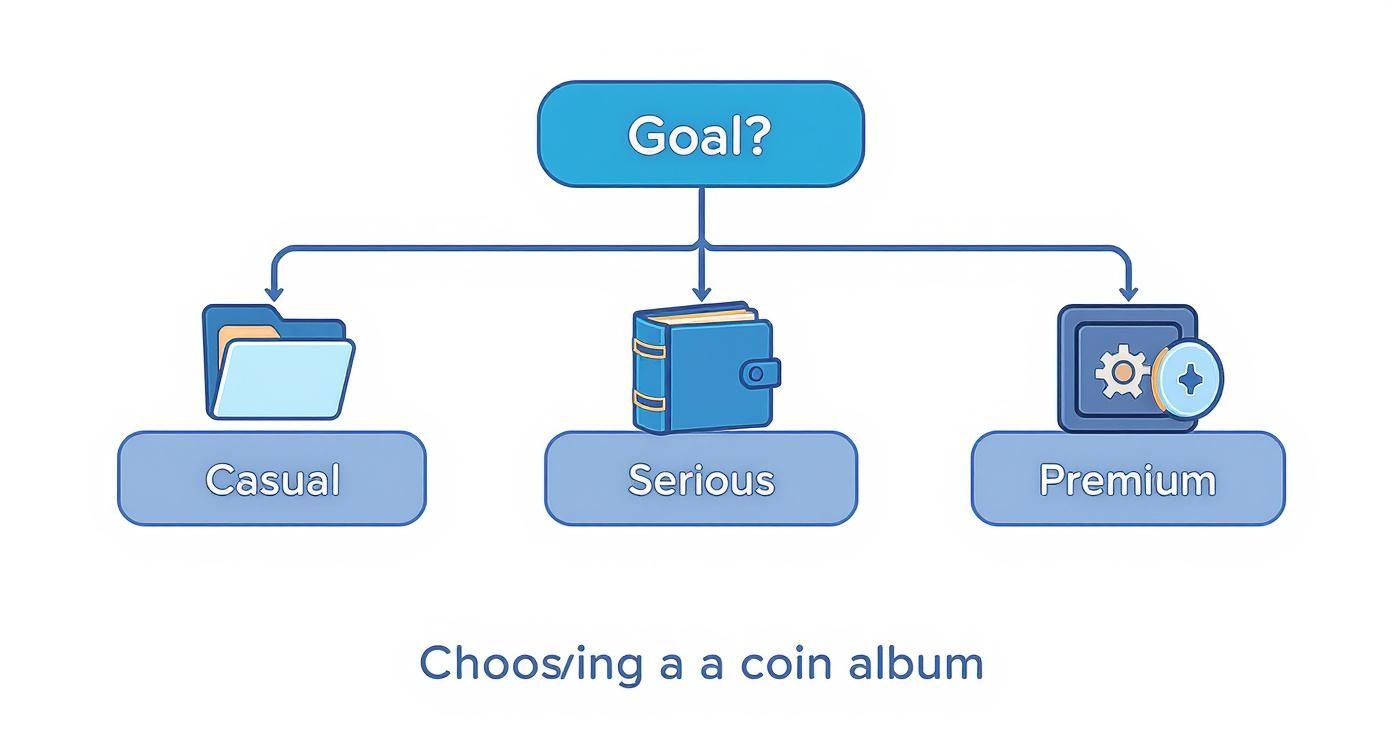
As the infographic shows, your main goal—whether that’s casual collecting, serious organisation, or premium display—is the best place to start when choosing your album.
The UK coin collecting scene has seen a massive surge in interest, partly thanks to The Royal Mint's incredibly popular commemorative issues. Series like the 'Music Legends' coins have pulled in a global audience, with overseas sales recently accounting for about 37% of revenue in the commemorative coin division. This boom means more people are facing the same storage decisions, from casual fans to serious investors.
The real beauty of collecting is that it’s deeply personal. Your album should be a reflection of your journey, whether it’s a meticulously completed series or a wonderfully chaotic mix of historical treasures.
Choosing the right album is a key decision for any collector. To help you weigh your options, here’s a quick comparison of the most popular styles.
Coin Album Styles Comparison
| Album Type | Best For | Pros | Cons |
|---|---|---|---|
| Push-Fit Albums | Completing specific, finite series (e.g., Olympic 50ps). | Provides a clear collecting goal and satisfying display. | Inflexible; cannot be expanded or customised for other coins. |
| Binder & Page Systems | Eclectic, growing, or customised collections. | Highly versatile, expandable, and allows custom organisation. | Can become bulky; requires buying pages separately. |
| Slab Albums | Professionally graded and certified coins (slabs). | Offers maximum protection for high-value, graded coins. | Specific to slab sizes; not for 'raw' or ungraded coins. |
| Wooden Display Cases | Showcasing a few premium, high-value coins. | Elegant presentation, turns coins into a centrepiece. | Limited capacity and less practical for large collections. |
Each style offers a different experience, so think about where your collection is now and where you want it to go.
For the Premium and Graded Coins
Finally, what about the most valuable pieces in your collection? Perhaps you have a professionally graded sovereign or a rare proof set. For these, specialised storage is a must. Albums designed for slabbed coins hold the entire graded case securely, protecting both the coin and its all-important certification.
For an even more distinguished display, you might consider an elegant wooden case with a velvet-lined interior. This can turn your prize coins into a true centrepiece. Thinking about how to present your best items is part of the fun. In a similar way, you might look at guides on selecting personal accessories like custom leather keychains to appreciate how quality materials enhance the final look. A premium case communicates the significance of the coins inside, making it a fantastic choice for your most cherished items.
Essential Features of a High-Quality Coin Album
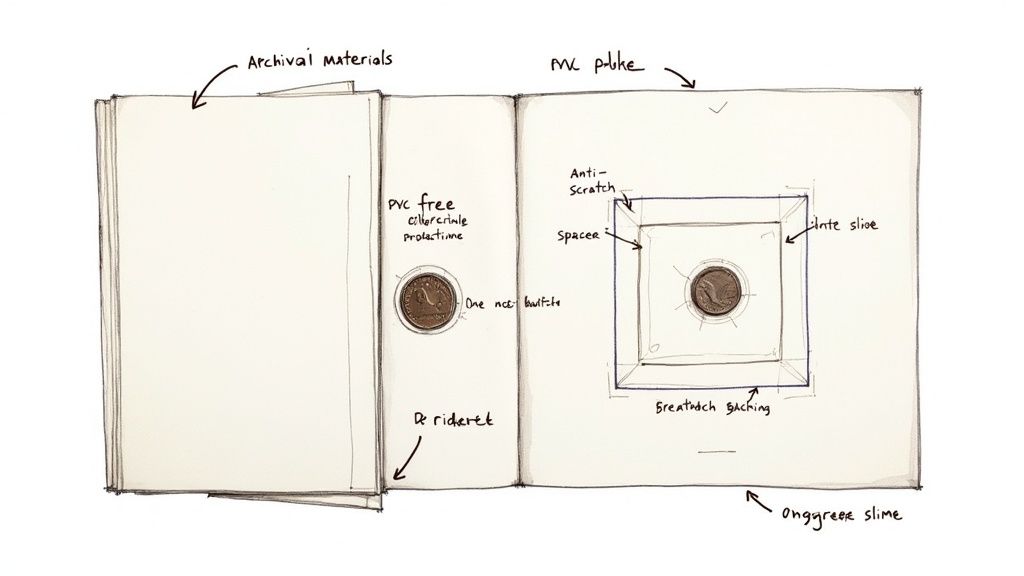
When you’re ready to properly house your collection, the physical features and materials of your album for coins are paramount. It’s a serious decision. The right album will protect your coins for a lifetime, while a poor choice can cause irreversible damage.
The single most critical feature is the material used for the pages and pockets. You must, without question, ensure they are archival-quality and completely PVC-free. PVC (polyvinyl chloride) contains plasticisers that break down over time, leaching out as a sticky, greenish film.
This residue creates a chemical reaction known as ‘PVC damage’ or ‘green slime’, which can literally etch into a coin's surface and destroy its value.
Always look for albums that use inert plastics like Mylar (polyester) or polypropylene. These materials are chemically stable and won't react with the metals in your coins, even over many decades. For any serious collector, this is a non-negotiable starting point.
Beyond the Plastic
Once you've confirmed the materials are safe, the album's physical construction is your next priority. The way it’s built determines how well it shields your coins from knocks and bumps, and frankly, how enjoyable it is to use.
Consider these structural elements:
- Protective Slides: Many binder-style pages include plastic slides that slip into each row. These are crucial. They hold the coins firmly in place, stopping them from rattling around or, even worse, falling out. They also create a barrier that prevents coins from rubbing against each other.
- Binder Durability: The binder itself needs to be sturdy, with a strong spine and rings that close tightly and securely. A flimsy binder can warp over time, putting uneven pressure on the pages and the coins held within. Padded covers not only feel more premium but add an extra layer of shock absorption.
Your album is a working tool, not just a static display case. A well-constructed binder that can withstand regular use without falling apart is essential for both accessing and protecting your collection.
The clarity of the pockets matters, too. High-quality polypropylene gives you excellent visibility, letting you appreciate the fine details of your coins without any distortion. Low-grade plastics, on the other hand, can be cloudy or turn yellow with age, obscuring the view of your prized possessions.
Planning for Growth and Ease of Use
Finally, a truly practical coin album should accommodate the future of your collection. A fixed folder is fine if you're collecting a specific, finite set, but for a growing collection, expandability is key.
This is where binder systems really shine, as they let you add, remove, or reorganise pages whenever you need to.
Look for a standard ring configuration, like a 3-ring or 4-ring binder. This gives you the flexibility to buy compatible pages from various manufacturers, ensuring your album can grow and change along with your collecting interests. You can find more detailed comparisons in our guide to the top coin collecting albums for 2025, which breaks down specific models.
By thinking ahead, you’ll choose an album that will serve you well for years to come.
Organising and Cataloguing Your Collection
Once you’ve found the perfect album for your coins, the real fun begins. This is your chance to turn a simple pile of coins into a properly curated collection. The way you organise everything tells a story, whether you're tracing the lineage of British monarchs or celebrating the unique artistry of a specific series.
There’s really no single “right” way to do this; the best method is whatever brings you the most satisfaction. Many collectors start with a straightforward approach, arranging coins by their denomination and then chronologically by year. It's a classic for a reason and works wonderfully if you're trying to build a complete date run of old pennies or shillings.
Alternatively, you could decide to organise your collection thematically. For example, you might create a section in your album dedicated entirely to pre-decimal silver coins, or maybe another focused on the huge variety of commemorative 50p pieces released here in the UK. This approach turns each page of your album into a distinct chapter of numismatic history.
Creating a System That Works for You
A popular and really engaging method for UK collectors is organising by monarch. Starting with Victorian-era coins and moving through to the modern Elizabethan and Charles III eras provides a tangible link to the country’s history. It’s incredibly rewarding to see the transition of portrait styles and inscriptions over the decades, all laid out neatly in your album.
For those who enjoy a more modern challenge, focusing on a specific series can be very compelling. Think of The Great British Coin Hunt and its 26 different 10p coins – that's a prime example. An album organised around a series like this gives you a clear and achievable goal, with the simple satisfaction of filling each specific slot.
A well-organised collection isn’t just about being tidy; it’s about accessibility. When you can instantly find a specific coin or see which pieces you’re missing, you deepen your engagement with the hobby and start making smarter buying decisions.
This level of organisation becomes even more critical when you consider the sheer number of coins out there. With an estimated 27 billion coins currently in circulation in the UK, having a system is absolutely essential for managing your finds. This huge number reflects the ongoing demand that The Royal Mint meets, ensuring collectors have a rich pool of contemporary coins to discover. You can always explore more UK coin mintage statistics on The Royal Mint's official website.
Beyond the Album: A Simple Inventory
While your coin album provides the physical home for your collection, a digital or paper catalogue acts as its brain. This inventory system tracks all the vital information that goes beyond what’s visible on the coin itself. Keeping a detailed record is one of the most important steps you can take as a collector.
Creating an inventory doesn’t have to be complicated. A simple spreadsheet is an excellent starting point.
Here’s what your basic inventory should track:
- Coin Identification: The essentials – year, denomination, monarch, and any mint marks.
- Acquisition Details: Where and when you got it, and what you paid for it.
- Condition/Grade: Your own honest assessment (e.g., Fine, Very Fine) or the professional grade if it's slabbed.
- Current Value: An estimated market value, which you can update from time to time.
This simple act of cataloguing really elevates your hobby. It gives you a clear picture of your collection's value, highlights your most significant pieces, and helps you set goals for what to hunt for next. For a deeper dive into this process, check out our guide on how to catalog coins effectively.
Long-Term Preservation and Handling Tips
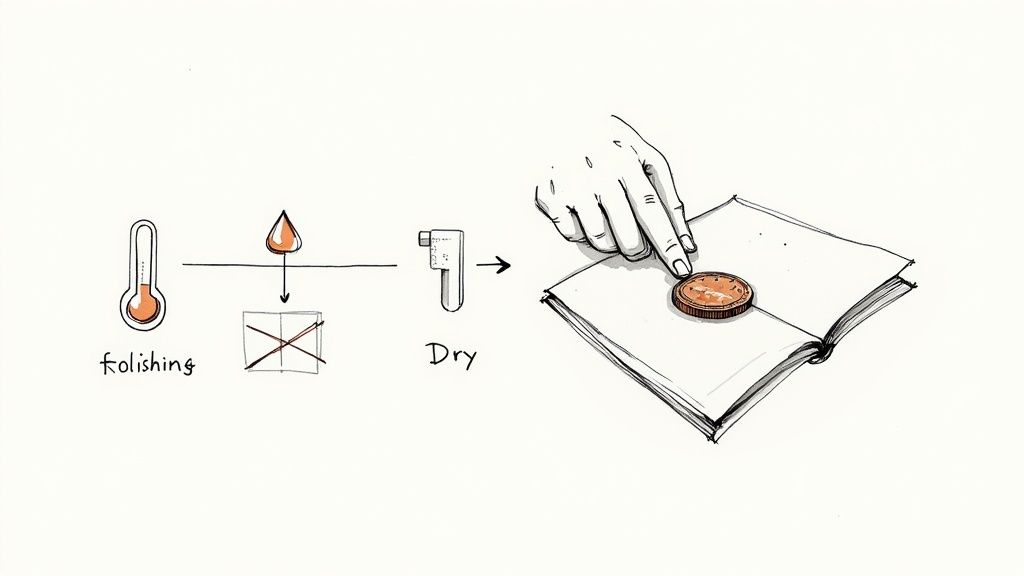
Choosing the right album for coins is a fantastic start, but it's your long-term habits that truly safeguard your collection. The way you handle and store your coins will ultimately decide their fate, ensuring they stay in pristine condition for years, or even generations, to come.
Proper handling is probably the easiest and most effective preservation technique you can adopt. The natural oils and acids on your skin are surprisingly corrosive to coin metals and can leave permanent, unsightly fingerprints. To prevent this, always handle coins by their edges. Better yet, wear a pair of soft, lint-free cotton gloves whenever you're moving them into or out of your album.
It's a simple practice, but it protects the delicate surfaces from damage you can't undo.
Creating the Ideal Storage Environment
Where you keep your coin album plays a massive role in its long-term health. Coins are far more sensitive to their surroundings than most people realise, and the wrong environment can speed up tarnishing, corrosion, and other forms of decay.
The ideal spot is cool, dark, and dry. You're looking for a stable environment with low humidity, as moisture is a primary catalyst for metal degradation. A cupboard in a temperature-controlled room is far superior to a damp cellar or a hot attic, where wild temperature swings can cause condensation to form inside the album pages.
For a deeper dive, our comprehensive guide on the best way to store coins has plenty more advice.
The golden rule of coin preservation is stability. Drastic changes in temperature and humidity are far more damaging than a consistently cool or warm environment. Find a safe, stable spot and stick with it.
Avoiding Common Preservation Pitfalls
One of the biggest mistakes a new collector can make is giving in to the temptation to clean their coins. It might seem like a great idea to make an old coin shiny again, but you can completely destroy its numismatic value with improper cleaning.
Polishes and abrasive cleaners cause microscopic scratches and, crucially, strip away the natural patina. This is the thin layer of toning that develops over time, and experienced collectors prize it as proof of a coin's age and authenticity. Aggressively cleaning it is seen as irreversible damage. Unless you're a trained professional, it's always best to leave your coins as they are.
For many UK collectors, the allure is owning a piece of history. The rarest British coins can become the centrepiece of any collection, which makes preserving them absolutely paramount.
Take the 1344 Edward III Florin, or 'Double Leopard'. It’s one of the most valuable, with only three known specimens. One sold for a staggering £480,000 back in 2006, a record at the time. When you're dealing with pieces of that calibre, you quickly understand why protecting them properly is so crucial.
Your Coin Album Questions Answered
When you're digging deep into finding the perfect album for coins, a few questions always seem to pop up. It's completely natural. You might be worried about the right materials or wondering how on earth to organise a jumble of different-sized coins. Getting good, clear answers is the key to moving forward with confidence. Let's tackle some of the most common queries we hear from fellow collectors.
One of the first, and most critical, questions is always about the plastic pages themselves.
Are PVC Coin Album Pages Really That Bad for Coins?
In a word, yes. They are genuinely destructive. PVC, which stands for polyvinyl chloride, is loaded with chemical plasticisers that keep it flexible. The trouble is, these chemicals aren't stable and break down over time.
As they degrade, they leach out as a sticky, greenish, acidic slime that coats the coin's surface. This nightmare scenario causes irreversible damage known as ‘PVC damage’, which can completely wipe out a coin's numismatic value. For real peace of mind and genuine long-term protection, you should always, always insist on an album made from inert, archival-safe materials like Mylar (polyester) or polypropylene.
Another common puzzle is what to do when your collection is a glorious mix of shapes and sizes.
How Should I Organise a Collection with Different Sized Coins?
A binder-and-page system is, without a doubt, your most flexible and practical friend for a mixed-size collection. This approach lets you buy pages with all sorts of pocket configurations, so you can easily house everything from tiny silver three-pences to chunky modern crown-sized coins.
It means you can build a truly custom album that's perfectly suited to your unique collection, keeping all your treasures safe, sound, and organised in one place. It’s the ideal solution for anyone whose interests jump between different eras and denominations.
The best storage solution is one that adapts to your collection, not the other way around. That versatility ensures your album can grow and change right alongside your numismatic journey.
Many collectors also wonder if they should give their coins a bit of a polish before tucking them away.
Should I Clean My Coins Before Putting Them in an Album?
Generally, the answer to this is a firm and resounding no. Cleaning almost always does more harm than good. It can leave behind thousands of microscopic scratches (harsher cleaning methods) and strip away the natural patina that experienced collectors and dealers prize so highly. This toning is a visual sign of a coin's age and originality, and removing it can torpedo its value.
If a coin has some loose dirt on it, a gentle rinse with distilled water is the absolute most you should ever do. For anything more serious, your best bet is to consult a professional numismatist. The safest approach? Place your coins into their new album in their original, untouched state.
Finally, a well-labelled collection is a joy to behold and share.
What Is the Best Way to Label Coins in My Album?
Thankfully, many top-quality album systems come with pre-printed labels for dates and denominations, which makes life a lot easier. If you're building a custom collection in a binder, the best method is to use small, acid-free paper inserts that you can slip into the pockets behind the coins.
On these little inserts, you can jot down all the key details:
- The coin's year, monarch, and denomination.
- Any interesting notes about its condition or where it came from.
- Where and when you acquired the piece.
Try to avoid writing directly on the coin holders or pages themselves unless they are specifically designed for it. You'd be surprised how many inks contain chemicals that can cause problems down the line.
At Cavalier Coins Ltd, we provide collectors with archival-safe albums and accessories designed to protect your investments for generations. Explore our full range of storage solutions today at https://www.cavaliercoins.com.