
Choosing the right album for a coins collection is probably the single most important decision you'll make to protect your investment and your passion. It’s a choice about active preservation, not just shoving coins in a drawer. This guide is designed to go beyond the usual basic advice, giving you the practical knowledge you need to pick an album that will truly safeguard your coins from irreversible harm.
Why Your Coin Album Choice Matters So Much
Picking the perfect album for your coins is far more than just a matter of organisation—it's the very foundation of your collection's future. I’ve seen it happen too many times: a collector uses an unsuitable album and it actively damages their coins, causing chemical reactions that lead to corrosion, ugly discolouration, and a serious hit to their value.
Many collectors, especially when they're just starting out, unknowingly grab albums made with nasty plastics like PVC (Polyvinyl Chloride). Over time, these materials can leach acidic compounds that are disastrous for metal.
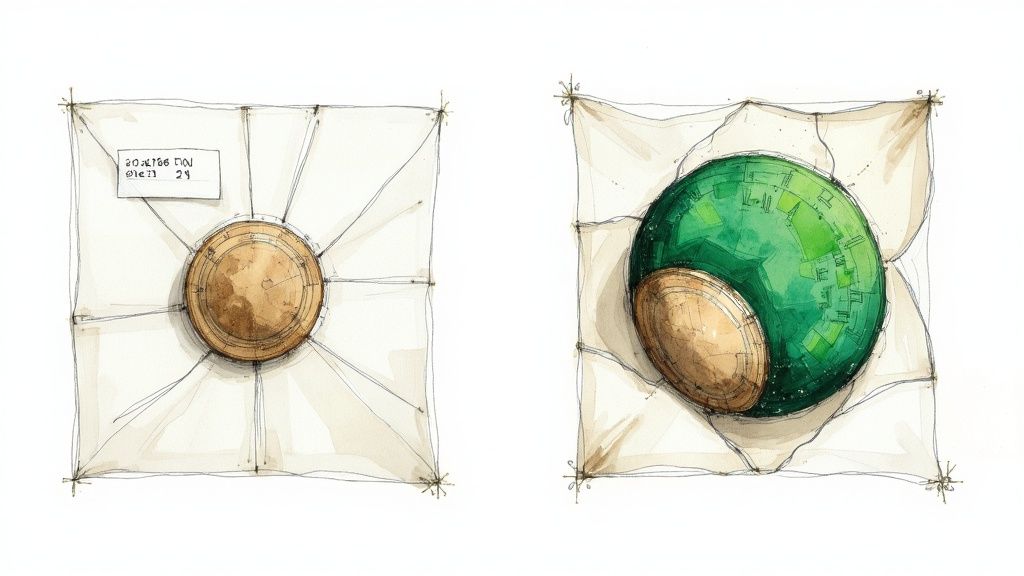
This isn't just a small blemish. The wrong materials can cause a destructive greenish film to form on your coins, a type of chemical damage that you simply cannot undo. Your choice of album directly determines whether your collection becomes a treasured legacy or a sad cautionary tale.
Understanding the Material Risks
The main goal here is simple: create a stable, non-reactive home for each coin. That means you need to prioritise materials that are chemically inert and completely free from the acids that love to tarnish and corrode metal surfaces. The difference between safe and unsafe materials is night and day.
"Whatever storage method a collector chooses, the container should be acid-free. You want a container that stays dry and keeps out humidity. A safe that’s fire-retardant is best." - Rod Gillis, American Numismatic Association
This chart gives a stark visual of the corrosion risk linked to different album materials.
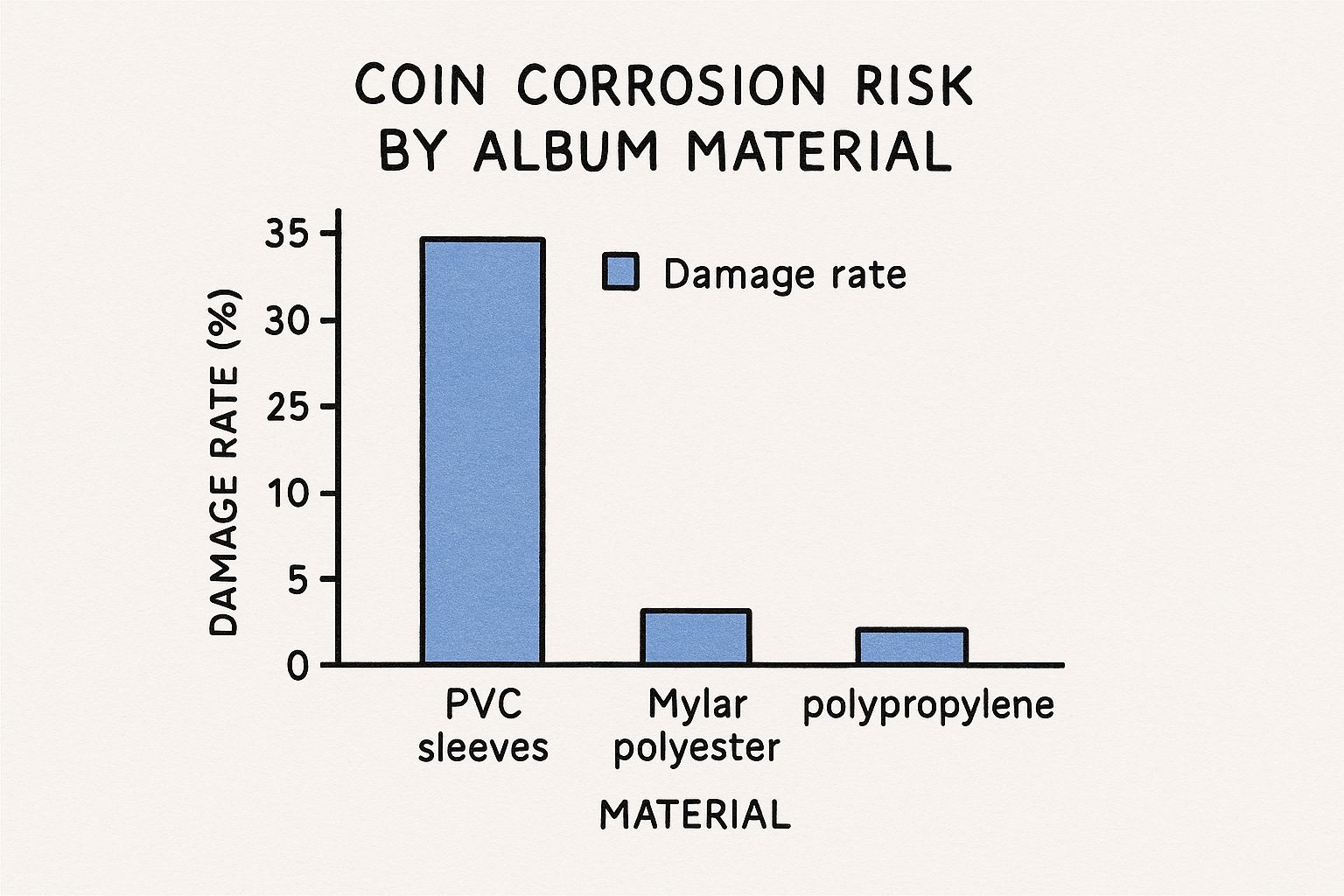
The data really speaks for itself. PVC sleeves carry a massive 35% risk of damage, while proper archival-quality materials like Mylar and polypropylene have a tiny risk of just 1-2%.
It's More Than Just Storage
Beyond just keeping your coins safe, the right album genuinely enhances the joy you get from your collection. It can transform a random shoebox of coins into a beautifully curated exhibit, letting you:
- Organise with a story: Arrange your coins by date, monarch, or theme to tell a fascinating story.
- Display them proudly: Show off your best pieces without ever having to expose them to the harmful oils and acids on your fingertips.
- Plan for the future: Choose a system that can grow with you as you find new treasures to add.
By getting these fundamentals right from the start, you can confidently choose an album for your coins collection that not only protects but also truly elevates your hobby.
Decoding Album Materials for True Archival Safety
When choosing an album for your coins collection, the single most important thing to consider isn't the fancy cover or how the pages are laid out. It's the material that actually touches your coins. Getting this wrong can lead to irreversible damage over time, and getting it right is the secret to preserving your collection for a lifetime.
The number one enemy we need to talk about is PVC (Polyvinyl Chloride). You'll find it everywhere, and it often feels soft and flexible, which seems ideal. But inside, it’s a ticking time bomb. PVC contains plasticisers that degrade, eventually releasing hydrochloric acid. Here in the UK, the damp air only speeds this process up, leading to a horrible greenish film on your coins—especially copper and bronze ones. This isn't just tarnish; it's permanent chemical damage that completely wipes out a coin's value.
Identifying Archival-Grade Materials
So, what should you be looking for instead? The key is to find materials that are chemically inert. It's a technical-sounding term, but it simply means the material won't react with the metals in your coins. These are what professionals call 'archival quality', and they're the gold standard for long-term storage.
You'll come across three main types of safe plastics:
- Mylar (Polyester): This is a top-tier choice for serious numismatists. It's incredibly strong, crystal-clear, and highly stable, offering fantastic protection without breaking down over time.
- Polyethylene: A slightly softer and more flexible plastic that is completely free of harmful acids and plasticisers. It’s a very reliable and common archival material.
- Polypropylene: A more rigid, clear plastic that is also chemically stable and perfectly safe for long-term contact with your coins.
When you see a label like 'acid-free' on an album, it’s a good sign. It means the materials have been made to be chemically neutral, so they won't release corrosive nasties that could eat away at your collection. For a deeper dive into different storage options, have a look at our guide to various collector coin cases and what they're best for.
One of the biggest mistakes collectors make is assuming any clear plastic is safe. PVC can be tricky to spot, but here’s a tip from experience: give it a sniff. If a new album has that distinct, sharp "shower curtain" smell, it's almost certainly PVC. Stay well clear.
A Practical Comparison of Materials
To help you choose with confidence, it helps to see how these materials actually stack up against each other. Each has its place, depending on what you're storing and how valuable the coins are.
Here's a quick-reference table to break it down.
Coin Album Material Safety Comparison
This table offers a snapshot comparison of the most common materials you'll encounter, helping you quickly identify the safe and unsafe options for your coin collection.
| Material | Archival Safety | Common Issues | Best For |
|---|---|---|---|
| PVC | Very Poor | Leaches acid, becomes brittle, causes green gunk | Temporary display only; avoid for any serious collection |
| Polyethylene | Excellent | Can be less rigid than other options | Versatile, all-purpose use for most collections |
| Polypropylene | Excellent | Can feel a bit more brittle than Mylar | Structured pages and durable binder inserts |
| Mylar (Polyester) | Superior | Generally a more expensive option | High-value coins needing maximum clarity and protection |
Choosing an album made from Mylar, polyethylene, or polypropylene is non-negotiable for any serious collector. It might cost a little more upfront, but that small investment pays massive dividends in protecting the integrity and value of your collection for decades. Don't let your treasured coins fall victim to a completely preventable chemical reaction—always check the material specifications before you buy.
Finding the Right Album for Your Collecting Style
Every collection develops its own personality over time, so it makes sense that the album you choose should reflect that. There’s simply no single “best” album for storing coins; the right choice for you will come down to how you collect, what you collect, and what your long-term goals are.
Getting this right from the start is the key to creating a storage solution you’ll be happy with for years to come.
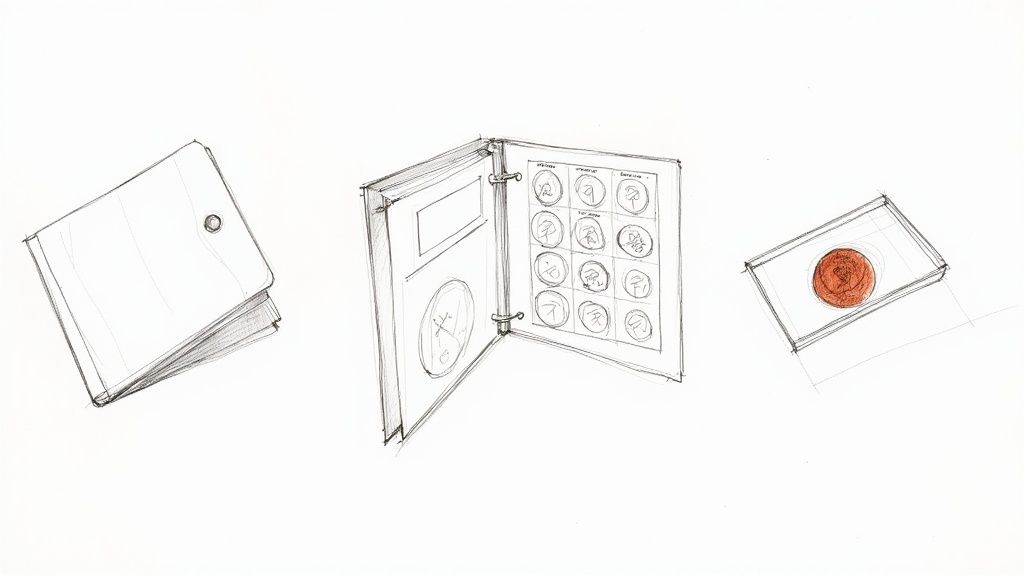
Let's break down the three main types of albums you'll find on the market. Each one is built for a different kind of collector, and understanding where they shine—and where they fall short—will help you find the perfect home for your treasured coins.
Push-in Folders for Specific Sets
For many of us, the coin collecting journey starts with a simple goal: completing a specific set. Maybe you're on the hunt for every Beatrix Potter 50p or trying to track down all the different £2 coin designs. If that sounds like you, then push-in folders (sometimes called coin boards) are where you want to look first.
These albums are brilliant in their simplicity and are very affordable. They come with pre-labelled slots for each coin in a series, giving you a crystal-clear visual map of your progress. There’s a unique satisfaction in finally pressing that last, elusive coin into its rightful place.
But this strength is also their biggest weakness. Push-in folders are completely rigid by design. If you suddenly decide to collect something outside that specific set, you're out of luck. They also tend to leave one side of the coin exposed to the air, which means they offer very little protection from the environment.
Binder-and-Page Systems for Ultimate Flexibility
As your collection grows and your interests wander, you’ll probably find yourself craving more flexibility. One week you might pick up a lovely Victorian penny, and the next, a modern commemorative crown. This is where a binder-and-page system becomes the go-to choice for the collector whose tastes are a bit more varied.
The setup is simple: a binder (I always recommend a D-ring type for durability) and separate plastic pages with pockets of various sizes. This modular approach is its greatest feature, letting you:
- Mix and match page types: You can have a page for your 50p coins sitting right next to one designed for much larger crowns or even banknotes.
- Easily rearrange your collection: Fancy organising your coins by monarch instead of by denomination? Just pop the pages out and move them around.
- Expand without hassle: As your collection gets bigger, you just add more pages. There's no need to buy a whole new album.
The real beauty of a binder system is its adaptability. It grows and changes right alongside your collection, making room for new interests and unexpected finds without ever forcing you to start over from scratch. It's a system built for a lifetime of collecting.
Slabbed Coin Albums for Maximum Security
For the serious numismatist dealing with professionally graded coins, a whole different level of protection is needed. Once a coin has been certified and sealed in a plastic holder (known as a "slab"), your standard albums just won't cut it. This is where slabbed coin albums come into play.
These are highly specialised albums with large, sturdy pages containing custom-sized compartments designed to hold these bulky plastic cases securely. They offer the absolute highest degree of physical protection, which is essential for preserving the integrity—and, of course, the value—of certified coins.
They are certainly the most expensive option, but for anyone investing in high-grade numismatic coins, they are an indispensable piece of kit.
Planning for Your Collection's Future Growth
One of the most common regrets I hear from fellow collectors is the sheer frustration of outgrowing their first album far too quickly. It’s a classic mistake: buying an album that perfectly fits your collection today, without a thought for where your hobby might be in five or ten years.
Thinking ahead isn’t just about saving a bit of money down the line. It's about avoiding the risky and tedious job of re-housing hundreds of coins later on. A little bit of forecasting now can make a world of difference.
So, what kind of collector are you? Do you zero in on one specific series, or do you tend to pick up interesting coins whenever and wherever you find them? Your answer will point you toward the right kind of scalable solution.
Choosing a System That Can Expand
If you're leaning towards the flexibility of a binder, the ring mechanism is what you need to focus on. A flimsy O-ring binder will inevitably warp under the weight of coin pages, causing them to sag and potentially put your coins at risk. You should always opt for a sturdy D-ring binder. It’s designed to let the pages lie completely flat and can handle a lot more weight without putting stress on the rings or the pages themselves.
Keep an eye on the binder’s maximum capacity. A good rule of thumb is to never fill any binder more than 80% full. This leaves just enough room for the pages to turn without catching and prevents the rings from springing open or tearing the page holes.
For those who prefer the neat, structured approach of push-in folders, look for brands that offer a multi-volume series. This is a brilliant way to seamlessly continue your collection into a second or third album that matches the first, maintaining a consistent and organised look on your shelf. This works perfectly for extensive, ongoing sets like the UK's commemorative 50p coins.
I once had to move over 300 coins from a cheap, overstuffed binder into a larger, more robust system. The process wasn't just time-consuming; it was genuinely stressful. Every coin you handle is a coin at risk of a fingerprint or an accidental drop. Investing in a larger, higher-quality album for a coins collection from the very start would have saved me a massive headache.
The Growing Market for Coin Collecting
This need for scalable, quality storage is only becoming more important as the hobby itself grows. The global coin collection market was valued at around USD 10.74 billion in 2024 and is projected to more than double by 2032. This incredible growth highlights a clear demand for reliable storage solutions that can protect ever-expanding collections. You can read more about the expanding coin collection market on maximizemarketresearch.com.
Ultimately, planning for growth means investing wisely in a system that won’t hold you back. An album with room to grow is a practical, long-term decision that will support your passion for years to come. For more detailed advice, you might be interested in our complete guide on coin collecting storage solutions.
Organising and Displaying Your Coins Like a Pro
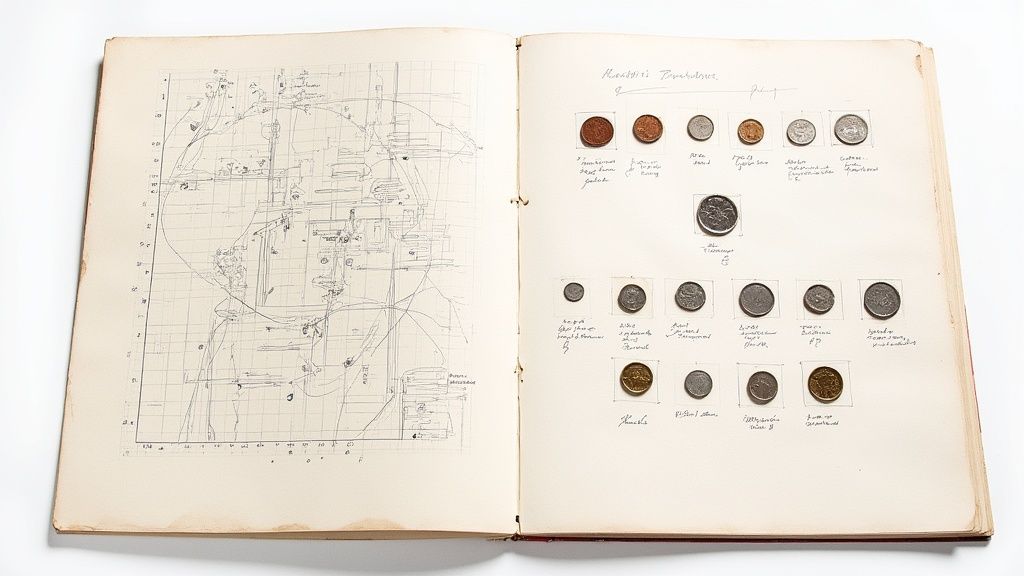
A truly exceptional album for your coin collection does more than just hold your coins; it turns them into a curated exhibit that tells a compelling story. This is where the real joy of the hobby kicks in—moving beyond simple storage and adding layers of context that bring each piece to life.
This means thinking beyond just slotting a coin into a pocket. You could create small, acid-free labels to place alongside each one. Jot down key details like mintage figures, a bit of historical context, or even the story of how you acquired it. It’s this personal touch that transforms your album from a simple folder into a historical document.
Crafting a Narrative with Your Layout
The way you organise your coins has a huge impact on the story you’re telling. There are no right or wrong answers here, just creative choices that reflect your personal interests and passion for the hobby.
Think about the different ways you could approach this:
- Chronological Order: This is a classic for a reason. Arranging coins by date is a brilliant way to show the evolution of coinage over time.
- By Monarch or Era: You could group coins from the reign of Queen Victoria, for example, or create a snapshot of the pre-decimal era. This creates a really focused historical display.
- Thematic Collections: This is where you can get really creative. Why not build a collection around a theme, like naval history, significant anniversaries, or wildlife depicted on coins?
A great contemporary example would be to create a special section dedicated to the historic coinage transition from Queen Elizabeth II to King Charles III. Placing their first and last definitive coins side-by-side creates a powerful and visually engaging narrative that captures a unique moment in British history. For more ideas on creating an engaging setup, have a look at our guide on displaying your coin collection.
The true art of displaying a collection lies in the details. It’s the carefully chosen order and the added context that turn a row of coins into a captivating journey through time, inviting others to appreciate their significance as much as you do.
Prioritising Visibility and Protection
Of course, a great display is useless if you can't see the coins properly. When choosing pages for your album, make sure they have crystal-clear, inert slides. This ensures you can easily view both the obverse (heads) and reverse (tails) of each coin without the risky business of having to take it out of its protective pocket.
This is especially critical for coins with significant reverse designs. Take the iconic 2009 Kew Gardens 50p, a legendary piece for UK collectors due to its exceptionally low mintage of just 210,000. Its sought-after design featuring the Great Pagoda is a key part of its appeal, and being able to view it clearly is absolutely essential.
By applying these thoughtful techniques, your coin album becomes so much more than a storage solution. It evolves into a dynamic and engaging personal museum, showcasing your passion and knowledge for everyone to appreciate.
Common Questions on Choosing a Coin Album
Even with the best plan, you're bound to have a few nagging questions when you’re ready to invest in a proper album for a coins collection. Getting these sorted out is key to making a confident choice that protects your coins for the long haul. Let’s clear up some of the most common queries I hear from fellow collectors.
One of the first things people want to know is how long an album actually lasts. The honest answer? It all comes down to the quality of the materials and where you keep it. A top-notch, archival-grade album stored in a stable, dry environment can easily last for decades.
That said, it’s good practice to give it a quick check once a year for any signs of brittleness or discolouration. On the flip side, a cheap album made with PVC is a ticking time bomb. Think of it as a temporary fix and plan to replace it every 3-5 years at a minimum. The damaging chemicals can start causing trouble long before you see any visible signs.
Practical Concerns for Organising Coins
Another great question that comes up often is whether it’s safe to mix different types of metal—like copper, silver, and cupro-nickel—on the same page. It’s a valid concern for anyone with a varied collection.
The good news is, yes, it’s perfectly safe, but there’s a big "if". This only works if your album uses inert, archival-safe materials and, crucially, if every coin has its own separate pocket. The individual pockets stop the coins from ever touching each other, which is what prevents galvanic corrosion between different metals. It’s the page material that does the protecting, not how far apart the coins are.
A beautiful leather cover means nothing if the pages inside are made of cheap, damaging plastics. The album's safety is determined by what touches the coins, not by its external appearance. Always prioritise the quality of the internal materials over aesthetics.
Speaking of covers, it's easy to be drawn to those expensive, luxurious leather-bound albums. But are they automatically safer for your coins? Not necessarily. The cover is just for looks; the real safety lies in the pages and pockets your coins actually sit in.
A stunning leather album filled with cheap PVC pages is far more dangerous than a simple binder that uses high-quality Mylar pages. If you have your heart set on a leather album, just make sure it’s from a reputable numismatic brand that clearly states it uses archivally safe pages inside.
Handling Coins Before Storage
Finally, we come to the most important question of all: how should you clean your coins before putting them in a new album? The golden rule in numismatics is straightforward and absolute: do not clean your coins.
Any kind of cleaning, polishing, or chemical treatment strips away the coin’s natural patina and leaves behind tiny scratches, absolutely tanking its value. An experienced collector can spot a cleaned coin a mile off, and it's always considered damage. The only real exception is for excavated coins covered in loose dirt, which can be gently rinsed in distilled water. But for 99% of collectors, your coins should go into the album just as they are.
Ready to give your collection the archival-safe home it deserves? Explore the premium selection of albums and storage solutions at Cavalier Coins Ltd and ensure your treasured pieces are protected for generations. Find your perfect album at https://www.cavaliercoins.com.