
The right albums for coins do far more than just hold your collection; they're the guardians of its history, condition, and value. A good quality album is your first line of defence against environmental damage, preventing the kind of corrosion that can ruin a prize find, while giving you an organised way to showcase your passion.
Choosing Your First Coin Album
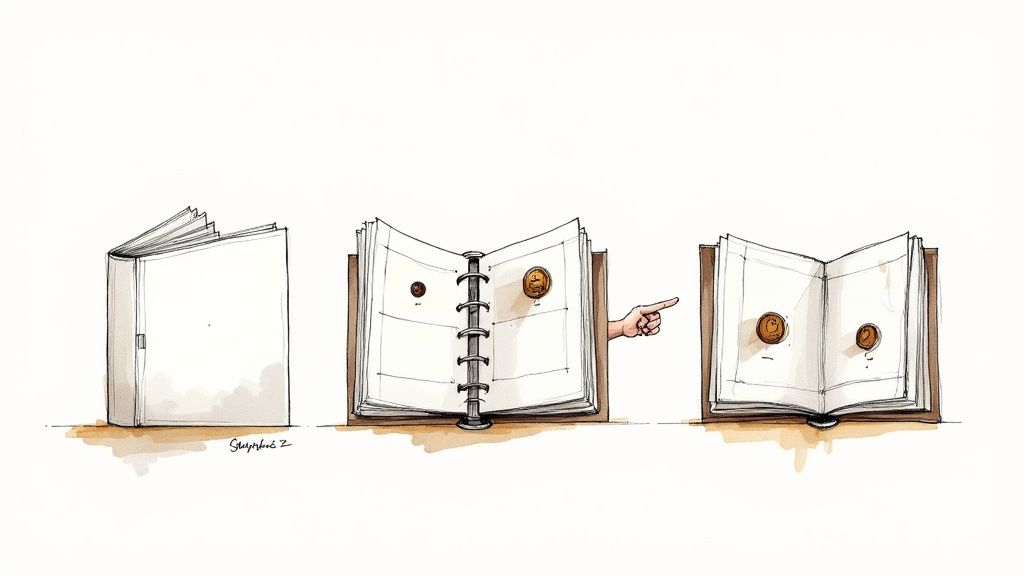
Jumping into the world of coin collecting is a brilliant journey. But one of the first and most important decisions you'll make is how to look after your finds. The right album isn't just a container—it's a critical tool that preserves the condition, and therefore the value, of your coins. Think of it as the difference between a simple shoebox and a secure vault. A well-chosen album is your catalogue, display case, and shield all rolled into one.
I can tell you from personal experience that the material your album is made from matters more than almost anything else. Early on, I stored some circulated pennies in a cheap, generic plastic holder I'd picked up. Within a few years, a sticky green gunk had formed on the coins—a classic sign of PVC damage. That mistake was a hard, and slightly heartbreaking, lesson in the importance of archival-quality materials. It’s a point we’ll definitely come back to.
Understanding Your Options
Before you can pick one, it helps to know the main categories of albums for coins. Each style has a different purpose and suits different types of collectors. Your choice will really shape how you interact with and grow your collection down the line.
- Push-in Folders: These are often the first stop for new collectors, and for good reason. They come with pre-labelled slots for a specific series, like UK 50p coins, which makes them fantastic for completing a set.
- Binder Systems: These offer the most flexibility by far. You use pages with various pocket sizes to store coins in individual 2x2 flips. This is perfect for diverse collections with coins of all different sizes and origins.
- Slab Albums: Built for the big guns. These albums are designed to hold the thick, hard plastic cases (slabs) from professional grading services, protecting your most valuable pieces.
Your album choice directly impacts the long-term health of your collection. Prioritising archival-safe materials from the very beginning will prevent costly and irreversible damage down the road.
Getting to grips with these basic types is your first step. For a deeper dive into specific brands and models we recommend, check out our expert analysis in this guide to the top coin collecting albums for 2025. It'll help you figure out which path is the right one for you.
Matching an Album to Your Collection's Needs
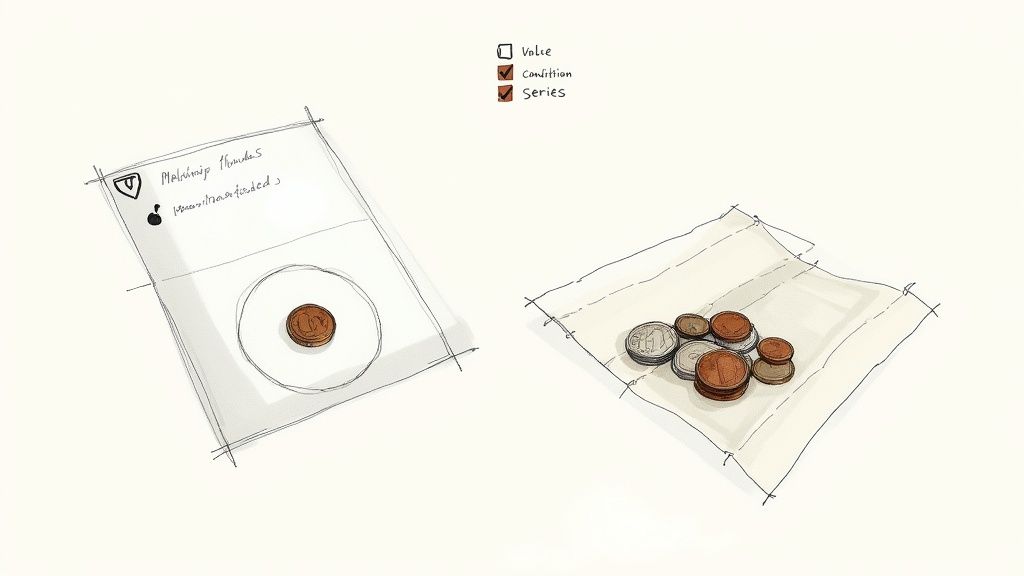
Before you even start looking at albums, it’s worth taking a step back and really thinking about what your collection needs. The best album isn’t about a flashy brand name; it’s about finding the perfect home for your coins and one that suits your own goals as a collector. What works wonders for one person might be completely wrong for another.
First, consider the kind of collection you have, or the one you're hoping to build. Are you methodically completing a specific set, like every UK 50p commemorative issued since 2010? Or is your collection more of a magpie’s nest, full of assorted world coins, ancient pieces, and family heirlooms? A pre-printed folder is ideal for the first scenario, but a flexible binder system is far better for the second.
Valuing Your Coins and Their Condition
The value and condition of your coins play a huge role in choosing the right storage. Not every coin needs to be kept in a fortress, but your most precious pieces absolutely deserve the best protection you can give them.
Let’s look at two very different examples:
- High-Value or Uncirculated Coins: Imagine you’ve got a flawless, uncirculated Sovereign. A coin like that demands archival-grade protection. It needs to be housed in an inert holder and then placed in a top-quality album that shields it from humidity, dust, and other airborne nasties.
- Circulated or Sentimental Coins: Now, picture a jar of old pennies and shillings you collected as a kid. The sentimental value is huge, but their monetary value is probably quite low. A simple, sturdy push-in folder is a fantastic and affordable way to get them organised so you can enjoy the memories, without needing bank-vault security.
The level of protection should always be proportional to the coin's monetary and historical significance. There's no point overspending on storage for common circulated coins, but skimping on protection for a rare piece can be a very expensive mistake down the line.
Aligning Albums with Your Collecting Goals
Finally, think about why you collect. Your personal motivation will point you toward the features you should be looking for in an album. Are you building an investment portfolio, preserving a bit of family history, or creating a hands-on tool for education?
If you’re keeping heirlooms to pass on to your children, long-term archival safety is everything. You'll want materials that won’t degrade or damage the coins over many decades. On the other hand, if you're putting together a collection to teach history, you might prefer an album that lets you see both sides of the coin easily and has space for you to add your own notes.
Taking a moment to think through these points before you shop is the surest way to invest in an album that will serve you and your collection well for years. It guarantees your storage solution becomes a support for your hobby, not a hindrance.
Comparing Coin Album and Storage Styles
In the world of coin collecting, the word ‘album’ can mean a few different things. Picking the right style is one of the most important decisions you’ll make for your collection, as each format strikes a different balance between display, protection, and flexibility.
Let's walk through the main contenders. Getting this right from the start not only saves you time and money but, more importantly, it ensures your coins stay safe for years to come.
Classic Push-In Coin Folders
For so many of us in the UK, the collecting journey started with a classic push-in folder. You know the ones: single-piece cardboard books with pre-cut, labelled holes for a specific series, like the Great British Coin Hunt 50p pieces or a full set of pennies.
Their biggest draw is how simple and affordable they are. They give you a brilliant visual map for completing a set, which is incredibly satisfying. However, their major downside is protection. The coins are left open to the air, humidity, and anything else floating around, which can easily lead to toning or even corrosion over time.
- Best For: Beginners, young collectors, and anyone completing sets of common, circulated coins.
- Pros: Very low cost, simple to use, and fantastic for tracking your progress on a set.
- Cons: Offers almost no real protection from the environment, risking long-term damage.
Think of a folder as a fantastic visual checklist. It's the perfect, motivating tool for building a collection of circulated coins, but it's not where you should keep your valuable or uncirculated pieces.
Versatile Binder Systems
The binder system is easily the most popular and adaptable method for housing a serious collection. The setup is simple: a ringed binder filled with multi-pocket pages. You first secure your coins in individual holders—usually 2x2 cardboard flips with clear Mylar windows—and then you just slide those flips into the pockets.
This modular approach is its greatest strength. You can organise, rearrange, and expand your collection whenever you like, even mixing in pages for different coin sizes or banknotes. As long as you use archival-safe flips and pages, you’re creating a secure, inert home for each coin that offers far better protection than any folder.
For a more detailed look at setting up a truly safe storage system, our guide on comprehensive coin collecting storage has a lot more tips and best practices.
Before we move on, let's quickly break down how these main options stack up against each other.
Coin Storage Solutions At a Glance
This table gives a quick overview to help you see which method might be the best fit for your coins and your goals.
| Storage Type | Best For | Protection Level | Flexibility | Typical Cost |
|---|---|---|---|---|
| Push-In Folders | Beginners & circulated sets | Low | Very Low | £ |
| Binder & Page System | Most collectors, diverse collections | Medium-High | Very High | ££ |
| Slabs & Archival Boxes | High-value & graded coins | Very High | Medium | £££ |
As you can see, there's a clear trade-off between cost, flexibility, and the level of protection you get. For most people, the binder system hits that sweet spot.
Specialised High-Security Storage
When preservation is everything, collectors move to specialised archival boxes and slabs. This is the gold standard for high-value, professionally graded, or historically important coins.
- Slabs: These are the hard, sonically sealed plastic cases used by professional grading services. They offer the ultimate defence against handling and environmental damage. You can even get specialised albums for coins that are really just sturdy boxes with slots perfectly sized to hold these slabs.
- Archival Boxes: These are purpose-built boxes made from totally inert materials. They're designed to hold neat rows of coins in their 2x2 flips or other holders. It’s less about display and all about creating a stable, controlled little world for long-term preservation.
Ultimately, choosing between these styles comes down to what your collection needs. Folders are a fun, accessible starting point. High-security options give you vault-like protection. For the vast majority of collectors, though, the binder system strikes that perfect balance, offering excellent safety, unmatched flexibility, and a wonderful way to view and share your collection.
Why Archival-Safe Materials Are Non-Negotiable
If there’s one piece of advice I can give that will save your collection from ruin, it’s this: not all plastics are created equal. The wrong album won't just store your coins poorly; it can actively destroy them over time. Think of ‘archival-safe’ as your collection’s ultimate insurance policy.
The number one enemy you need to avoid is Polyvinyl Chloride, or PVC. It's a soft, flexible plastic you’ll often find in cheap photo albums and low-quality coin pages. It seems harmless enough, but PVC degrades, especially when it gets warm or is exposed to light. As it breaks down, it actually leaches hydrochloric acid, which is a disaster waiting to happen for the metal in your coins.
The Dangers of PVC Damage
This chemical reaction creates a sticky, greenish film on the coin's surface. At first, you might mistake it for a bit of grime, but this residue is corrosive. Leave it, and it will permanently etch into the coin, causing irreversible pitting and damage. It absolutely destroys a coin's detail, lustre, and, of course, its numismatic value. I’ve personally seen beautiful coins reduced to scrap metal just from being stored in the wrong plastic for a few years.
This is where the choice of storage really matters.
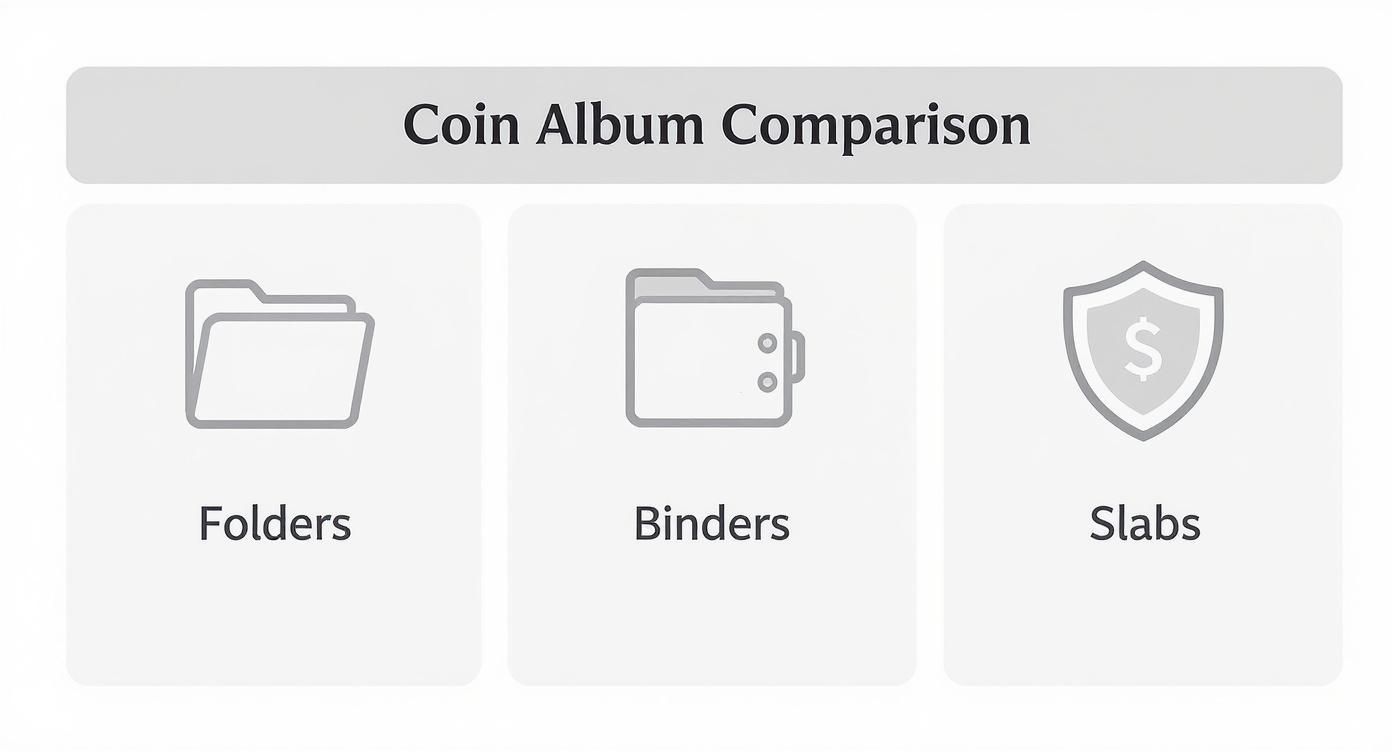
As you can see, while basic folders are accessible, the coins are still exposed to air. Binders and slabs offer far better protection, and that’s almost entirely down to the superior, safer materials used in their construction.
Identifying Safe and Unsafe Plastics
So, how do you tell the good from the bad? When you’re shopping for albums for coins, you need to become a bit of a material detective. The good news is that reputable manufacturers are proud of their safe products and will tell you so.
Look for these key phrases in product descriptions:
- PVC-Free: This is the big one. If a product doesn't explicitly state it's free of PVC, it's safest to assume it contains it.
- Archival-Safe: This is your guarantee that the material is stable and won't degrade or release anything harmful.
- Inert: This means the plastic is chemically non-reactive and won't interfere with the coin's metal.
The safest plastics for long-term coin storage are polyester (often sold under the brand name Mylar) and polypropylene. Both are rigid, stable polymers. They create a secure barrier against contaminants without leaching any nasty chemicals themselves. There's a reason they're the industry standard.
Choosing archival-safe materials is a non-negotiable part of responsible collecting. The few pounds you might save on a cheap, PVC-based album today could cost you hundreds or even thousands in devalued coins later on.
It’s not just about the plastic, either. If you use cardboard flips or paper inserts, make sure they are described as acid-free. Regular paper and cardboard contain acids that will tone and eventually corrode your coins over the decades. By carefully reading product descriptions and prioritising these safe materials, you’re making a conscious choice to preserve the history and value of every coin in your collection.
Properly Storing and Maintaining Your Collection
Once you’ve settled on the perfect albums for coins and your collection is neatly housed, the job isn’t quite over. The final, and arguably most important, step is creating and maintaining the right environment for long-term storage. These simple habits can make all the difference, ensuring your coins stay in pristine condition for generations to come.
The golden rule of coin preservation is simple: stability. Your collection’s worst enemies are drastic, rapid shifts in temperature and humidity. This is precisely why places like attics, garages, and basements are completely unsuitable. They’re notorious for extreme temperature swings and dampness, which can speed up toning, encourage mould to grow on paper inserts, and even kickstart corrosion.
A cool, dry, and dark place is what you’re looking for. Think of a cupboard in a climate-controlled part of your house or a dedicated safe. Remember, consistency is key—it’s more important to avoid the constant cycle of hot-to-cold or damp-to-dry than it is to hit a specific temperature. That’s what truly protects your coins from environmental stress.
Best Practices for Handling and Upkeep
Even with your coins securely in their holders, how you handle them still matters. The natural oils and acids on your skin can easily transfer to the holders and, over time, work their way to the coin's surface. This leads to fingerprints and spots that are next to impossible to remove.
- Handle the Edges: Always pick up a coin holder or slab by its edges. Never touch the clear window or the surface directly over the coin.
- Use Cotton Gloves: For an extra layer of protection, especially when you're moving valuable pieces or putting them into albums, it’s a great idea to wear soft, lint-free cotton gloves.
- Keep an Inventory: A simple spreadsheet or even a notebook is invaluable. Log each coin, its grade, when you bought it, and where it's stored. This not only keeps you organised but is also crucial for insurance purposes.
With its vast history, the UK coinage system is a fascinating area for collectors. Before decimalisation in 1971, the pound was divided into 20 shillings, with each of those worth 12 pence. By 2008, it was estimated that 28.85 billion UK coins were in circulation—a figure that highlights the sheer volume of history collectors like us are working to preserve.
A stable environment isn't just a good idea; it's a requirement for any serious collector. The most expensive album in the world can't protect a coin from being stored in a damp, hot attic for years.
These maintenance steps might seem small, but they are the absolute foundation of responsible collecting. By controlling the environment and handling your collection with care, you’re actively preserving not just its physical state but its historical value too. For more in-depth advice, we’ve put together a detailed guide that covers the crucial aspects of proper storage of coins.
Common Questions About Coin Albums
As you get deeper into organising your coin collection, a few common questions always seem to pop up. Sifting through all the different albums for coins can feel a bit much at first, but getting the right answers is the key to protecting your collection and making smart choices. Let’s tackle some of the most frequent queries that collectors have.
Think of this as your go-to guide for troubleshooting common problems and fine-tuning how you store your coins. Having the right know-how not only keeps your collection safe but also makes the whole hobby that much more enjoyable.
How Can I Tell If an Old Album Has Harmful PVC?
Knowing how to spot potentially harmful PVC in older albums is a vital skill for any collector. Thankfully, there are a few tell-tale signs you can look out for, some of which are noticeable long before any damage is done.
First, just use your nose. Albums containing PVC often give off a very distinct, plasticky chemical smell—a lot like a new shower curtain. Another giveaway is the feel of the plastic itself. If it feels unusually soft, a bit oily, or far too flexible compared to safer, more rigid plastics like Mylar, be wary. Over time, you might also see the PVC plastic turning yellow and becoming brittle.
- A strong, chemical "shower curtain" smell.
- Plastic that feels soft, sticky, or oily.
- Visible yellowing or brittleness in the pages.
- A greenish film or residue appearing on the coins themselves.
The most obvious sign, sadly, is when you can actually see the damage. If you spot a sticky green residue forming on a coin's surface, that's the acid leaching out from the PVC. If you see this, you need to get your coins into an archival-safe holder straight away to stop any further corrosion in its tracks.
Is It Safe to Use Photo Albums for Coins?
This is a question I hear all the time, and my advice is always the same: avoid it at all costs. While a photo album might look a bit like some coin album pages, they are built for a completely different purpose.
Most photo albums, especially the older or cheaper ones, are made with PVC and other chemicals that are almost guaranteed to damage the metal of your coins over time. They simply aren't designed for long-term chemical stability. What’s more, they aren't built to hold the weight or specific shapes of coins, so your collection won't be held securely and could easily fall out or get damaged. It's always best to stick with products made specifically for numismatic storage.
What Is the Best Way to Label Coins in a Binder?
Clear, consistent labelling is what separates a simple pile of coins from a well-organised, cherished collection. If you're using a binder system with 2x2 cardboard flips, the best approach is to use the little acid-free paper inserts they come with.
For every coin, I recommend jotting down the key details. You can write this neatly with an archival-quality pen, or even design and print your own custom inserts for a really clean, professional look. This doesn't just help you identify coins at a glance; it creates a fantastic permanent record of your collection.
Essential info to include:
- Country
- Denomination (e.g., 50p, Half Crown)
- Year and any mint mark
- Grade or condition (if you know it)
- Purchase date and price (great for your own records)
Making this a habit transforms your album from a simple storage box into a detailed, personal catalogue of your collecting journey.
At Cavalier Coins Ltd, we provide a wide range of archival-safe albums and storage solutions to keep your collection secure for years to come. Explore our selection and find the perfect home for your coins at https://www.cavaliercoins.com.