
A coin collector's album is so much more than just a place to keep your coins. It’s a personal museum, carefully designed to protect, organise, and properly display your historical treasures.
Think of it this way: you wouldn't keep precious family photos chucked in an old shoebox, would you? You’d put them in a dedicated photo album. It's the exact same principle for your coins. A quality album safeguards them from damage and handling, transforming a casual hobby into a serious, structured pursuit.
Why Your Collection Deserves a Proper Home
Every single coin you own, whether it's a common decimal piece or a rare commemorative, is a tiny slice of history. Leaving these items loose in a tin or a drawer is a recipe for disaster. It exposes them to scratches, grubby fingerprints, and the slow creep of oxidation, all of which will ruin their condition and hammer their value.
A proper coin collector's album is the first, most crucial step in levelling up your collection from a pile of loose change to a curated gallery.
This journey from casual keeper to serious collector really begins with preservation. An album provides a safe, structured home where each coin has its own little pocket, safe from the oils on our skin and all the contaminants floating in the air. This protection is absolutely fundamental to maintaining a coin's original lustre and intricate details for years—and even decades—to come.
Beyond just keeping them safe, an album brings a sense of order and narrative to what you've gathered. Imagine trying to read a great novel by picking out random pages. It just wouldn't work. It’s the same with coins. An album lets you arrange them logically, perhaps by denomination, year of issue, or a specific historical theme that interests you.
A well-organised album does more than just hold coins; it tells a story. It visually maps out your collecting journey, highlighting the pieces you've found and clearly showing the gaps you still need to fill.
This organisational aspect is an incredible motivator. It transforms the hunt for new coins from a random search into a focused quest with clear goals. You're no longer just accumulating metal discs; you're completing a set, chronicling a monarch's reign, or assembling a portfolio of miniature art.
Let’s quickly summarise the main advantages of giving your coins a proper home.
Key Benefits of a Dedicated Coin Album
| Benefit | Description |
|---|---|
| Protection | Acts as a vital shield against physical damage like scratches and the slow decay from environmental factors. |
| Organisation | Provides a logical framework to arrange your collection, making it easy to see what you have and what you're missing. |
| Appreciation | Presents your coins in a clean, accessible format that enhances your own viewing pleasure and makes sharing your hobby a joy. |
Ultimately, investing in a good album is about respecting the coins and the history they represent. It’s the difference between simply having coins and truly collecting them.
Choosing Materials That Preserve Your Coins
When you’re picking out a coin collectors album, the materials it’s made from aren't just a minor detail. Far from it. They are the single most important factor for the long-term health and safety of your collection. Think of your album as the guardian of your coins; choosing the wrong one can cause heartbreaking, irreversible damage over time.
The number one enemy to avoid is PVC (Polyvinyl Chloride). You'll find it in many cheap, flexible plastics, but it’s a ticking time bomb for coins. Over the years, PVC breaks down and can release hydrochloric acid. This nasty stuff leaches onto your coins, creating a sticky, green film that causes permanent corrosion and effectively wipes out their numismatic value.
A good coin album is an investment in preservation. Opting for cheap materials containing PVC is a false economy that puts your entire collection at risk. The safest choice is always archival-quality, chemically inert plastics.
To make sure your coins stay in pristine condition for generations, you absolutely must seek out albums made with safe, archival-grade materials. These are plastics that have been rigorously tested and are known to be completely stable for decades.
Safe Materials for Long-Term Storage
The best albums use plastics that are chemically inert, which is just a fancy way of saying they won't react with the metals in your coins. The two most trusted materials in the numismatic world are, without a doubt:
- Mylar (Polyester): Often seen as the gold standard, Mylar is a strong, crystal-clear material that offers brilliant protection without breaking down.
- Polypropylene: This is another excellent archival-safe option. Polypropylene is a rigid plastic that is completely free of harmful acids and the softeners that cause so many problems.
Both Mylar and polypropylene create a secure home for your coins, shielding them from fingerprints, dust, and—most importantly—chemical damage. If you'd like to dive deeper into storage solutions, you can explore this detailed overview of coin collecting storage options.
This infographic breaks down the core benefits of using a properly constructed coin collectors album.

As the visual shows, all the benefits stem from the central purpose of protection, which is directly tied to the materials you choose.
To help clarify the differences, here’s a quick comparison of the materials you’re likely to encounter.
Coin Album Material Safety Comparison
| Material | Archival Safety | Best Use Case | Potential Risks |
|---|---|---|---|
| Mylar (Polyester) | Excellent | High-value coins, long-term archival storage. | None. Considered the gold standard for safety. |
| Polypropylene | Excellent | Album pages, rigid holders, and storage boxes. | None. A stable, acid-free, and inert plastic. |
| Polystyrene | Good | Hard plastic capsules ("slabs") for single coins. | Can be brittle and crack if dropped. |
| PVC (Polyvinyl Chloride) | Very Poor | Avoid at all costs. | Releases acids, causes green residue and corrosion. |
Ultimately, sticking with Mylar or Polypropylene is the surest way to guarantee your collection remains safe and sound.
Choosing the Right Holder Type
Beyond just the type of plastic, the format of the holder itself offers different levels of protection. Your choice here will often come down to the value and rarity of the coin you're trying to house.
-
Cardboard 2x2 Flips: These are wonderfully budget-friendly and are perfect for organising bulk collections or lower-value coins. They're simple: a cardboard holder with a Mylar window. You just pop the coin inside and staple the holder shut.
-
Rigid Capsules: For your most valuable or treasured coins, hard plastic capsules are the absolute best choice. These are two-piece containers that snap together, completely encasing the coin in a protective, airtight shell that prevents any physical contact or exposure to the elements.
Finding the Right Album Format and Style
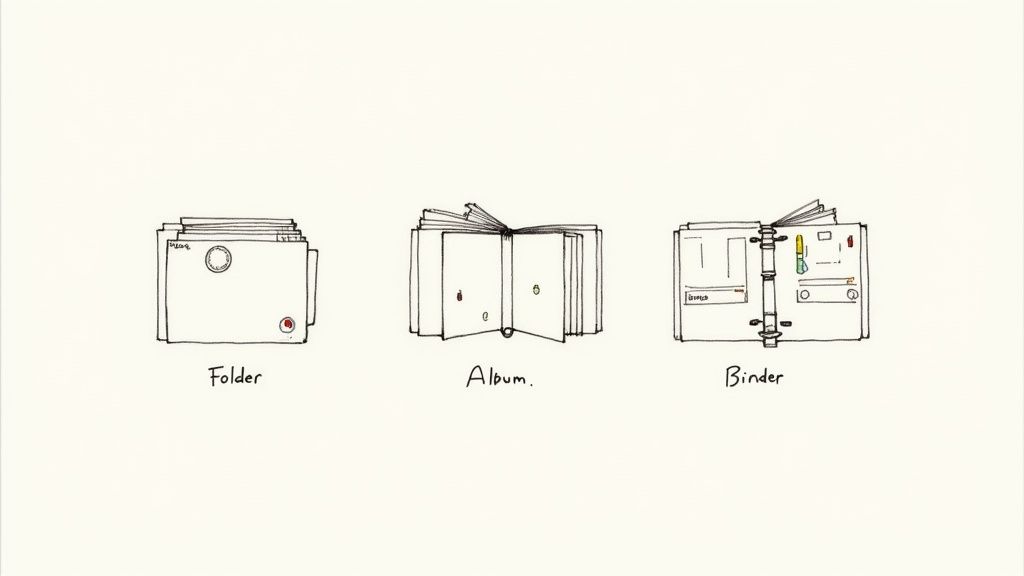
Choosing the right coin album is a lot like picking the perfect frame for a piece of art. It’s not just about storage; the format you choose should protect your collection while perfectly matching your own collecting style and goals. Just as different artists need different canvases, different numismatists need different albums.
There are three main formats to think about, each with its own clear advantages. Getting to grips with what makes them different will help you find the one that best suits the collection you’re building today, and the one you dream of having in the future. Let's dive into the options.
Folders for Simplicity and Beginners
For anyone just starting their journey, coin folders are often the perfect entry point. Think of them as a simple, introductory workbook for your collection. Folders are usually made from sturdy card and have pre-labelled, die-cut holes designed for specific coin sets.
You simply push your coins into their designated slots, which makes it incredibly easy to see your progress at a glance. They’re absolutely ideal for popular circulating series, like the commemorative 50p or £2 coins.
Their main benefits are:
- Affordability: Folders are easily the most budget-friendly option you'll find.
- Simplicity: The push-in design means you don’t need any extra tools or holders.
- Goal-Oriented: They give you a clear, visual map of which coins you still need to hunt down.
The trade-off is that folders only let you see one side of the coin and offer very basic protection against the elements. This makes them best for common, circulated coins rather than valuable uncirculated pieces.
Albums for a Refined Display
When you feel you’re ready for a more permanent and protective solution, albums with slipcases are the natural next step. These are much more like hardback books, giving your collection a sophisticated and uniform look on a bookshelf. The coins are typically housed in individual slides that fit into pre-cut pages, allowing you to view both sides.
An album elevates your collection, presenting it in a more curated and protected format. It’s the difference between a casual scrapbook and a professionally bound portfolio—giving your coins the respect they deserve.
These albums provide far better protection from dust and everyday handling than folders do. You can explore more about the best ways of displaying your coin collection in our detailed guide.
Binders for Ultimate Flexibility
For the collector whose interests are diverse and always changing, binders offer the most freedom. A binder is essentially a blank canvas. You buy the binder itself and then fill it with whatever type of archival-safe pages you need.
This customisable approach is perfect for eclectic collections that might include:
- Coins of all shapes and sizes from around the world.
- Banknotes and other numismatic items.
- Professionally graded coins in their protective slabs.
This format lets you add, remove, and reorganise pages as your collection evolves, ensuring your coin album can grow right alongside your passion.
How Albums Protect the Value of Rare Coins
When you're dealing with rare and high-value coins, a proper coin collector's album is far more than just a storage solution—it's a critical tool for preserving its worth.
Think of it this way: would you keep a valuable painting in a dusty attic, or would you display it in a climate-controlled gallery? The album serves as that gallery, protecting your investment from the subtle but destructive forces of the environment.
A high-quality, archival-safe album shields your coins from fingerprints, dust, moisture, and chemical reactions that can slowly eat away at a coin's lustre and fine details. This protection is everything when it comes to maintaining a coin's grade, which is directly tied to its market price.
On top of that, a specialised album gives you a system for organising and tracking these valuable pieces. A tidy, well-documented collection is always going to be more attractive to other collectors and dealers should you ever decide to sell.
Protecting Modern Rarities
This principle is even more critical for modern rarities, where condition is king. Take the highly sought-after 2009 Kew Gardens 50p coin. With a tiny mintage of just 210,000, it’s one of the rarest modern coins in the UK, and its value is almost entirely dictated by its state of preservation. It's not uncommon to see prices soar past £150 for a pristine example.
For a coin like this, even the tiniest scratch or a slight loss of its original mint lustre—things that can easily happen with improper storage—can slash its value significantly.
An album acts as a personal vault, safeguarding the coin's physical integrity. For any serious investor, keeping a coin in its uncirculated or proof state is non-negotiable, and the right album is your first line of defence.
This careful preservation also becomes a part of the coin's story, or provenance. A coin that has been meticulously housed in an archival-quality album from day one has a much stronger history than one that’s been rattling around in a drawer.
If you're serious about maximising the value of your collection, learning how to get coins graded is a logical next step, and it all starts with perfect storage.
Organising Your Collection of Modern UK Coins
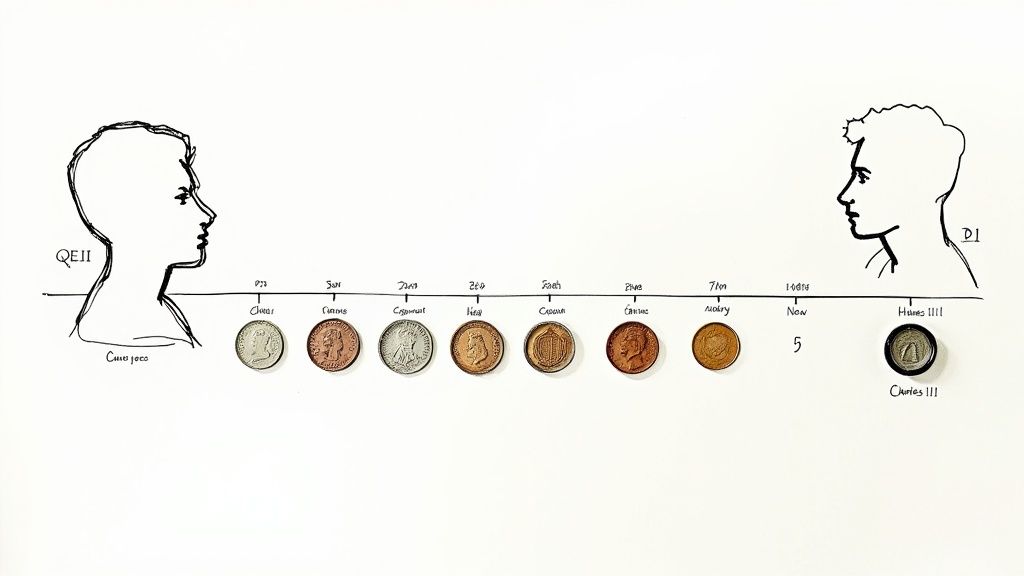
The world of UK coinage is going through some historic changes, making a proper coin collectors album more essential than ever. With the end of Queen Elizabeth II's extraordinary reign, coins from her final years have suddenly become highly sought-after pieces of history.
An album gives you the perfect framework to lay out a clear timeline. It lets you neatly separate the last of the QEII coins from the very first issues showing the new portrait of King Charles III. This kind of organisation is vital if you want to keep track of the recent rarities that every collector is chasing.
A well-structured album lets you see at a glance which coins you’re missing from a set. It also beautifully showcases the historic handover between monarchs, turning what might look like a random pile of change into a tangible story you can hold in your hands.
Documenting a Royal Transition
Sorting your collection by monarch and year is a fantastic way to appreciate this period of change. A dedicated coin album allows you to create distinct sections for each ruler, highlighting the key dates and designs from their time on the throne.
This approach is especially helpful for identifying and protecting scarce coins. For example, the 2022 £1 coin is a tough one to find, with only 7.735 million minted. That makes it the rarest £1 coin currently in circulation. Collectors are particularly keen on this piece as it's the last £1 to feature Queen Elizabeth II. You can learn more about the scarcity of modern £1 coins and why collectors seek them out.
Using a coin collectors album transforms your hobby from simple accumulation into a curated exhibition. It provides a dedicated space for scarce coins, protecting them while highlighting their significance within your collection.
By giving these modern rarities a home of their own, you not only preserve their condition but also elevate their status. Your album becomes more than just storage; it’s a chronicle of a pivotal moment in British numismatic history, ready to be enjoyed for years to come.
Future-Proofing Your Album Selection
The world of coin collecting doesn't stand still, and your album choice needs to keep up. The hobby today is increasingly about the chase for modern rarities—coins with incredibly low mintage figures that generate a huge amount of excitement, sometimes before they even hit circulation. This shift has a massive impact on the kind of coin collectors album you should be looking at.
With so much anticipation around these ultra-rare coins, collectors aren't just sifting through their change anymore. They're actively hunting down coins in perfect Brilliant Uncirculated (BU) condition, often buying them in official sets straight from the mint. This calls for a totally different kind of album.
Accommodating Modern Coin Formats
Those traditional albums with simple push-in slots just weren't made for these premium coins. To protect their flawless condition and, let's be honest, their investment potential, modern collectors need albums that can hold coins already sealed in their protective capsules. This really marks a change in collecting, from a straightforward hobby to a serious investment strategy.
Your album stops being just a storage box; it becomes a key part of preserving the coin's value. Choosing an album that can take encapsulated coins is absolutely vital for protecting their future worth, which is often magnified by how few of them were made.
The right album acts as a vault for modern treasures. It understands that keeping a coin in its original, untouched state is just as important as the coin itself, especially for these low-mintage issues.
Take the hype around the projected 2025 Bee £1 coin, for example. It's expected to have an unbelievably low mintage of just 170,000. That kind of scarcity creates enormous demand for coins in pristine condition, which are usually only found in official sets. You can even watch a video discussing the rarity of the Bee £1 coin and its impact on collectors.
At the end of the day, "future-proofing" your collection is all about picking an album that sees these trends coming. By investing in a system that supports modern formats like capsules and official sets, you're making sure your prized possessions are safe and sound for years to come.
Frequently Asked Questions
Getting into the world of coin collecting is exciting, but it naturally brings up a few questions. This is especially true when you're trying to figure out the best way to keep your coins safe while still being able to enjoy them.
Here are a few of the most common queries we hear about choosing and using a good coin collectors album.
What Is the Best Type of Coin Collectors Album for a Beginner?
For anyone just dipping their toes in, a simple coin folder is a fantastic and affordable starting point. You’ll find folders with pre-labelled slots for specific sets, like the Great British Coin Hunt for 50p pieces. They’re brilliant for learning about different designs and giving you that satisfying feeling of filling in the gaps.
Once your collection starts to grow, or you acquire more valuable pieces, you’ll probably want to graduate to a binder system. Using a proper binder with archival-safe pages gives your coins much better long-term protection and the freedom to organise your collection however you see fit.
It's always a good idea to start simple. A basic folder helps you get into the habit of organising your coins before you invest in a more permanent and flexible album system for your prized pieces.
Should I Clean My Coins Before Putting Them in an Album?
The short answer is almost always no, never clean your coins. Trying to polish or scrub them, no matter how gently, can create tiny, microscopic scratches or strip away the natural patina that develops over decades. This kind of damage can slash a coin's numismatic value, often for good.
The best thing you can do is handle your coins carefully by their edges to keep oils from your skin off the surfaces. Pop them straight into your album just as you found them to preserve their condition and value for years to come.
Can I Use a Regular Photo Album for My Coins?
We strongly advise against using a regular photo album for your coin collection. The problem is that many standard photo albums are made with plastics containing PVC and other chemicals that are absolute poison for coins.
Over time, these plastics break down and can release harmful acids, leaving a sticky green residue on your coins and causing irreversible corrosion. It’s always worth investing in an album made specifically for coin collecting, using materials confirmed to be archivally safe, such as Mylar or polypropylene.
How Should I Store My Coin Albums to Keep Them Safe?
To keep your collection in top shape for the long haul, store your coin albums upright on a shelf, just like you would with books. This simple trick stops the weight of the coins from pressing down on the pages and potentially causing damage over the years.
The perfect storage spot is cool, dry, and dark, with a steady temperature and low humidity. Try to avoid places like lofts or basements where big temperature swings can cause condensation, mould, and other environmental headaches.
Ready to give your collection the home it deserves? Explore the wide range of archival-quality albums and storage solutions at Cavalier Coins Ltd. Find the perfect fit for your treasures at https://www.cavaliercoins.com.