
Welcome to the incredibly rewarding world of numismatics, where every single coin tells a story. Starting your journey into coin collecting is all about moving beyond just stashing away spare change and learning how to build a collection with real purpose and passion. It's a wonderfully accessible hobby that neatly blends history, art, and the pure excitement of discovery.
Starting Your Coin Collection Without Getting Overwhelmed
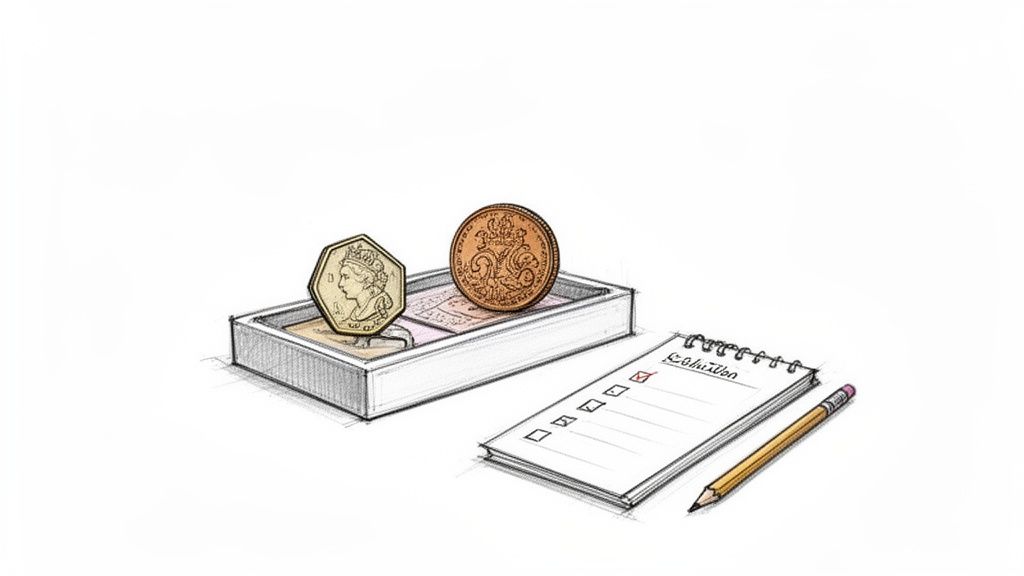
It’s easy to see why so many people are drawn to coin collecting, a pastime with deep roots in the UK that’s often called the "Hobby of Kings." The appeal is universal, whether it's the thrill of finding a rare commemorative 50p in your change or the quiet satisfaction of completing a set of Victorian pennies.
But let's be honest, the sheer volume of coins out there can feel a bit daunting at first. The secret to enjoying this pursuit without feeling lost is to start with a clear focus. A defined goal is what transforms a random pile of metal into a truly meaningful collection.
Defining Your Collection’s Purpose
Before you even think about buying your first coin, take a moment to ask yourself what really interests you. A focused collection is far more satisfying to build and, in the long run, often becomes more valuable. Without a theme, it's far too easy to make impulsive buys that don't quite fit with a larger goal.
If you need some inspiration, consider these popular starting points for new collectors in the UK:
- By Monarch: You could set yourself the challenge of collecting one of every coin denomination issued under Queen Elizabeth II.
- By Denomination: A fantastic choice is collecting the various commemorative 50p or £2 coins, which are celebrated for their diverse and artistic designs.
- By Historical Period: Perhaps you're fascinated by a specific era, like Roman Britain or the Georgian period.
- By Metal Type: Some collectors concentrate on gathering pre-1947 silver coins, which hold an intrinsic value beyond their face value.
A well-defined theme acts as your roadmap. It guides your purchasing decisions, helps you identify what to look for, and provides a clear sense of accomplishment as you fill the gaps in your set.
Matching Your Goals to Your Budget
Coin collecting is a brilliant hobby because it can be adapted to almost any budget. You absolutely do not need a fortune to get started; you just need a plan. If your funds are limited, hunting through your daily change or buying bags of mixed world coins can be a fantastic and inexpensive way to begin.
For those with a bit more to spend, visiting a local coin dealer or browsing online auctions opens up a world of higher-quality pieces. The important thing is to set realistic expectations. Decide on a monthly or quarterly budget and do your best to stick to it. This simple step prevents the hobby from becoming a financial strain and keeps it enjoyable.
This disciplined approach will also help you sidestep some of the most common pitfalls new collectors face. For more on this, you can learn about the seven rookie errors to avoid when collecting coins and make sure your journey gets off to a flying start. A thoughtful strategy, one that combines your passion with a dose of practicality, is the foundation for building a collection you’ll be proud of for years to come.
How To Choose a Focus and Find Your First Coins
Deciding what to collect is your first, and arguably most exciting, challenge. With a clear focus, you turn a simple hobby into a captivating quest. Without one, it's all too easy to end up with a random jumble of coins that don't tell a cohesive story.
Think of your collection as your own personal museum exhibit. What story do you want it to tell? Are you fascinated by a specific historical period, like the long and influential reign of Queen Victoria? Or maybe the bold, modern designs of today’s commemorative coins catch your eye. The real secret to long-term enjoyment is choosing a theme that genuinely excites you.
Coin collecting has incredibly deep roots in the UK, capturing imaginations for generations with its unique blend of history, art, and value. According to a Royal Mint survey of 2,000 UK adults, a staggering 83% have collected something in their lifetime, with 57% still at it today. Coins were the second most popular item, chosen by over a third of everyone asked. You can dig into more of their findings in this insightful report on UK collecting habits.
Popular Collecting Paths for Beginners
If you're not sure where to begin, don't worry. Here are a few popular and accessible themes that are perfect for getting started.
- Collecting by Country: Focussing on British coins is a fantastic starting point. You could aim to gather a complete date run of old pennies or explore the rich variety of pre-decimal silver shillings. It’s a great way to get to grips with our own history.
- Focus on Modern Issues: The UK is famous for its ever-changing commemorative currency. Collecting the different 50p and £2 coin designs has become a modern-day treasure hunt, and you can start just by checking your change.
- A Journey Through History: Why not pick a monarch or an era that fascinates you? Assembling a set of coins from the reign of George VI, for instance, provides a tangible link to Britain during the Second World War.
- The Thrill of the Hunt: Some collectors get their buzz from hunting for error coins—pieces with minting mistakes like mis-strikes or wonky inscriptions. These unique coins are often scarce and highly prized by those in the know.
Your chosen theme is your guide, not a rigid set of rules. It helps you make smart decisions, but don't ever be afraid to pick up an interesting coin that falls outside your main focus if it speaks to you.
Where To Find Your First Coins
Once you have a theme in mind, the hunt begins! Your first coins don't have to come from a specialist dealer; in fact, they're often hiding in plain sight.
The easiest way to start is to become a "change checker." Seriously, just scrutinise the coins you get back in shops. You’d be amazed at what turns up, from old pennies to sought-after commemorative 50p pieces like the famous Kew Gardens design. It’s a completely free and exciting way to kick-start your collection.
Another brilliant source for hidden gems is your local car boot sale or flea market. Keep an eye out for old tins of coins that people are clearing out. Yes, you’ll have to sift through a lot of very common stuff, but the thrill of finding a rare date or a silver coin for just a few pence is absolutely unmatched.
Sourcing Specific Coins Online
While hunting in the wild is fun, you'll eventually need to source specific coins to fill those annoying gaps in your collection. This is where the internet becomes your best friend.
Online coin dealers offer a massive inventory of graded and authenticated coins, which gives you confidence in what you're buying. For those who enjoy a bit more excitement, platforms like eBay host countless coin auctions every week. You can bid on everything from bulk lots of world coins to rare, individual pieces. Just be sure to check a seller’s feedback and compare prices to avoid getting carried away and overpaying.
Getting The Right Tools to Protect Your Collection
Once you start finding coins you want to keep, the game changes. Your immediate priority is no longer the hunt, but the protection of your finds. How you handle and store your collection is absolutely critical—it’s the single biggest factor in preserving a coin’s condition and, by extension, its long-term value.
Think of this as your practical shopping list for the essential numismatic supplies that will safeguard your treasures.
Every single time you touch a coin with your bare hands, you leave behind oils and acids from your skin. It might not look like much at first, but over time, these substances can cause corrosion and leave permanent fingerprints, effectively ruining a coin's surface. So, the first and most important rule is to always handle coins by their edges, never their faces.
Your Essential Starter Kit
To handle your coins like a seasoned pro from day one, you only need a few basic items. These are cheap as chips but make a world of difference in protecting your investment.
- Soft Cotton Gloves: Your first line of defence. A simple pair of lint-free cotton gloves prevents your skin's oils from ever touching the coin's delicate surface.
- A Quality Magnifying Glass: Known as a loupe in the numismatic world, this tool is vital. A loupe with 5x to 10x magnification is perfect for spotting tiny mint marks, checking for wear, and appreciating intricate designs without straining your eyes.
- A Soft, Lint-Free Cloth: This is not for cleaning your coins—a massive mistake we'll cover later—but for providing a safe surface to place them on. A microfibre cloth creates a soft, non-abrasive mat to work on.
This flowchart shows the different ways you might find coins, and you’ll notice every path leads to the same outcome: you've got a coin that needs proper care.
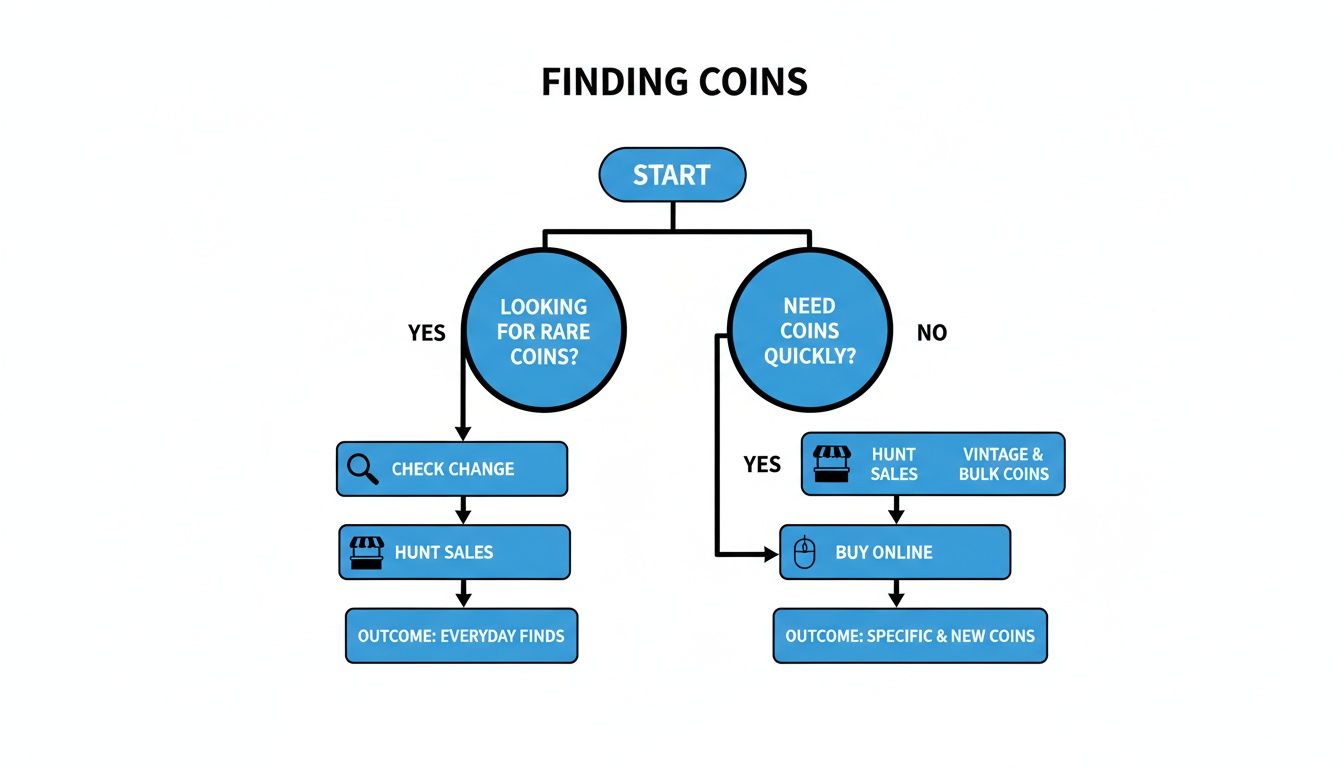
Whether you’re pulling a keeper from your pocket change or buying a graded piece online, you need to be ready to protect it immediately.
Choosing The Right Storage
Storing your coins properly is all about protecting them from the elements—moisture, air, and physical knocks. There are several options out there, each with its own pros and cons depending on your collection and budget.
One non-negotiable rule: avoid any storage solution that contains PVC (polyvinyl chloride). Over time, this plastic breaks down and releases chemicals that create a sticky green gunk on your coins, causing irreversible damage. Always look for products labelled "archival-safe" or "PVC-free."
So, what are the best options for a new collector? The table below breaks down the most common choices.
Comparing Coin Storage Options for New Collectors
This quick guide compares the go-to storage methods, helping you match the right solution to your collection's needs and value.
| Storage Type | Cost | Protection Level | Best For |
|---|---|---|---|
| Cardboard 2x2s | Low | Basic | Storing bulk circulated finds and getting started on a tight budget. |
| Coin Flips (Mylar) | Low | Good | Temporarily storing new purchases or organising coins with notes. |
| Coin Albums/Folders | Medium | Fair | Building date-and-mint sets and enjoying a visual display of your progress. |
| Airtight Capsules | High | Excellent | Protecting your most valuable, uncirculated, or favourite coins individually. |
Ultimately, the best choice often comes down to your collection's focus and value. For a deeper dive, our guide on coin collecting storage solutions offers detailed comparisons.
Beyond the specifics of coin holders, it helps to understand the general principles for looking after valuables. The advice on how to store antiques often touches on similar concerns about climate and security.
Investing in the right tools and storage from the very beginning is one of the smartest moves you can make. It sets you up for success and ensures the coins you love today will still be in great shape for years to come.
A Practical Introduction to Coin Grading
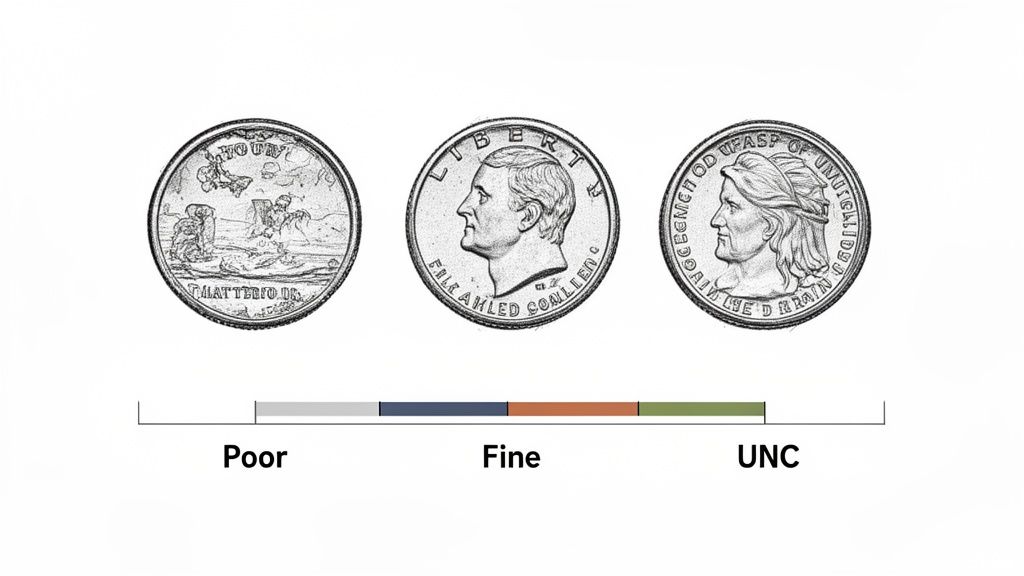
Ever wondered why one old penny is worth just a few pence, while another that looks almost the same can fetch hundreds of pounds? The secret almost always lies in its condition, a concept we call grading in the coin collecting world.
Getting your head around the basics of coin grading is probably the single most important skill you can learn. It's what separates a casual enthusiast from a serious, savvy collector. This knowledge lets you make smarter purchases, understand a coin's real market value, and dodge the classic beginner's mistake of paying too much for a coin in poor shape.
Grading isn't just about spotting a few scratches; it's about training your eye to see a coin the way an experienced numismatist does. It’s a fantastic time to get started, too. The UK coin market continues to offer exciting opportunities, blending a rich history with smart investment potential.
Across Europe, there are over 145 billion coins in circulation, valued at more than €32 billion. The UK’s slice of this is consistently boosted by popular commemorative issues, which often see double-digit growth. We've even seen a 26% jump in participation from millennials since 2021, showing a real revival in the hobby. You can delve deeper into these market trends and their findings.
The UK Coin Grading Scale Explained
Here in the UK, we traditionally use a descriptive grading system. You might come across other scales, like the American Sheldon scale that runs from 1 to 70, but getting to grips with these common British terms will give you a solid foundation for assessing almost any coin you'll find.
Here are the key grades, starting from the most worn and working our way up to perfection:
- Poor (P): The coin is extremely worn, to the point where the date and main features are barely legible. It likely has significant damage and is usually only of interest if it's an exceptional rarity.
- Fair (F): You can make out the date, but most of the design has been worn flat. Think of this as a "filler" for your collection until you can track down a better example.
- Good (G): The main design is outlined, but all the finer details have vanished. Crucially, all lettering and the date should still be readable.
- Very Good (VG): The key features are clearer and some detail is visible, but you can see considerable wear across the whole coin.
- Fine (F): Around 50% of the fine detail is still there, but the coin clearly shows signs of being used. The highest points of the design will be worn smooth.
- Very Fine (VF): More detail survives, with noticeable but not excessive wear. It's been in circulation for a moderate amount of time but was looked after.
- Extremely Fine (EF): This coin shows only light wear, and only on the very highest points of the design. You'll often see much of the original mint lustre remaining.
- Uncirculated (UNC): Absolutely no signs of wear. It might have picked up minor "bag marks" from bumping against other coins at the mint, but it has never been in circulation.
- Brilliant Uncirculated (BUNC): A perfect coin, looking exactly as it did the moment it was struck. It boasts full, brilliant lustre with no imperfections visible to the naked eye.
For an even more detailed look at the nuances, our comprehensive coin grading guide for beginners and experts is an excellent place to go next.
What To Look For When Grading a Coin
Grading is a skill that you build with time and practice. When you first pick up a coin to assess it, your attention should immediately go to three key areas: wear, surface marks, and lustre.
1. Identifying Wear
This is the most critical factor. Always check the high points of the design first—these are the bits that get worn down fastest when a coin is rattling around in pockets and tills. On a British penny, for instance, you’d look at the monarch's hair, the top of their crown, and the details on Britannia's helmet. If those areas are flat and smooth, you know the coin has seen a lot of action.
Pro Tip: Tilt the coin under a good, bright light. The light will catch on the worn, flat areas, making them stand out clearly against the parts of the design that still have detail.
2. Assessing Surface Marks
Next, scan the coin for any damage that isn't from normal circulation. This could be anything from deep scratches and dinks on the rim to signs of cleaning, which often appear as a series of very fine, parallel lines across the surface. While a few minor bag marks are perfectly acceptable on Uncirculated coins, any significant scratches or damage will always pull the grade—and the value—down.
3. Evaluating Lustre
Lustre is that beautiful, satiny sheen a coin has when it’s fresh from the mint. It creates a sort of "cartwheel" effect of light that moves as you rotate the coin. A coin loses its lustre very quickly once it enters circulation, so if you can still see it, that's a powerful clue you're holding a higher-grade coin, usually an EF or better.
Where To Actually Buy and Trade Coins
Alright, you've got your essential tools sorted and you're getting a feel for grading. Now for the really exciting part: actually getting out there and building your collection. The hunt for new pieces is a genuine thrill, and knowing where to look is the key to tracking down quality coins at fair prices.
Your local coin shop is often the best place to start. Nothing beats building a relationship with a knowledgeable dealer; they can offer priceless guidance, keep an eye out for coins on your wish list, and, most importantly, let you see coins in person before you buy. That hands-on experience is something you just can't get online.
Navigating Online Marketplaces and Dealers
It's no secret that a huge chunk of the coin market now lives online. This opens up an incredible world of choice, but it also means you need to be a bit more careful.
You'll find two main sources for coins online:
- Dedicated Online Dealers: These are professional numismatists running their own websites. They tend to offer high-quality, accurately graded coins and are a good bet for solid customer service. Buying from a reputable online dealer brings a lot of peace of mind.
- Auction Sites like eBay: Platforms like eBay can be a treasure trove, with everything from common coins to fill gaps in a set to exceptionally rare pieces. But, and it's a big but, it’s a "buyer beware" environment. You absolutely must learn how to vet sellers properly.
When you're on an auction site, always scrutinise the seller's feedback score and read their recent reviews. Look for clear, high-resolution photos of the actual coin you're bidding on—not stock images. Vague descriptions or blurry pictures are massive red flags.
The Buzz of Coin Fairs and Auctions
For a more traditional and social experience, you really can't beat visiting a coin fair or attending a live auction. These events are fantastic for learning. You get to speak with dozens of dealers, see a huge variety of coins up close, and get a real feel for the market.
Coin fairs bring dealers from all over the country together under one roof. It’s the perfect place to browse, ask questions, and maybe even find a bargain. You'll often find interesting items that aren't listed online, and there's usually a bit of room for some friendly haggling.
Live auctions, whether in-person or online, are where many of the most sought-after coins change hands. The key to successful bidding is simple: set your maximum price beforehand and stick to it. It's incredibly easy to get swept up in the heat of a "bidding war" and end up paying far more than a coin is worth. Do your homework, know the coin's value, and bid with your head, not your heart.
Insider Tip: When you're at a coin fair, don't be afraid to ask dealers if you can look through their "stock books." This is where they often keep less expensive but still fascinating coins that aren't out on display. It's a fantastic way to unearth some hidden gems.
Joining Clubs and Online Forums
Sometimes the best "deals" you'll find aren't about money at all—they're about knowledge and camaraderie. Joining a local coin club or getting involved in an online numismatic forum connects you with other collectors who are just as passionate about the hobby as you are.
These communities are invaluable for a few reasons:
- Sharing Knowledge: You can get a second opinion on a potential purchase or ask for help identifying that one mysterious coin you can't figure out.
- Trading Opportunities: Many collectors are happy to trade their duplicates to help you fill a gap in your set, and you can do the same for them.
- Building Trust: You’ll quickly learn who the respected dealers and collectors are, which is crucial for navigating the hobby safely.
This community spirit is really what the hobby is all about. In fact, it's a passion shared by many; over half of Brits (57%) actively collect something, and coins are cherished by more than a third of them. This fascination is what drives the market for pieces like the 2009 Kew Gardens 50p, whose tiny mintage saw its value rocket from 50p to over £150. You can discover more insights into why Brits love collecting on The Royal Mint's website.
Ultimately, the best approach is a blended one. Use online dealers for specific, high-quality purchases, enjoy the thrill of the hunt at fairs and on eBay, and lean on the community for knowledge and friendship. This balanced strategy will help you build an impressive collection you can be truly proud of.
Common Questions from New Coin Collectors
Diving into the world of coins is an incredible mix of history, art, and treasure hunting. As you get started, it's totally normal to have a million questions. This section is here to tackle the most common ones we hear from newcomers, giving you clear, straight answers to help you get your footing.
Think of this as your personal FAQ for those queries that can feel like stumbling blocks. From figuring out what a coin is worth to the do's and don'ts of care, we've got you covered.
How Do I Know if a Coin Is Actually Valuable?
This is the big one, isn't it? The dream of finding a hidden gem in your change is what pulls many of us into the hobby. A coin's value really comes down to three things: rarity, condition, and demand.
- Rarity: It's all about supply. How many were actually made? A coin with a tiny mintage, like the famous 2009 Kew Gardens 50p, is naturally scarce. Rarity is often the number one driver of a high price tag.
- Condition: We touched on grading earlier, and it is absolutely vital here. A perfect, Uncirculated version of a common coin can easily be worth more than a beat-up, heavily worn example of a rare one. The better it's been preserved, the more it's worth.
- Demand: Some coins are just more popular than others. Designs that capture a major historical moment, feature a beloved character, or have a dramatic minting error tend to be chased by a much larger crowd of collectors.
To get a real-world feel for a coin's value, your best move is to use online price guides. More importantly, check the "sold" listings on sites like eBay. This doesn't show you what people are asking; it shows you what people are actually paying for a coin like yours, in a similar condition.
Should I Ever Clean My Coins?
In almost every situation, the answer is a hard and fast no. This is probably the single most important piece of advice for anyone new to collecting.
Cleaning a coin, especially with abrasive polishes or chemicals, creates microscopic scratches and strips away its original surface. This damage is irreversible and will almost certainly destroy its numismatic value. That toning or "patina" a coin picks up over the decades? That's part of its history and character—it’s something experienced collectors actually want to see.
If you find a coin covered in loose dirt or grime, the absolute most you should ever do is rinse it gently under distilled water. Afterwards, pat it dry—don't rub—with a very soft, lint-free cloth. Never, ever scrub or polish it. When in doubt, it is always safer to do nothing at all.
What Are the Biggest Mistakes Beginners Make?
Every seasoned collector has a few cringe-worthy stories from their early days—it’s how you learn. But if you know the common pitfalls, you can sidestep some of the more costly errors.
One of the most frequent mistakes is simply improper handling. Always hold a coin by its edges. Touching the faces leaves oils from your skin that can cause corrosion over time. Another is poor storage; using holders that contain PVC plastic will eventually cause a sticky green residue that ruins coins.
Beyond the physical side of things, many beginners overpay for coins because they're still getting the hang of grading. It’s very easy to mistake a Very Fine coin for an Extremely Fine one and end up paying too much. Finally, buying without a clear plan can lead to a messy, unsatisfying collection. Decide what you love early on and get the right supplies from the start, and you'll avoid these common issues.
How Should I Keep Track of My Collection?
Once your collection grows beyond a handful of interesting finds, keeping a detailed inventory is crucial. An organised record isn't just for your own satisfaction; it's vital for insurance purposes and for planning your next purchases.
You don't need anything fancy. A simple spreadsheet, a dedicated notebook, or specialised numismatic software all work just fine.
For every coin you add, make sure you log these key details:
- Country, year, and denomination
- Any specific mint marks
- The grade or condition (as best you can judge it)
- The date you got it and what you paid
- Where you bought it from
This simple habit completely changes the game. It helps you see your collection's progress at a glance, spots the gaps in your sets, and helps you make much smarter decisions about what to buy next. An organised inventory is one of the most powerful tools a collector has.
At Cavalier Coins Ltd, we're passionate about helping new collectors get started on the right foot. Explore our extensive selection of world coins and banknotes to find the perfect pieces to begin your numismatic adventure. Visit us at https://www.cavaliercoins.com to discover your next treasure.