
Every great coin collection starts with a single, crucial decision: how will you protect it? A collector coin album is so much more than just a place to keep your coins. Think of it as a personal library for your collection, giving each piece a safe home where it’s shielded from damage and can be beautifully displayed. This guide is your roadmap to finding that perfect home.
Your First Step in Coin Preservation
Choosing the right album is about preserving value, staying organised, and truly appreciating the story behind each coin in your hands. It's a foundational step that elevates a simple pile of coins into a curated collection with a future. This is especially true here in the UK, where coin collecting is one of our most cherished national pastimes.
In fact, a recent Royal Mint survey revealed that a staggering 57% of British adults have an active collection of some kind. Coins are the second most popular item to collect, with over a third of us snapping up everything from commemorative sets to rare 50p pieces. You can read more about this collecting craze in the Royal Mint's collecting insights. This widespread passion makes proper preservation more important than ever.
Setting the Stage for Success
Before your treasures can be displayed, they need to be properly identified and sorted. Taking the time to do this first makes sure your album is both logical and easy on the eyes. A well-structured system lets you see your collection's story at a glance, from vintage pennies to modern commemorative issues.
To get started on the right foot, here are a few things to consider:
- Establish a Goal: What do you actually want to collect? Are you aiming to complete a specific series, like UK half-crowns, or build a diverse portfolio of world coins? A clear goal makes every decision easier.
- Create an Inventory: It's vital to know what you have before you start putting coins away. A simple inventory stops you from buying duplicates and helps you track your progress. Our guide on how to catalogue coins walks you through this step-by-step.
- Think About the Future: Try to choose an album that can grow with your collection. A flexible system saves you the headache of having to reorganise everything down the line.
By thinking about preservation from day one, you ensure your collection not only brings you joy today but also holds onto its historical and financial value for years to come.
Whether you're just starting out, managing bulk coins as a reseller, or organising a donated collection for a charity, picking the right album with confidence is your first and most important move.
Decoding the Different Types of Coin Albums
Stepping into the world of collector coin albums can feel a bit daunting at first, but it gets a lot clearer once you get to know the main styles. Each type is built with a specific collector in mind, from someone just starting out to a seasoned numismatist focused on long-term preservation. Finding the right fit is the first step to building a collection that’s not only protected but also a genuine pleasure to look through.
The biggest difference between albums usually boils down to flexibility, how many coins they can hold, and how they display them. Some are made for a specific, finite set—like collecting all the UK half-crowns from a certain period. Others are designed to expand right alongside your growing collection. Let's break down the most popular options to find the perfect match for you.
This infographic lays out the core things a good collector coin album should do for you and your coins.
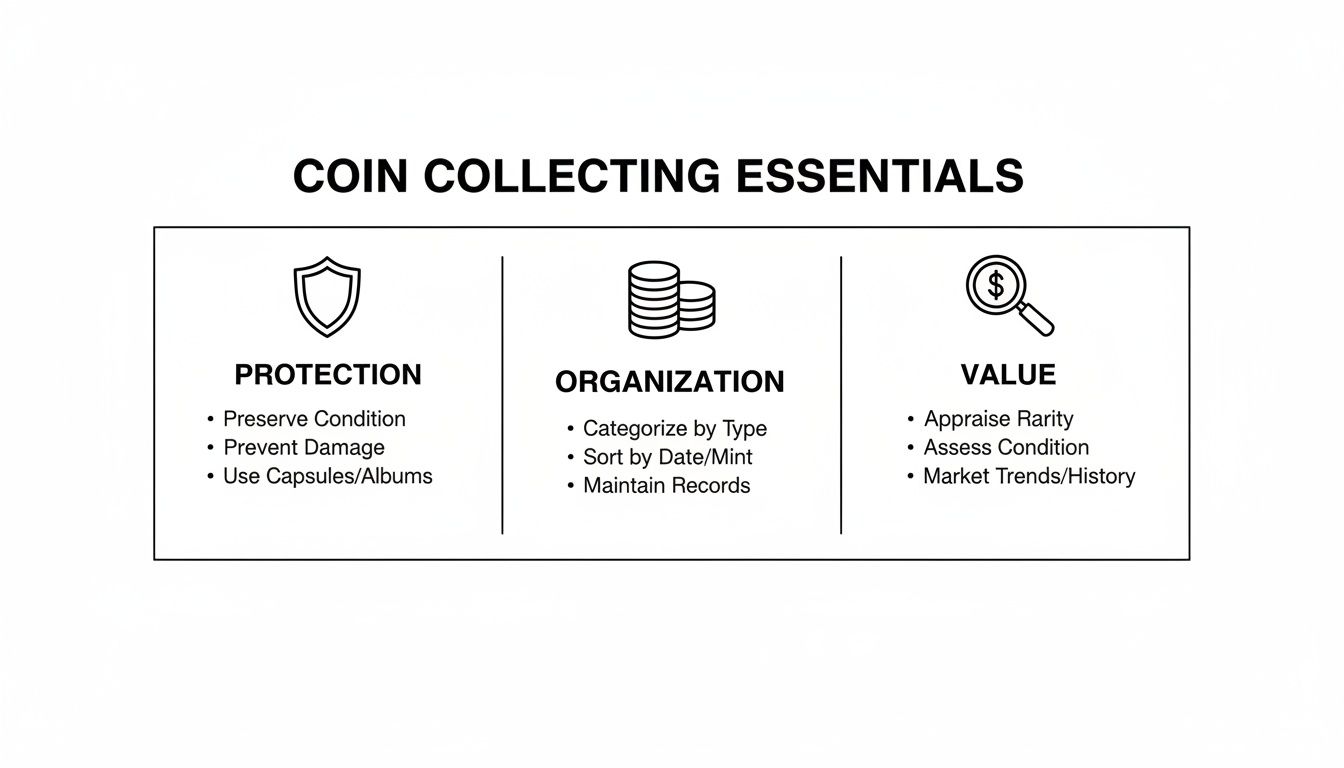
As you can see, the best album strikes a balance between solid protection, clear organisation, and features that help preserve and even enhance the value of your coins over time.
To make things even clearer, here’s a quick rundown of the most common album types.
Collector Coin Album Types at a Glance
This table gives a snapshot of the main album styles, helping you decide which one suits your collection's size, your personal style, and where you see it heading in the future.
| Album Type | Best For | Pros | Cons |
|---|---|---|---|
| Press-In Folders | Beginners, young collectors, completing specific sets (e.g., commemorative 50ps). | Inexpensive, highly satisfying to fill, provides a clear collecting goal. | Offers minimal protection; one side of the coin is always exposed. |
| Pocket Page Albums | Intermediate collectors with a mix of coins, those who want to see both sides of their coins. | Good protection, excellent visibility, pages can be found in various pocket sizes. | Less customisable than binders; fixed page capacity in some styles. |
| Ring Binders | Serious collectors, large or diverse collections, those who collect slabs and banknotes too. | Ultimate flexibility, grows with your collection, can house different page types. | Higher initial cost, can become bulky and heavy. |
Each of these has its place in the hobby, and many collectors end up using more than one type as their interests evolve.
Press-In Folders: The Satisfying Starter
For many of us, the press-in folder (also called a board album) was our first real coin album. It’s a simple, affordable tri-fold cardboard book with pre-cut slots for a particular coin series. You’ve probably seen them for collecting all the different commemorative 50p or £2 coins.
Their biggest draw is the clear goal they set: fill every empty space. There’s a real sense of accomplishment as you pop each new find into its slot, making them fantastic for beginners and kids. The downside? One side of the coin is always open to the air, offering very little protection from tarnishing or handling. They’re best for circulating, lower-value coins where the fun is in the hunt.
Pocket Page Albums: Flexible and Visible
If you want to admire both the obverse and reverse of your coins, albums with transparent plastic pocket pages are a brilliant choice. These pages, usually held in a simple folder or binder, have individual pockets where each coin sits securely.
This style is a major step up in protection from the press-in folders. It also gives you a great view of your coins without ever having to touch them directly, which is crucial for preservation. They're a versatile middle ground, perfect for collectors who have moved beyond the basics and have a more varied assortment of coins.
A key benefit of pocket-style albums is their adaptability. You can often find pages with different pocket sizes, allowing you to house various denominations, from tiny silver Maundy money to large crowns, all within one organised system.
Ring Binders: The Ultimate Customisation
The ring binder is the king of versatility and the go-to for serious collectors. Just like an office binder, it lets you add, remove, and shuffle pages around whenever you like. This modular design means your album can grow and change right along with your collection.
You can buy a huge variety of pages for these binders, with options for raw coins in flips, professionally graded coins in slabs, and even banknotes. This level of customisation makes ring binders the top choice for dedicated numismatists and anyone with a large, diverse, or ever-changing collection. Think of it as a long-term investment in keeping your passion organised and safe.
Why Album Materials Are Your Collection's Best Friend or Worst Enemy
The material your coin album is made from is single-handedly the most important factor for keeping your collection safe long-term. Think of it like storing a precious old photograph; you’d never dream of putting it in a cheap, acidic frame that would make the image yellow and fade over time. The exact same logic applies to your coins, where the wrong environment can cause damage that you can never undo.
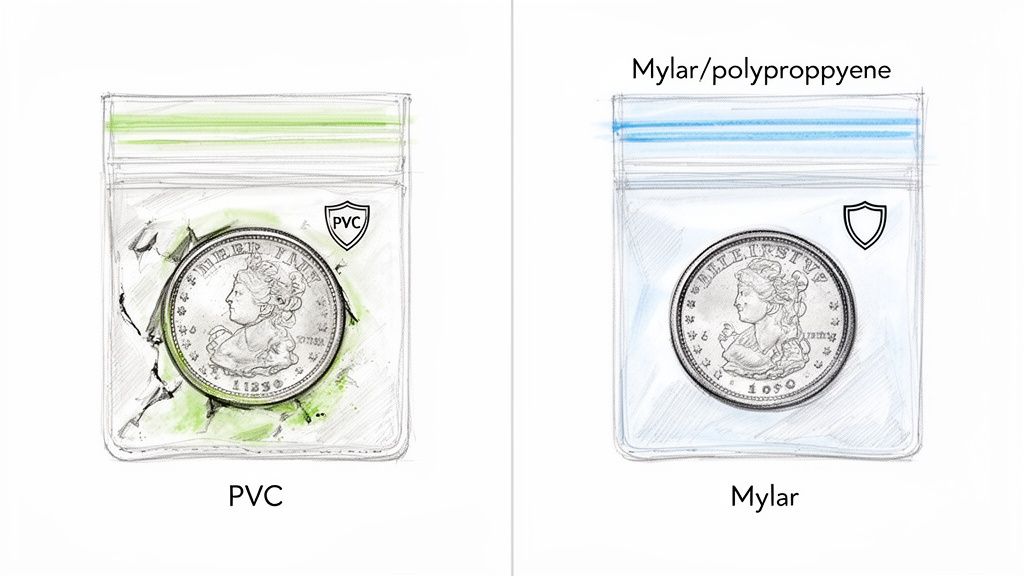
Many older or cheaply made albums are riddled with a harmful plasticiser called Polyvinyl Chloride, or PVC. It’s what makes the plastic soft and bendy, but over time it slowly breaks down and lets off hydrochloric acid. This acid then leaches onto your coins, causing a sticky green gunk often known as ‘green slime’ or ‘coin disease’. Once this happens, the damage is permanent and can absolutely tank a coin's value.
Archival-Safe Materials: The Gold Standard
To avoid this nightmare scenario, you have to choose albums made from archival-safe, inert materials. These plastics are stable and won't react with the metals in your coins, essentially acting as a neutral guardian for your collection. They make sure that what you put into the album is exactly what you’ll see years, or even decades, down the line.
The best materials to look out for are:
- Polyethylene Terephthalate (Mylar): This is widely seen as the absolute best material for long-term archival storage. It’s incredibly stable, crystal clear, and resists stretching.
- Polypropylene: A brilliant, more affordable alternative to Mylar. It’s rigid, acid-free, and contains none of those nasty plasticisers, making it a safe bet for most collections.
- Polystyrene: You'll often find this used for hard plastic cases or capsules. It’s very rigid and clear, offering tough physical protection as well as chemical safety.
When you're thinking about materials, don't forget that every layer of protection counts. Using safe options like acid-free tissue paper for wrapping or separation is just as important to prevent long-term decay.
Choosing an album made from Mylar or polypropylene isn't just a preference; it's a critical investment in your collection's future. It is the dividing line between preserving a piece of history and watching it slowly corrode.
How to Spot Dangerous Materials
Unfortunately, manufacturers don’t always make it easy by labelling their products clearly. But there are a couple of reliable ways to check if an album page or coin flip contains that dreaded PVC.
First, give it a quick sniff. PVC often has a very distinct, sharp plastic smell, a bit like a new shower curtain. Archival-safe plastics like polypropylene, on the other hand, are completely odourless.
Another method is the ‘flex test’. PVC-based plastics are very soft and flexible, whereas polypropylene and Mylar feel much stiffer and more rigid to the touch. If a plastic page feels unusually supple, be wary.
Ultimately, the safest bet is to invest in a quality coin album from a reputable brand. It’s the best guarantee that your album will be a true guardian for your investment, not a hidden threat waiting to strike.
Matching the Album to Your Unique Collection
There’s no such thing as a one-size-fits-all coin album, simply because every collection is unique. The real trick is to find a system that works for your specific coins and, just as importantly, your personal goals. A well-chosen album does more than just store coins; it brings order to chaos, turning a random assortment into a collection with a story.
One of the most common hurdles collectors face is how to house a varied collection. How do you neatly store a large, heavy crown next to a small, delicate silver penny? This is where modular systems, like ring binders, really shine. They let you mix and match pages with different pocket sizes, creating one unified home for all your different denominations.
The Power of Themed Collections
If you're a focused collector, specialised albums can be incredibly satisfying. Say your passion is for commemorative 50p pieces or a specific series like Victorian pennies. An album with pre-labelled slots gives you a clear roadmap and a tangible goal: fill every single space. It’s an approach that’s especially rewarding for new collectors just finding their feet.
The UK coin market is buzzing at the moment, largely thanks to The Royal Mint's hugely popular royal commemoratives and bullion coins. Hobbyists are keenly chasing down limited editions, making those albums designed for themed sets and proof coins more relevant than ever. For a deeper dive into these trends, you can explore more data on the growth of the coin collection market.
Choosing an album is an act of curation. It reflects not just what you collect, but how you see your collection—as a completed set, a growing portfolio, or a historical timeline.
Strategies for Different Collection Sizes
Naturally, the right album for you will also depend on the sheer scale of your collection.
- For Small or Specific Sets: A simple press-in folder or a small pocket album often does the job perfectly. They’re cost-effective and keep things organised without being overkill.
- For Growing Diverse Collections: A versatile ring binder is your best friend. It offers the flexibility to add new pages as your collection expands and branches out over time.
- For Bulk Lots (Resellers/Charities): Here, durability and efficiency are the names of the game. Large-capacity binders with uniform pages make sorting, cataloguing, and presenting huge quantities of coins a much smoother process.
Ultimately, the best system is the one that makes your collection easier to manage and more enjoyable to browse. For more detailed recommendations, take a look at our guide on the top coin collecting albums for 2025, where we review specific models for every type of collector.
Matching Your Album to Your Collecting Goals
Choosing the right coin album isn't really about the album. It’s about you. It’s about your collection, your budget, and what you hope to achieve in this hobby. The perfect album should feel like a natural extension of your collecting style, whether you’re just starting out, managing a serious portfolio, or sorting through mountains of donations.
Think of it like buying a car. A learner driver doesn’t need a Formula 1 machine; they need something practical and easy to handle. Likewise, the ideal album for a beginner is worlds apart from what a seasoned numismatist or a high-volume reseller needs. Getting this right from the start saves a lot of time, money, and headaches down the road.
Let’s break down how your goals point you towards the perfect home for your coins.
For the New Collector
If you're just dipping your toes into coin collecting, the name of the game is learning, enjoyment, and keeping things simple. You need an album that makes the hobby fun and accessible, not intimidating. The focus should be on building a good habit and celebrating every new find without breaking the bank.
A great starter album has a few key features:
- It’s affordable: You don’t need a top-of-the-line system just yet. A simple press-in folder or a basic pocket album is a fantastic, low-cost way to get started.
- It offers a clear goal: Albums designed for a specific series, like the commemorative 50p coins, give you a satisfying, visual checklist that keeps you hunting for the next piece.
- It's easy to use: You want to pop your coins in quickly and see your progress, enjoying that tangible feeling of building a collection.
For the Advanced Numismatist
Once you've been collecting for a while, your priorities shift. Now, it’s all about long-term preservation, flexibility, and showcasing your most valuable pieces. Your collection might include graded slabs, rare proofs, or coins of unusual sizes, all of which demand a more sophisticated and adaptable system.
At this level, you should be looking at high-end, customisable albums that can grow with your collection. A modular ring-binder system using archival-quality pages is really the gold standard. It allows you to mix and match pages for raw coins, certified slabs, and even banknotes, creating a truly bespoke home for your treasures. It's about protecting what is often a significant financial and historical investment.
In the UK, with our rich numismatic heritage and major auction houses, serious collectors need storage that matches the calibre of their coins. Protecting these assets isn't just a good idea—it's paramount.
For Charities and Resellers
When you're dealing with coins in bulk, efficiency and durability are everything. The goal is to sort, catalogue, and present large quantities of coins, whether for fundraising or for sale. A flimsy album from the corner shop just won't survive the constant handling and reorganisation.
What you need is a robust, practical workhorse. Large-capacity ring binders filled with uniform, durable pages are by far the most effective choice. This kind of setup makes it simple to sort by country or denomination and gives a professional look. Here, practicality trumps aesthetics; you need a system that protects your inventory while streamlining your entire operation.
Given the UK's booming online retail market, having durable storage is essential for managing bulk collections and minimising the risks that come with frequent handling. To get a sense of just how big this market is, you can read more about global coin collecting trends and its growth in Europe.
Smart Storage Habits and Album Alternatives
Picking out a high-quality collector coin album is the best first step you can take, but keeping your coins in pristine condition for the long haul comes down to smart storage habits. It also means knowing when a different storage solution might be a better fit. The way you handle your coins and the environment you keep them in are just as vital as the album itself.
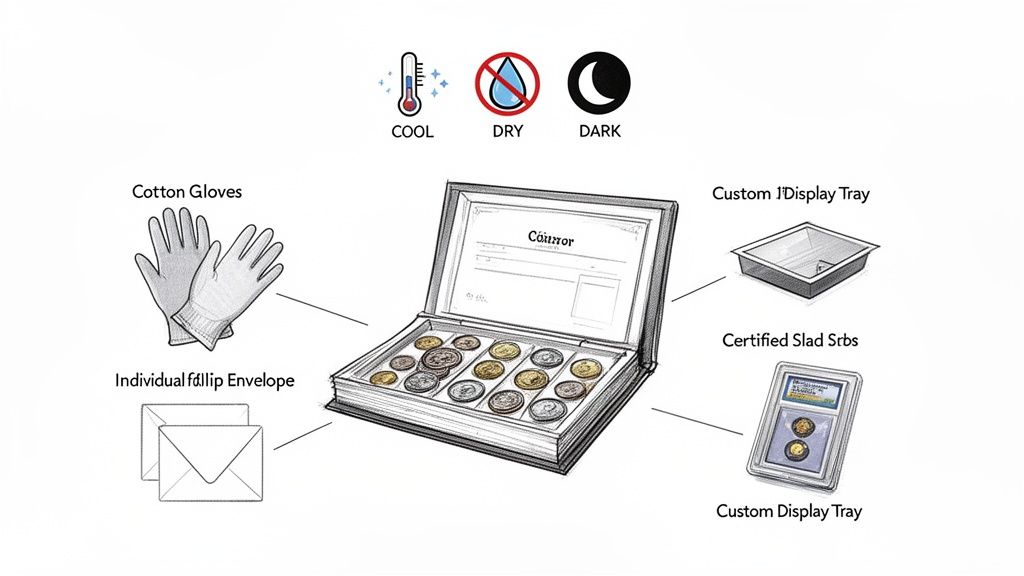
First things first: always handle your coins by their edges. If you can, wear a pair of soft cotton gloves. This simple act prevents the natural oils and acids from your skin from touching the coin’s surface, which can cause ugly spots and even corrosion over time.
Where you keep your album is just as important. The perfect spot is cool, dry, and dark. Try to avoid places like attics or basements where the temperature and humidity can swing wildly from one extreme to the other. A stable, dark spot inside your home—like a cupboard or a drawer in a study—is the ideal home for your collection.
Exploring Album Alternatives
While albums are fantastic for organising and admiring a complete series, sometimes a different tool is needed for the job. Knowing when to use an alternative gives you a complete toolkit for protecting every coin in your collection.
Here are three popular alternatives you’ll come across:
- Coin Flips: These are small, transparent pockets, usually made from archival-safe Mylar, designed for single coins. They’re brilliant for temporary storage or for sorting new acquisitions before you find them a permanent home in an album.
- Slabs: A slab is a hard, sonically sealed plastic case used by professional grading services. For that one special, high-value coin in your collection, a slab offers the ultimate in tamper-proof protection and certified authenticity.
- Display Trays: For collectors who enjoy a more hands-on, tactile experience, felt-lined trays offer an elegant way to store and view your coins. We cover these and other options in more detail in our guide to collector coin cases.
The right storage solution isn't just about the container; it's about matching the level of protection to the value and purpose of the coin. An album is perfect for your set, while a slab is the vault for your crown jewel.
For those with truly extensive collections or anyone needing to put supplies into long-term storage, it's worth looking at external solutions. You might even consider researching secure self-storage options that offer climate-controlled units for total peace of mind.
Frequently Asked Questions About Collector Coin Albums
As you get further into the fascinating world of numismatics, it's only natural for practical questions to pop up. You start wondering about the little details of caring for your collection, and getting the right answers is crucial for protecting your coins.
We get these questions all the time from fellow collectors. Let's tackle some of the most common queries we hear, giving you the clear, straightforward advice you need to make confident choices for your collection.
How Do I Clean Coins Before Putting Them in an Album?
Here’s the golden rule, and it’s a simple one: don't. Cleaning coins, particularly older or valuable ones, is one of the biggest mistakes a collector can make. It can strip away the natural patina that has developed over decades, or even centuries, and leave tiny scratches all over the surface. To a serious collector, this isn't cleaning; it's damage, and it can tank a coin's value.
Now, if we’re talking about modern coins you’ve just pulled from your pocket that have a bit of everyday grime on them, the most you should ever do is a gentle rinse in distilled water. After that, pat it dry very carefully with a soft microfibre cloth. If you have a truly valuable coin that you think needs professional attention, always consult a numismatist before you even think about touching it.
Are Vintage Coin Albums Safe to Use?
You need to be very careful with them. While they have a certain nostalgic charm, many older albums were made with materials we now know are harmful to coins. They often contain PVC or high levels of sulphur, which react with the metals over time and can cause irreversible damage – sometimes leading to that dreaded green slime.
Vintage albums are best reserved for common, low-value coins where long-term preservation isn't your main goal. For any coin you value, whether for sentimental or financial reasons, we strongly recommend moving it to a modern, archival-quality collector coin album. These are made from inert materials like Mylar that won't harm your collection.
Can I Store Coins and Banknotes in the Same Album?
This is generally not a good idea. While you can find versatile binder systems with pages for both, coins and banknotes have completely different needs when it comes to storage. Coins are heavy and thick, requiring sturdy pockets that can support their weight without sagging or tearing over time.
Banknotes, on the other hand, are delicate. They need sleeves that offer full, flat support to stop them from getting creased, folded, or torn. The best approach is to use separate, purpose-built albums. It’s the only way to ensure both your coins and your paper money get the specific protection they need to stay in top condition for years to come.
Ready to give your coins the protection they deserve? Explore the curated selection of archival-safe albums and storage solutions at Cavalier Coins. Find the perfect home for your collection today at https://www.cavaliercoins.com.