

If you've handled one of the newer banknotes from the Bank of England or the Reserve Bank of Australia, you'll know they feel completely different from old paper money. These are polymer plastic banknotes, a modern currency printed on a flexible plastic substrate instead of traditional cotton paper.
Collectors and central banks alike have taken note of their exceptional durability, clever security features, and much longer lifespan. This shift away from paper isn't just a minor change; it's a huge step in the evolution of how physical money is made and used across the globe.
The Foundation of Modern Currency
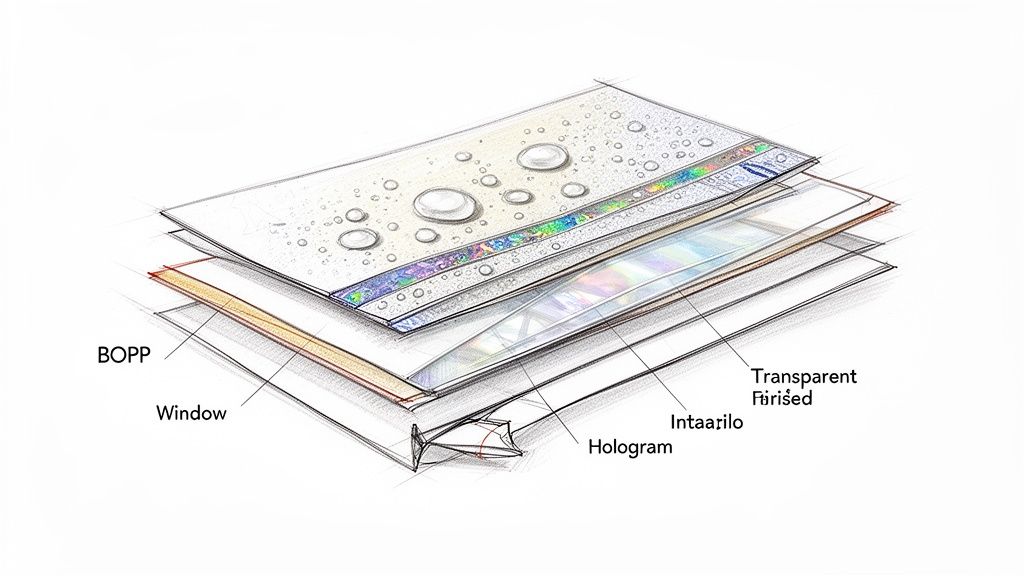
Think about trying to tear a plastic food wrapper—it’s tough, flexible, and completely waterproof. Polymer banknotes share these traits, but they are a world away in terms of complexity. They are crafted from a specific type of plastic known as biaxially oriented polypropylene (BOPP), a non-porous and incredibly resilient film. This isn't your average plastic; it's a material engineered to handle the rough-and-tumble of daily circulation in a way paper just can't.
The manufacturing process involves stretching this polypropylene film in two directions (the 'biaxially' part), which neatly aligns the plastic molecules. This gives the material its impressive strength and stability, stopping it from tearing or warping easily.
From Plastic Pellets to Secure Banknotes
Creating a polymer banknote is a multi-layered, high-tech affair. It’s more like manufacturing a complex electronic component than simply printing on paper.
The journey starts with simple plastic pellets, which are transformed into an opaque BOPP film. This film forms the core of the note, and it's then layered with specialised inks and a whole host of intricate security elements. The clever part is that these features aren't just printed on top; they're integrated directly into the note's structure.
One of the biggest innovations with polymer is the ability to create transparent 'windows' in the banknote. These aren't holes cut out of the material but are an integral part of the polymer sheet itself, making them incredibly difficult for counterfeiters to fake.
Core Benefits of Polymer Technology
For central banks, and indeed for us collectors, the move to polymer brings some very clear advantages over the old cotton-paper notes. Understanding these benefits is key to appreciating why more than 50 countries have now made the switch.
- Enhanced Durability: Polymer notes are incredibly tough. They last at least 2.5 times longer than their paper counterparts and can even survive a trip through the washing machine. They also resist tearing and repel dirt and moisture.
- Improved Security: The plastic material opens the door to advanced security features that are almost impossible on paper. Think of the clear windows, complex holograms, and unique textures that make fakes so much easier to spot.
- Increased Cleanliness: Unlike porous paper that can absorb oils, dirt, and microbes, the smooth surface of a polymer note is much easier to keep clean. This makes it a far more hygienic option for public circulation.
The UK's Journey From Paper to Polymer
The story of how the United Kingdom switched to polymer banknotes is a perfect case study for modern collectors. It wasn't a snap decision, but a carefully planned move driven by the very real downsides of traditional paper money. For decades, paper notes just couldn't stand up to daily use and were in a constant battle against ever-more-sophisticated counterfeiters.
The shift from paper to polymer really started gathering steam in the early 2010s. The Bank of England saw how countries like Australia were benefiting from the durability and security of plastic money and realised it could solve many of its own long-standing currency headaches. This kicked off a period of deep research and, most importantly, a conversation with the public to see if they were on board with such a major change.
Getting The Public Onside
Before committing to a complete currency overhaul, the Bank of England launched a huge public consultation in 2013. The aim was simple: explain the benefits of polymer and listen to what people thought. This open and honest approach was crucial for getting the public's blessing.
The feedback was overwhelmingly positive. The 2013 consultation received nearly 13,000 responses, with a staggering 87% of people in favour of making the switch to polymer. This powerful public mandate gave the Bank the green light to push ahead with one of the biggest changes in British currency history. You can dig into the detailed results of this public feedback and the Bank of England's manufacturing data for more background.
The Churchill £5: A New Era Begins
The big moment came in September 2016 with the release of the very first polymer banknote, the £5 note featuring Sir Winston Churchill. For UK numismatists, its arrival instantly created a new collecting category. The crisp feel, vibrant colours, and the innovative see-through window made it feel completely different from its paper predecessor.
This wasn't a small trial run; it was a full-scale launch. By the end of August 2017, less than a year after it was introduced, the Bank had already printed an incredible 595 million of the new fivers, cementing polymer as the new standard.
This transition sparked immediate demand among collectors for the first-issue notes, especially those with low serial numbers starting with 'AA01'. The story of the UK's move to polymer is a clear example of how a government policy change can create an exciting new focus for the collecting community.
The successful launch of the £5 note set the stage for the notes that followed, including the Jane Austen £10, the J.M.W. Turner £20, and the Alan Turing £50. Each release followed the same pattern of public engagement and advanced security, completing the UK's transformation and giving collectors a brand-new series to track down.
Decoding Advanced Security Features
Polymer banknotes are like miniature fortresses, packed with security features that are a nightmare for counterfeiters to replicate. Unlike old paper notes, which were really just a canvas for ink, the polymer material itself is an active part of the note’s security. This allows for clever, multi-layered features that you can see, feel, and even check against the light.
For collectors, getting to know these security elements is like learning the secret language of a banknote. It turns a simple authenticity check into a moment of discovery, revealing the incredible engineering and artistry hidden in plain sight.
This diagram shows the UK's journey from paper to polymer, a switch that was overwhelmingly backed by the public.
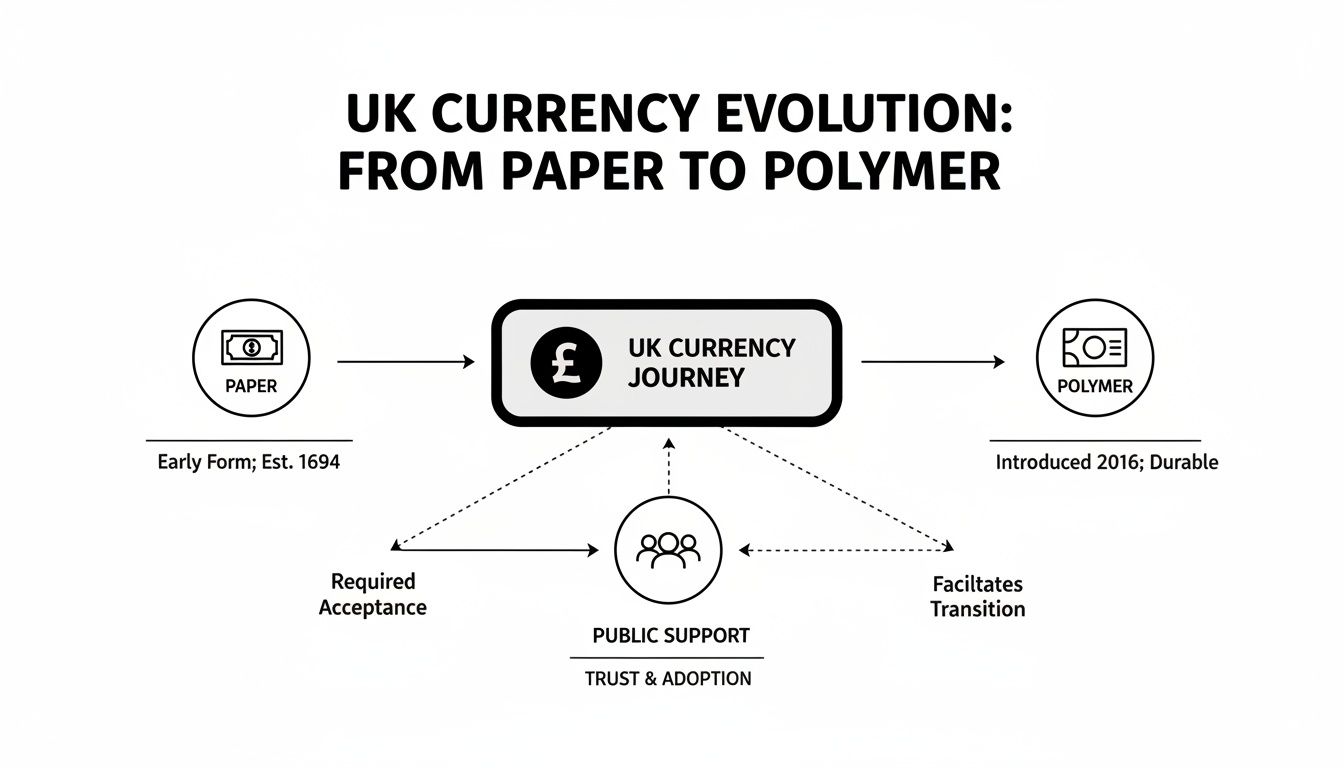 The transition highlights just how important public approval was for successfully rolling out this new currency technology.
The Window of Trust
The most obvious feature of a polymer note is the clear window. This isn't just a hole punched through; it’s an unprinted part of the polymer film itself. Trying to fake a window on paper is a non-starter—you'd have to cut a hole or stick on a piece of plastic, both of which are dead giveaways.
These windows are rarely empty. They often contain stunningly intricate details, like a metallic foil image. Take the UK's £20 note—it has a large window with a blue and gold foil on the front showing the lighthouse from Margate. But when you flip it over, that same foil is silver. It’s a smart dual-colour effect that’s tough to copy.
Interactive Holographic Elements
The holograms on polymer notes are leagues ahead of the simple foil strips you might see on older paper money. They’re designed to be interactive, completely changing their appearance as you tilt the note.
- Colour-Shifting Foils: Look for patches that change colour dramatically. The coronation crown on the UK £50 note, for example, looks green in the window but shifts to a vibrant purple when you angle it.
- 3D Imagery: Some notes, like the Alan Turing £50, have a hologram with a genuine three-dimensional effect, giving the image a real sense of depth and movement.
- Micro-Lettering: Tucked away inside the foil, you'll often find incredibly small text spelling out the note's value. You'll need a magnifying glass to see it clearly.
To help you get familiar with these features, here’s a quick guide to what you should be looking for on modern UK polymer notes.
Key Security Features of UK Polymer Banknotes
| Feature | Description | How to Check |
|---|---|---|
| See-Through Window | A large, clear area of unprinted polymer, often containing a detailed portrait or building. | Hold the note up to the light. The window should be completely transparent, not hazy or stuck on. |
| Colour-Changing Hologram | A patch that changes colour and text when the note is tilted. For example, the £10 hologram changes from 'Ten' to 'Pounds'. | Tilt the note back and forth. The image and words should clearly change. |
| Silver Foil Patch | A metallic patch containing a 3D image, such as the Coronation Crown on the £5 note. | Tilt the note; the image should appear three-dimensional. |
| Raised Print (Intaglio) | Key text, like "Bank of England" and the note's value, is printed with raised ink. | Run your finger across the front of the note. You should be able to feel the texture of the print. |
| Micro-Lettering | Tiny letters and numbers are printed below the main portrait and within the foils, visible only under magnification. | Use a good quality magnifying glass to look for the tiny text. It should be sharp and clear, not blurry. |
| Ultra-Violet Feature | The note's value appears in bright red and green numbers on the front when viewed under a good quality UV light. | Place the note under an ultraviolet lamp to reveal the hidden numbers. |
Checking these details transforms a simple glance into a proper inspection, giving you confidence in the note's authenticity.
The Feel of Authenticity
Your sense of touch is a surprisingly powerful tool for spotting fakes. Polymer notes have specific tactile features that give them a distinct feel, and the most important is the raised print.
This technique, also known as intaglio printing, is used for key parts of the note like the words "Bank of England" and the main portrait. If you run your finger over these areas, you’ll feel a noticeable, raised texture. This is done by forcing ink deep into the polymer under immense pressure, creating a feature that standard printers just can't reproduce. If you want to dive deeper, you can learn more about the essential banknote security features that experts rely on.
Just How Tough Are Polymer Notes, and Are They Really Greener?
One of the first things you notice about a polymer banknote is just how tough it is. Cast your mind back to the old paper notes – they often felt a bit flimsy even when fresh from the bank. Polymer is a different beast entirely. It’s the all-weather gear of currency, built to survive modern life, whether that’s an accidental spin in the washing machine or months forgotten in a back pocket.
This resilience is far from a gimmick. Polymer notes shrug off moisture, repel dirt, and are incredibly difficult to tear. A paper note could look tired and tatty after just a few months in circulation, but a polymer note is built to last for years, holding onto its crisp feel and vibrant colours for much, much longer. For central banks, this is a massive advantage, as they no longer have to churn out constant replacements for damaged notes.
Built to Last
The difference in longevity between paper and polymer is genuinely night and day. A typical paper note might survive a year or two before it's too worn out to use. Polymer notes, on the other hand, are engineered for a long life in the real world:
- Water and Dirt Resistance: Their non-porous surface means you can literally wipe spills and grime away. Paper, of course, just soaks it all up.
- Tear Resistance: The material, biaxially oriented polypropylene, makes tearing a note almost impossible. This puts an end to the common rips and tears that plagued paper money.
- Structural Integrity: Polymer notes keep their shape. They don’t go limp or get horribly creased, which makes them far easier to handle, count, and use in machines.
The Surprising Environmental Upside
The word "plastic" naturally makes you think about the environment, but the story with polymer banknotes is more complex and, surprisingly, quite positive. The secret is in their sheer durability. Because they last so much longer, far fewer notes need to be produced over time, slashing the overall manufacturing footprint.
The real environmental saving comes from longevity. By replacing notes less frequently, we cut down on the energy, water, and raw materials needed for production and transport, leading to a smaller carbon footprint over the note's entire life.
In fact, a study by the Carbon Trust revealed the UK’s £5 polymer note has a 16% lower carbon footprint than the paper version it replaced, while the £10 note's is 8% lower. This is almost entirely down to a polymer note being expected to last at least five years, easily dwarfing the lifespan of paper versions that needed constant replacement. You can learn more about the lifecycle impact of polymer banknotes in detailed industry reports.
And what happens when they finally reach the end of the road? They aren’t just thrown into a landfill. Instead, old polymer notes are melted down into pellets and recycled into new plastic items, like garden furniture or building materials.
How to Value and Collect Polymer Banknotes
For most people, a banknote is worth whatever number is printed on it. For a collector, though, its face value is just the starting point. The real thrill lies in spotting the tiny details that can turn a common piece of plastic currency into a genuine treasure.
Understanding what to look for is the key, and the switch to polymer itself created a fascinating chapter for collectors. The UK's transition, for instance, wasn't exactly smooth. High street banks found their ATMs couldn't properly grip the new, slicker notes. Upgrading thousands of machines cost an estimated £45 million, a figure that could balloon to £240 million once you factor in vending and counting machines. You can read more about how polymer notes reshaped UK cash logistics on Fintech Futures. This massive logistical headache makes the early-issue polymer notes historically significant pieces.
Identifying High-Value Serial Numbers
The first thing a seasoned collector will check is the serial number – it’s a banknote's unique fingerprint. Certain patterns are highly prized by notaphilists and can dramatically increase a note's value.
- Low Serial Numbers: These are the holy grail. Notes from the very first print run, especially in the UK with prefixes like ‘AA01’, are incredibly sought-after. If you find one with a serial number under 100 from that first batch, you've found something special.
- Ladder Serials: These are serial numbers that climb up (or down) in perfect sequence, like 123456. Finding a 'perfect' ladder is exceptionally rare and a highlight for any collection.
- Radar Serials: A bit more common but still very collectible, these are palindromic numbers that read the same forwards and backwards, such as 123321.
- Solid Serials: A top-tier find. This is a note where every single digit is the same (e.g., 888888).
These "fancy" serial numbers are what separate everyday pocket money from a true collector's item. It’s always worth taking a second look at your change!
The Importance of Condition and Errors
Just like with paper money, condition is everything. A polymer note's value is directly tied to its state of preservation, though it presents its own set of challenges. While they’re tough against tears and dirt, a sharp fold can leave a permanent, value-killing crease.
A note in crisp, Uncirculated (UNC) condition, with no folds or blemishes, will always command the highest price.
Printing errors are another huge driver of value. Modern quality control is incredibly tight, but mistakes still slip through. Keep an eye out for:
- Misaligned printing where colours don't line up
- Ink smears or smudges from the printing process
- Notes that have been cut incorrectly
An error transforms a mass-produced item into a unique one, and that rarity can make it incredibly valuable.
For a collector, a printing error is not a flaw; it's a feature. It tells a story about the manufacturing process and creates a one-of-a-kind piece that stands out from the millions of identical notes printed.
Buying and Selling Polymer Notes
Whether you're buying or selling, your focus should be on authenticity and clear, accurate descriptions. Sticking to reputable dealers and established online marketplaces is the safest way to avoid fakes or disappointments.
When listing a note for sale, use high-quality photos that clearly show the serial number and any other special features. Be honest about the condition.
For anyone just dipping their toes into the hobby, getting a handle on the basics is a great first step. This beginner's guide to collecting world banknotes provides a fantastic foundation. By understanding these key value drivers, you'll be well on your way to building an impressive collection of polymer banknotes.
Preserving Your Polymer Banknote Collection
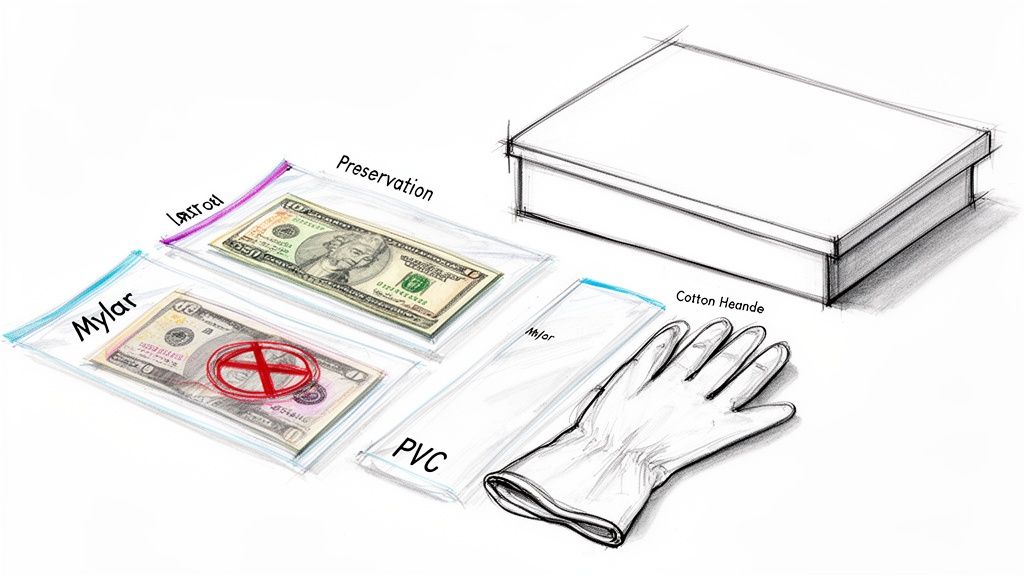
Building a collection is one thing, but protecting it is just as crucial. Polymer banknotes are tough enough for everyday use, but when it comes to long-term preservation, the old rules for paper money don’t always apply. Their unique properties call for a slightly different approach.
Think of a crisp, uncirculated polymer note like a vinyl record. It’s a resilient piece of kit, but it’s vulnerable to specific types of damage. The number one enemy? A sharp fold. This creates a permanent crease that completely ruins the note's eye appeal, tanking its grade and value. Unlike paper, which can sometimes be coaxed back into shape, a polymer crease is there for good.
Choosing the Right Storage Materials
The single most important decision you'll make for your collection is how to house your banknotes. Not all plastic sleeves are created equal, and picking the wrong one is a recipe for disaster.
Your absolute top priority is to avoid any holder that contains polyvinyl chloride (PVC). This type of soft, flexible plastic contains acidic plasticisers that can leach out over the years. The result is a sticky, hazy film that covers the banknote's ink—a chemical reaction known as ‘fogging’ that will permanently ruin your note.
Instead, always choose sleeves and holders made from inert, archival-quality materials:
- Mylar (Biaxially-oriented polyethylene terephthalate): This is the gold standard for currency collectors. It’s strong, crystal clear, and chemically stable, meaning it won’t react with your banknotes over time.
- Polypropylene: Another safe and more affordable option that offers excellent protection without the risks that come with PVC.
Always look for storage solutions that are explicitly labelled ‘PVC-free’ or ‘archival-safe.’ Paying attention to this small detail is the single most important thing you can do to safeguard the future value of your polymer collection.
Best Practices for Handling and Environment
With the right materials sorted, the final pieces of the preservation puzzle are proper handling and a stable environment.
Whenever you handle your notes, make sure your hands are clean and dry. Better yet, wear a pair of cotton gloves to avoid transferring natural oils and dirt onto the surface.
Always store your collection flat—never, ever folded or rolled. Find a cool, dark, and dry place with stable humidity to prevent any potential warping or degradation. Sunlight is particularly harmful, as prolonged exposure to UV light will cause the vibrant colours of your polymer notes to fade. For collectors looking for more advice, our guide on how to properly store a paper money collection offers extra tips that are just as relevant for polymer.
Common Questions About Polymer Banknotes
When you're delving into the world of polymer banknotes, a few common questions always seem to pop up. Let's tackle some of the most frequent queries we hear from fellow collectors to help you navigate your collection with a bit more confidence.
Are Polymer Notes Worth More Than Their Face Value?
Most of the time, the polymer notes you find in your change are worth exactly what they say on the front. However, some can be far more valuable to collectors. It all comes down to the details.
Keep an eye out for factors that can bump up a note's value:
- Low or early serial numbers: Anything with an 'AA01' prefix is often the first off the press and highly sought after.
- Interesting number patterns: 'Ladder' sequences (like 123456) or 'radar' numbers that read the same forwards and backwards (like 123321) are always a great find.
- Printing mistakes: Errors are rare, which makes them valuable.
Of course, condition is king. A crisp, uncirculated note will always command a much higher price than one that’s been folded and passed around. It’s always worth giving a note a second look before you assume it’s just spending money.
Can You Iron a Creased Polymer Banknote?
Absolutely not. Please, never take an iron to a polymer banknote. The note is made from a specialised plastic that will shrink, melt, or warp under that kind of direct heat. You'll permanently destroy it, and any value it had will literally melt away.
If you have a note with a minor crease, a much safer bet is to place it inside a heavy book for a few weeks. The gentle, consistent pressure can help flatten it out. But really, the best approach is always prevention – handle them with care and store them flat from the start.
How Do I Safely Clean a Dirty Polymer Note?
One of the great things about polymer is its durability, which allows for some very careful cleaning if a note gets a bit grimy. If you must, use a soft, lint-free cloth that's slightly damp with lukewarm water and gently wipe the surface. For a bit of stubborn dirt, a tiny drop of mild, pH-neutral soap can be used.
After wiping, use a second cloth dampened with plain water to rinse any soap residue off, and then carefully pat it dry. It's crucial to avoid any harsh chemicals, solvents, or anything abrasive. Scrubbing will damage the delicate ink and the printed security features, ruining the note for good.
Ready to start or expand your own collection of these fascinating banknotes? At Cavalier Coins Ltd, we have a fantastic selection of rare and interesting currency from all over the globe. Why not explore our collection today and find your next treasure?