
Yes, it’s true. Some UK pound coins are worth significantly more than their face value, particularly those with low mintage numbers or the occasional, fascinating minting error. The real trick is knowing what to look for – specific dates, designs, and little production flaws that make a coin scarce and genuinely desirable to collectors.
Your Pocket Change Could Be Worth a Fortune
That handful of coins you just got back from the shop might be hiding a small treasure. It’s a simple truth that often gets overlooked: some of the pound coins jingling in your pocket could be worth far more than one quid. This guide will walk you through what makes a coin valuable, from its rarity to those curious mistakes made at the mint.
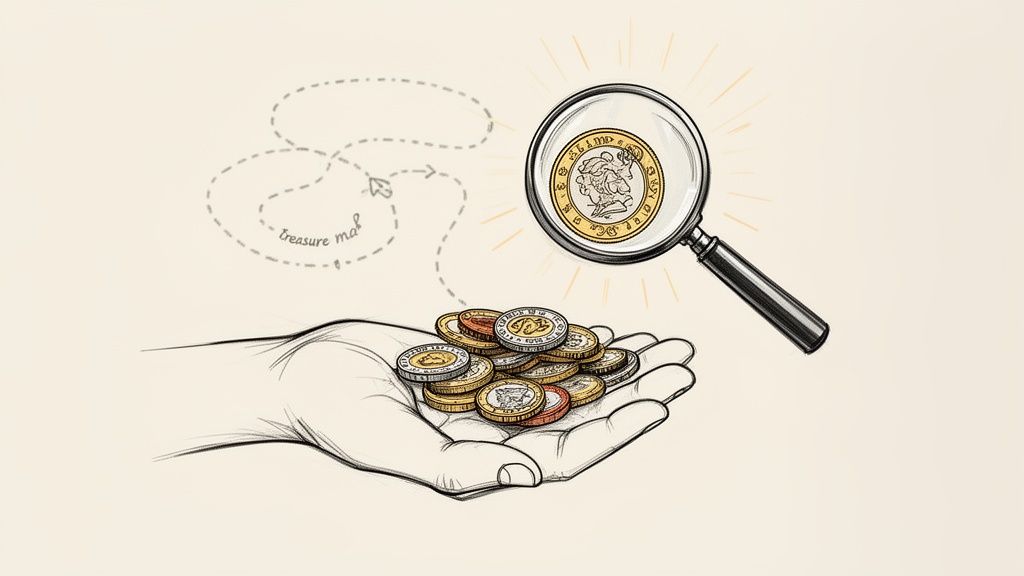
Think of this as your treasure map for the world of modern coin collecting. We'll show you exactly what to spot, turning the mundane task of checking your change into an exciting hunt. To kick things off, the table below gives you a quick snapshot of the main types of valuable £1 coins to keep an eye out for.
Key Factors Driving a Coin's Value
Before we dive into specific examples, it’s important to understand why certain pound coins are worth good money. It isn't random; it all comes down to the classic principle of supply and demand.
Three main factors really determine a coin's collectability and, ultimately, its price:
- Mintage Figures: This is simply how many coins of a particular design and date were ever made. The lower the mintage, the rarer the coin is. Simple as that.
- Minting Errors: Mistakes happen, even at The Royal Mint! These slip-ups can create unique and highly sought-after varieties. We’re talking about everything from misaligned designs to coins struck on the wrong metal blank.
- Condition (Grade): A coin that looks like it just left the mint—crisp, shiny, and uncirculated—will always fetch a higher price than one that’s been rattling around in pockets and tills for years.
Understanding these core principles is the first step to becoming a savvy collector. A coin isn’t valuable just because it’s old; it’s valuable because it is scarce and in demand.
To get you started on your hunt for a pound coin that's worth money, here’s a quick guide to what you should be looking for.
Quick Guide to Valuable UK Pound Coins
This table summarises the main categories of valuable £1 coins. Think of it as your at-a-glance checklist when sorting through your change.
| Coin Category | What to Look For | Potential Value Range |
|---|---|---|
| Low Mintage Round Pounds | Specific designs with low production numbers, like the 2011 Edinburgh City coin. | £5 - £50 (circulated) |
| 12-Sided Coin Errors | Flaws like die chips, rotational errors, or partial collar mistakes. | £10 - £150+ |
| 'Mule' or Transitional Errors | Extremely rare coins with mismatched obverse and reverse designs/dates. | £500 - £3,000+ |
Keep these categories in mind as you begin your search. You never know when one of these rare finds might turn up
Hunting for the Rarest Round Pound Coins
Even though the classic round pound was replaced by the modern 12-sided version back in 2017, it's found a whole new life as a collector’s favourite. If you’re searching for a pound coin that’s worth more than its face value, this retired series is a fantastic place to start. Their value doesn’t come from age, but from one simple, powerful factor: scarcity.
Between 1983 and 2016, The Royal Mint pumped out 25 different commemorative designs, but the number of coins minted for each one varied wildly. Some were released in the tens of millions, while others were produced in much smaller, almost boutique-like quantities. It’s these low-mintage coins that collectors are now scrambling to find.
The Secret is in the Mintage Figures
Think of it like a limited-edition art print. The fewer copies that exist, the more each one is worth to the people who really want it. It's the exact same logic with these round pounds. Any coin with a mintage of under two million is considered scarce, and anything dipping below one million is exceptionally rare.
This is precisely what turns a simple piece of currency into a collectible treasure. Pulling one of these low-mintage designs from your change is like uncovering a hidden gem that thousands of others have handled and completely overlooked.
Identifying the Top 5 Rarest Round Pounds
If you want to track down the most valuable round pounds, you need to know which designs to look for. These five coins are the rarest of the rare, with mintage figures that make them incredibly sought-after. You’ll want to keep a close eye on the date and the design on the reverse (the ‘tails’ side).
Here are the top five to hunt for, starting with the most common of the rare and leading up to the holy grail of round pounds:
- 2011 Cardiff City: Mintage of 1,615,000. Part of the "Capital Cities" series, this is a key find for any collector.
- 2010 London City: Mintage of 2,635,000. Another from the Capital Cities set, its striking design makes it a popular one to hunt down.
- 2009 Kew Gardens 50p (Honourable Mention): Now, this isn't a pound coin, but its legendary rarity (210,000 mintage) has made it the benchmark for all modern coin collecting.
- 2011 Edinburgh City: The undisputed king of the circulating round pounds.
The 2011 Edinburgh City £1 coin stands head and shoulders above the rest as the rarest circulating round pound design. Only 935,000 ever entered general circulation—a tiny fraction compared to the millions of other commemorative issues. Its low mintage is because it was mainly produced for collectors' sets, so finding one that’s been in circulation is a real challenge. Pristine uncirculated examples have fetched serious money at auction, and even worn ones from someone's pocket can sell for £20-£50 to eager buyers.
"Finding a 2011 Edinburgh in your change is the modern equivalent of finding a gold nugget. It’s the coin that proves that treasure hunting isn't just for storybooks."
This rarity makes the Edinburgh coin a centrepiece for any serious collection. Its scarcity is the main driver of its value, which can range from £20-£50 for a circulated coin to potentially hundreds for one in pristine, uncirculated condition. You can read our detailed guide on how to identify the rarest one pound coin for more tips.
Watch Out for Fakes
A word of warning: the old round pound was notoriously counterfeited. During its time in circulation, it was estimated that 1 in 30 were fake, so spotting them is a crucial skill. Genuine coins have distinct features that forgeries often get wrong.
Key things to check:
- Edge Inscription: On a real coin, the lettering around the edge should be crisp, well-defined, and evenly spaced. Fakes often have fuzzy, uneven, or poorly formed lettering.
- Date Alignment: The date on the obverse (the Queen's head side) should align perfectly with the design on the reverse.
- Overall Quality: Genuine coins have a high-quality strike. Look for sharp, clear details on the Queen’s portrait and the reverse design. Fakes can often look a bit soft or blurry.
Learning to spot these subtle differences will save you from paying a premium for a worthless counterfeit. Always give a potential find a careful once-over, especially if you're thinking of buying one from an online seller.
Spotting Valuable Errors on New 12-Sided Coins
When the modern 12-sided pound coin arrived in 2017, it did more than just boost security—it kicked off a brand-new, exciting chapter for collectors. While most of these bimetallic coins aren’t rare based on their mintage numbers, their real value is often hiding in plain sight, tucked away in small but important production flaws.
For the sharp-eyed collector, these errors can transform a regular pound coin into something genuinely special. Just picture the minting process as a massive, high-speed production line. When billions of coins are being struck, it’s inevitable that a few tiny imperfections will slip through quality control. These are the valuable anomalies that collectors are hunting for.
Learning to spot these mistakes is a skill that can turn checking your change from a mundane task into a fun—and potentially profitable—hobby. You don't need a fancy microscope, just a keen eye and a bit of knowledge.
Common Errors and What to Look For
While the really dramatic, headline-grabbing errors are few and far between, several more common types of flaws pop up on the 12-sided pound surprisingly often. These are the perfect entry point for aspiring 'error hunters' and can still fetch some impressive prices.
Here are a few key errors you should be actively looking for on the new pound coins:
- Die Chips: These happen when a tiny piece of the die—the metal stamp that strikes the design onto the coin—breaks off. This leaves a small, raised blob of metal on the coin’s surface, a bit like a permanent metal bubble.
- Rotational Errors: This is a simple misalignment between the two sides of the coin. If you hold the coin with the Queen's head perfectly upright and then flip it over horizontally, the reverse design should also be upright. If it’s tilted at an odd angle, you’ve found a rotational error.
- Partial Collar Errors: This occurs when the retaining collar, which holds the coin in place during striking, slips. The result is one edge of the coin appearing flattened or smeared, almost as if the metal has bled over the side.
This diagram helps to visualise how different factors come together to determine a coin's value, which applies just as much to error coins as it does to low-mintage ones.
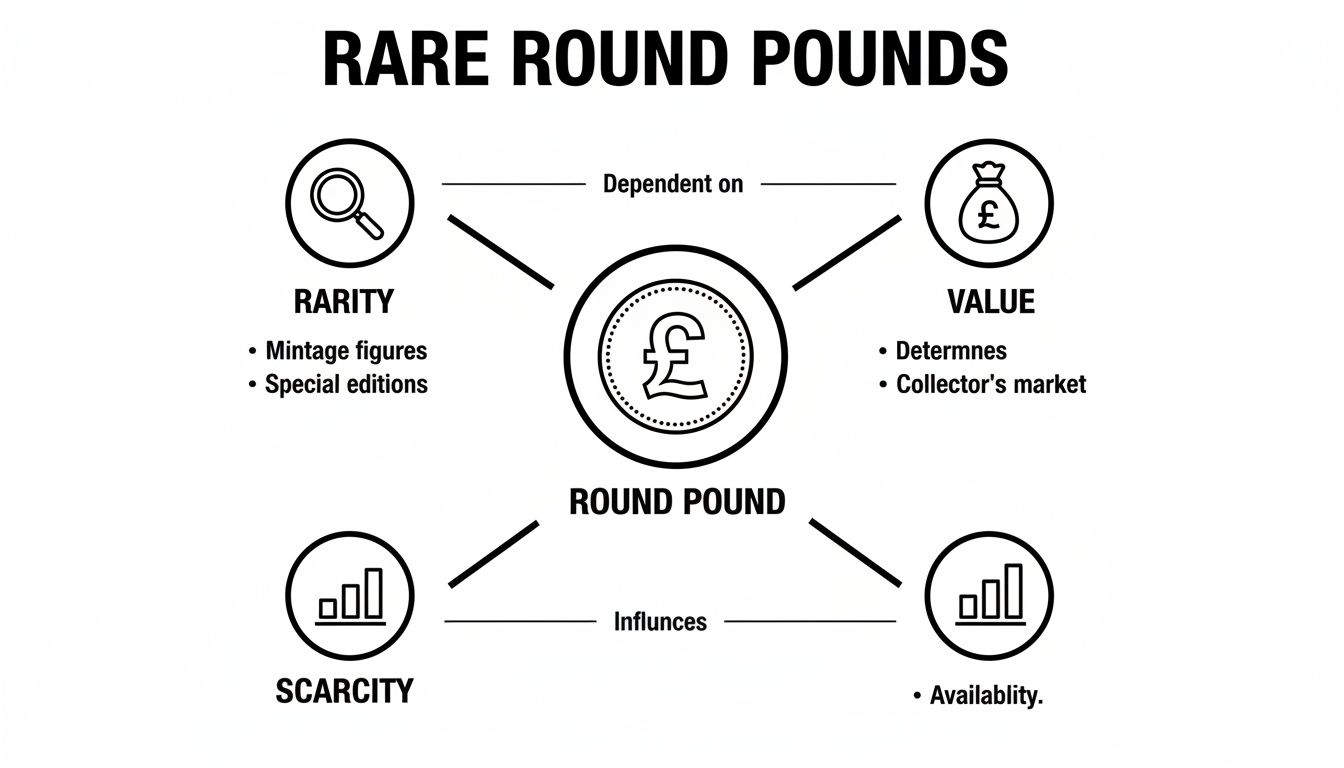
As you can see, rarity—whether from a low mintage or a minting error—is the key driver behind a coin's scarcity and, ultimately, its market value.
Valuing Your 12-Sided Error Coins
Unlike low-mintage coins that have fairly well-documented values, pricing an error coin is a much more subjective game. Its value really comes down to a mix of the error's rarity, how obvious it is, and what the current market demand looks like. A big, dramatic flaw will always be worth more than a minor one you need a magnifying glass to see.
To give you an idea of what to expect, we've put together a quick guide on some of the more frequently found errors and their potential values.
Common 12-Sided £1 Coin Errors and Their Values
The table below is a handy reference for identifying and valuing some of the common minting mistakes you might find on the new pound coins.
| Error Type | Description of Error | How to Spot It | Estimated Value |
|---|---|---|---|
| Die Chip | A small, raised lump of metal on the coin's surface. | Look for unusual bumps or blobs, particularly around lettering or detailed parts of the design. | £5 - £20 |
| Rotational Misalignment | The obverse and reverse designs are not aligned correctly. | Hold the coin upright and flip it over. The reverse design should not be tilted. | £10 - £50+ |
| Partial Collar Error | A section of the coin’s edge is smooth, raised, or misshapen. | Examine the 12 edges carefully for any inconsistencies or areas that look 'leaked' or flattened. | £15 - £100+ |
| Mis-strike | The design is struck off-centre on the inner or outer ring. | The Queen's head or reverse design will appear noticeably off-balance within its ring. | £20 - £150 |
It's a simple rule of thumb: the more pronounced and visually striking the error, the more a collector is likely to pay. A coin with multiple errors, though exceptionally rare, would be even more valuable.
Discovering these little treasures is what makes coin hunting so addictive. For a deeper dive, you can read our guide on how to discover valuable error coins and their hidden treasures. With a bit of practice, you’ll be spotting these valuable imperfections in no time.
Finding the Holy Grail of Pound Coin Errors
Every collector dreams of it: the one spectacular find that turns a casual hobby into a headline. While spotting die chips and rotational errors is a thrill, they’re just the warm-up act for the main event—the truly rare, high-value mistakes known as 'mule' or 'transitional' errors. These are the pound coins worth serious money, born from a major blunder at the Royal Mint that results in an exceptionally prized collectible.
Think of the minting process like a car assembly line. A blank coin moves along, and two massive stamps, called dies, strike the front and back designs at the same time. The 'obverse' die has the Queen's portrait, and the 'reverse' die has the design—say, the Scottish Thistle or Welsh Dragon. A mule coin is what you get when the factory accidentally pairs the wrong front stamp with the wrong back stamp. It’s a numismatic Frankenstein's monster.
This isn’t just a tiny flaw; it’s a fundamental mix-up that should never happen, which is exactly why these coins are so rare and valuable. They are the ultimate proof that even in a highly controlled, precise environment like the Royal Mint, mistakes can slip through. Finding one is the collector's equivalent of digging up buried treasure.
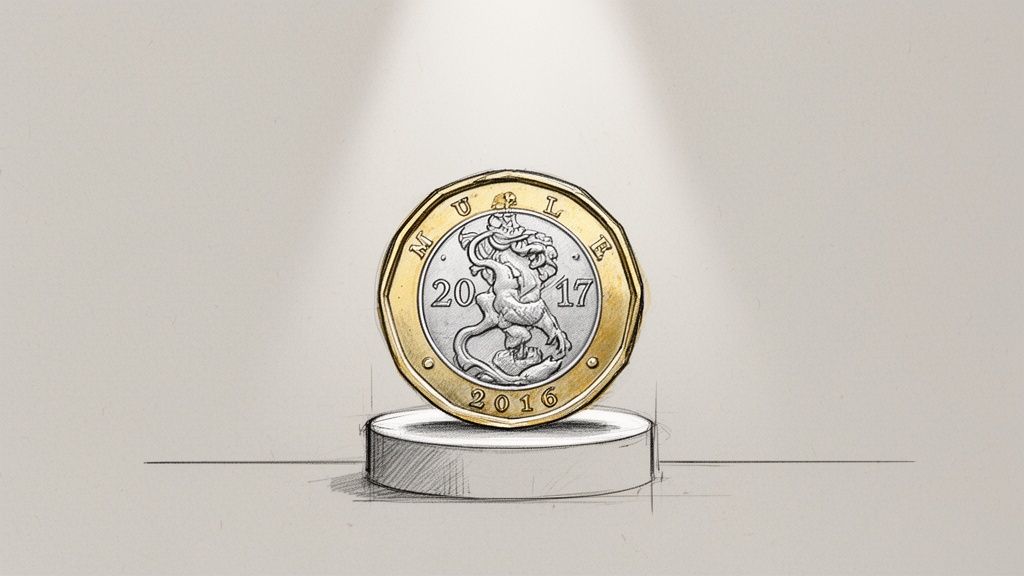
The Legendary 2016 Transitional £1 Coin
The most famous example of such a mistake is the legendary 2016 transitional £1 coin. This piece is the undisputed holy grail for modern coin hunters and represents one of the most exciting discoveries in recent UK numismatic history. The error happened right in the middle of the switch from the old round pound to the new 12-sided design.
In 2016, the Royal Mint was producing trial pieces for the new 12-sided coin, which was set to launch officially with a 2017 date. During this test phase, a tiny number of coins were somehow struck using an obverse die dated 2016 paired with a reverse die dated 2017. This created a bizarre coin with two different years on it—an impossible combination that instantly made it a collector’s dream.
One of the best parts of this story is how the first one was found. A window cleaner spotted one in his change and, realising something wasn't right, had it authenticated by experts. They confirmed it was a genuine minting error from the Royal Mint in Llantrisant, Wales, and estimated its value could hit up to £3,000 at auction. You can dive deeper into this incredible find and learn what makes the rarest one pound coin so sought after.
This single discovery kicked off a nationwide treasure hunt. The 2016 transitional error proves that monumental finds aren't just confined to old history books; they can be sitting in a cash register or hiding at the bottom of a change jar, just waiting for a sharp eye.
Why Is This Error So Valuable?
The value of this particular pound coin is driven by a perfect storm of numismatic factors. It’s not just a mistake; it’s a story captured in metal.
Several key elements contribute to its high valuation:
- Extreme Rarity: Nobody knows the exact number of these coins that escaped the mint, but it's believed to be incredibly small, perhaps only a handful. They were never meant for circulation, making any example found in public a true anomaly.
- A Major Production Error: This isn’t a minor die chip. A date mismatch is a significant breakdown in the minting process, which adds to its appeal and historical importance.
- Compelling Backstory: The coin is directly tied to a huge event in UK currency—the introduction of the "most secure coin in the world." This narrative makes it more than just an error; it's a piece of history.
Because so few exist, pinning down a definitive market price is tough. The value is largely set by what a collector is willing to pay at auction, but figures in the £1,000 to £3,000 range are frequently cited, depending on the coin's condition and history. For collectors, the 2016 transitional £1 isn't just a coin; it's a testament to the thrilling possibility that a life-changing find could be just one transaction away.
How to Spot More Subtle Production Flaws
Once you've got the hang of spotting the big, obvious rarities, it's time to train your eye for the subtler flaws that most people completely miss. While dramatic errors like the dual-date mule coin are the stuff of legend, there are other, more common production glitches that can still make a pound coin worth a good bit more than its face value.
These little imperfections need a closer look, but finding one is a real thrill for the dedicated collector. One of the most interesting and accessible of these is the partial collar error, a fascinating mistake you can find on the modern 12-sided pound coins. It’s a flaw that, once you know what to look for, lets you spot value where others just see a slightly odd-looking coin.
Understanding the Partial Collar Error
To get your head around this error, think about baking a cake. You pour the batter into a tin, and that tin—the collar—is what gives the cake its uniform shape. In the world of coin minting, a metal ring called a collar does exactly the same job. It holds the blank coin (called a planchet) perfectly in place as it's struck with incredible force by the dies, ensuring the coin gets its precise 12-sided shape.
A partial collar error happens when this metal ring doesn't quite sit right and fails to fully encircle the coin blank during the strike. With part of the coin unsupported, the metal has nowhere to go but outwards, 'leaking' over the edge. This creates a very distinctive raised lip or a smooth, flattened section on what should be a sharp, perfectly formed edge.
It's crucial to remember this is a genuine production glitch, not just damage from being knocked about. A damaged coin will look crushed, scratched, or dented, whereas a partial collar error shows the natural, smooth flow of metal from the high-pressure strike.
You can think of the partial collar error as the mint's equivalent of cake batter spilling over the top of the tin. It's an accidental overflow that creates something unique and, in the coin world, valuable.
Identifying and Valuing the Flaw
Spotting this error is all about carefully checking the coin's 12 edges. Turn the coin slowly in the light and keep an eye out for any of these tell-tale signs:
- A Raised Lip: One section of the edge will have a distinct ridge of metal sitting proud of the coin's surface.
- A Flattened Area: Part of the edge might look smooth and slightly wider than the others, lacking that crisp definition.
- 'Bleeding' Effect: The inner silver-coloured core may look like it has slightly 'bled' into the outer golden ring right at the point of the error.
As you might expect, the value of these coins is directly linked to how dramatic the flaw is. A minor, barely noticeable error might only add a few quid to the coin's value. But a really obvious error that significantly changes the coin's shape can be far more desirable to collectors.
Partial collar errors on the new 12-sided £1 coins from 2016 to 2018 are a surprisingly common find. Research suggests this flaw happened repeatedly at the Royal Mint in Llantrisant, likely affecting thousands of coins. Values can range from £10 to £50 for mild examples, but can climb to £100 or more for pronounced errors in excellent condition. To dive deeper into this and other fascinating varieties, it's well worth checking out the experts at Check Your Change.
This is the kind of knowledge that separates a casual change-checker from a serious collector. By learning to spot these subtle yet significant flaws, you open up a whole new world of coin hunting, finding hidden value in the change that passes through your hands every single day.
How to Value and Sell Your Rare Pound Coins
Finding a scarce or error-riddled pound coin in your change is a fantastic moment, but that's just the start of the adventure. The next big step is figuring out what it's genuinely worth and how best to sell it. This guide will give you a clear roadmap to turn that exciting find into actual cash, without the guesswork.
It’s not just about finding someone to buy it. It's about properly judging your coin's condition and picking the right place to find serious collectors—the people willing to pay a fair price for a coin they've been hunting for.
Understanding Coin Condition and Grading
After rarity, the single biggest thing that dictates a coin's value is its condition, or what collectors call its grade. Think of it like a vintage car: one that's been kept under a dust cover in a garage will always be worth more than the exact same model that’s been used for the daily school run for 20 years. Coins are no different.
Numismatists (coin experts) have a detailed scale for this, but for now, you just need to know the basics you'll see bandied about:
- Uncirculated (UNC): A perfect, mint-condition coin. It looks just like it did the day it left the Royal Mint, with no signs of wear at all. These fetch the highest prices.
- Extremely Fine (EF): You can see the tiniest bit of wear, but only on the very highest points of the design. Almost all of its original shiny lustre is still there.
- Very Fine (VF): This coin has been in a few pockets. There's light wear on the details, but the main features are still crisp and clear.
- Fine (F): The design is worn but you can still make everything out clearly. It’s obviously been used, but it’s not heavily damaged.
A coin's grade can be the difference between it being worth £5 and £500. An uncirculated version of a rare pound can sell for many, many times more than a heavily worn example of the very same coin.
Choosing Where to Sell Your Coins
Once you've got a handle on your coin's condition, it’s time to decide where to sell it. You've got a few options, and each has its pros and cons, whether you're a seasoned seller or this is your first time.
1. Online Marketplaces (e.g., eBay) Online sites give you access to a huge audience, but they come with big risks. You’ll see prices all over the place, often wildly inflated by hopeful sellers, which makes the market look confusing. The trick is to filter your search to see 'Sold Items' only. This shows you what people are actually paying, not just what sellers are asking for.
2. Specialist Coin Dealers A reputable dealer brings expertise to the table and offers a quick, straightforward sale. They will, of course, offer a price below its full retail value—that’s how they make their living—but in return, you get a secure, professional transaction and cash in hand. For a deeper dive into the valuation process, you can learn more about how to value coins in our guide.
3. Auction Houses If you suspect you have an exceptionally rare or high-value coin, a specialist auction house might be your best bet. They do all the marketing to connect you with serious collectors with deep pockets, but they do take a commission from the final sale price. To get inside the mind of a professional appraiser, an article explaining the secrets of smart valuation offers great insights, even though it's focused on a different market.
Tips for a Successful Sale
To get the best price and make sure everything goes smoothly, a little bit of prep work goes a long way. A well-presented coin will always get more attention and, ultimately, a better price.
- Take High-Quality Photos: Use natural light against a plain, simple background. Get sharp, close-up shots of the front (obverse), back (reverse), and don’t forget the edge of the coin.
- Write an Honest Description: Be clear about the coin's year, design, and any potential errors. It's crucial to be upfront about its condition, mentioning any scratches or marks you can see. Honesty builds trust.
- Set a Realistic Price: Do your homework. Look up what identical coins in a similar condition have recently sold for. This will help you set a price that’s both competitive and fair. Avoid the temptation to list it for a fantasy figure—it just puts off genuine buyers.
Your Top Questions About Valuable Pound Coins Answered
Dipping your toes into the world of coin collecting always brings a flurry of questions. To give you a head start on your hunt for a pound coin that’s worth more than its face value, we’ve tackled some of the most common queries we hear from new collectors.
Think of this as a quick guide to building your confidence and steering clear of those classic beginner slip-ups.
Are All the Old Round Pound Coins Worth a Fortune?
Not at all. The simple truth is that the vast majority of old round pounds are only worth a quid. A coin's real value almost always comes down to one thing: rarity. And rarity is all about how many were minted in the first place.
It's the specific, low-mintage designs you need to keep an eye out for, like the coveted 2011 Edinburgh City coin. The key is to always check both the date and the design on any coin you find against a good rarity guide. That’s how you’ll know if you’ve struck gold.
How Do I Know if an Error Coin Is the Real Deal?
This is a brilliant question, and learning to spot the difference is a crucial skill. Genuine minting errors have very specific tells that are incredibly difficult to fake. A partial collar error, for instance, will show the metal flowing smoothly and naturally where it escaped the press. Post-mint damage, on the other hand, just looks wrong—crushed, filed, or scratched.
If you think you've found something special, the best and safest thing you can do is talk to a reputable coin dealer or send it to a professional grading service. Their expert eyes can tell you for sure and save you from making a very expensive mistake.
Should I Clean My Coins to Make Them More Valuable?
Definitely not—in fact, you’ll do the exact opposite. Cleaning a collectible coin is one of the fastest ways to destroy its value. It creates thousands of tiny scratches and strips away the coin's original surface lustre, a thin layer called a patina, which serious collectors absolutely love.
Always handle potentially valuable coins by their edges to keep fingerprints off, and pop them straight into protective holders. Preserving a coin's natural, untouched state is the secret to unlocking its true market value.