

A single monarch's portrait remains on approximately 27 billion UK coins in active circulation, according to The Royal Mint's overview of Queen Elizabeth II coinage. That figure changes the way a serious collector should approach the phrase “Queen Elizabeth coin”. The portrait alone doesn't create rarity. Date, denomination, portrait, condition, variety, production status and collector demand decide whether a piece is ordinary change or a coin worth setting aside.
Queen Elizabeth II's coinage is unusually broad because her reign crossed the pre-decimal and decimal eras, included five definitive portraits and ended during a live transition to King Charles III issues. The practical opportunity today isn't to keep every coin bearing her effigy. It's to sort intelligently, recognise the boundaries between coin types and separate legal-tender status from genuine circulation scarcity.
Understanding the Scale of Elizabeth II Coinage
Elizabeth II coinage spans both pre-decimal and decimal currency, with issues beginning around her accession and continuing through the transition to King Charles III. That breadth makes the category useful for building a structured collection, but it also creates a common valuation mistake: treating every coin with her portrait as scarce.
The supply is large, so a typical post-decimal coin from everyday change rarely gains a premium because it shows an earlier monarch. The stronger candidates are more specific: a scarce date within a denomination, an unusual die variety, a proof finish, an unusually high grade or a commemorative issue with limited availability.
Practical rule: Use the monarch's portrait to identify the coin type, not to assume value.
Portrait changes matter because they establish collecting boundaries and can signal different dies, dates and production runs. Two coins with the same denomination may have different market appeal if their effigies, reverse designs or varieties differ. A dealer sorting a mixed lot therefore records the portrait before making a pricing decision, then checks the date, denomination, condition and evidence of a variety.
Legal tender status adds another layer during the current dual-monarch transition. A coin may remain valid for payment while being plentiful in circulation, whereas another may attract collector interest because examples are difficult to find in spendable change. Those are separate questions. Confirm the issue and denomination before treating a coin as either spendable currency or a scarce collectible.
Pre-decimal and decimal supply
Decimalisation provides a clear organising line for a Queen Elizabeth II collection. Earlier pieces belong to a different monetary system and should be catalogued by pre-decimal denomination and type. Decimal issues can then be arranged by denomination, date and effigy, with commemoratives and special finishes kept separate.
A practical storage and recording system divides the material into:
- Pre-decimal issues, identified by denomination, date and type.
- Decimal circulation coins, arranged by denomination, date and effigy.
- Commemoratives, separated from pieces encountered in ordinary spending.
- Proof and presentation pieces, retained with original packaging and documentation where available.
This separation prevents common coins from obscuring the few pieces that deserve closer examination. It also makes gaps in a date, denomination or portrait sequence easier to spot.
For context on the longer development of British monetary types, see this history of British coins from Cavalier Coins. Elizabeth II issues fit into that wider sequence rather than forming one uniform group.
Age alone does not establish scarcity. An older coin can be historically important yet widely available, while a later issue can command attention when circulation examples are hard to locate, a die variety is sought after or the coin completes a portrait and date run.
The Five Definitive Portraits and Key Milestones
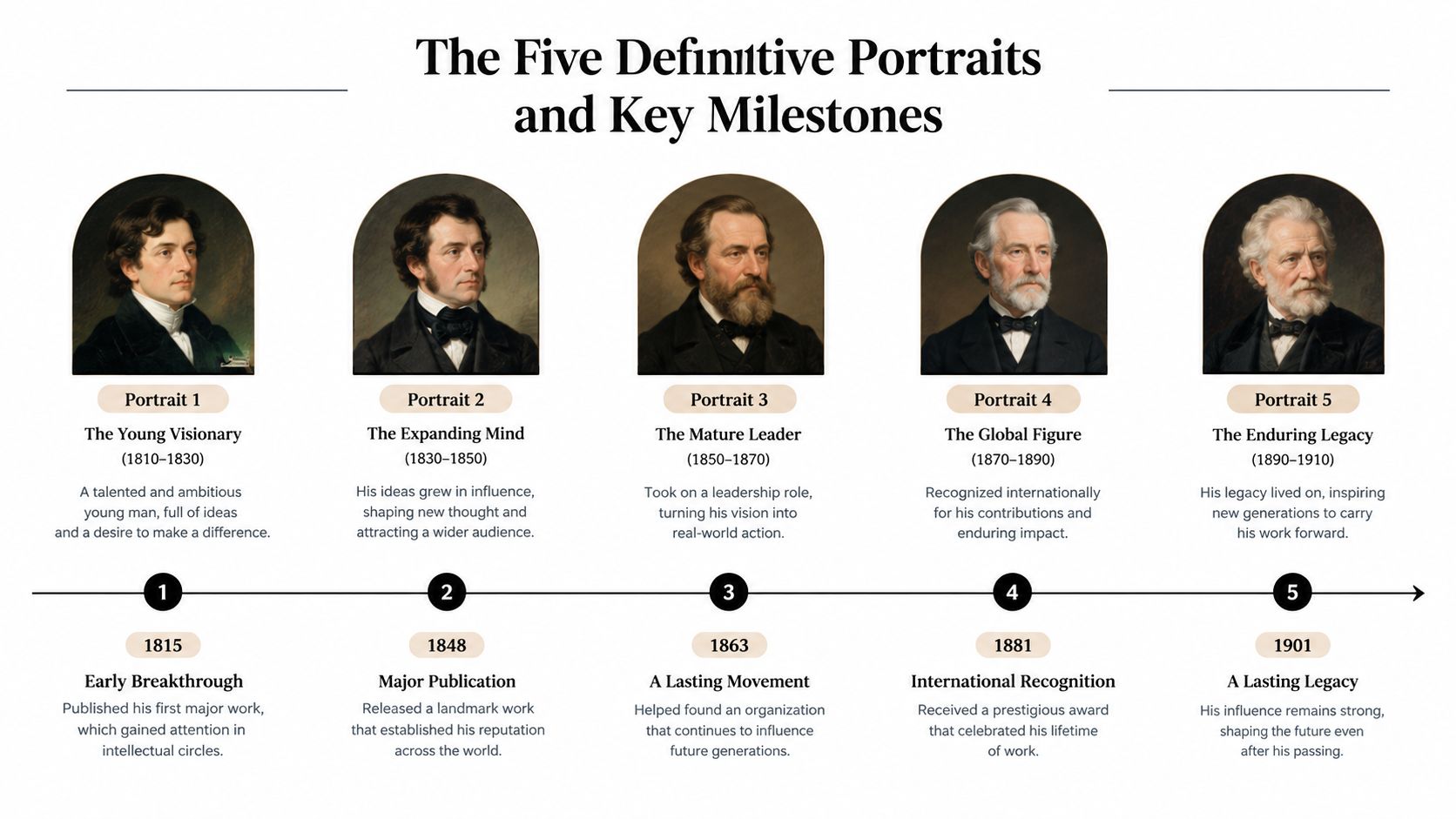
The most efficient way to catalogue a Queen Elizabeth coin is to start with the obverse portrait, then confirm the date, denomination and reverse design. The Royal Mint Museum records five portrait changes during Elizabeth II's reign. The first, by Mary Gillick, appeared on circulating coins from 1953 until decimalisation in 1971, while later effigies created new collecting boundaries.
Mary Gillick and the pre-decimal foundation
The first circulating portrait is the Mary Gillick effigy associated with the accession period and the early part of the reign. For a collector, the important point isn't recognising a young Elizabeth II. It's recording that this portrait belongs to the pre-decimal phase and forms the first major boundary in a complete reign collection.
A coin with the Gillick portrait should be checked for its denomination, date, metal and condition before any value judgement. Wear can be considerable on pieces that spent decades in circulation, and similar-looking examples may have very different appeal depending on whether they're ordinary circulation strikes, proofs or part of a complete set.
The Arnold Machin transition
The second definitive portrait was designed by Arnold Machin. The Royal Mint's records identify its use from 1968, with decimalisation in 1971 providing the clearest practical dividing point for collectors. That overlap is important. The portrait date and the currency system don't always change at precisely the same moment, so cataloguers should record both rather than relying on a single assumption.
Decimalisation replaced the UK's coins and introduced a new framework of denominations. For a collector building a date run, this means the 1971 milestone can separate two major groups while the portrait itself helps identify the relevant subtype.
Later effigies as catalogue boundaries
The portrait changed again in 1985, then in 1998, and finally in 2015. These updates weren't merely decorative. Each effigy creates a new combination of portrait, date and denomination for catalogue purposes, and each can affect set completeness.
The 2015 portrait by Jody Clark is particularly recognisable because it shows Elizabeth II wearing the Royal Diamond Diadem crown. It also marks the latest definitive portrait used during her reign. A collection that includes only one example from each period is a useful overview, but advanced collectors generally pursue denomination-by-denomination combinations within each portrait era.
The Royal Mint Museum's explanation of Elizabeth II on coins confirms the five portrait changes and the role of the 1971 decimalisation milestone. The Royal Mint's definitive coinage records also show how these portrait transitions support attribution and cataloguing across issues struck from 1953 through 2022.
Cataloguing advice: Write down the portrait, not just the year. A date without the effigy can leave a variety or transitional issue incorrectly identified.
The same method applies to commemoratives and proof sets. Confirm the design, finish and packaging, then compare the coin with a reliable reference before assigning a premium. This overview of the Royal Mint's worldwide reach provides useful wider context for understanding why Royal Mint designs appear in collecting markets beyond the UK.
Grading Standards and Condition Assessment
Condition is often the deciding factor between a coin that belongs in a circulation accumulation and one that deserves a collector listing. The assessment should begin before cleaning, polishing or placing the coin under harsh light. Cleaning can remove the original surface and leave hairlines that are more damaging to value than ordinary, honest circulation wear.
Examine the high points first
Use a soft, neutral light and hold the coin by its edge. Avoid rubbing the surfaces with a cloth. On Elizabeth II portraits, inspect the raised areas of the crown, hair, cheek and neck truncation. These points receive handling wear first, although the exact appearance varies between effigies and denominations.
An Extremely Fine, or EF, coin should retain substantial design detail while showing clear evidence of limited circulation. An About Uncirculated, or AU, piece may show only light friction on the highest points, with much of its original surface still present. An Uncirculated, or UNC, coin should show no ordinary circulation wear, though marks from contact with other coins, storage or production can still affect its desirability.
The label alone isn't enough. Two coins described as UNC may differ sharply in eye appeal because one has fewer contact marks, cleaner fields or stronger lustre. A seller who calls every bright coin uncirculated will usually create disputes with experienced buyers.
Use a repeatable inspection process
A reliable examination follows the same order each time:
- Identify the type first. Record the denomination, date, portrait and reverse. Grading an incorrectly identified variety creates a false valuation from the outset.
- Check the fields. Look for scratches, hairlines, spots, stains and marks from coin-to-coin contact.
- Inspect the relief. Examine the crown, facial features, hair and truncation for flattening.
- Assess the edge. Note knocks, dents, lettering or milling damage. Edge damage can be severe even when the obverse looks attractive.
- Compare both sides. A strong portrait cannot compensate for a badly marked reverse or damaged rim.
- Record the result conservatively. If a coin sits between grades, describe the visible condition rather than promising the higher grade.
The Royal Mint's production history is useful here because it establishes five definitive portrait boundaries across the reign. This guide to how coins are graded can help collectors understand the terminology used in descriptions and auction listings.
Dealer's standard: Describe what the buyer can see. “Light friction on the highest points with scattered field marks” is more useful than an unsupported grade label.
Proof coins require a separate mindset. Their mirrored or specially prepared surfaces reveal hairlines, fingerprints and spotting quickly, so a proof shouldn't be handled in the same way as a coin pulled from pocket change. Keep packaging and certificates with the piece, but don't let original presentation materials substitute for a careful examination of the coin itself.
Value Drivers and Market Premiums
The Elizabeth II market has a wide spread between abundant circulation material and coins that command a premium for specific reasons. The Royal Mint states that over 27 billion Queen Elizabeth II coins remain in circulation, while the final UK £1 coins bearing her effigy were released in a 23.29 million-piece tranche before the move to King Charles III issues. The Royal Mint's information on the rarest circulating coins puts that supply into perspective.
A common coin from a large circulation issue usually needs exceptional condition, a recognised variety or strong set demand to move beyond ordinary value. Age by itself won't overcome abundant supply. A later transition issue, however, may attract attention because collectors find fewer examples in active change, even when the total issue is not absolutely scarce.
Compare the reasons for a premium
| Coin characteristic | What it can contribute |
|---|---|
| Common circulation type | Usually limited collector premium unless the condition is unusually strong |
| Distinct portrait and date combination | Helps complete a structured collection and may create variety demand |
| Low-availability commemorative | Can attract buyers seeking a particular event or design |
| Proof or presentation issue | Special finish, packaging and completeness can strengthen desirability |
| Recognised error or die variety | May command attention when the feature is genuine and documented |
| Late transition issue | Can be harder to find in everyday change, creating practical sorting interest |
This comparison doesn't mean every commemorative or late issue is valuable. Demand still depends on how many collectors want the piece, how easily they can buy it elsewhere and whether the coin is correctly identified. A coin that looks unusual may just be damaged after leaving the mint.
Build value from the collection outward
Set completeness can matter more than isolated novelty. A collector assembling the five portrait periods may need an ordinary coin that fills a gap, while another buyer may want a sharply graded example of one denomination across each effigy. The same coin therefore has different commercial importance depending on the buyer's project.
For resellers, sorting is more productive than indiscriminate accumulation. Separate the obvious circulation material, then create a review pile for portrait changes, dates, commemoratives, proofs, errors and high-grade pieces. Photograph both sides and the edge of anything unusual before listing it. The description should explain the exact reason for the premium, not rely on the emotional appeal of the royal portrait.
Pricing principle: A premium needs a reason that another collector can verify.
Navigating the Dual Monarch Transition Era
The appearance of King Charles III coins alongside Elizabeth II issues has created a living mixed-monarch period in UK circulation. That doesn't make every Elizabeth II coin newly collectible, and it doesn't remove the older coins from use. The Royal Mint confirms that all Elizabeth II coins remain legal tender, so owners can spend them, save them or sort them without treating them as obsolete currency.
The important distinction is between legal-tender status, date scarcity and circulation scarcity. Legal tender answers whether the coin can still be used. Date scarcity asks how limited a particular date or issue is compared with related examples. Circulation scarcity asks how difficult it is to encounter that piece in ordinary change at a particular moment.
Why the 2022 £1 matters
The Royal Mint's guidance identifies the 2022-dated Elizabeth II £1 as the rarest £1 in circulation, while also confirming that more than 4 billion one-pound coins have entered circulation. The Royal Mint's guide to the rarest one-pound coins supports the distinction collectors need to make.
That statement doesn't mean every 2022 £1 is a high-value rarity. It means the date is the rarest currently circulating £1 date in the context described by the Royal Mint. The coin remains a usable pound, and its collector appeal comes from the final position in the Elizabeth II circulation sequence and the difficulty of finding examples in everyday transactions.
The final release also creates a useful trap for casual sellers. A coin encountered recently may have been struck earlier and held before release. The Royal Mint's transition information explains that final Elizabeth II £1 coins and the first Charles III issues entered circulation as part of a handover driven by demand for £1 coins, not solely by collectors.
Spend, keep or sort
A practical decision tree is more useful than a blanket instruction to hoard every Elizabeth II coin.
- Spend common, worn examples if they don't fill a collecting gap and show no unusual feature.
- Sort 2022-dated £1 coins separately, recording condition and checking the date carefully.
- Keep portrait transitions together if you're building a complete reign or denomination set.
- Retain proof, commemorative and presentation pieces with their packaging, certificates and purchase records.
- Seek a second opinion before selling anything described as an error or rare variety.
Mixed-monarch change is valuable for beginners because it makes comparison immediate. A collector can examine the effigy, date and denomination on coins found in normal transactions, then learn how a circulation sequence changes over time. It's also useful for charities and bulk sorters, provided they separate genuine collector candidates from ordinary face-value currency.
Authentication and Spotting Common Fakes
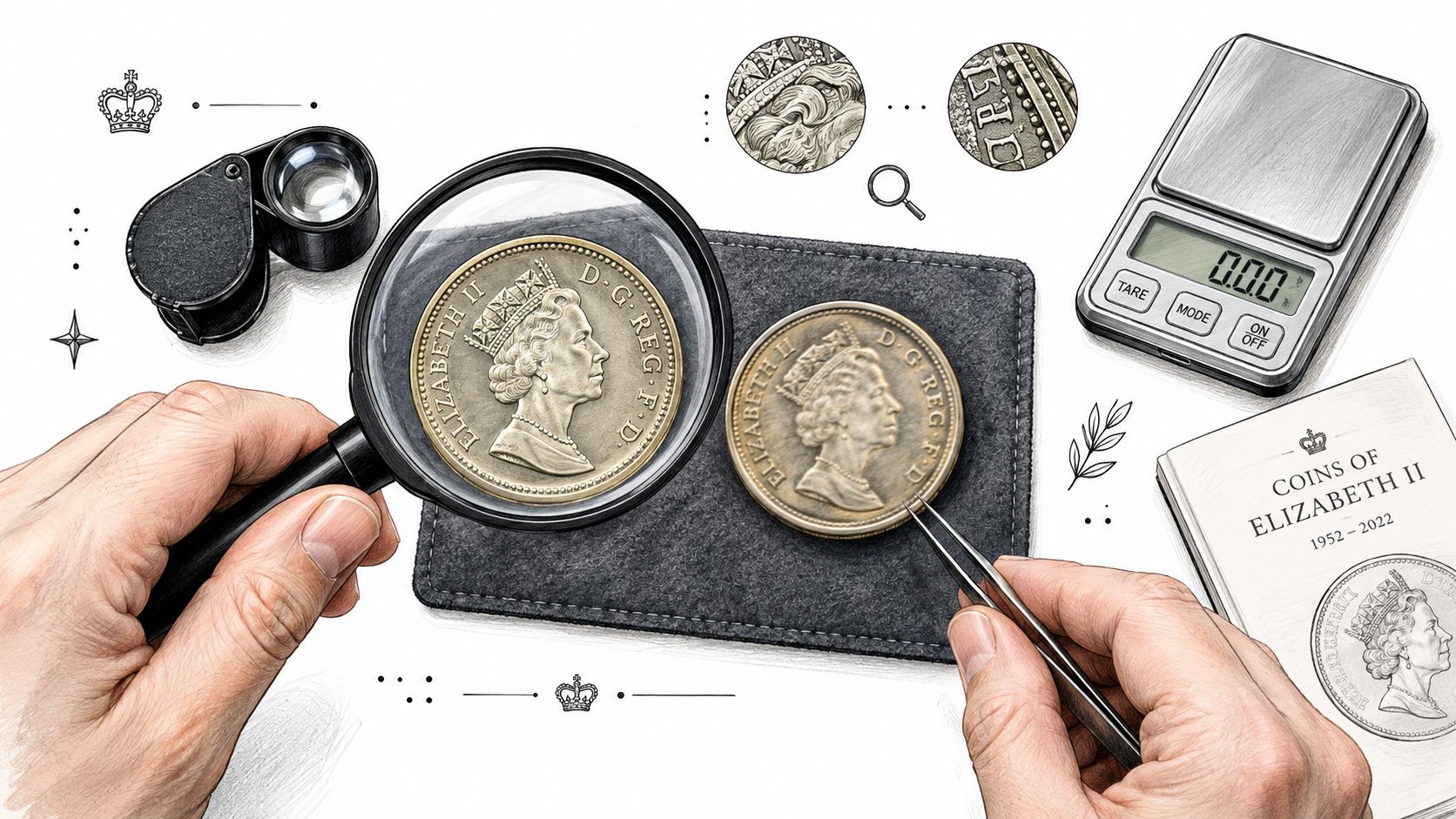
The most expensive mistake in Elizabeth II collecting is paying a premium for a coin that has been altered, misidentified or damaged. Start with the basics. Compare the suspect piece with a trusted example of the same denomination and type, then examine its design sharpness, lettering, edge and overall surface under magnification.
Check the coin as a complete object
Counterfeiters and dishonest sellers may target coins that attract attention because of a date, commemorative design or transition status. Common warning signs include soft lettering, uneven relief, suspiciously smooth fields, incorrect edge treatment and surfaces that look unnaturally altered. A genuine coin can also be worn or damaged, so one imperfect feature isn't proof of forgery.
Use a non-destructive sequence:
- Confirm the design. Match the portrait, inscription, denomination and reverse details against a reputable reference.
- Inspect the edge. Look for the correct milling, lettering or plain finish. An edge that doesn't belong to the type is a serious warning.
- Study the strike. Weak, rounded or poorly formed details can indicate a counterfeit, although genuine minting variation must also be considered.
- Look for tooling. Raised lines, filled letters and unnaturally sharp local details may indicate alteration.
- Compare the surface. Artificial toning, fresh scratches around a date and mismatched colour can reveal an attempt to change appearance.
- Escalate valuable pieces. Ask a respected dealer, auction specialist or professional grading service to examine a coin when the financial risk is material.
The Royal Mint's transition information identifies the 2022-dated Elizabeth II £1 as the rarest in active circulation, a point also reported in the Royal Mint's handover announcement. That attention makes correct identification more important, but it doesn't justify treating every 2022 coin as an investment-grade rarity.
Authentication rule: Never clean, file, test with chemicals or apply a magnet to a coin before professional evaluation. A crude test can damage the very evidence an expert needs.
For higher-value purchases, request clear photographs of the obverse, reverse and edge, along with the seller's description of provenance and condition. Be cautious when a listing uses dramatic language but omits the denomination, date, portrait or edge details. Specific information is a sign of a sale built around identification. Vague claims require the buyer to do all the verification work.
Storage and Preservation Best Practices
Preservation starts with handling. Hold coins by the edge, keep food and drink away from the work area and use clean, dry hands. Cotton gloves can catch on raised details and encourage careless handling, so many experienced collectors prefer bare hands with careful edge contact for ordinary metal coins. The rule changes only when the material or surface requires specialist treatment.
Humidity, pollutants, unsuitable plastics and skin oils can all affect a coin's appearance. PVC-containing holders may leave a sticky residue or create long-term surface damage. Paper envelopes with poor-quality materials can also transfer contaminants. Store collectible pieces in inert, archival-quality holders designed for coins, and avoid forcing a coin into a compartment that is too small.
Match storage to the coin
A mixed Elizabeth II collection needs more than one storage method. Everyday circulation pieces can be organised in labelled flips or trays, while proof and presentation issues deserve protection from contact and abrasion. Keep original cases and certificates with the relevant coin, but inspect packaging periodically for deterioration.
Useful storage habits include:
- Use inert holders: Choose archival flips, capsules or trays made for numismatic storage rather than unknown soft plastics.
- Separate raw coins: Prevent pieces from rubbing together, especially when one coin has dirt or rough edge damage.
- Keep records: Log the date, denomination, portrait, grade opinion, purchase source and any visible marks.
- Control the environment: Choose a stable, dry location away from direct sunlight, condensation and household chemicals.
- Handle minimally: Every unnecessary touch creates another opportunity for fingerprints, scratches or drops.
Don't polish a dull coin to make it look more attractive. Collectors generally prefer an original surface, even when it shows natural toning or ordinary circulation, over a bright surface covered in cleaning hairlines. The same principle applies to commemoratives. Presentation should protect the coin, not disguise its history.
Preserve resale flexibility
Good storage supports good selling. A coin that can be identified quickly, photographed without removing it from a safe holder and matched to a purchase record is easier to offer confidently. Bulk buyers also benefit from clear separation between common circulation material and pieces that require individual assessment.
Keep high-interest coins away from loose bulk bags. A potentially valuable variety can be scratched, mixed with the wrong date or overlooked when inventory is handled repeatedly. Preservation therefore isn't only about preventing corrosion. It protects the chain of identification that gives a coin commercial credibility.
Strategic Buying and Selling for Collectors
A sensible Elizabeth II buying strategy begins with a defined collecting objective. Choose whether you're building a portrait set, completing denomination and date runs, seeking proof issues, studying commemoratives or sourcing stock for resale. Without that decision, it's easy to spend money on attractive pieces that don't fit a coherent collection.
Buy the information before the coin
Before agreeing a price, record the details that allow another buyer to verify the item:
- Obverse: Confirm the portrait and inscription.
- Reverse: Identify the denomination and design type.
- Date: Check that the date matches the claimed issue.
- Edge: Photograph or describe milling, lettering and any unusual features.
- Condition: Separate visible wear from marks, stains and damage.
- Provenance: Keep invoices, certificates, original packaging and seller descriptions.
A weekly auction can be useful for sought-after pieces because it exposes a coin to an audience already searching for that category. The trade-off is competition and the risk of bidding emotionally. Set a maximum price based on the coin's verified type and condition, then stop when the bidding exceeds the reason for buying.
For bulk purchases, calculate the sorting work before negotiating. A mixed collection may contain useful dates and varieties, but it may also require substantial time to inspect, photograph and list. Direct purchases can make sense when the lot is well organised or when the seller provides accurate inventories. Large orders may also justify asking for special pricing, but the discount should compensate for unsorted material, handling and realistic resale demand.
Sell with evidence, not excitement
A strong listing gives the buyer enough information to make an independent judgement. Use sharp photographs, neutral descriptions and separate lots for coins with different grades or levels of interest. Don't describe an ordinary legal-tender coin as rare just because it belongs to the final Elizabeth II period. State whether the appeal comes from the date, portrait, condition, commemorative design or documented variety.
Charities can apply the same discipline to donated currency. Separate obvious ordinary currency from coins that merit individual review, keep potentially significant pieces together and seek specialist guidance before selling a mixed collection as scrap or bulk face value. That approach can help prevent a recognisable collector item from disappearing into an unexamined lot.
For collectors and resellers, the final checklist is straightforward:
- Identify the portrait and monetary era.
- Separate circulation coins from proofs and commemoratives.
- Check dates, denominations and edges.
- Grade conservatively and never clean before assessment.
- Verify unusual claims with a specialist.
- Store pieces so their surfaces and records remain intact.
- Price from evidence and comparable demand, not royal nostalgia.
- Decide in advance whether the coin is for a collection, resale or everyday use.

The dual-monarch period rewards organised sorting. Elizabeth II coins remain legal tender, but only particular dates, portraits, varieties, conditions and formats create a compelling collecting proposition. A disciplined buyer can enjoy the historical continuity without confusing a familiar portrait with automatic rarity.
Cavalier Coins Ltd offers fixed-price coins and banknotes, weekly eBay auctions for sought-after pieces, bulk purchasing options and guidance for identifying British commemorative issues. Visit Cavalier Coins Ltd to explore Elizabeth II material, compare collecting opportunities and discuss larger collections or resale stock.