
That familiar jingle of change in your pocket rarely gets a second thought, but it could be hiding a small fortune. A select few rare one pound coins are worth far more than their face value, prized by collectors for their scarcity and unique stories. The key is knowing what to look for—a specific year, a subtle error, or a low production run can turn a simple quid into a genuine find.
What Turns a Pound Coin into a Collector's Prize
It’s easy to think that age alone makes a coin valuable. While older coins can certainly be scarce, the real drivers of value for pound coins are much more specific. Think of it like collecting first-edition books; it isn’t just about how old the book is, but how many copies were printed and whether it has any unusual features. The world of numismatics—the collecting and study of currency—runs on these same principles of supply and demand.
A seemingly ordinary £1 coin can become a sought-after treasure for a few key reasons. Understanding these is the first step towards building a truly impressive collection and spotting those hidden gems that most people spend without a second glance.
The Power of Scarcity
The single most critical factor is the mintage figure. This is simply the total number of coins of a specific design that The Royal Mint produced in a given year. Low numbers create instant rarity. For example, a coin with a mintage below one million is considered incredibly scarce when you compare it to common designs produced in the tens of millions.
A coin's journey from loose change to a collector's item often begins with its mintage figure. The fewer coins that exist, the more people will want one, pushing its market value far beyond its one-pound face value.
Errors and Unique Variations
Beyond production numbers, a coin's value can skyrocket because of mistakes made during the minting process. These aren’t just dings and scratches from being in circulation; they are unique imperfections that set a coin apart from every other one like it. These fascinating anomalies are what many collectors live for.
Here are a few key types of errors to keep an eye out for:
- Die Errors: These happen when the mould (or die) used to stamp the coin has a flaw, like a crack or a misaligned element.
- Mis-strikes: This is when the blank coin isn't lined up perfectly during striking, resulting in an off-centre design.
- Mules: This is an extremely rare type of error where a coin is struck with mismatched dies—for instance, the 'heads' design from one coin and the 'tails' from a completely different one.
Ultimately, the journey from pocket change to prized possession is all about spotting the details that others miss. This guide will arm you with the knowledge to identify the designs, dates, and subtle flaws that can transform a simple pound coin into a piece of numismatic history.
Decoding the Secrets of a Valuable Pound Coin
What separates a common £1 coin from a collector's piece worth fifty times its face value? While you might think age is the most obvious clue, the real secrets lie in a mix of scarcity, unique quirks, and historical context. Learning to spot these is like learning a new language—once you know the signs, you can see value where others just see loose change.
The journey starts with the single most important factor in the world of rare one pound coins: its mintage figure. This number is simply the total quantity of a specific coin design that The Royal Mint produced in a given year.
Think of it like a limited-edition art print. A poster with millions of copies is just a poster, but a print from a run of only 500 becomes a sought-after piece. The same principle applies here. A coin with a low mintage is automatically scarcer and, therefore, far more desirable to collectors trying to complete their sets.
The Impact of Mintage Figures
A low mintage instantly creates a supply and demand imbalance that can drive up a coin's value on the secondary market. Coins with mintage figures under 2 million are generally considered scarce, while those under 1 million are exceptionally rare and often command a serious premium.
For instance, the 2011 Edinburgh City £1 coin is one of the rarest ‘round pounds’ ever to enter circulation, with a mintage of just 935,000. That low number cements its status as a key find for any serious collector, making it worlds more valuable than a common design produced in the tens of millions. Knowing these numbers is your first step towards identifying a genuine treasure.
When Imperfection Creates Perfection
Beyond sheer production numbers, a coin’s value can rocket up thanks to fascinating imperfections known as minting errors. These aren't the everyday scratches and dings from being passed around; they are genuine mistakes that happened right at the mint. These unique flaws can make a coin one-of-a-kind.
Some of the most exciting errors to look for include:
- Mis-Strikes: This happens when the blank coin (the planchet) isn’t perfectly aligned with the stamping die, resulting in a design that’s noticeably off-centre.
- Die Cracks: If a die develops a small crack, it leaves a raised, jagged line on every coin it strikes, creating a distinct and collectible variety.
- Mules: The holy grail for error collectors. A 'mule' is an incredibly rare hybrid created when a coin is struck with mismatched obverse (heads) and reverse (tails) dies.
A recent, brilliant example was a 2023 King Charles III 'Bee' £1 coin found struck entirely on the nickel-brass outer ring, completely missing its silver-coloured inner section. This unique piece, a result of a planchet error, sold at auction for an astonishing £1,250.
Finding a verified minting error is like discovering a glitch in the system—a rare deviation from the norm that creates something truly special and valuable. It transforms a mass-produced object into a unique artefact.
Historical Significance and Public Interest
Finally, a coin’s story really matters. Coins that commemorate major national events, anniversaries, or feature designs that just capture the public's imagination often become more collectible. The switch from the round pound to the 12-sided coin in 2017, for example, sparked a nationwide hunt for the final round pound designs.
This "collectability factor" is driven by a powerful mix of nostalgia and historical importance. A coin marking the end of an era, like the final £1 design to feature Queen Elizabeth II's portrait, carries an appeal that goes far beyond its mintage figure. It's this combination of a low mintage with a compelling story that cements a simple pound coin's place as a true collector's prize.
A Collector's Checklist of Sought-After Pound Coins
Right, now that we've covered what makes a pound coin valuable, let's get down to the fun part: identifying the actual treasures you might find hiding in your change. This is your go-to guide for spotting the most sought-after designs from the classic "round pound" era.
Think of it as a treasure map. Each entry gives you the coin's name and year, its unique design, that all-important mintage figure, and a realistic market value. Use it to quickly check any interesting round pounds you come across.
The Round Pound Heavy Hitters
Before the 12-sided coin appeared in 2017, the round pound was king for over three decades. During that time, The Royal Mint pumped out dozens of commemorative designs, but only a handful were made in genuinely low numbers. These are the coins every serious collector is on the lookout for.
The table below lays out the top five rarest round pounds that actually went into circulation. Get familiar with these designs, and you'll be one step ahead in spotting a rarity.
Top 5 Rare Round One Pound Coins to Find
Here's a quick-reference guide to the heavy hitters of the round pound world. These are the ones to keep an eagle eye out for, as their low mintage figures make them the most desirable for collectors.
| Coin Name & Year | Design Feature | Mintage Figure (Approx.) | Estimated Value Range |
|---|---|---|---|
| Edinburgh City (2011) | The official Coat of Arms of Edinburgh | 935,000 | £30 - £50 |
| Cardiff City (2011) | The official Coat of Arms of Cardiff | 1,615,000 | £20 - £30 |
| London City (2010) | The official Coat of Arms of the City of London | 2,635,000 | £10 - £15 |
| Royal Arms (2008) | A detailed depiction of the Royal Coat of Arms | 3,910,000 | £8 - £12 |
| Belfast City (2010) | The official Coat of Arms of Belfast | 6,205,000 | £6 - £10 |
As you can see, the Capital Cities designs dominate the top of the list, but knowing the specific years is crucial to spotting the real prizes.
The Undisputed Champion: The 2011 Edinburgh City £1
Among all the round pounds, one coin stands head and shoulders above the rest on every collector's wish list: the 2011 Edinburgh City £1.
With a mintage of just 935,000, it's the undisputed rarest round pound ever released into general circulation. That tiny production run automatically makes it a key coin for any collection.
For collectors, finding an Edinburgh City pound in your change is a genuine 'Eureka!' moment. To put its rarity into perspective, for every 40 of the common 2016 Royal Shield £1 coins you might stumble upon, there is likely only one Edinburgh coin in existence.
Beyond the Capital Cities: The Other Key Dates
While the Capital Cities series grabs most of the headlines, a few other designs are absolutely worth searching for.
The 2008 Royal Arms £1 is a brilliant example. It features the standard Royal Arms design seen in other years, but the 2008 version had a surprisingly low mintage of just under four million. This makes it far scarcer than its more common lookalikes.
Similarly, the Floral Emblem series from 2013-2014 has some gems. The 2014 Thistle and Bluebell £1, representing Scotland, is one to watch. Its mintage of just over 5 million might sound like a lot, but compared to the hundreds of millions of other pound coins out there, it's a relatively small figure that gives it fantastic long-term potential.
Of course, figuring out what these coins are truly worth is a skill in itself. For a closer look at how a coin's condition and rarity affect its price tag, you might want to check out our guide on how to value old English coins.
The market for these coins is holding strong, and values have been creeping up steadily over the years. This chart shows the rising average auction prices for the top-tier rare pounds, which really reflects the growing demand from collectors.
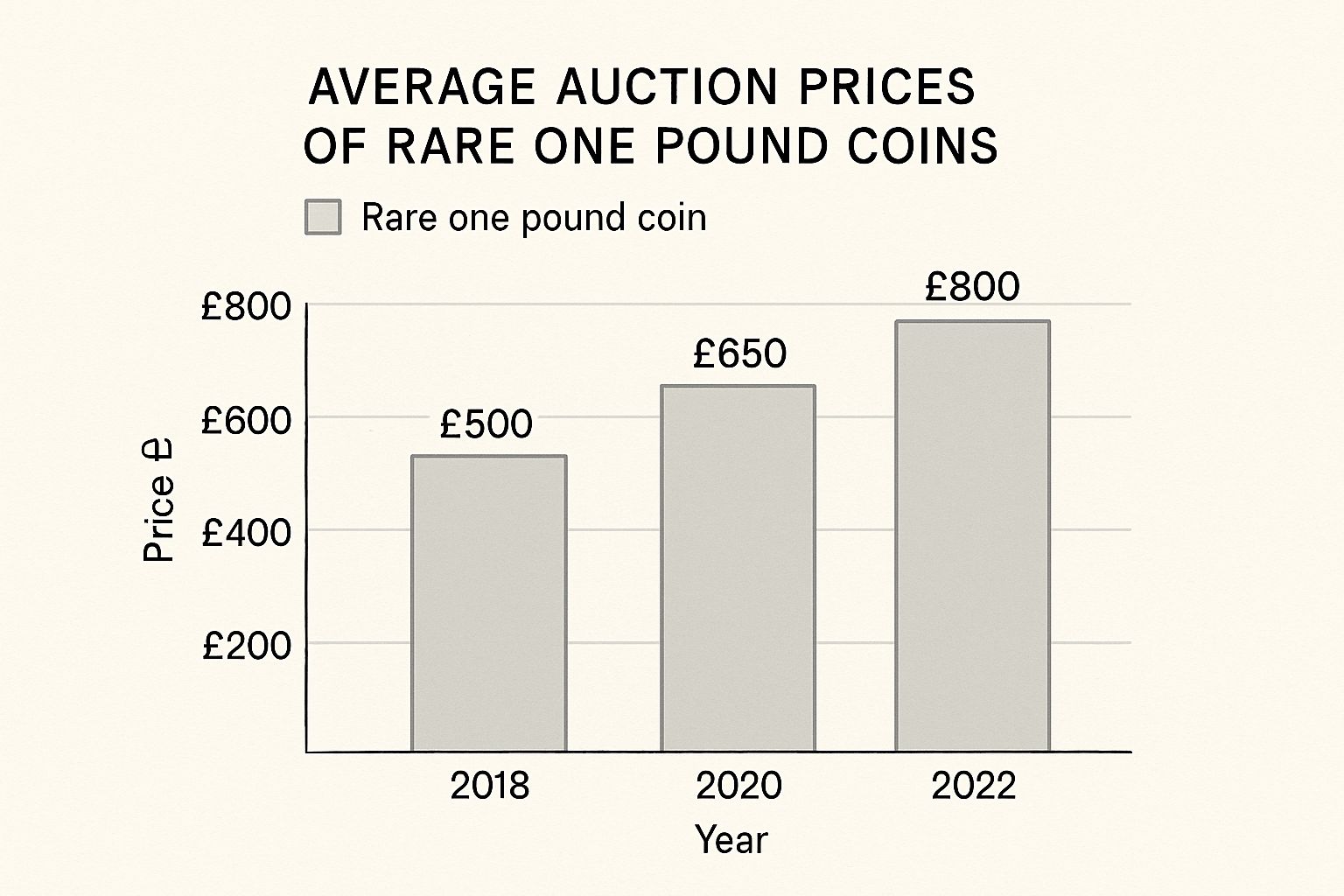
The data speaks for itself. There's a clear upward trend, suggesting that rare one pound coins aren't just a fascinating hobby, but also a tangible asset that can grow in value.
At the end of the day, knowledge is your best tool. By getting to know this checklist, you can turn the simple act of checking your change into a genuine treasure hunt. Happy hunting
The New Generation of Collectible 12-Sided Coins
When the revolutionary 12-sided pound coin appeared in our change in 2017, it wasn’t just a clever move to thwart counterfeiters. It also turned a new page for coin collectors. This bimetallic marvel, packed with sophisticated security features, completely reset the board.
For years, the game was all about hunting down low-mintage round pounds. The new format changed everything, creating a fresh landscape of what collectors call "modern classics." It seems The Royal Mint is now much more deliberate, creating specific designs with intentionally low production numbers to reignite that thrill of the hunt.
The treasures of tomorrow are literally being minted as we speak. While everyone else is still digging through their jars for the well-known round pound rarities, savvy collectors are already one step ahead, keeping a close eye on the mintage figures for these new 12-sided coins.
The Modern Scarcity Strategy
The strategy behind creating these modern collectibles is fascinating. Instead of churning out tens of millions of every design, The Royal Mint is now releasing certain coins in much smaller batches. This controlled scarcity means some designs are instantly more desirable than others, creating a buzz in the collecting community from day one.
This new approach transforms coin collecting from a hobby focused on the past into a real-time treasure hunt. You no longer have to wait 20 years for a coin to become scarce; rarity is now being built into the system from the very start.
A perfect example is the 2022-dated £1 coin. This piece is hugely significant as the final definitive £1 coin to feature the fifth portrait of Queen Elizabeth II before her passing. With only 7.735 million released into circulation, it’s already one of the rarest 12-sided £1 coins in the UK. Its low mintage, combined with its poignant place in history, makes it a cornerstone for any modern collection. You can find more insights on which £1 coins are worth collecting at cash4coins.co.uk.
Comparing Old and New Rarity
To really get your head around the scarcity of these new coins, it helps to compare them to their round pound predecessors. A round pound with a mintage under two million is considered exceptionally rare, but the context for the 12-sided coin is a bit different. The total number of coins in circulation has changed, and so has the way people collect.
Here's a quick comparison to put things in perspective:
- Classic Rarity (Round Pound): The 2011 Edinburgh City £1 had a tiny mintage of just 935,000. It's the undisputed king of the rare round pounds.
- Modern Scarcity (12-Sided): The 2022 Queen Elizabeth II Memorial £1 has a mintage of 7.735 million.
Now, 7.7 million might sound like a huge number, but it’s remarkably low compared to the hundreds of millions of other 12-sided coins minted. It signals a clear decision to create a coin that is both historically important and numerically scarce from the moment it leaves the mint.
The new 12-sided coins are teaching us a valuable lesson: rarity isn't just about age. In today's collecting world, it's about intentional scarcity, historical context, and spotting the key designs that The Royal Mint has earmarked for collectability right from the moment they are struck.
Looking ahead, smart collectors will pay close attention to the annual mintage figures released by The Royal Mint. The next truly rare one pound coin might not be a dusty relic from the 1980s, but a shiny new design that just passed through your hands last week.
How to Start Your Own Pound Coin Collection
Thinking about turning a passing interest in rare one pound coins into a full-blown hobby? You'll be glad to know it's a lot easier than you might think. You don't need a huge budget or a lifetime of expertise to get started. All it really takes is a keen eye and a bit of patience.
Believe it or not, the thrill of the hunt often begins with the simplest step of all: checking your daily change.
This simple habit, which collectors call "change checking," is how countless fantastic collections have been born. Before you pop those coins into a jar or your wallet, just take a second to glance at the date and the design. This is your first line of discovery, and honestly, the most accessible way to start spotting the less common coins we’ve been talking about.
Gathering Your Essential Tools
While you can certainly start with nothing more than your curiosity, a few basic tools will make the whole process much more enjoyable and effective. Think of this as your collector's starter kit.
- A Magnifying Glass: A decent magnifier is an absolute must-have. It’s your best friend for spotting those tiny details, reading dates clearly, and identifying potential minting errors that you’d miss with the naked eye.
- Proper Storage: Whatever you do, don't just toss your finds into an old jam jar. Get yourself some proper coin albums, flips, or capsules. These will protect your coins from scratches, moisture, and general wear and tear, preserving their condition—and their value—for years to come.
- A Reliable Guide: Keep a list of mintage figures handy, whether it's a physical book or a website on your phone. Knowing which dates and designs had low production runs is the key to figuring out what's genuinely scarce.
The Golden Rules of Handling Coins
So, you've found something you think might be valuable. How you handle it from this point on is absolutely critical. Getting it wrong can instantly damage a coin's grade and, by extension, its worth.
The number one rule is to never, ever clean your coins. I know it’s tempting to polish up a tarnished coin to make it shiny, but this is the single biggest mistake a new collector can make. Cleaning strips the coin's original surface, or 'patina', and leaves microscopic scratches that any seasoned collector or dealer will spot a mile off. It can completely destroy its value.
Always hold a collectible coin by its edges, gripping it between your thumb and forefinger. This simple trick stops the natural oils and dirt from your skin getting onto the coin's faces, which can cause corrosion over time.
Expanding Your Search Beyond Pocket Change
Checking your change is a brilliant way to start, but you'll eventually want to broaden your horizons to track down those rarer pieces. Coin fairs are fantastic for this. They're a great place to meet dealers, see a massive variety of coins up close, and soak up knowledge from experienced collectors.
Online communities and the websites of reputable dealers also open up a whole new world of possibilities, giving you access to coins you'd likely never find in circulation. If you're looking to make your first purchase, it's a good idea to get a feel for the market first. You can get some solid advice by checking out these seven tips for buying collectable coins to make sure you're spending your money wisely.
Finally, don't be afraid to ask for help! The coin collecting community is, on the whole, incredibly welcoming. Joining a local club or an online forum can be an invaluable source of advice and a great way to get your collection off to a flying start.
Common Myths and Costly Mistakes to Avoid
Diving into the world of coin collecting is a fantastic journey, but like any adventure, there are a few myths and potential traps along the way. Some popular misconceptions can lead to real disappointment and even some costly mistakes. Think of this section as your friendly guide to navigating those early challenges, helping you collect smarter from day one.
One of the most common assumptions is that any old or unusual-looking coin must be valuable. It’s an easy mistake to make. While age and interesting designs are certainly part of the appeal, they don't automatically guarantee rarity or a high price tag. Many older pound coins were minted in their tens of millions and are simply worth face value. As we've seen, true value is almost always found in low mintage numbers or verified, sought-after errors.
The Face Value vs Market Value Trap
It's so easy to get carried away by the excitement of online listings. You might spot a common one pound coin listed for hundreds of pounds and think the identical one in your hand is a jackpot. This is a classic trap for newcomers.
A seller can ask whatever they like for a coin, but that figure often has no connection to its actual market value—what collectors are really prepared to pay. Always do your homework. Check the official mintage figures and, crucially, look at recently sold prices on auction sites, not just what people are asking for. A few minutes of research can save you from paying far too much for a very common coin.
Another thing to be wary of is the rise of fake or "copy" coins, which pop up all too often online. Always try to buy from reputable dealers or sellers who have a long track record of positive feedback. If a deal for a supposedly rare £1 coin seems too good to be true, it almost certainly is.
The Single Biggest Mistake New Collectors Make
There is one mistake that stands head and shoulders above all others for its ability to instantly wreck a coin’s value: cleaning it.
I get it, the impulse is natural. You find a grimy, dull-looking coin and your first thought is that a good polish will bring back its shine. But in the world of numismatics, cleaning a coin is the cardinal sin. It strips away the coin’s original surface—its patina—and leaves behind a network of tiny, abrasive scratches that can never be undone.
A coin's natural toning and original mint lustre are part of its unique history, and they're highly valued by serious collectors. Cleaning it is like taking sandpaper to a beautiful piece of antique furniture. To an untrained eye, it might look 'cleaner', but you've just wiped away its character and a huge chunk of its value.
An experienced dealer can spot a cleaned coin from a mile off, and it will almost always be graded lower or dismissed entirely. No matter how dirty or tarnished a coin might seem, you have to resist the urge to clean it. That dirt is part of its story.
By keeping these points in mind, you can steer clear of the most common blunders. Learning to tell the difference between genuine scarcity and online hype—and committing to never, ever clean your coins—will put you on the right path to building a collection you can be truly proud of.
Your Questions About Rare Pound Coins Answered
Right, let's wrap this up by tackling some of the questions I hear most often from collectors. Whether you're just dipping your toes into the world of pound coins or you’ve been at it for years, these are the queries that always seem to pop up.
Think of this as your go-to guide for those moments you find something interesting in your change and think, "Now what?" Let's clear up the confusion.
What Is the Rarest Pound Coin I Could Realistically Find?
Forget the legends for a moment. While coins like the 2011 Edinburgh City £1 are the stuff of dreams, finding one in your pocket today is practically impossible.
A much more realistic, yet still exciting, find is the 2022-dated Queen Elizabeth II Memorial £1 coin. With a mintage of just over 7.7 million, it's genuinely scarce for a modern coin. You do have a fighting chance of stumbling across one.
Beyond that, always keep a sharp eye out for the capital city designs and the Royal Arms shield series. Some of those were produced in much smaller numbers than you’d think, making them well worth pulling from circulation.
How Can I Tell If a Pound Coin Has a Valuable Error?
Finding a genuine minting error is the holy grail for many, but you need to know what you’re looking for. It's time to get the magnifying glass out.
Look for specific oddities that couldn't have happened outside the Royal Mint. The main ones are:
- Mis-strikes, where the design is noticeably off-centre.
- Die cracks, which appear as faint, raised, and often jagged lines across the coin’s surface.
The ultimate prize is a ‘mule’—a coin struck with mismatched obverse (heads) and reverse (tails) dies. These are incredibly rare and valuable. Before you get too excited, always compare a potential error coin to a normal one. The vast majority of imperfections are just post-mint damage from a hard life in circulation.
For those interested in the absolute pinnacle of minting quality, it's worth taking a moment to learn what Proof coins are in our collector's guide. Understanding these special strikes helps you appreciate the difference between a pristine coin and a standard circulation piece.
The key to spotting a real error is simple: compare it to a perfect example. Everyday dings and scratches are just damage. A true error is a flaw from the minting process itself, one that was repeated on other coins struck from the same faulty die.
What Is the Best Way to Sell a Rare Pound Coin?
How you sell your coin really depends on what it’s worth.
For coins valued under £100, online marketplaces are often your best bet. Just make sure you take clear, high-quality photos and write an honest, detailed description. Good presentation makes all the difference.
If you have a coin that’s more valuable, you should really go to the experts. A specialist auction house or a reputable coin dealer can properly authenticate your coin and get it in front of serious collectors who are prepared to pay what it's truly worth. Another great move is joining a few UK numismatic groups on social media—they’re a fantastic resource for advice and can point you towards trusted buyers.
At Cavalier Coins Ltd, we live and breathe coins. We love helping collectors, no matter where they are on their journey. Whether you need help identifying a potential treasure, are hunting for that one specific piece to complete a set, or need a trusted place to sell, we’re here to help.
Feel free to explore our hand-picked selection of rare coins from Britain and across the globe at https://www.cavaliercoins.com.