
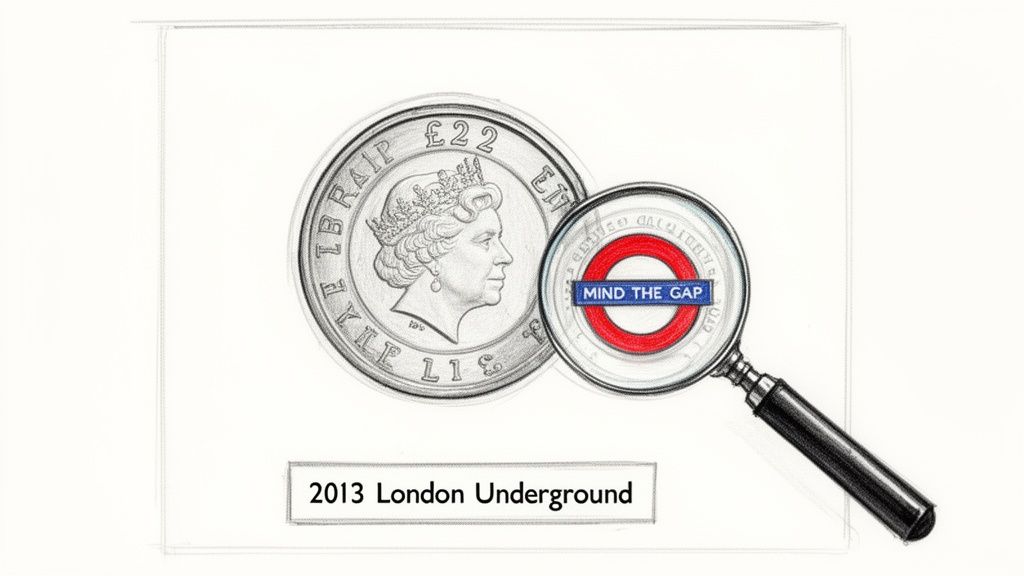
Without a doubt, the 2013 London Underground £2 coin is one of the most popular commemorative pieces out there. It was struck to celebrate the 150th anniversary of the London Underground, and collectors love it for a few key reasons: the brilliant design featuring the iconic Tube roundel, a relatively low mintage, and that famous "MIND THE GAP" edge inscription. It's a genuine piece of British transport history you can hold in your hand.
The Story Behind This Special £2 Coin
More than just loose change, the 2013 London Underground £2 coin is a small monument to a truly groundbreaking moment in our history. Whether you're a seasoned collector or just starting out, it's a wonderfully accessible yet significant piece of modern British coinage. Its real charm isn't just its scarcity, but the powerful story it tells about London, innovation, and British culture.
This coin hit circulation to mark 150 years since the world's very first underground railway rumbled into life on 10 January 1863. The design perfectly captures the spirit of that milestone. It stands out immediately from the millions of standard coins floating about, turning a bit of pocket change into a potential treasure hunt for those who know what to look for.
A Tribute in Metal
So, what makes this particular £2 coin so special? It really comes down to a perfect blend of history and thoughtful design:
- Historical Significance: It celebrates a huge anniversary for an invention that completely changed city travel across the globe.
- Iconic Design: The use of the instantly recognisable Underground roundel makes it a classic.
- Cultural Connection: The "MIND THE GAP" inscription is a direct nod to the daily experience of millions of Londoners and tourists.
The reverse of the coin, designed by Edwina Ellis, proudly displays the red roundel logo that’s become synonymous with the Tube. On the other side, the obverse features the fourth definitive portrait of Queen Elizabeth II, created by Ian Rank-Broadley. Together, they make a coin that's as much a work of art as it is legal tender. If you want to see how this fits into the bigger picture, you can learn more about the evolution of British coins in our guide.
Why It Captures Every Collector's Interest
The magic of the 2013 London Underground £2 coin is how it straddles two worlds: it's part of everyday life but also a highly sought-after collectible. Unlike ancient coins that can feel a bit remote, this one commemorates a living, breathing piece of British heritage. And because it was issued fairly recently, finding one in your change—while a challenge—isn't totally out of the question.
This mix of modern history, familiar symbolism, and just the right amount of scarcity is the perfect recipe for a collector's item. It's a fantastic starting point for newcomers, yet it still holds plenty of interest for the old hands.
This unique combination secures its place as a must-have coin for any modern UK collection. In this guide, we'll dive deeper into its history, the finer details of its design, and what it's worth today, giving you everything you need to appreciate this numismatic nod to the Tube.
How a Victorian Marvel Inspired a Modern Collectible
To really get a feel for the 2013 London Underground £2 coin, you have to picture the city it came from: a fog-drenched, gaslit London. It was the heart of a global empire, but it was also suffocating. The streets were hopelessly clogged with horse-drawn carriages, making daily travel a chaotic, slow-moving nightmare for its millions of people. Something radical had to be done.
On the 10th of January 1863, that radical solution hissed and steamed into life. The Metropolitan Railway, the world's very first underground transport system, opened its doors, connecting Paddington to Farringdon. It was an incredible feat of Victorian engineering, a true marvel of tunnels dug mostly by hand through the city's clay soil.
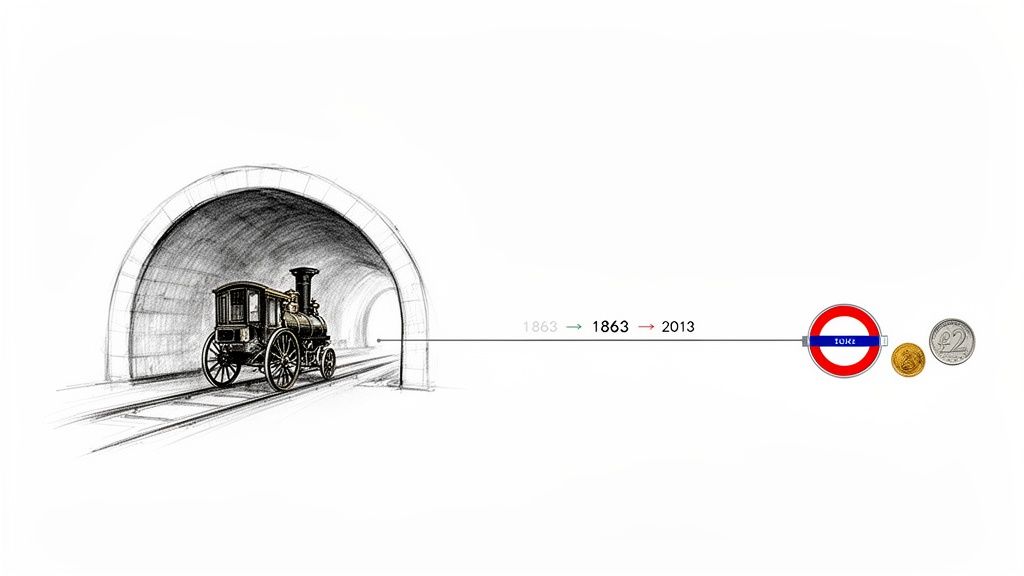
This wasn't just about moving people from A to B; it was about completely reimagining what a modern city could be. For the first time, Londoners could travel quickly and affordably beneath the gridlocked streets, an idea that would forever change the city's social and economic landscape.
From Steam and Soot to a Global Icon
Riding the early Tube was a world away from the experience we know today. Think wooden carriages lit by flickering gas lamps, pulled by steam locomotives that filled the tunnels with smoke and soot. It wasn't uncommon for passengers to step onto the platform with their faces and clothes covered in grime.
Despite the dirt, it was an instant, roaring success. The railway fuelled London's expansion, allowing suburbs to spring up as people could now commute into the centre from much further afield. It was the engine of the city's growth during the industrial age.
Over the next 150 years, this pioneering system went through some massive changes. A few key milestones chart its journey from a smoky Victorian experiment to an essential part of London life:
- Electrification: The move from steam to electric power in the early 20th century made journeys much cleaner, faster, and more pleasant.
- Deep-Level Lines: As tunnelling technology got better, engineers could dig the deep "Tube" lines we recognise today, running far beneath the city's foundations.
- Iconic Branding: The creation of the famous roundel logo and the clear Johnston typeface gave the Underground a unified and instantly recognisable identity.
This journey turned a simple railway into a cultural icon. It became the lifeblood of the capital—a symbol of London's resilience, innovation, and constant energy.
The London Underground is more than a transport network; it is woven into the city's cultural DNA. It represents the forward-thinking spirit that propelled Victorian Britain and continues to drive London today.
A Milestone Worthy of Commemoration
By 2013, the Underground was celebrating its 150th anniversary. This wasn't just a birthday for a railway; it was a celebration of an idea that shaped modern cities across the globe. From New York to Tokyo, countless cities followed London's lead, building their own subterranean networks.
It was only right that The Royal Mint chose to honour this legacy with a commemorative £2 coin. The coin does more than just mark a date; it tells a story of bold engineering and cultural significance. It connects anyone holding it directly to that groundbreaking moment in 1863, a powerful reminder of the visionaries who dared to tunnel beneath one of the world's greatest cities.
The 2013 London Underground £2 coin is a tangible piece of this incredible history. To hold one is to hold a small piece of London itself—a metal testament to the Victorian marvel that still moves millions of us every single day.
A Closer Look at the Underground Coin's Design
Any coin worth collecting tells a story, and the 2013 Underground £2 coin is a brilliant piece of visual storytelling. It’s more than just a lump of metal; every single element is a deliberate nod to the London Underground's rich history. When you understand the thought that went into its design, you stop seeing it as just money and start appreciating it as a miniature work of art.
The coin is really a tale of two halves. One side captures the modern, punchy branding of a world-famous public transport system. The other features the traditional portrait of the monarch, a constant on British coins for hundreds of years.
The Iconic Roundel Reverse
The ‘tails’ side, or reverse, is what makes this coin instantly recognisable. Designed by the talented artist and engraver Edwina Ellis, it’s a masterclass in simplicity. She boiled the London Underground's entire identity down to its most powerful symbol: the roundel.
Her design shows the famous bar-and-circle logo, but with a fantastic little twist. The words 'LONDON UNDERGROUND' are shown as if they're a train pulling into the central station, giving it a real sense of movement and energy. It’s a clean, clever concept that gets the theme across instantly without any unnecessary fuss. It manages to feel both modern and timeless, just like the Tube itself.
What makes Ellis’s design so great is its confidence. She didn’t need complicated pictures; she trusted the roundel to do all the heavy lifting. And it works. That simple logo means ‘London’ to people all over the globe.
Focussing entirely on the roundel was a bold move. It trusts that one symbol can carry the weight of 150 years of history, from Victorian steam trains to the sprawling network we know today. It pulls it off beautifully.
The Fourth Portrait Obverse
Flip the coin over, and you'll find the ‘heads’ side, known as the obverse. This features the fourth official coinage portrait of Her Majesty Queen Elizabeth II. This familiar face, created by sculptor Ian Rank-Broadley, appeared on UK circulating coins from 1998 right through to 2015.
Rank-Broadley’s portrait is known for its realism. It was a conscious decision to move away from the more idealised portraits of the Queen’s younger days, instead showing a monarch with decades of experience. It firmly grounds the coin in a specific period of British history. When you see it next to Ellis's modern reverse, it creates a wonderful contrast between contemporary design and royal tradition—a balance that’s key to modern commemorative coins.
The Unforgettable Edge Inscription
For many collectors, the real magic of the 2013 Underground £2 coin is found on its edge. Milled around the side are three simple words: 'MIND THE GAP'.
This isn't just a safety warning; it's part of the fabric of London. It's a sound that millions of commuters and tourists hear every single day. The phrase first appeared in the late 1960s as a practical fix for platforms with a curved gap, but it's since become a cultural icon. You’ll see it on t-shirts, mugs, and all sorts of souvenirs—a quirky, beloved symbol of the capital.
Putting 'MIND THE GAP' on the coin was a stroke of genius. It adds a layer of wit and personality, connecting the coin directly to the experience of travelling on the Tube. It’s a small detail that transforms the coin from a formal tribute into something much more personal and fun. This is the kind of thoughtful touch that makes a good design truly great.
Understanding the Coin's Mintage and Rarity
What separates a common coin from a sought-after collectible? It almost always boils down to one crucial thing: how many were actually made? For the two pound coin underground 2013, its mintage figure is the secret sauce that explains why finding one in your change feels like a genuine score.
The Royal Mint officially released just 1,560,000 of these coins into general circulation. While that might sound like a lot, in the world of UK coinage, it's a surprisingly modest number. It's scarce enough to get collectors excited but not so ridiculously rare that you'll never see one.
To put that into perspective, by March 2014, there were a staggering 417 million £2 coins jingling around in UK pockets and tills. The 1,560,000 London Underground coins were just a tiny drop in that massive ocean, highlighting just how special it is to stumble across one.
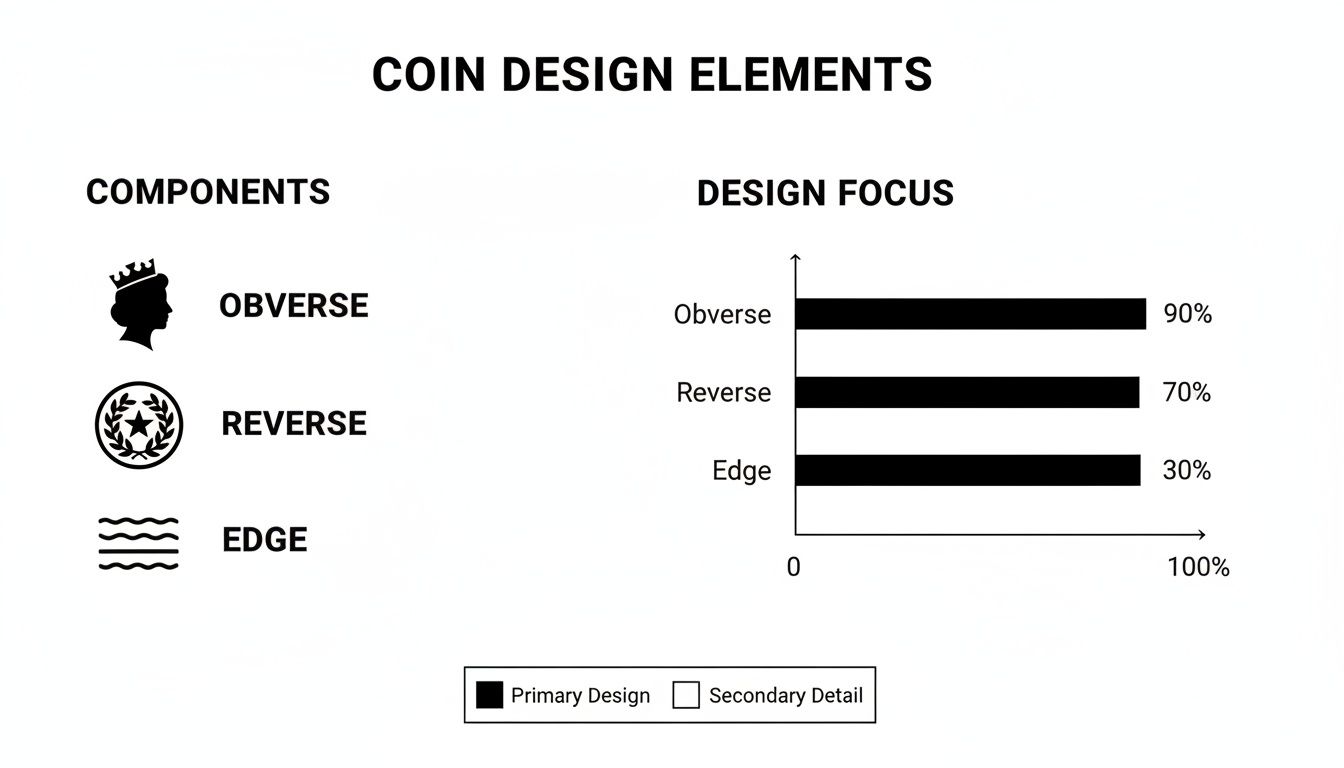
This just reminds us that every single part of the coin, from the Queen's portrait to the famous Roundel and the edge inscription, is a deliberate piece of the puzzle that makes it so collectible.
Circulation Coins vs Collector Editions
It's vital to know the difference between the coins meant for everyday use and those produced specifically for collectors. That 1,560,000 figure only counts the standard coins you’d find in your change. The Royal Mint also struck special collector's versions.
- Circulation Coins: These are the workhorses. They're struck quickly, in massive numbers, and sent out into the world. Naturally, they'll have minor imperfections and will quickly show signs of wear from being handled.
- Brilliant Uncirculated (BU) Coins: These are the show ponies. Struck to a much higher standard, they boast sharper details and a brilliant, frosty lustre. They are sold in presentation packs and never intended for your weekly shop.
Even if you can't find a flawless example in circulation, you can always add a perfect one to your collection by buying a BU pack. This difference is key when it comes to value, as a BU version will always fetch a higher price.
Where Does It Rank in Scarcity?
So, just how rare is the Underground £2 coin compared to other commemoratives? It’s not the absolute rarest £2 coin out there—that title belongs to heavy hitters like the 2002 Commonwealth Games series. However, it's definitely one of the scarcer designs to come out of the 2010s.
A quick comparison really brings its scarcity to life. The standard "Technology" £2 coin from the same year, 2013, had a mintage of over 15 million. This contrast makes it crystal clear why the Underground coin is a target for collectors.
This relative scarcity is what gives it long-term appeal. As more of these coins are plucked from circulation and tucked away in collections, the odds of finding one in the wild slowly decrease, which will likely only increase its desirability.
If you're interested in how this coin stacks up against others, you can learn more in our comprehensive guide on rare UK £2 pound coins. Knowing the landscape is the first step to becoming a savvy collector.
How to Determine Your Coin's Current Value
So, you've got a 2013 London Underground £2 coin, and the big question on your mind is: what's it actually worth? The truth is, there's no single answer. The value is a spectrum, and it all boils down to one crucial factor: condition.
Think of it like a classic car. One that's been kept under a dust cover in a garage, pristine and untouched, is going to be worth a whole lot more than the exact same model that’s been used for the daily school run for a decade. Coins are no different.
Every transaction, every jingle in a pocket, and every rattle in a cash till leaves its mark. Over time, a coin picks up tiny scratches, dinks, and a general dullness that erodes its original sharpness. On the flip side, a coin pulled from circulation early or bought in a special collector's pack will still have that fresh-from-the-mint glow.
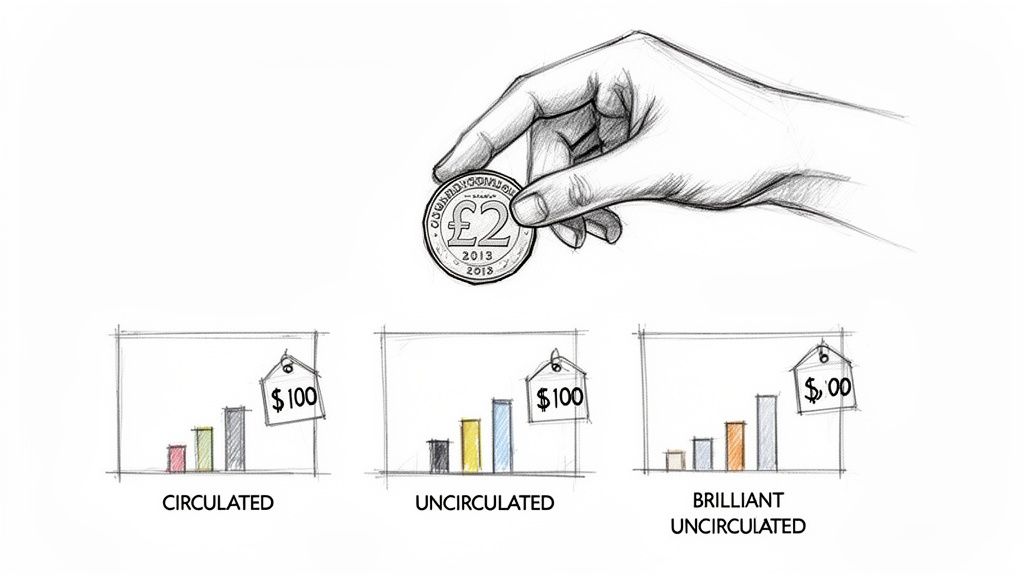
This difference in preservation is what separates a coin worth a few quid from one that collectors will happily pay a premium for.
Understanding the Key Grades and Price Bands
To get a real sense of your coin’s value, you first need to figure out its grade. In the collecting world, "grade" is just our term for condition. For a modern coin like the 2013 Underground £2, we can generally slot them into three main buckets.
- Circulated Condition: This is how you'll find most of these coins. They've been used. You’ll see obvious signs of wear and tear, like light scratches across the Queen’s portrait, a dull finish on the flat surfaces, and maybe a few minor knocks to the rim. The original shine is long gone.
- Uncirculated Condition: This describes a coin that looks almost new, with next to no signs of wear. It was likely saved very early on or has been handled with care. The design details are crisp, and it still has plenty of that original mint lustre.
- Brilliant Uncirculated (BU) Condition: Now we're talking top-tier. BU coins were never meant for your wallet. They're struck to a higher standard and sold directly to collectors in special Royal Mint packs, preserving their flawless, brilliant finish.
Naturally, each of these grades commands a different price on the market.
Typical Market Values in 2024
Looking at recent sales data from online marketplaces and trusted coin dealers, we can get a good feel for the going rate for the 2013 London Underground £2 coin. Just remember, these are typical price ranges, and the market can always shift based on collector demand.
| Coin Condition | Typical Price Range | Key Characteristics |
|---|---|---|
| Circulated | £3 - £4 | Visible scratches, dull surface, general signs of use. |
| Uncirculated | £5 - £8 | Sharp details, good lustre, minimal to no scratches. |
| Brilliant Uncirculated | £10+ | Perfect condition, often in original Royal Mint packaging. |
As you can see, a pristine Brilliant Uncirculated version can fetch more than double what its circulated cousin is worth. That premium reflects how much harder they are to find in perfect condition, making them the target for serious collectors.
The biggest leap in value is between a standard, pocket-worn coin and one that has been carefully preserved. It just goes to show how critical condition is in the world of coin collecting.
How to Assess Your Coin's Condition
Grading your own coin can feel a bit daunting at first, but you can get a pretty good idea just by looking closely. Grab a bright light and a magnifying glass if you have one. Pay close attention to the highest points of the design—like the Queen's cheek or the intricate lines of the Underground roundel—as these are the first spots to show wear.
For those looking for a definitive verdict, you might want to check out our guide that explains how to get your coins officially graded. A professional grade can add real value and prove its authenticity. Ultimately, the closer your coin is to the day it left the mint, the more it’s going to be worth.
A Collector's Guide to Buying and Selling
Whether you’re on the hunt for your first 2013 Underground £2 coin or looking to sell one you’ve found in your change, the collector's market can feel a bit like a maze. But don't worry. The trick is simply knowing where to look, what to watch out for, and how to present your coin to get the best result.
The market for these coins is always buzzing, with plenty of opportunities for both buyers and sellers. Get the approach right, and you can confidently add a great piece to your collection or secure a fair price for one you're selling.
Where to Find Your Underground £2 Coin
Finding an authentic 2013 Underground coin means looking in the right places. While you might still get that lucky break and find one in your change, dedicated collectors usually turn to more reliable sources to track down a quality example.
Here are the most common spots:
- Reputable Coin Dealers: Specialists like Cavalier Coins offer carefully selected stock. Buying from an expert dealer gives you peace of mind, as their coins are usually authenticated and accurately graded, saving you a lot of guesswork.
- Online Marketplaces: Websites like eBay are a popular hunting ground, but they do require a bit of caution. Stick to sellers with high ratings and look for listings with sharp, detailed photographs. It pays to scrutinise these carefully to avoid fakes or paying too much for a coin in poor shape.
- Coin Fairs and Shows: These events are brilliant, bringing numerous dealers together under one roof. The huge advantage here is that you can inspect a coin in person before buying, which is the best way to judge its true condition.
Before you commit, always have a quick look at prices for coins of a similar grade across a few different platforms. It helps you get a feel for the current market rate and makes sure you don't overpay.
Smart Buying Tips to Avoid Pitfalls
Making a smart purchase isn't just about finding the coin; it's about getting the right coin at the right price. A little bit of homework goes a long way in protecting you from common mistakes.
The golden rule of coin buying is simple: buy the coin, not the story. A seller's grand claims mean nothing if the coin itself doesn't live up to them. Always trust clear photos and your own judgement.
To make sure you're buying intelligently, keep these key points in mind:
- Insist on High-Quality Photos: Never, ever buy a coin based on blurry or badly lit images. You need to see the fine details to judge its condition properly.
- Check the Seller's Reputation: Have a look at their feedback, read a few reviews, and see how long they've been trading. Established sellers have a reputation to protect and are usually more reliable.
- Understand the Returns Policy: A good seller will always offer a returns policy. This is your safety net if the coin arrives and doesn't match its description.
Strategies for Selling Your Coin for the Best Price
If you're on the selling side of the table, getting the best possible price for your 2013 Underground £2 coin comes down to good presentation and finding the right audience. How you showcase your coin can make a real difference to its final value.
Your main goal is to build a buyer's confidence. Start by taking sharp, well-lit photos of both sides of the coin, and don’t forget a clear shot of the 'MIND THE GAP' edge inscription. Honesty is absolutely key; if there are minor scratches or marks, point them out in your description. Collectors appreciate transparency and will bid with more confidence.
When it comes to pricing, do a bit of research on what coins in a similar condition have sold for recently. This will help you list it competitively, whether you opt for a fixed-price sale or an auction to let the bidders battle it out.
Your Questions Answered
When you're digging into the details of a specific coin, a few common questions always seem to pop up. Let's tackle the most frequent queries about the 2013 London Underground £2 coin to give you a clearer picture of this fantastic collectible.
How Rare Is the 2013 Underground £2 Coin?
With a mintage of just 1,560,000 for general circulation, this coin is definitely on the scarcer side for a commemorative £2.
It's not in the same legendary league as the Kew Gardens 50p, of course, but it's far harder to find in your change than the standard definitive £2 coins. This makes it a genuinely rewarding find and a key piece for anyone putting together a modern UK collection.
Does the 2013 Underground £2 Coin Have an Error?
There are no major, officially recognised minting errors for this particular coin that you need to be hunting for.
The main point of confusion often comes down to the edge inscription, 'MIND THE GAP'. Some collectors notice it appears upside down when the Queen's head is facing up. This isn't an error but a normal quirk of the minting process. The edge lettering is stamped onto the blank coin before the heads and tails sides are struck, which means its orientation is completely random.
How Much Is a 2013 Underground £2 Coin Worth?
As with any coin, its value is all down to condition. The price can swing quite a bit depending on how well it’s been looked after since it left The Royal Mint.
The biggest factor driving value is the coin’s condition. A pristine, untouched example will always command a much higher price than one that shows the wear and tear of daily use.
Here’s a general guide to what you can expect to pay or sell for:
- Circulated Condition: A coin you find in your change will typically be worth around £3 to £4.
- Uncirculated Condition: A nice, clean example that hasn't seen any circulation might sell for £5 to £8.
- Brilliant Uncirculated (BU): A perfect coin taken from a Royal Mint pack can fetch £10 or more, thanks to its pristine condition and original packaging.
Whether you're searching for a top-grade example of the 2013 London Underground £2 or looking to discover other rare and fascinating pieces, Cavalier Coins has an extensive selection for every collector. Come and browse our curated collections at https://www.cavaliercoins.com.