
Collecting UK coins is so much more than a simple hobby. It's a way to hold a real piece of British history in your hand, where every coin from a rare 50p to an ancient sovereign tells a story. For most people, it starts with a simple glance at their change, but it can quickly grow into a serious passion for numismatics.
Starting Your UK Coin Collecting Journey
Welcome to the fascinating world of numismatics, where history, art, and the thrill of the hunt all come together. At its core, UK coin collecting is all about finding and organising coins, but the appeal goes much deeper than that. It often begins with the simple joy of finding a special commemorative 50p or £2 coin in your pocket money or daily change.
This hobby is a uniquely personal way to connect with the past. Holding a Victorian penny, for instance, is like shaking hands with another era. Each coin is a miniature artefact that has passed through countless hands, witnessing everything from national triumphs to the quiet moments of everyday life. The reasons for collecting are as varied as the coins themselves.
Why Do People Collect Coins?
What draws people to this pastime? It usually comes down to a few key motivations:
- The Thrill of Discovery: Finding a rare coin with a low mintage, like the famous Kew Gardens 50p, can feel like winning a small lottery. This "treasure hunt" is a massive driver for many collectors.
- A Connection to History: Coins are like tiny time capsules. They feature portraits of monarchs and designs that celebrate key events, from military victories to cultural milestones.
- Appreciation of Art and Design: Every coin is a tiny work of art, showcasing the incredible skill of its engraver and designer. Many collectors simply admire the intricate details and symbolic imagery.
- Potential for Investment: While it's never guaranteed, some rare and well-kept coins can certainly increase in value over time, making them an interesting alternative asset.
Think of this guide as your treasure map for the exciting journey of UK coin collecting. We'll give you the knowledge you need to identify, grade, and look after your finds, helping you turn simple curiosity into real expertise.
Whether you're a complete beginner wondering where to even begin or someone with a few coins already looking to learn more, this guide will give you the foundation you need. We'll move from the basics to more advanced skills, making sure you feel ready and excited to build a collection you can be truly proud of. The best part? This rewarding journey can start today, with the coins you already have in your pocket.
Discovering the Stories Behind UK Coins
Every coin rattling in your pocket or purse is a tiny piece of history. Each one tells a story about our nation's art, culture, and monarchy. To really get into UK coin collecting, you have to look beyond the metal and understand the context behind each design. It’s a shift that turns a simple hobby into a real appreciation for these miniature artworks that chronicle Britain’s story.
The single biggest event in modern British coinage was, without a doubt, decimalisation. On 15th February 1971, a day now known as 'Decimal Day', the ancient system of pounds, shillings, and pence was swept away. This created a clear dividing line for collectors, separating the old pre-decimal coins from the modern ones we use today.
This wasn't just a practical switch; it was a complete reinvention of the money in our hands. It gave The Royal Mint a fresh canvas to create new, modern designs that reflected a new era for Britain.
Iconic Coin Series You Should Know
Since 1971, a few key coin series have become the cornerstones of any collection. These are often the coins that first spark an interest and make for a brilliant starting point. If you want to dive deeper into the timeline, you can explore this brief history of British coins on our blog.
A perfect example is the original round £1 coin, which first appeared in 1983. For more than three decades, these coins featured designs celebrating the four home nations.
- Floral Series: Showcasing the thistle for Scotland, the leek for Wales, the flax plant for Northern Ireland, and the oak tree for England.
- Heraldic Series: Featuring iconic symbols like the Three Lions of England and the Scottish Lion Rampant.
- Bridges Series: Celebrating engineering marvels like the Forth Bridge and the Menai Suspension Bridge.
Hunting down every design from these series is a fantastic challenge. It's a rewarding pursuit that takes you on a tour of British heritage without ever leaving your home.
A coin is never just currency; it is a snapshot of its time. The portrait of the monarch, the symbols on the reverse, and even the metal it's made from all provide clues about the period in which it was minted.
Of course, you can't talk about modern UK coin collecting without mentioning the wildly popular commemorative 50p and £2 coins. What started as a simple seven-sided coin has become a cultural phenomenon. From celebrating the Olympics and Paddington Bear to marking the founding of the NHS, these coins are small tributes to our national identity. Their ever-changing designs and often limited mintages make them incredibly sought-after.
Identifying Rare and Valuable UK Circulation Coins
It's always a thrill to find something unusual in your change. While many commemorative coins are snapped up by collectors, some genuine rarities are still out there. This table highlights a few of the most sought-after UK coins you might just find in circulation.
| Coin Denomination & Design | Year of Issue | Mintage Figure | Key Reason for Rarity |
|---|---|---|---|
| 50p - Kew Gardens | 2009 | 210,000 | The lowest mintage 50p ever released for circulation, making it the ultimate find. |
| £2 - Commonwealth Games (NI) | 2002 | 485,500 | One of four designs for the Games, the Northern Ireland version is the scarcest. |
| 20p - Undated "Mule" | 2008 | ~250,000 | An error coin where the new reverse was accidentally paired with the old obverse, leaving the date off. |
| 50p - Olympic Football (Offside Rule) | 2011 | 1,125,500 | One of the 29 Olympic designs; this one is popular for its design explaining the offside rule. |
| 10p - A-Z of Great Britain (Full Set) | 2018/2019 | ~220,000 per letter | Low mintage for each of the 26 designs makes finding a complete set very challenging. |
Keep an eye out for these when you get your change – you never know when a rare piece of history might pass through your hands.
The Face of the Nation
Perhaps the most consistent feature on our coins is the portrait of the monarch. For an incredible 70 years, the effigy of Queen Elizabeth II graced our currency, with five definitive portraits marking the stages of her long reign. Each one, from Mary Gillick’s youthful depiction to Jody Clark's final portrait, is a beautiful piece of art in its own right.
With the accession of King Charles III, a new chapter in our coinage has begun. His portrait, designed by Martin Jennings, now faces left. This follows a tradition that each new monarch faces the opposite direction to their predecessor. This simple change has sparked huge interest among collectors, all eager to find the first coins bearing the new King's effigy.
The UK coin market is always moving, with The Royal Mint reporting nearly 25 billion coins in circulation. Scarcity is what really drives collector demand, and that's true for recent issues, too. For example, only about 7.735 million £1 coins dated 2022 were ever released, making it the rarest £1 coin currently in use. That low mintage, combined with the excitement around the first King Charles III coins, has sent collector interest soaring. When you start to understand these stories, your collection transforms from a simple assembly of metal into a curated gallery of British history.
Learning to Grade Your Coins Like a Pro
What separates a coin worth a few quid from one worth hundreds of pounds? Often, it all comes down to its condition. Grading is the art of assessing a coin's state of preservation, and it's one of the most crucial skills you'll develop in UK coin collecting. It might sound a bit technical, but the core idea is pretty straightforward.
Think of it like judging a classic car show. A motor fresh off the factory floor is pristine, but one that's been driven daily for 50 years is going to show its history through dents and scratches. Coins are exactly the same. A freshly minted coin has razor-sharp details and a bright, shimmering lustre, whereas one that has passed through thousands of hands will be noticeably worn down.
Understanding the Language of Coins
Before you can grade a coin, you need to know your way around it. Numismatists (that’s us!) use specific terms to describe a coin’s features, and getting to grips with them is your first step.
- Obverse: This is the 'heads' side of the coin, which almost always features the portrait of the reigning monarch.
- Reverse: The 'tails' side, which displays the main design – think of the shield of arms or a special commemorative image.
- Field: The flat, blank background of the coin where the main design and portrait are raised.
- Rim: The raised edge on both sides, cleverly designed to protect the main surfaces from wear and tear.
- Edge: The outer border of the coin itself. This can be plain, milled (ridged), or even inscribed with lettering.
Getting familiar with these basic parts will help you describe and assess your finds with much greater confidence and accuracy.
The hierarchy of UK coinage has changed a great deal over the years, especially since decimalisation, as this diagram helps to illustrate.
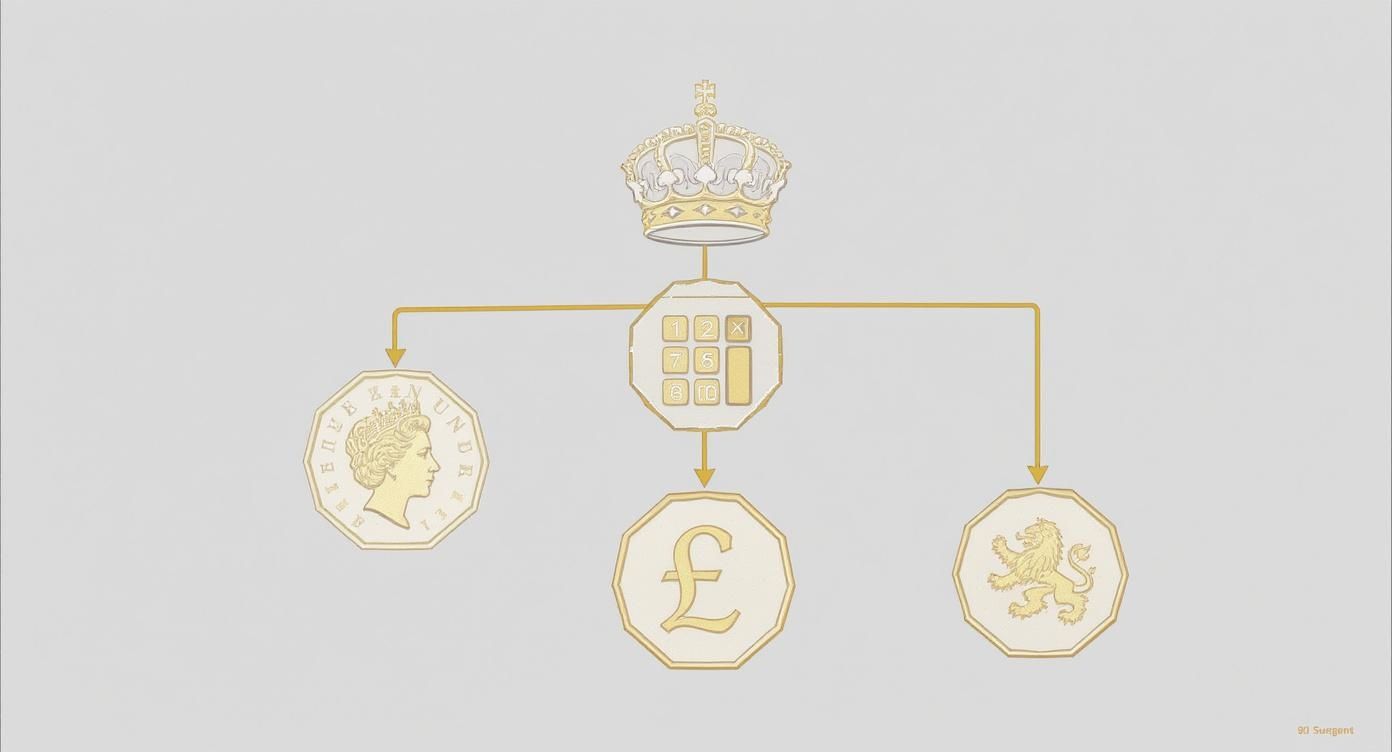
This visual shows that evolution nicely, from the Crown's authority, through the massive shift of decimalisation, to the familiar circulating coins like the 50p and £1 that form the bedrock of most modern collections.
The Main UK Coin Grades Explained
Official grading systems can be incredibly detailed, but for most collectors, they boil down to a few key categories. The terms simply describe the amount of wear and tear a coin has picked up.
- Uncirculated (UNC): A perfect coin, exactly as it left The Royal Mint. It shows absolutely no signs of wear and still has its full, original lustre. You’ll usually find these in special mint sets or sealed bags.
- Extremely Fine (EF): This coin shows only the faintest signs of having been in circulation. The design details are sharp, with just a touch of light wear visible on the very highest points.
- Very Fine (VF): The coin has seen a bit of circulation, and wear is more noticeable on the high points of the design, like the monarch's hair or the tiny details on a shield. Crucially, all the major features are still clear.
- Fine (F): A coin that's been around the block a bit. Much of the finer detail has worn away, but the main design and lettering are still perfectly readable.
- Poor/Fair: This coin is heavily worn. The inscriptions and date might be barely legible. Generally, these coins don't hold much value unless they are exceptionally rare.
Grading is a subjective skill that gets better with practice. The best way to learn is by comparing coins you hold in your hand to high-quality photos from reputable dealers or specialist grading guides.
The passion for UK coin collecting is part of a massive global trend. The worldwide coin collection market was valued at roughly USD 10.74 billion and is forecast to more than double to about USD 23.87 billion by 2032. That shows some seriously strong and sustained interest in the hobby!
Spotting Error Coins and Varieties
Beyond a coin's condition, you should always keep an eye out for "error coins." These are fascinating pieces with mistakes made during the minting process, and they can be highly collectible.
Examples include coins struck off-centre, those with letters missing from the edge inscription, or "mules"—coins struck with mismatched obverse and reverse dies. The famous undated 20p from 2008 is a perfect example. These happy accidents are rare and can turn an ordinary coin into a real prize.
For a more detailed walkthrough of the grading process, you might find our coin grading guide for beginners and experts really helpful.
How to Value Your UK Coin Collection
Once you’ve got your coins identified and have a good idea of their condition, the big question looms: "What are they actually worth?" Valuing a coin is as much an art as it is a science. It's a classic rookie mistake to think age is everything. In reality, a coin's price is a constantly shifting mix of its condition, its rarity, and what the market is hungry for right now.
Think of it a bit like the property market. A house’s value isn’t just about how old it is; it’s about its condition (a new build versus a fixer-upper), its location (rarity), and how many people are looking to buy in that specific area (demand). For coins, it’s the same story. An Uncirculated specimen will always fetch a higher price than one that’s been knocking about in someone's pocket, and a coin with a tiny mintage run is naturally far more sought-after than one churned out in the millions.
Essential Tools for Coin Valuation
To get a realistic idea of your collection's worth, you need to use the right tools. Pure guesswork is a recipe for disappointment, so it’s vital to ground your valuation in solid data. A good start is to get familiar with these resources.
- Coin Catalogues: A proper printed catalogue like Spink's Coins of England & the United Kingdom is basically the bible for UK collectors. It gives you a reliable baseline value for coins across different grades.
- Online Price Guides: Various websites and apps offer up-to-the-minute price information, often pulled from recent sales data. They're brilliant for keeping track of the value of popular modern coins.
- Recent Auction Results: Checking the "sold" listings on places like eBay or specialist auction house websites gives you a real-time snapshot of what people are actually paying for a specific coin, right now.
These tools really work best when you use them together. The catalogue gives you that steady, long-term baseline, while online guides and auction results show you how the market is behaving at this very moment.
Rarity and Mintage: The Real Value Drivers
When it comes down to it, a coin's rarity is the single most important factor driving its value. Scarcity is what creates demand among collectors, and this is where UK coin collecting gets really interesting. Even modern coins can be astonishingly rare and valuable if their mintage figures—the total number of coins produced—are low. For a deeper look, our guide on how to value coins covers this topic in much more detail.
The numbers tell a fascinating story. For example, the Salmon 50p has become the rarest UK 50p in circulation, with a confirmed mintage of only 200,000 coins—that’s even fewer than the legendary Kew Gardens 50p. Other examples of extreme rarity include the Isle of Man TT £2 coin, with just 5,000 released, and the Edinburgh City £1 coin, with a mintage of only 935,000. You can dig into more details on these and others by exploring recent mintage data from Change Checker.
A coin's value is not static. It can rise and fall based on media coverage, new discoveries, or a surge in collector interest for a particular series. Staying informed about these trends is key to smart collecting.
Just look at the famous Kew Gardens 50p. Its value can swing wildly from £80 to over £200. Why such a huge difference? It all comes down to condition and provenance. A pristine, uncirculated example will command a premium price, while one that's been rattling around in circulation for a decade will be worth significantly less.
This is the perfect example of how those key factors—rarity, condition, and market demand—all play off each other. The Kew Gardens coin has a very low mintage (rarity), and huge media attention has created intense collector interest (demand). The final price is then decided by the specific coin's grade (condition). Understanding this interplay is what gives you the power to value your own collection accurately and make smarter decisions when you’re buying or selling.
Building Your Collection and Trading Safely
Sooner or later, every collector gets the itch to move beyond just checking their pocket money. When that bug bites, you’ll find yourself stepping into the exciting world of buying, selling, and trading coins. Knowing where to look and how to do business safely is absolutely crucial for protecting your investment and, just as importantly, your enjoyment of the hobby.
Think of the coin market as a high street. You've got your specialist boutiques, your bustling street markets, and your massive online department stores. Each one offers a completely different experience with its own pros and cons, so the right choice really depends on what you're after.
Where to Buy and Sell Your Coins
Finding trustworthy places to buy from is the foundation of building a great collection. It can be tempting to dive straight into the big online marketplaces, but taking the time to explore a few different avenues will make you a much smarter collector in the long run.
- Specialist Coin Dealers: These are the pros. A good dealer, especially one registered with the British Numismatic Trade Association (BNTA), offers guaranteed authentic coins and brilliant advice. This is where you go for high-quality, accurately graded pieces.
- Numismatic Fairs: Coin fairs are basically real-life treasure hunts. They gather dozens of dealers under one roof, giving you the chance to see a massive variety of coins up close, handle them (with care!), and even haggle over prices in person.
- Online Auction Sites: Platforms like eBay have a mind-boggling selection but demand the most caution from buyers. They’re fantastic for picking up common dates to fill gaps in your albums, but the risk of stumbling upon fakes or dodgy listings is much higher.
If you’re just starting out, your safest bet is to begin with a trusted dealer or a local coin fair. You’ll not only get a fair deal but also soak up invaluable knowledge from experienced people who live and breathe numismatics.
Staying Safe When Trading Online
The convenience of buying online is hard to beat, but it definitely comes with risks. When you can’t physically inspect a coin, you have to be extra sharp. It’s all about doing your homework before you even think about clicking that ‘buy’ button.
Always start by checking out the seller. What’s their feedback score like? Take a minute to read their recent reviews. Have they sold similar coins before? Are their descriptions detailed and professional? A seller using blurry photos or vague descriptions is an instant red flag.
Here’s a simple rule for buying online: if a deal looks too good to be true, it almost certainly is. A rare coin being sold for a song is one of the clearest signs that you might be looking at a fake.
Postage is another thing you can’t afford to overlook. Make sure your coin will be sent using a tracked and insured service. For anything valuable, paying a bit extra for Royal Mail Special Delivery isn’t just a good idea—it’s essential. It protects both you and the seller if the package decides to go on an adventure of its own.
How to Spot a Counterfeit Coin
Unfortunately, fakes are a part of the collecting world. These counterfeits can range from clumsy, obvious copies to incredibly sophisticated forgeries designed to trick even seasoned experts. Learning the tell-tale signs of a fake is one of the most important skills you can develop.
- Check the Weight and Size: A small digital scale and a set of callipers are your best friends here. Compare the coin’s vital statistics to the official specifications on The Royal Mint's website. Fakes are often made from cheaper metals and will almost always be slightly off.
- Inspect the Details: Real coins have sharp, crisp details. Fakes often look a bit ‘soft’ or ‘soapy,’ with fuzzy lettering and poorly defined features on the monarch’s portrait.
- Examine the Edge: Forgers often forget about the edge of the coin. Check if the milling (the little ridges) is even and clean. If there’s an inscription, is the lettering correct and spaced properly?
- Look for Seams or Marks: Some fakes are cast from a mould, which can leave a tiny seam line running around the edge. Others might have little pimples or tooling marks on the surface that you’d never find on a genuine, struck coin.
Getting your eye in for these things takes time and practice. The best way to learn is simply to handle as many genuine, authenticated coins as you can. You’ll quickly get a feel for what’s real and what isn’t.
Preserving Your Coins for Future Generations
Your collection is so much more than a box of metal discs; it’s a tangible piece of history, a personal legacy you've carefully built. Protecting that legacy is one of the most vital parts of UK coin collecting. It's all about preventing damage to keep a coin’s condition—and its value—intact for years to come.
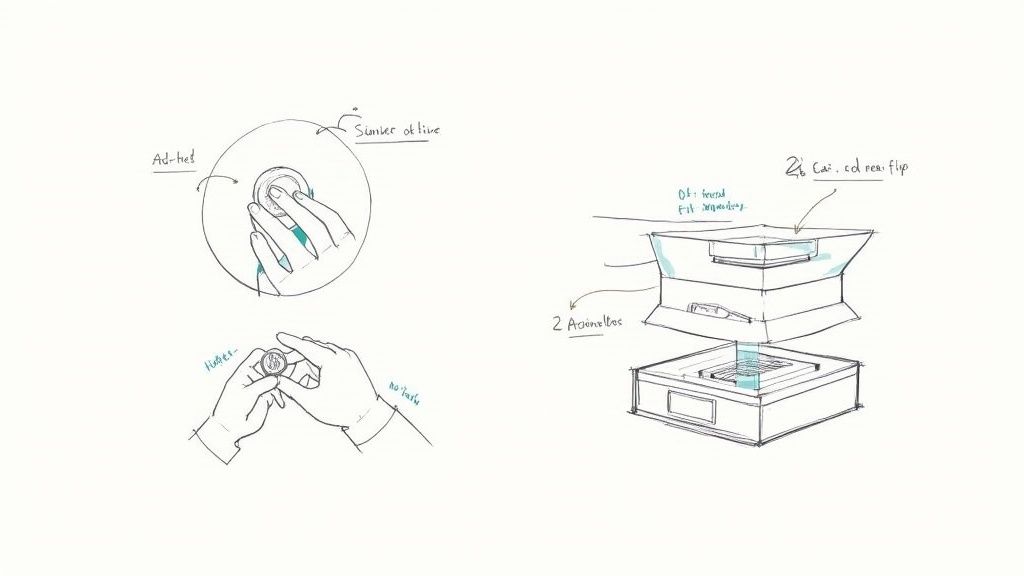
Picture a coin's surface as a delicate, microscopic landscape. Even the slightest touch can cause damage you can't undo. The natural oils and acids from your skin are surprisingly corrosive and can etch permanent fingerprints into the metal over time. That’s why proper handling isn’t just a friendly suggestion—it’s the golden rule of collecting.
The Enemies of a Coin Collection
All sorts of environmental factors can slowly degrade your coins. Just knowing what they are is the first step in protecting your collection. The main culprits you need to watch out for include:
- Human Contact: This is the number one cause of damage. Always, always use soft cotton gloves or hold coins carefully by their edges.
- Humidity: Moisture in the air is a killer, leading to spotting, toning, or even outright corrosion, particularly on copper and bronze pieces. A stable, dry environment is absolutely crucial.
- Harmful Plastics: Steer clear of any plastics containing PVC (polyvinyl chloride). Over time, it releases chemicals that create a sticky green gunk on a coin's surface, causing permanent harm.
- Atmospheric Pollutants: Things like sulphur in the air can react with the metals in your coins, causing unsightly toning or discolouration.
Avoiding these common threats is fundamental. And whatever you do, never, ever try to clean your coins with polish or abrasives. You'll completely destroy their collector value.
Choosing the Right Storage Solution
Finding the right home for your coins is vital. The aim is to create a stable, inert environment that shields them from both physical bumps and chemical reactions. Thankfully, there are plenty of great options out there for every budget.
For beginners, the go-to solutions are 2x2 cardboard flips with Mylar windows or simple acid-free paper envelopes. They’re cheap, effective, and perfect for organising individual coins while protecting them from scratches and fingerprints. Just make sure any plastic you use is explicitly labelled as PVC-free.
As your collection grows, you’ll probably want to upgrade. Archival-grade albums with inert plastic pages are a fantastic way to display and organise your coins safely. For your absolute best pieces, acrylic capsules (often called "slabs" when used by professional graders) offer the ultimate protection, sealing the coin in its own little environment.
Proper storage is not an expense; it is an investment in the future value and longevity of your collection. It ensures that the historical artefacts you've gathered will remain in the best possible condition for the next generation of collectors to appreciate.
Once your collection becomes particularly large or contains high-value coins you couldn't bear to lose, protecting them from theft or disasters like fire and floods becomes a real consideration. For that extra layer of security, it's wise to investigate secure storage options for complete peace of mind. By taking these simple but effective steps, you can ensure your collection remains a source of pride for decades.
Common Questions About UK Coin Collecting
Diving into the world of UK coin collecting can feel a bit overwhelming at first, and it’s natural to have a lot of questions. Getting good answers from the start helps build your confidence and lets you sidestep some of the rookie mistakes many new collectors make. Here, we’ll tackle some of the most common queries we hear.
The best way to start is simply by "change checking." Every time you get some coins back from the shops, have a quick look. Get familiar with the different designs on the 50p and £2 coins, and always check the dates on everything else. It's a fantastic, zero-cost way to get a feel for what’s actually out there in circulation.
A great first project is to try and complete a set of the definitive coins we use today. This simple goal sharpens your eye for detail before you even think about spending a penny on buying specific coins.
How Do I Start Collecting UK Coins?
The easiest and cheapest way to kick off your collection costs nothing at all. Just start paying attention to the coins that pass through your hands every day. This is how most of us got the bug, and it's still the best way to find modern commemorative designs.
Here are a few pointers to get you going:
- Grab a checklist: You can download free mintage figure lists or use an app to see which coins are the rarer ones to look out for.
- Set a simple goal: A fun challenge is to find all the coins from the Royal Shield of Arms series – that’s the 1p, 2p, 5p, 10p, 20p, and 50p that piece together to form the full shield.
- Get friends and family involved: Let them know you’re collecting. You’d be surprised how many people are happy to swap any interesting coins they find with you.
What Tools Does a Beginner Need?
You really don't need a load of expensive equipment to get started properly. Just a few basic tools will make a world of difference to how you inspect and look after your finds, protecting their condition and value right from the beginning.
Your starter kit should probably include:
- A magnifying glass: A simple magnifier with 5x-10x magnification is a must-have for spotting tiny details, mint marks, and the subtle signs of wear and tear.
- Soft cotton gloves: These are crucial. The natural oils on your fingers can permanently damage a coin's surface, so handling them with gloves is a habit to get into early.
- Basic storage: You can't go wrong with inexpensive acid-free paper envelopes or plastic coin flips. They’re perfect for protecting individual coins from getting scratched or being exposed to the elements.
If there's one thing to remember, it's this golden rule of coin collecting: never clean your coins. Trying to polish them up with abrasives will almost certainly destroy their numismatic value.
Are New Royal Mint Coins a Good Investment?
This is a question we get a lot. Is buying brand new commemorative coins directly from The Royal Mint a smart financial move? The honest answer is, while some new releases do go up in value, it's never a guarantee.
A new coin's investment potential really hangs on its mintage limit, how popular the theme is, and whether it’s struck from a precious metal like silver or gold. As a rule of thumb, it's the coins with exceptionally low mintage figures that tend to do best over the long run.
The best approach is to buy coins because you genuinely love the design and the story behind them. If they happen to appreciate in value over the years, think of it as a brilliant bonus, not the primary reason for buying. That way, you'll always get joy from your collection, no matter what the market is doing.
At Cavalier Coins Ltd, we provide a vast selection of coins and banknotes for every level of collector. Whether you are searching for a rare piece to complete a set or just starting your numismatic journey, explore our collection at https://www.cavaliercoins.com.