
That handful of change rattling around in your car or tucked away in a jar could be hiding a genuine treasure. It’s true—certain UK £1 coins are worth a great deal more than their face value, with some of the rarest examples fetching hundreds, even thousands, of pounds. These aren't just old coins; they're valuable £1 pound coins made special by low mintage numbers, unique commemorative designs, or fascinating minting errors.
Unlocking the Value in Your Spare Change
It’s all too easy to just spend the coins you get back from the shop without a second glance. But doing that could mean you’re missing out on a find worth many times its simple £1 value. Think of this guide as your treasure map, here to help you navigate the world of modern UK coin collecting and spot the valuable pound coins hiding in plain sight. We’ll show you exactly what to look for, turning the mundane task of sorting change into an exciting hunt.
It’s a bit like finding a signed, limited-edition print tucked away in a stack of ordinary posters. While millions of standard coins are minted every year, a select few are produced in much smaller quantities or with tiny mistakes that make them exceptionally rare. These are the very pieces that collectors, hobbyists, and resellers are actively searching for.
From Round Pounds to Modern Rarities
The story of the valuable £1 coin took an interesting turn in 2017 with the switch from the old, circular 'round pound' to the current 12-sided version. This didn't just modernise our currency; it created a distinct cut-off point for collectors. Suddenly, older designs were being pulled from circulation, sparking a whole new wave of interest in them.
This guide covers both eras of the modern pound coin, so you’ll know what to look for, no matter the shape. You'll learn how to identify:
- Low Mintage Coins: We’ll pinpoint the specific years and designs that had very small production runs, making them scarce from day one.
- Sought-After Designs: Discover why some coins, like those from the UK Cities collection, are far more desirable than the common Royal Arms shield.
- Intriguing Error Coins: Learn to spot the minting mistakes—like misaligned dies or incorrect dates—that can turn a standard coin into a high-value collectable.
By the end of this guide, you won't just see a pound coin; you'll see potential. You'll have the knowledge to examine your change with a collector's eye, spotting the subtle details that separate everyday currency from a valuable find.
Whether you're a new collector, a charity sorting through donations, or just curious about the change in your pocket, the principles are the same. Understanding rarity, design, and condition is the key to unlocking hidden value. Get ready to start looking at your spare change in a completely new light.
What Makes a £1 Coin Rare and Valuable?
Let's be honest, most of the pound coins jingling in your pocket are worth exactly that: one pound. So, what separates a standard piece of shrapnel from a sought-after collector's item? Understanding this is the first real step in any treasure hunt.
It all comes down to a potent mix of three things: scarcity, design appeal, and those little accidents we call errors. Think of it like a recipe. A coin might be interesting with just one of these ingredients, but when you get two or three together, its value can really take off. Get your head around these core ideas, and you'll be well on your way to spotting the valuable 1 pound coins that might be hiding in plain sight.
The Power of Scarcity: Mintage Matters
The single biggest factor that drives a coin's value is its scarcity. This is tied directly to the mintage figure—that is, the total number of coins of a particular design and date that were ever struck and released into the wild. Simply put, the lower the mintage, the rarer the coin.
It’s just like concert tickets. A gig at Wembley Stadium has tens of thousands of tickets up for grabs, so they’re easy enough to get. But what about a secret acoustic set in a tiny pub with only 100 seats? Those tickets become incredibly desirable and far more valuable. Coins are no different.
A low mintage figure is the primary driver of value for most collectable £1 coins. The fewer coins out there, the more collectors are willing to pay to fill that gap in their collection. It's classic supply and demand.
The Royal Mint churns out millions of coins every year, but the numbers for specific designs can vary dramatically. Take the common 2018 'Nations of the Crown' £1 coin—over 130 million of those were made. Compare that to the 2023 'Bees' design, which had a much smaller run of around 10 million, making it scarcer from day one. You can dig into the history of these production runs to see why some years are more important than others. For a deeper dive, the history of the one pound coin on Wikipedia) is a great starting point.
Desirability: The Appeal of Specific Designs
While scarcity is king, the design of the coin itself plays a huge part. Some designs are just flat-out more popular with collectors, and that increased demand pushes up the value. This is especially true for coins that belong to a specific series.
Lots of collectors are completists; they want to finish a full set, like the 'Cities of the UK' series from the old round pound days. To do that, they have to track down every single coin, including the hardest-to-find ones. This creates fierce demand for key dates like the 2011 Edinburgh City £1, which had a tiny mintage of just 935,000.
When you're looking at a coin, ask yourself a few questions about its design:
- Commemorative Significance: Is it marking a major national event or a special anniversary?
- Part of a Set: Is it the missing piece someone needs to complete a popular collection?
- Artistic Merit: Is the design just plain beautiful or particularly interesting to look at?
A visually stunning or historically important coin will nearly always capture more attention than a standard, everyday design, even if their mintage figures are neck and neck.
Minting Errors: The Accidental Treasures
Finally, we come to the real wild card of coin collecting: error coins. These are the happy accidents of the numismatic world—coins that were minted with a mistake, making them unique and often very valuable. Think of them like a misprinted stamp or a first-edition book with a famous typo.
These errors can be subtle or glaringly obvious. You might find a misaligned strike where the design is off-centre, the wrong lettering stamped on the edge, or even a coin struck on a completely incorrect metal blank. One of the most famous modern examples is the 2016/2017 dual-dated £1 coin, a transitional error that somehow escaped the mint's quality control.
Because these flukes are unintentional and are supposed to be caught and destroyed, the very few that make it into circulation are exceptionally rare. Finding a genuine error coin is like finding a needle in a haystack, but it's where a simple pound coin can suddenly be worth a serious prize.
The Most Sought-After £1 Coins: A Collector's Checklist
Right, you’ve got the theory down. Now it’s time to get your hands dirty. Think of this as your field guide, a proper checklist of the specific treasures you should be hunting for when you’re sorting through that jar of change. We’ll cover both the classic ‘round pounds’ that disappeared back in 2017 and the modern 12-sided coins we use every day.
This is essentially a ‘most wanted’ list for your growing collection. We're going to shine a spotlight on the heavy hitters, the coins known for their rarity and desirability, and I'll explain exactly why they fetch prices way beyond their face value. Having this list in your pocket is the difference between letting a gem slip through your fingers and snagging a genuinely valuable £1 coin.
To give you a quick overview, here are the top coins we'll be discussing.
Top 5 Valuable UK £1 Coins at a Glance
This table summarises some of the most sought-after £1 coins, highlighting their mintage figures and what you might expect them to be worth on the market.
| Coin Description | Year | Mintage Figure (Approx.) | Estimated Value Range (Good Condition) |
|---|---|---|---|
| Edinburgh City (Round Pound) | 2011 | 935,000 | £30 - £50 |
| Cardiff City (Round Pound) | 2011 | 1,615,000 | £20 - £30 |
| London City (Round Pound) | 2010 | 2,635,000 | £10 - £15 |
| Nations of the Crown (12-Sided) | 2022 | 7,700,000 | £4 - £7 |
| 2016/2017 Misdated Coin (12-Sided Error) | 2016 | Extremely Low | £800 - £3,000+ |
As you can see, low mintage numbers and significant errors are the biggest drivers of value. Keep these figures in mind as you start your search.
The Classic Round Pound Rarities
The original round £1 coin was a familiar sight from 1983 to 2016. During that time, dozens of different designs were minted, celebrating everything from the Forth Bridge to the Celtic Cross. While most are now only worth their weight in metal, a select few have become legendary among collectors simply because so few were ever made.
These are the key round pounds to keep an eye out for:
- 2011 Edinburgh City: This is the undisputed champion, the one everyone wants. Part of the 'Cities of the UK' series, it had a tiny mintage of just 935,000. Finding one of these in your change today is a real achievement for any collector.
- 2011 Cardiff City: The second rarest in the series and another top prize. With a mintage of only 1,615,000, it’s a tough one to track down.
- 2010 London City: Rounding out the valuable city trio, the London design had a mintage of 2,635,000. It's a bit more common than its Edinburgh and Cardiff siblings but is still highly sought-after, especially by people trying to complete the set.
For a deeper dive into what makes these coins so special, our detailed guide on the rarest one pound coin offers more context and collecting tips.
Modern 12-Sided Coins to Look For
When the new 12-sided £1 coin landed in our pockets, it completely reset the game for collectors. While many of the new designs have been minted in massive numbers, certain years and some fascinating errors have already become collectable. The trick is to pay close attention to the date and look for anything out of the ordinary.
This infographic breaks down the main things that make any £1 coin valuable, whether it's old or new.
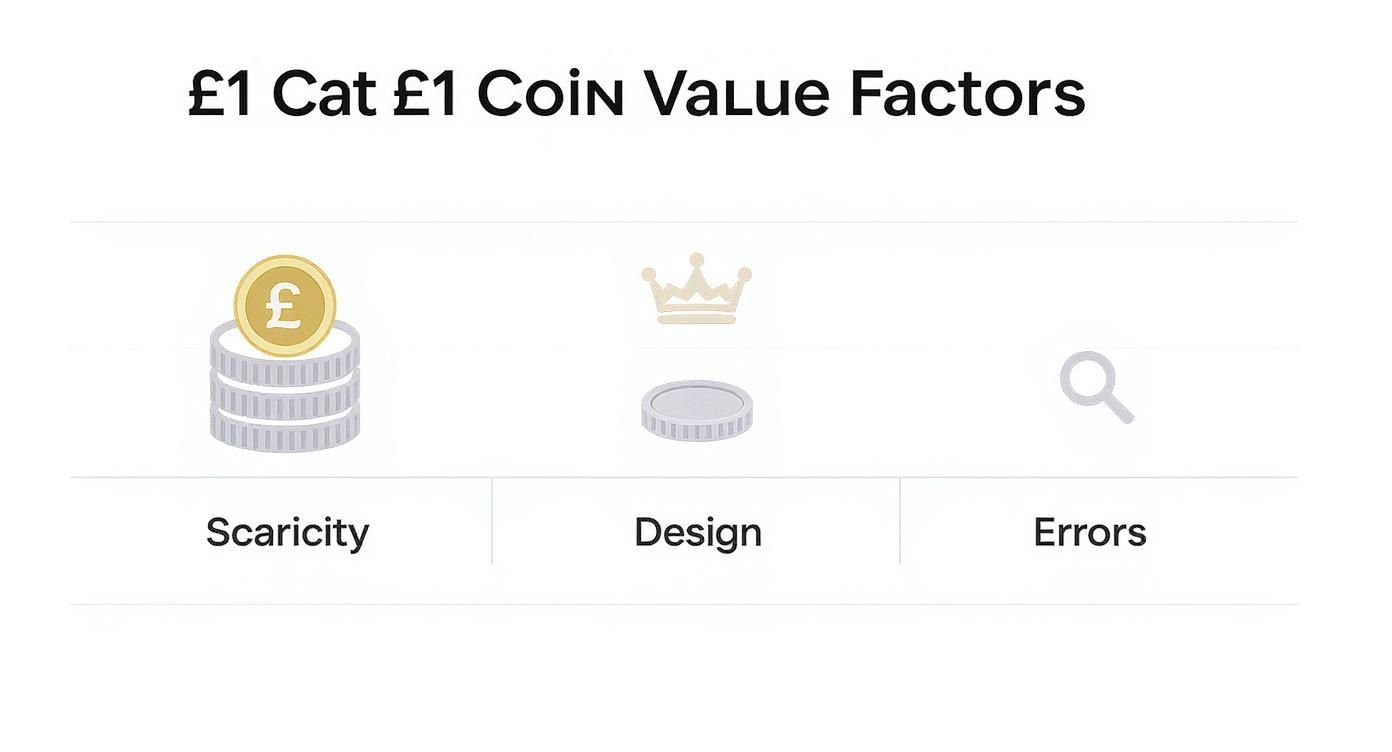
As the chart shows, it's that magic combination of low supply (scarcity), a popular design, or a mistake at the mint that creates a truly valuable piece.
Keep your eyes peeled for these modern rarities:
- 2022 Nations of the Crown: At the moment, this is the rarest 12-sided £1 coin you're likely to find in circulation, with a mintage of around 7.7 million. This makes it a key date for modern collectors.
- 2023 and 2025 'Bee' Designs: These were the first £1 coins to feature King Charles III. The 2025 version is especially scarce, with just over 9 million released into circulation.
- The 2016/2017 Misdated Coin: This is the most famous error of the new series and a true holy grail for modern coin hunters. A small number of 2016 trial coins were accidentally struck with a 2017 reverse. The Royal Mint has acknowledged them, and these transitional errors are exceptionally rare, with collectors willing to pay up to £3,000 for a good example.
Collector's Tip: Always look closely at the date on 12-sided coins. It appears on the obverse (the King or Queen's head side) and in tiny micro-engraving on the reverse. Any mismatch could be a sign of a valuable error.
This checklist should give you a fantastic starting point. By getting familiar with these specific coins, you'll be able to quickly scan your change for something worth a lot more than a quid. And remember, condition is everything – a clean, well-preserved example will always fetch a better price. Happy hunting
How to Properly Grade and Value Your Coins
Finding a rare date or a low-mintage design is always an exhilarating moment. But that thrill of discovery is really just the beginning. The true market worth of any valuable £1 coin is overwhelmingly dictated by its physical condition—a process we call grading.
Think of it like finding two identical, rare, first-edition books. One is still crisp and unread in its dust jacket, while the other is dog-eared with a coffee stain on the cover. They're the same book, of course, but their values would be worlds apart. Coin collecting works on exactly the same principle.
Understanding the Basics of Coin Grading
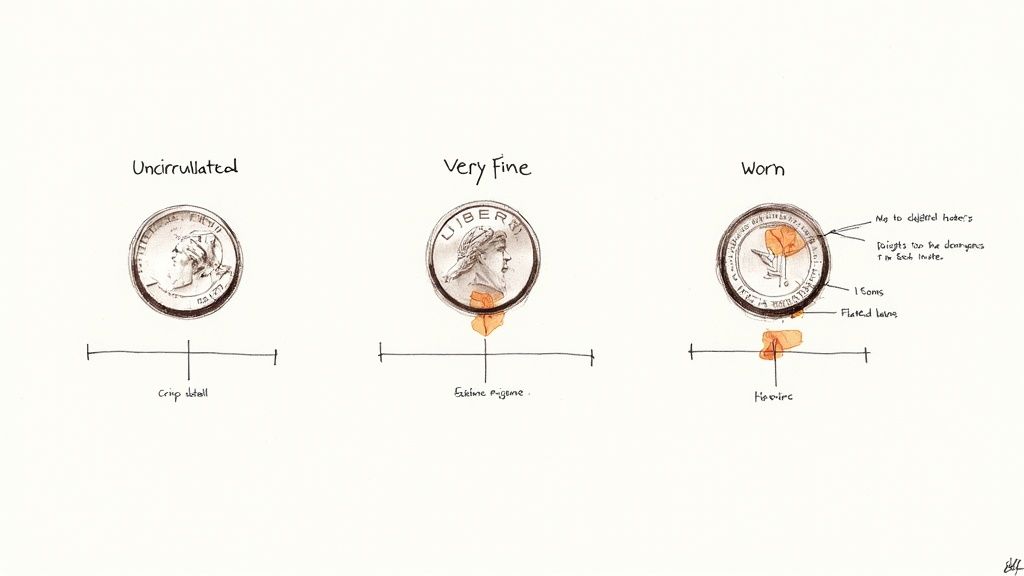
Grading isn't about giving a coin a score out of ten. It's about placing it into a recognised category based on the amount of wear it's picked up over the years. As a beginner, you don't need to get bogged down memorising complex numismatic terms. Just focus on getting a feel for a few key levels of condition.
This simple breakdown will help you assess most coins you'll come across:
- Uncirculated (UNC): This is a coin in perfect, mint condition. It’s never been used for shopping and shows no signs of wear, scratches, or other blemishes. All the design details are sharp and clear, and it often still has that original shine from the mint.
- Extremely Fine (EF): A coin in this grade has only seen a tiny bit of circulation. Almost all the details are still visible and sharp, but you might spot very minor wear on the highest points of the design, like the Queen's hair or the petals on a flower.
- Very Fine (VF): This is a pretty common grade for coins you'd find in your change. The coin shows noticeable but even wear across its surface. While the main design is still clear, some of the finer details have started to soften and blend together.
- Fine (F) and Below: At this stage, the coin is heavily worn. You can still see the major design elements, but most of the intricate details have been worn smooth from years of handling.
The difference in value between an Uncirculated and a Very Fine example of the same rare coin can be absolutely staggering. A pristine coin might be worth 10 to 20 times more than its heavily worn counterpart, making grading the single most important valuation skill you can learn.
To get a more detailed handle on the nuances involved, you can learn more about coin grading in our comprehensive guide, which is perfect for newcomers and seasoned collectors alike.
How to Determine Your Coin’s Market Value
Once you have a good idea of your coin's condition, the next step is to find out what it’s actually worth. A coin's value isn't a fixed number; it’s a dynamic figure based on what buyers are willing to pay right now. This means you need to do a little market research.
The best place to start is by checking the ‘sold’ listings on online marketplaces like eBay. It's absolutely crucial to look at what items have actually sold for, not the optimistic prices people are asking for in current listings. This gives you a realistic snapshot of current market demand.
Follow these steps for an accurate valuation:
- Be Specific in Your Search: Don't just search for "rare £1 coin." Use precise terms like "2011 Edinburgh £1 coin" or "Nations of the Crown 2022 pound coin" to narrow down your results.
- Filter for Sold Items: On eBay, find the filter options on the left-hand side of the page and tick the box for "Sold Items." This shows you the actual transaction prices—the most reliable data you can get.
- Compare Conditions: Pay close attention to the photos and descriptions of the sold coins. Try to match the condition of your coin to one that has recently sold to get the most accurate price comparison.
By combining a solid understanding of grading with real-world market data, you can figure out precisely what your finds are worth. This knowledge is essential, whether you're building a personal collection, reselling for a profit, or simply satisfying your curiosity.
A Practical Guide to Selling Your Valuable Coins
So, you’ve done the hard part. You’ve sorted through your change, identified a rare date, figured out its condition, and got a feel for what it’s worth. The thrill of the hunt is over, and you’re now the proud owner of a genuinely valuable £1 coin. What now?
Turning that potential into actual cash is the final step, and it’s where a lot of people feel a bit stuck. Don't worry. Choosing where to sell and how to list your coin might seem daunting, but it’s a pretty straightforward process once you know the ropes. The main goal is simple: get your coin in front of the right buyers, describe it accurately, and get paid safely.
Choosing Your Selling Platform
Where you sell your coin makes a huge difference to the price you’ll get and how much effort you'll have to put in. There are really three main routes you can go down, each with its own pros and cons.
-
Online Marketplaces (like eBay): This is the go-to for most individual sellers. It gives you access to the biggest possible audience of collectors who are actively looking for coins like yours. The downside? You’re also up against a lot of competition, and you’ll have to do all the work yourself – taking photos, writing the listing, and posting the coin.
-
Specialist Coin Dealers: Going to a reputable coin dealer is the quickest and easiest way to get cash in hand. They'll often make you an offer on the spot. The trade-off is that they need to make a profit, so the price you get will be below its full retail value. You’re essentially swapping a bit of profit for convenience.
-
Auction Houses: If you’ve stumbled upon something exceptionally rare, like a major error coin, then a specialist numismatic auction house might be your best bet. They handle all the marketing and verification to attract serious collectors with deep pockets. Just be aware that their commission fees are higher, and the whole process can take a few months from start to finish.
For most of the valuable £1 coins you'll find in your change, like the Edinburgh or Cardiff City designs, an online marketplace offers the best of both worlds. You get direct access to a huge pool of motivated buyers, which often pushes the final price higher than what a dealer would offer.
Creating a Listing That Sells
Once you’ve picked your platform, a top-notch listing is your key to getting a good price. Think of it as your coin’s shop window – the better it looks, the more confidence buyers will have.
First things first: photography is everything. You don’t need a fancy camera; a modern smartphone is more than capable. Just place the coin on a plain, non-reflective surface (a bit of dark felt works wonders) and use bright, natural light from a window. Never use the flash – it creates a horrible glare that hides all the important details. Make sure you get sharp, in-focus shots of the front (obverse), the back (reverse), and the edge.
Next, write a clear and honest description. Your title needs to be straight to the point. Something like "2011 Edinburgh City UK £1 One Pound Coin" is perfect. In the description itself, state the year and design, and be totally upfront about its condition using the grading terms we covered earlier (e.g., "Very Fine condition, has some minor marks from circulation"). Being honest about any little flaws builds trust and stops any arguments down the line.
Finally, think about your price. You can either set a fixed "Buy It Now" price or run an auction. Starting an auction at a low price like £0.99 is a great way to get people interested early on, and the competitive bidding can often drive the final price surprisingly high. Whichever you choose, don't forget to factor in postage. Always, always use a tracked and insured service when sending valuable items – it protects both you and your buyer.
How to Care for Your Coin Collection
Finding a valuable £1 coin is a real thrill, but that excitement is just the beginning. Protecting that value is every bit as important as the initial discovery, and proper care is the key to preserving a coin's condition and its market worth. The golden rule here is refreshingly simple: less is more.
First things first, let's talk about handling. The most critical step is to never, ever touch the face of a coin with your bare fingers. Your skin has natural oils and acids that are corrosive to metal. They leave behind fingerprints that can permanently etch the surface over time, causing damage that simply can't be undone.
Always hold a coin by its edges. If you can, wear soft cotton or nitrile gloves. This one simple habit is the best defence you have, ensuring your treasures stay in prime condition and safeguarding their value for years to come.
Choosing the Right Storage Solution
Once you've spotted a keeper, your top priority is to get it out of a change jar or your pocket and into a proper home. Don't think of a storage solution as just another expense; see it as an insurance policy on your coin's value. The good news is, there are excellent options available for every budget.
- 2x2 Cardboard Flips: These are a fantastic and affordable starting point for any collector. They're essentially a cardboard square with a clear Mylar window. You pop the coin inside, fold it over, and staple it shut. It’s a simple way to provide solid protection from fingerprints and scratches.
- Airtight Capsules: For your more valuable £1 coins—like a high-grade Edinburgh City or a particularly rare error coin—it’s worth upgrading to an individual hard plastic capsule. These cases create a secure, airtight seal when they snap shut, offering far superior protection from things like dust and humidity.
There are all sorts of options out there to suit your collection. For a deeper dive, have a look at our guide on the essentials of coin collecting storage.
The Most Important Rule: Never Clean Your Coins
This might sound completely backwards, but it is the single most important piece of advice anyone can give you. You must never, ever attempt to clean your coins. Using polish, chemicals, or even just a bit of soap and water will strip a coin of its natural patina—that is, the thin layer of toning that builds up on the surface over many years.
Collectors treasure this original surface, and cleaning is considered irreversible damage. A cleaned coin is almost always worth significantly less than an untouched one, even if the untouched coin looks a bit dull. In fact, an improperly cleaned rare coin can lose up to 90% of its potential value.
Beyond just physical storage, remember to protect your investment financially. For a growing or high-value collection, it's worth exploring first-class insurance for valuable items to make sure you're fully covered. By following these simple guidelines, you can ensure your valuable finds stay in pristine, collectable condition for the long haul.

Got Questions About Valuable £1 Coins?
As you start rummaging through your coin jar, a few questions are bound to come up. It happens to everyone. Here are some straight answers to the most common queries we hear from both seasoned collectors and those just starting out. Think of it as your go-to guide for sidestepping common pitfalls on your coin hunt.
Are All Old Round Pound Coins Valuable Now?
Not a chance. While the old 'round pound' was taken out of circulation, that fact alone doesn't make it a collector's item. The simple truth is that the vast majority are still only worth their face value of £1.
What really drives value is rarity, not just age. It's the coins with specific low mintage figures, like the 2011 Edinburgh City or the 2011 Cardiff City designs, that collectors are willing to pay a premium for. You always need to check the reverse design and the date against a rarity list to know for sure.
How Can I Tell If A Valuable £1 Coin Is A Fake?
Unfortunately, counterfeit 'round pounds' were rife before the design was changed. To spot a dud, look for details that seem mushy or poorly defined. Uneven lettering on the edge inscription or a colour that just looks a bit off are also classic red flags. A genuine coin will always have crisp, sharp features.
The new 12-sided coin is a much tougher nut to crack for counterfeiters, thanks to some clever security features.
- Check the Latent Image: Look at the small panel just below the Queen's head. When you tilt the coin, it should switch between a '£' symbol and a '1'.
- Inspect the Micro-Lettering: On the inner rim, you’ll find tiny letters spelling 'ONE POUND'. On a real coin, this is incredibly precise and clear, not fuzzy or blurred.
What Is The Best Way To Check A Large Bag Of Coins?
Staring at a mountain of coins can feel like a daunting task, but a bit of system makes it much more manageable. The smartest way to tackle it is to sort them by the reverse ('tails') design first.
Get yourself organised with separate piles for each design – one for all the Royal Arms coins, another for the Floral Emblems, and so on. This approach quickly isolates the designs that have a chance of being rare. Once you’ve got your piles, you only need to check the dates on the less common design groups, which saves a huge amount of time.
Don't bother checking the date on every single coin from the get-go. By grouping them by design first, you can focus your energy only on the piles that might contain a valuable £1 coin. It turns a potential all-day job into something you can do in a spare hour.
Does A Coin's Condition Really Matter That Much?
Absolutely. A coin's condition, or what collectors call its 'grade', is one of the biggest factors in determining its final value. A rare coin in pristine, 'Uncirculated' condition can fetch many times more than the exact same coin that's been rattling around in pockets and is covered in scratches.
Even small issues like nicks on the rim or signs that someone tried to clean it improperly can slash what a serious collector will pay. If you think you've found something good, handle it with care to preserve its condition—and its value.
At Cavalier Coins Ltd, our passion is helping collectors discover the next great piece for their collection. Whether you're after rare UK coins or fascinating world banknotes, our curated selection and weekly auctions have something for everyone.
Explore our latest arrivals by visiting us at https://www.cavaliercoins.com and start your collecting journey today.