
Ever glanced at the change in your hand and wondered if it’s worth more than face value? For most of us, a pound is just a pound. But for those with a keen eye, certain valuable pound coins UK aren't just currency—they're tiny treasures worth a small fortune. This guide will help you turn your loose change into a treasure map, showing you exactly what to look for.
Why Your Loose Change Could Be a Hidden Treasure
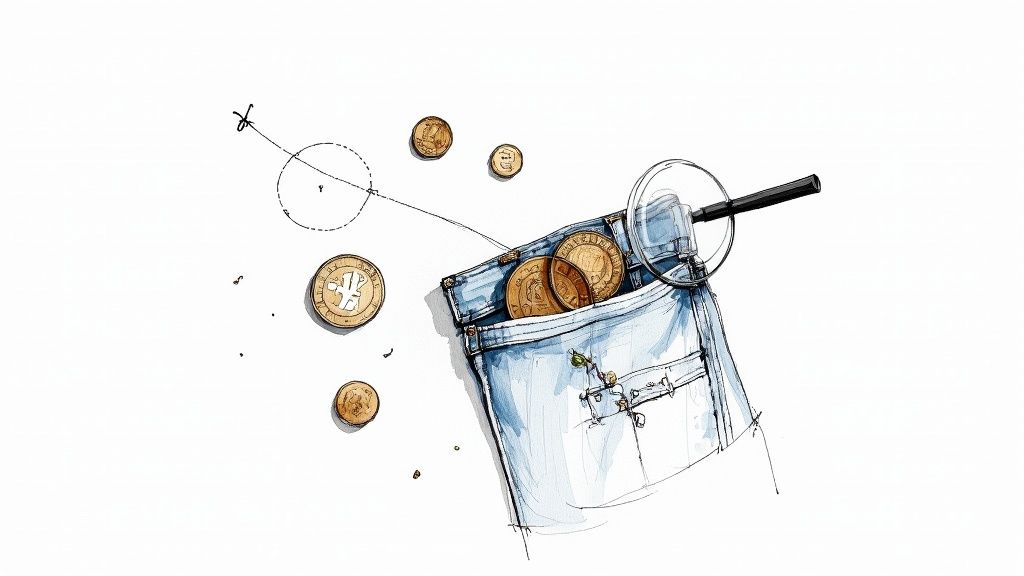
It might sound a bit far-fetched, but the idea that a simple £1 coin could be worth hundreds of times its face value is a reality. It happens more often than you'd think. A coin's value isn't really about the metal it’s struck from; it's all about its story and its scarcity.
Think of it like a first-edition book. Its real value comes from how few copies were printed and what it represents. In the same way, every coin tells a small part of our national story. To get a feel for this, it's worth exploring a brief history of British coins to see just how much our currency has changed over the centuries. This historical backdrop is what turns a piece of metal into a collectible.
Key Factors That Create Value
So, what transforms an ordinary coin into a collector's item? It all boils down to a few key things. Rarity is, without a doubt, the biggest driver of value. This is usually determined by the coin’s mintage figure—that's the official term for how many identical coins The Royal Mint produced. A lower mintage means fewer coins are out there, which naturally ramps up demand among collectors.
But it’s not just about production numbers. Other factors can make a coin truly special:
- Minting Errors: These are fascinating mistakes made during production. Things like misaligned designs or a coin struck on the wrong type of metal create unique and often very valuable oddities.
- Commemorative Designs: Coins released to celebrate major events or honour important figures are usually made in limited runs, making them collectible from day one.
- Condition: It’s simple, really. A coin that looks like it just left the Mint—pristine and uncirculated—will always fetch a much higher price than one that’s been jangling around in pockets for years.
A coin's true worth lies not just in its face value, but in the combination of its history, rarity, and the story it tells. It’s a miniature piece of art and history that fits in the palm of your hand.
This guide will take you beyond basic coin collecting and get into these fascinating details. We’ll look at the real stories of people who’ve found rare gems in their everyday change, and hopefully, it’ll inspire you to start your own hunt. It's time to start looking at your change in a whole new light, because your next valuable find might be just a coin toss away.
What Makes a Pound Coin Valuable?
If you want to find a real treasure, you first need to know what you’re looking for. Not all pound coins are made equal; most are just everyday currency, but a select few are miniature artefacts worth much more than the £1 stamped on them. The difference comes down to a fascinating mix of scarcity, human error, and a bit of history.
Think of it like a limited-edition art print. The fewer copies there are, the more they're cherished and hunted down by collectors. This is the exact principle that separates your common pocket change from the valuable pound coins UK collectors dream of finding. Get your head around these four factors, and you'll be on your way to spotting a potential windfall.
Scarcity and Mintage Figures
The biggest driver of a coin's value, hands down, is its mintage figure. This is simply the official number of coins The Royal Mint produced for a specific design in a given year. A low mintage is the bedrock of rarity. When millions of a coin are pumped into circulation, finding one is no big deal, and its value stays at £1.
But when a coin has a tiny mintage – like the famous 2009 Kew Gardens 50p with only 210,000 released – demand goes through the roof. There just aren’t enough to satisfy every collector who wants one. This is the scarcity that turns a simple piece of metal into a sought-after collectible.
The Allure of Minting Errors
Sometimes, the most valuable coins are the ones that went a bit wrong. The Royal Mint has an incredibly precise production process, but every now and then, a mistake slips through. These die errors are flaws that happen during the striking of a coin, creating unique and highly desirable oddities.
We're not talking about any old scratch or ding from being passed around. A genuine minting error is a flaw that was baked in from the very start. Some classic examples include:
- Off-centre strikes: The design isn't perfectly centred on the coin blank.
- Die cracks: A crack in the die (the stamp) leaves a raised, jagged line on the coin.
- Mule coins: An incredibly rare and valuable error where the wrong 'heads' (obverse) and 'tails' (reverse) designs are accidentally paired together.
These little imperfections make a coin a true one-off, and collectors will happily pay a hefty premium for something so unique.
The Crucial Role of Condition
Picture this: you find two identical rare coins. One is pristine, with razor-sharp details and a brilliant shine, looking like it just left the mint. The other is dull, scratched, and worn smooth from years in circulation. Even though they're the same coin, their values would be miles apart.
A coin’s physical state, what collectors call its grade or condition, has a massive effect on its price tag. An uncirculated coin that's been carefully kept can be worth ten times more than the exact same coin that shows heavy wear and tear.
The golden rule for any potential find is simple: do not clean it. Polishing or scrubbing a coin can create tiny scratches and strip away its original surface, known as the patina, which will torpedo its value for any serious collector.
Design and Historical Significance
Finally, the story behind a coin can add a whole other layer of value. Coins are often little monuments in your pocket, celebrating key moments in British history, honouring famous figures, or showcasing beautiful regional designs.
While historical importance alone won't make a coin valuable without rarity, it does create a powerful emotional pull for collectors. A coin that commemorates a beloved event or features a stunning, iconic design often becomes far more desirable. When that desirability meets a low mintage, you have the perfect storm for a truly valuable pound coin.
How to Spot Rare Pound Coins in Your Change
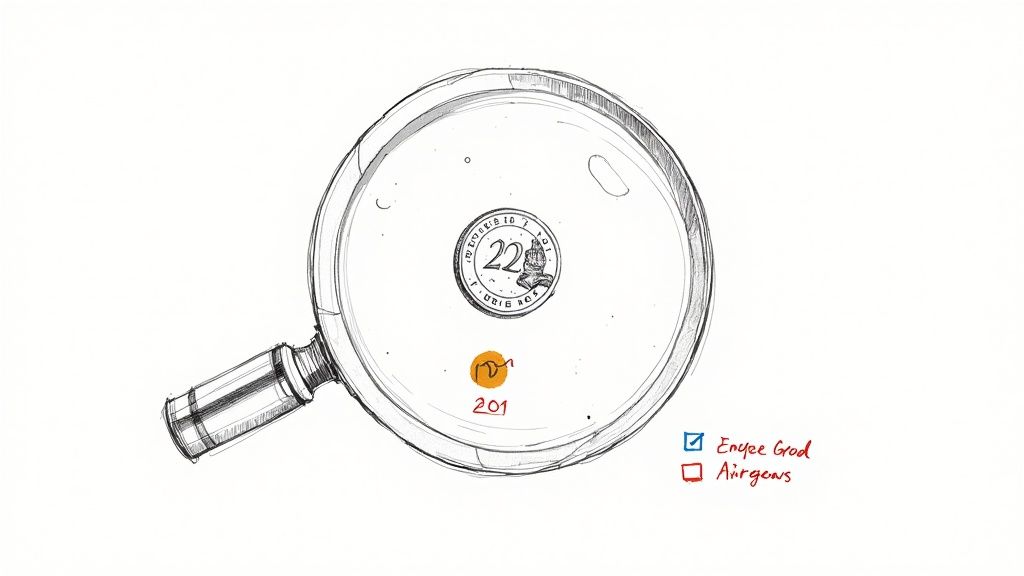
Now that you know what makes a coin valuable, it’s time to put that knowledge into practice. Becoming a coin detective is easier than you think, and the change jangling in your pocket is the perfect training ground. Think of this as your hands-on manual for sniffing out those valuable pound coins UK collectors are desperate to find.
We're going to walk through a simple, repeatable process for checking the coins you handle every day. With a little patience and a keen eye, you'll soon start spotting the small details most people completely miss.
Your Coin-Hunting Toolkit
You don’t need a lab full of expensive equipment to start your treasure hunt. In fact, a couple of basic tools will massively improve your chances of spotting a rarity. This is your essential detective kit.
All you really need to get started is:
- A Good Light Source: A bright, direct light, like an LED desk lamp, is a game-changer. It helps you see every tiny detail, scratch, and unusual texture on the coin's surface.
- A Magnifying Glass: Even a simple magnifying glass with 5x magnification will do the trick. It reveals those tiny mint marks, die cracks, and other features that are totally invisible to the naked eye.
With these two items, you’re ready to turn a handful of loose change into an exciting hunt for hidden gems.
A Step-by-Step Inspection Process
To hunt for rare coins effectively, you need a system. Follow these steps for every pound coin you check to make sure you don’t miss a thing.
-
Check the Date: This is your first port of call. The year a coin was minted is directly tied to its mintage figure and potential rarity. It's a good idea to keep a list of key low-mintage years handy.
-
Examine the Reverse Design: Carefully inspect the 'tails' side. Are you looking at a standard Royal Arms design, or is it one of the less common commemorative patterns, like the capital cities or floral emblems series?
-
Inspect for Errors: This is where your magnifying glass really earns its keep. Slowly scan the entire surface of both sides. Look for anything that seems out of place—designs that are off-centre, tiny raised lines from die cracks, or any other unusual markings.
The key to finding rare coins is patience and consistency. Most coins will be common, but the thrill comes from knowing the next one you pick up could be the exception.
Identifying Key Designs and Errors
Knowing what you’re looking for is half the battle. Certain designs are notoriously hard to find. The round pound featuring the Edinburgh City shield, for instance, is a top prize for collectors.
In fact, the 2011 Edinburgh City £1 is the rarest circulating round pound out there, with just 935,000 ever minted. It’s the only one with a mintage below a million. In good condition, these have been known to sell for over £90.
Beyond specific designs, always keep an eye out for minting mistakes. 'Mule' coins, where the wrong obverse and reverse dies are paired up, are exceptionally rare and can be very valuable. Even less dramatic errors, like misaligned strikes where the design isn't perfectly centred, can add a premium.
It's also crucial to know the difference between genuine errors and fakes. As you get more serious about collecting, learning how to spot counterfeit pound coins will become an essential skill to protect your investment and ensure your finds are authentic.
A Collector's Guide to Valuable UK Pound Coins
Now that you know the basics of what makes a pound coin valuable, it’s time to meet the stars of the show. This section is your field guide to the heavy hitters—the specific round £1 coins that still send a ripple of excitement through the collecting community.
Believe it or not, many of these could still be tucked away in old piggy banks, forgotten jars, or maybe even your parents' change drawer. We'll be focusing on the classic round £1 series, which was phased out for the current 12-sided version back in 2017. For each coin, we’ll dig into its unique story, design details, mintage figures, and what it’s actually worth to an eager collector today.
Let's dive in and see what you should be looking for.
The Capital Cities Series: The Holy Grails
Issued between 2010 and 2011, the Capital Cities series is where you'll find some of the most sought-after treasures. These coins showcase the official badges of the four UK capital cities, and two of them have incredibly low mintage figures, making them modern classics.
2011 Edinburgh City
This is the undisputed king. It’s the coin that UK collectors dream of finding. Representing Scotland's capital, the reverse features the city's coat of arms, complete with a castle. With a mintage of just 935,000, it's the only circulating round pound to ever dip below the one-million mark. Finding one of these in your change is the ultimate prize.
2011 Cardiff City
Hot on Edinburgh's heels is the coin celebrating the Welsh capital. The Cardiff City £1 proudly displays the city's coat of arms, which includes the iconic Welsh Dragon. Its mintage stands at a mere 1,615,000, making it the third-rarest round pound and a major find for any enthusiast.
2010 London City
Representing England's capital, this coin displays the coat of arms for the City of London. While not nearly as scarce as its Scottish and Welsh counterparts, its mintage of 2,635,000 still places it firmly in the 'uncommon' category. It's a key piece for completing the set and commands a price well above its face value.
Other Notable Low Mintage Round Pounds
Beyond the top-tier Capital Cities coins, several other round pounds are well worth keeping an eye out for. These might not command the same eye-watering prices as an Edinburgh £1, but their scarcity makes them fantastic additions to any collection.
Take the Floral Emblems series, for example. It produced some surprisingly scarce coins that often fly under the radar. The 2014 Thistle and Bluebell (for Scotland) and the 2013 Flax and Shamrock (for Northern Ireland) are two great examples with relatively low mintages that often go unnoticed.
Remember, a coin's story and design are a huge part of its appeal. If you appreciate the intricacies of collecting, exploring other areas like vintage luxury watches can be just as fascinating. You can find excellent collector's guides on various valuable items that show how similar principles of rarity and condition apply across different hobbies.
Top 5 Valuable UK Round Pound Coins
To make hunting a bit easier, here’s a quick-reference guide to the most valuable round pounds you’re likely to come across. Think of it as a checklist for when you’re sorting through that jar of old coins.
| Coin Name & Year | Mintage Figure (Approx.) | Key Identifying Feature | Estimated Collector Value (Good Condition) |
|---|---|---|---|
| 2011 Edinburgh City | 935,000 | Shield featuring a three-towered castle | £30 - £50 |
| 2011 Cardiff City | 1,615,000 | Shield featuring a prominent red dragon | £15 - £25 |
| 2010 London City | 2,635,000 | Shield with the cross of St. George and a sword | £8 - £12 |
| 2008 Royal Arms | 3,910,000 | The full Royal Coat of Arms of the UK | £5 - £8 |
| 2014 Thistle & Bluebell | 5,185,000 | Scottish thistle and bluebell flowers | £4 - £6 |
This table provides a great snapshot, but remember that market values can and do fluctuate based on collector demand and the coin's specific condition. An uncirculated version will always fetch a higher price than one that’s been rattling around in pockets for years. Happy hunting
Preserving and Selling Your Valuable Coins
So, you think you’ve found one of the UK’s rare pound coins? That thrill of discovery is what collecting is all about, but what you do next is absolutely critical. Your first instinct might be to give it a good polish to make it shine, but hold on – that's the single worst mistake you can make.
The golden rule in the coin world is simple: never clean your coins. Cleaning, no matter how gently you do it, leaves microscopic scratches and strips away the coin's original surface, or what collectors call its patina. For a serious buyer, this damage can instantly wipe out over 90% of its potential value.
How to Properly Handle and Store Coins
The best way to protect your find starts with how you hold it. Always pick up a coin by its edges, gripping it between your thumb and forefinger. This stops natural oils from your skin getting on the coin's face and causing damage over time.
For long-term protection, the answer is a simple, airtight coin capsule. These little transparent plastic cases are cheap and cheerful, but they do an incredible job of shielding your valuable pound coins from scratches, damp, and anything else in the air that could tarnish them.
Turning Your Find into Profit
With your coin safely tucked away, the next step is figuring out how to get a fair price for it. The market for rare coins can be a bit of a minefield, with some online sellers listing coins for eye-watering, unrealistic prices. It's vital to have a clear head and a solid strategy.
The real secret to selling is knowing the difference between what someone is asking for a coin and what it's actually selling for. The only way to find its genuine worth is to look at completed sales for similar coins.
This chart gives you a great visual on the scarcity and collector demand for the top three pound coins from the Capital Cities series.
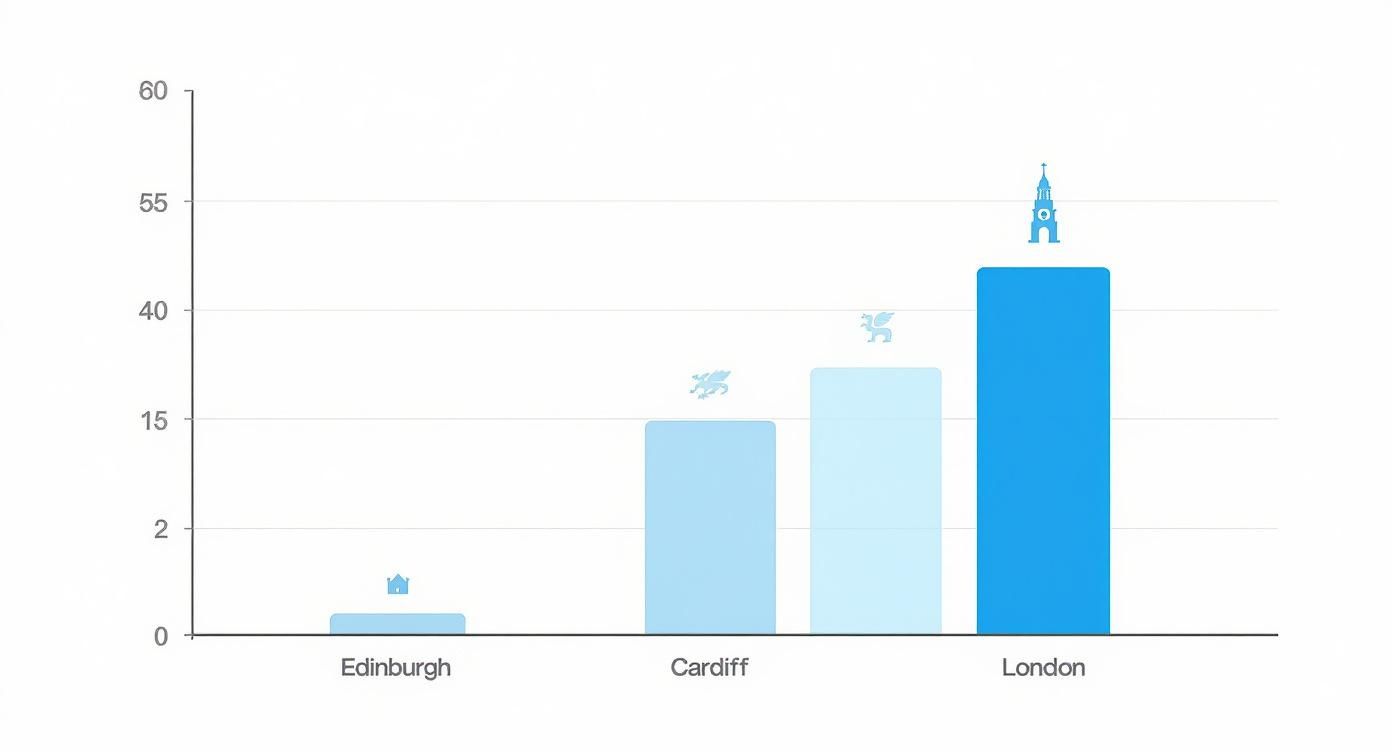
You can see straight away how the tiny mintage of the Edinburgh coin makes it a much bigger prize for collectors compared to its London and Cardiff counterparts.
When you're ready to sell, you've got a few solid options:
- Online Marketplaces: Sites like eBay put your coin in front of a huge number of potential buyers. The trick here is to take excellent, well-lit photos and write a description that's both detailed and completely honest.
- Specialist Dealers: A good, reputable coin dealer can give you a fair price on the spot. It's often the quickest and most hassle-free way to sell.
- Auction Houses: If you have something truly exceptional, a specialised coin auction can attract serious bidders who are willing to compete, often resulting in the highest possible price.
If you want to dig deeper into the pros and cons of each method, our guide on how to sell coins in the UK is the perfect next step.
Your Top Questions Answered
As you dive into the world of coin hunting, it's only natural for questions to bubble up. That first thrill of the search often gives way to more specific head-scratchers about what you've actually found. Here, we’ll tackle some of the most common queries with clear, no-nonsense answers to help you build your confidence and sharpen your collector's eye.
Think of this as your go-to guide for cutting through the confusion.
Are the New 12-Sided Pound Coins Valuable?
For the most part, the new bimetallic £1 coins were minted in such enormous numbers that they're quite common. The real value, however, often lies in the mistakes. Keep a sharp eye out for minting errors – things like misaligned centres, visible die cracks, or even mismatched dates on the coin.
While no 12-sided £1 has reached the legendary rarity of older round pounds (like the 2011 Edinburgh), some of these error coins are keenly sought after by specialist collectors. It always pays to give your change a second glance for anything that looks a bit 'off'.
How Much Does a Coin's Condition Affect Its Value?
A coin's condition – what we call its 'grade' in the collecting world – is a massive factor in its worth. An 'Uncirculated' (UNC) coin that looks as fresh as the day it left The Royal Mint can be worth 10 to 20 times more than the exact same coin in 'Good' condition, which will show heavy wear from its time in circulation.
Scratches, dings, and worn-down details can obliterate over 90% of a rare coin's potential value. This is exactly why handling your finds with care from the get-go is so critical.
Where Can I Find Official Coin Mintage Figures?
For the most reliable and official numbers, your first port of call should always be The Royal Mint website. They publish the official data, detailing precisely how many of each coin were struck for circulation in any given year.
If you're after something a bit more user-friendly, sites and apps like Change Checker provide handy scarcity indexes. These tools are great for quickly seeing how your finds rank in terms of rarity, helping you spot the ones that collectors are really looking for.
What Is a Mule Coin and Why Is It So Valuable?
A 'mule' is one of the holy grails of error collecting. It's an exceptionally rare mistake that happens when the wrong obverse ('heads') die is paired with a reverse ('tails') die during the minting process.
Imagine a coin with the heads side from a 10p piece but the tails from a 2p. These are incredible slip-ups that somehow bypass quality control, and as you can guess, collectors go wild for them. Because of their sheer scarcity and the unique story behind them, mules often command thousands of pounds at auction.
At Cavalier Coins Ltd, we are passionate about helping both new and experienced collectors find the perfect pieces to complete their collections. Explore our extensive selection of rare and fascinating coins from the UK and around the world. Visit us at https://www.cavaliercoins.com to discover your next treasure.