
At its core, a numismatist is a passionate student and expert in coins, paper money, tokens, and medals. This isn't just about stashing away spare change in a jar. A numismatist actively researches, grades, and catalogues currency, seeing every piece as a tangible slice of history.
More Than Just a Coin Collector
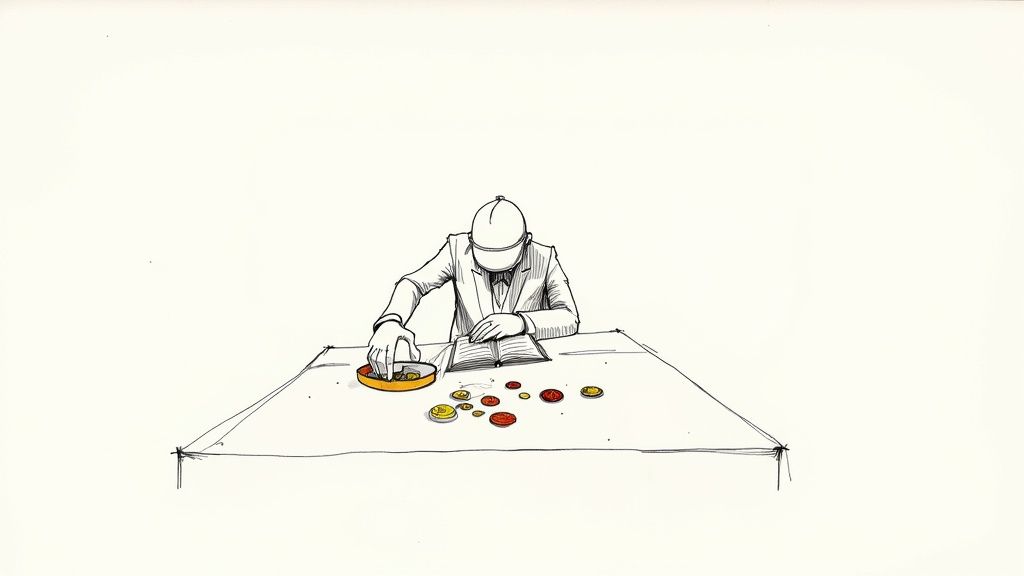
It’s easy to confuse a numismatist with a casual coin collector, but there’s a world of difference. Think of it this way: one person might enjoy looking at famous paintings, while another is a professional art historian who understands the context, technique, and story behind the canvas. Both appreciate the art, but the numismatist brings a scholarly dedication to the hobby.
Their work goes far beyond simply accumulating items. A true numismatist dives deep into the world behind each piece. They wear many hats—historian, detective, and even economist—as they piece together the incredible stories that money can tell us about forgotten civilisations, global trade, and cultural shifts.
If you're curious about the rich history of this practice, you can learn about the origin of the word numismatics in our deep-dive article.
The Discipline of Numismatics
Numismatics is a recognised academic and professional discipline with deep roots in the UK. A great example is the Royal Numismatic Society, founded way back in 1836. It began with around 120 members and has since grown to a global community of approximately 800, which shows just how much the field has grown and professionalised over the centuries.
So, what does a numismatist actually do? Their key activities often include:
- Meticulous Research: Digging into a coin’s mintage numbers, its historical period, and the unique elements of its design.
- Precise Grading: Carefully evaluating a coin's condition using established standards, which is a major factor in determining its value.
- Thoughtful Cataloguing: Organising a collection systematically to preserve both its historical context and financial integrity.
Numismatist vs Collector At a Glance
To make the distinction crystal clear, here’s a quick comparison of the motivations and activities that separate a dedicated numismatist from a more casual collector.
| Aspect | Casual Collector | Numismatist |
|---|---|---|
| Primary Goal | Accumulating interesting or visually appealing pieces. | Building a curated collection with historical or thematic significance. |
| Knowledge Base | Basic understanding of coin types and dates. | In-depth knowledge of minting processes, grading standards, and history. |
| Research | Minimal; often limited to identifying a coin. | Extensive; investigates provenance, rarity, and socio-economic context. |
| Tools Used | A simple magnifying glass and albums. | Specialised loupes, scales, reference books, and auction records. |
| Financial View | Hopes for value appreciation but often secondary. | Considers coins an asset class; tracks market trends and valuations. |
This table shows how numismatics takes the hobby of collecting to a whole new level of expertise and dedication. It's about transforming a simple collection into a curated archive.
Ultimately, being a numismatist is about blending the thrill of the hunt with the intellectual satisfaction of discovery. It’s a pursuit that makes it a uniquely rewarding field for anyone with a true passion for the past.
A Day in the Life of a Numismatist
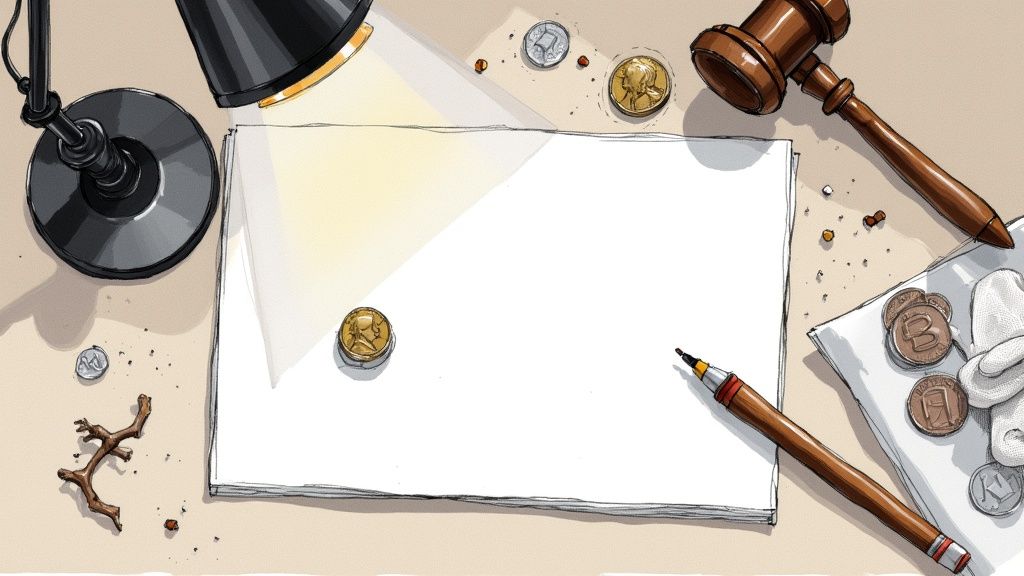
Forget the idea of a stuffy, monotonous job. The daily routine of a numismatist is a thrilling mix of detective work, historical sleuthing, and meticulous, hands-on analysis. While no two days are ever quite the same, they’re all fuelled by a deep-seated curiosity for currency and its stories.
A huge chunk of any numismatist’s time is spent on hands-on examination. This isn't just a quick look. It means getting out the specialised tools—a jeweller's loupe, specific lighting—to inspect every tiny detail of a coin or banknote. They are hunting for clues: rare die errors, almost invisible mint marks, or other unique quirks that could completely change a piece's history and value.
But this close-up inspection is only the first piece of the puzzle. What they find under the loupe almost always leads to the next crucial step.
Research and Cataloguing
A numismatist will spend countless hours buried in historical records, academic papers, and old auction catalogues. The goal is to properly attribute each piece, figure out its mintage numbers, and trace its provenance—the documented history of who has owned it over the years. This painstaking research is what elevates a simple pile of old coins into a historically significant archive.
Once an item’s story is pieced together, the cataloguing can begin. This is a careful, methodical process:
- Detailed Documentation: Every key bit of information is recorded, from the coin's origin and date to its denomination and metal composition.
- Condition Grading: Using established industry standards, a grade is assigned based on the level of wear and preservation.
- Secure Storage: Each item is carefully placed in archival-safe materials to stop it from degrading, protecting its condition and value for the long haul.
This detailed process ensures every piece isn't just stored away, but is fully understood and preserved for future generations.
For a numismatist, a coin isn't just an object; it's a primary source document. Every scratch, mint mark, and design choice offers a clue about the economic and political world it came from.
Community Engagement and Trading
The life of a numismatist is also incredibly social. They are an active part of a global community, constantly sharing knowledge, discovering new pieces, and keeping a finger on the pulse of market trends. This can mean anything from attending a local club meeting to flying to an international convention.
You’ll often find numismatists at coin fairs and auctions, both in-person and online. These events are the lifeblood of the hobby—the best places to buy, sell, and trade, whether they're looking to refine their collections or snap up a long-sought-after piece. They also contribute to numismatic societies and publications, connecting with fellow experts who share their passion. It's this collaborative spirit that keeps the field so vibrant, ensuring knowledge is always being shared and built upon.
How Numismatists Determine a Coin's Value
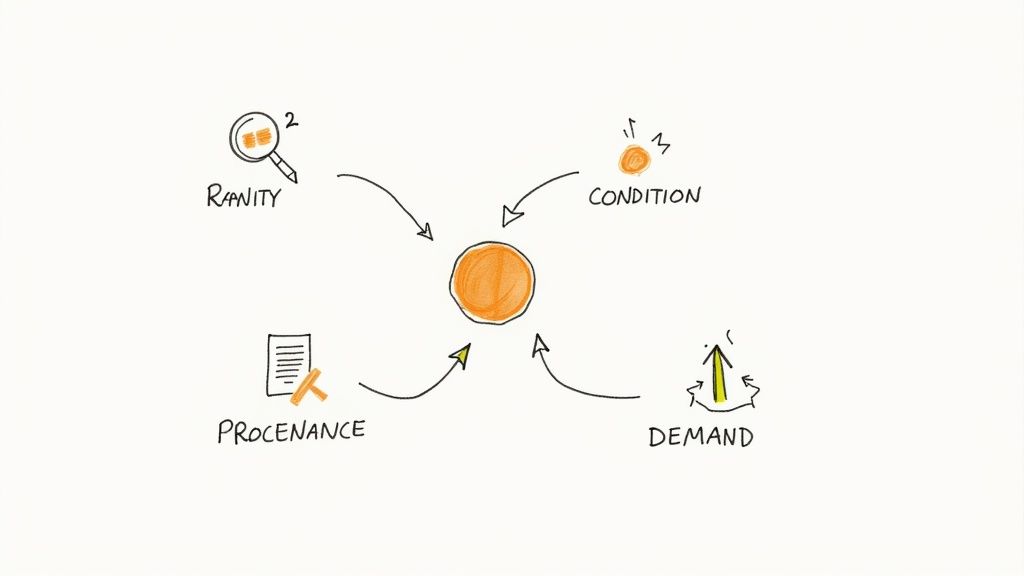
When a seasoned numismatist examines a coin, they’re seeing much more than a simple piece of metal. They see a story unfolding—a story of history, art, and economics all wrapped up in one small object. A coin's true worth isn't just about its metal content; it's a careful balance of four crucial factors.
Understanding these elements is the secret to appreciating why two coins that look almost identical can have wildly different price tags. A numismatist’s job is to weigh each factor, blending a bit of science with a keen sense of the market to land on an accurate valuation.
The Four Pillars of Coin Valuation
The whole process feels a bit like being a detective. Each of these four pillars offers a vital clue, and when you put them all together, they reveal a coin's true significance and how much collectors desire it.
- Rarity: How many were made in the first place, and how many have survived to this day? A coin with a low mintage or a small known population is naturally scarcer and, therefore, more valuable.
- Condition (Grade): How well has the coin been preserved? A numismatist will look for signs of wear, scratches, and the quality of its original lustre to assign a grade. The better the grade, the higher the value.
- Provenance: What's the coin's backstory? A documented history of ownership, especially one that includes a famous collector or collection, can add a huge amount to its appeal and price.
- Demand: Simply put, how many people want this coin? Market trends, historical events, and even just a beautiful design can all drive collector interest up or down.
Rarity and Condition in Action
Rarity is often the first thing a numismatist digs into. Here in the UK, that usually means heading straight for The Royal Mint’s official mintage figures. For example, a staggering 3,235,239 gold sovereigns were struck in 1817, but just two years later in 1819, only 3,574 were made. That massive difference in production is a key reason for the 1819 sovereign's high value.
An even more extreme case is the 1937 Edward VIII sovereign. With only 5,500 sets ever issued, one sold for £1 million, becoming Britain's most expensive coin and proving just how much low mintage matters.
Condition is just as important. Take a common date coin—a pristine, uncirculated example can be worth hundreds of times more than the same coin that’s seen heavy use. The tiniest difference between grades can translate into thousands of pounds in value. If you want to get your head around this critical element, our coin grading guide for beginners and experts is a great place to start.
Think of it like this: imagine two identical classic cars from the same year. One has been stored in a climate-controlled garage its whole life and looks like it just rolled off the factory floor. The other has been a daily driver, showing all the dings and scratches of a life well-lived. The pristine one will always fetch a much higher price—and it’s exactly the same principle with coins.
In the end, a numismatist’s skill lies in bringing all this information together. They might find a coin from a common year (low rarity) but in exceptional condition (high value), or a heavily worn coin (low grade) that was once part of a famous historical collection (high provenance), making it incredibly desirable. This multi-layered analysis is what truly separates an expert from a casual observer.
Exploring Different Fields of Numismatics
Think of the world of numismatics less as a single path and more like a sprawling historical library. It has countless different wings, each dedicated to a unique period, region, or type of currency. It’s no wonder that most numismatists choose a specialisation, allowing them to build a deep, personal expertise in a field that genuinely captures their imagination.
This focus is crucial because the required skills and knowledge can vary dramatically from one area to another. For instance, a specialist in ancient Roman coins needs a strong grasp of archaeology and classical history. In contrast, someone fascinated by modern banknotes must understand intricate printing techniques and security features. By choosing a focus, a numismatist can master the specific context needed to truly appreciate the items they study.
There’s a vast array of popular areas to explore, each with its own set of challenges and rewards. The right choice often comes down to what you’re passionate about, whether that’s a love for ancient empires, medieval kingdoms, or the stunning art of modern currency design.
Core Areas of Coin Study
For those drawn to physical coins, specialisations often revolve around distinct historical eras. Each period presents unique production methods and historical narratives, making them fascinatingly different fields of study for any numismatist.
- Ancient Numismatics: This field covers the earliest forms of coinage, from ancient Greek drachms to Roman denarii. Specialists here are a bit like archaeologists, piecing together the economic and political histories of entire empires from these small metal artefacts.
- Medieval Coinage: Focusing on hammered coins, such as Anglo-Saxon silver pennies, this area requires a keen eye for the subtle variations created by pre-industrial minting. Each piece is truly unique, telling a story of feudal lords and fledgling kingdoms.
- Modern Milled Coins: A hugely popular area, this covers coins made with industrial machinery from the 17th century onwards. Here, a numismatist hunts for things like mint marks, die varieties, and low-mintage issues that create rarity and value.
The depth of study in these fields can be immense. UK numismatists specialising in ancient coins, for instance, analyse vast archaeological data, such as the corpus of over 490,000 Roman coins found in England and Wales. The distribution of these finds helps specialists understand ancient economic patterns and coin circulation. You can discover more about how these findings reveal historical context from detailed economic data.
Beyond Traditional Coins
The practice of a numismatist isn’t limited to just official government currency. Several related disciplines, known collectively as para-numismatics, offer fascinating avenues for study and collection. These fields explore items that are money-like or related to financial history.
Some of the most engaging related fields include:
- Exonumia: This is the study of coin-like objects such as tokens, medals, and badges. These items often provide a unique and unfiltered glimpse into local history, commerce, and social events.
- Notaphily: This is the specialisation focused entirely on paper money. A notaphilist studies banknotes, analysing printing methods, security features, and the artwork that reflects a nation’s identity and values.
- Scripophily: An intriguing niche that involves collecting and studying stock and bond certificates. These documents are often beautifully engraved and offer a tangible window into the history of finance and industry.
Each of these fields offers a unique way to connect with the past, whether through a Roman denarius, a medieval penny, or a colourful modern banknote.
How to Start Your Numismatic Journey
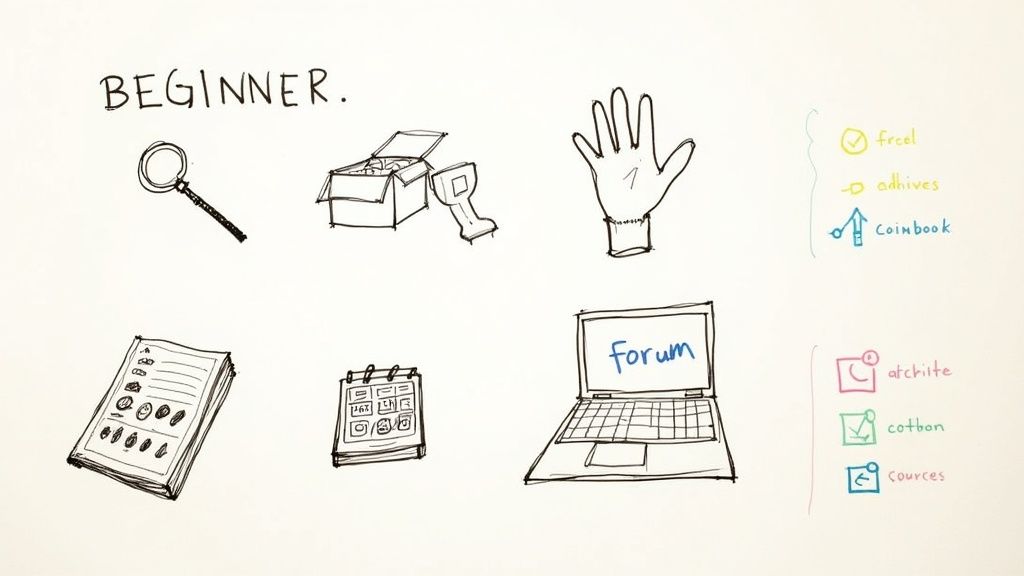
So, you’re ready to dip your toes into the world of numismatics? The first step isn’t to rush out and buy the shiniest, most expensive coin you can find. It’s actually much simpler: choose a focus. This single decision gives your new hobby a clear direction and stops it from feeling overwhelming.
Your focus can be anything that genuinely fascinates you. Maybe you’re drawn to the long reign of Queen Victoria, or perhaps you want to trace the history of a specific coin like the British shilling. A targeted approach like this helps you build real expertise in one corner of the numismatic world before you think about expanding.
Once you know what you’re looking for, it's time to gather a few essential tools. Think of these as the absolute must-haves for handling and studying your collection safely, protecting both its condition and its future value.
Assembling Your Numismatist Toolkit
A small, smart investment in the right equipment will save you a world of heartache down the line. Your basic kit should really include these three things:
- A Quality Magnifying Glass or Loupe: This is non-negotiable. You’ll need it to inspect the tiny details, mint marks, and subtle signs of wear that are completely invisible to the naked eye.
- Cotton Gloves: The natural oils on your skin can cause irreversible damage to a coin’s surface. Always, always use a pair of soft cotton gloves when handling your pieces.
- Archival-Safe Storage: Proper storage is crucial. Look for acid-free holders, albums, or flips made specifically for coins. Steer clear of any PVC-based plastics, as they can degrade over time and release chemicals that will ruin your collection.
With your focus set and your tools at the ready, the real learning can begin. This is what truly separates a numismatist from someone who just accumulates old coins. Luckily, there are more fantastic resources out there today than ever before.
A common mistake for newcomers is buying from unreliable sources. A true numismatist builds a network of trusted dealers, auction houses, and fellow collectors. Vetting your sources is as important as vetting the coins themselves.
Joining a local numismatic society or even an online forum can be invaluable. It connects you with a community of experienced collectors who are often happy to offer guidance and share what they’ve learned. Beyond that, every specialist needs good reference books—something like Spink's Coins of England is an essential resource for identifying and understanding the coins in your chosen field.
For more detailed advice on getting started with confidence, have a look at our in-depth article on how to start collecting coins. Taking these first steps thoughtfully will set you on the right path to building a collection that’s both meaningful and valuable.
Turning Your Passion into a Profession
For many serious collectors, what starts as a hobby slowly becomes something more. It’s a natural progression. The hours spent poring over books, learning to grade, and understanding market movements aren't just for fun—they build real expertise. The good news is, those skills are exactly what you need to build a career in this fascinating field.
Making the leap from enthusiast to professional is all about applying your deep knowledge in a commercial or academic setting. It means taking that love for a coin's story and its value and pairing it with sound business sense, whether you're striking out on your own or joining an established organisation.
Exploring Career Paths in Numismatics
There are a few well-trodden paths for anyone looking to make a living from their love of coins and banknotes. Some are perfect for the entrepreneur at heart, while others offer a more structured career within larger institutions. The right choice really comes down to what you enjoy most about the hobby and your personal goals.
You’ll find numismatists working in a variety of roles:
- Professional Coin Dealer: This is often the first thing people think of. Dealers are the backbone of the industry, buying and selling collections. It takes a sharp business mind, great people skills, and your finger constantly on the pulse of the market.
- Auction House Specialist: Big auction houses rely on numismatic experts to track down, appraise, and catalogue the incredible pieces they sell. This role is a brilliant mix of deep historical knowledge and the thrill of a high-stakes sale.
- Museum Curator: If your passion leans more towards the academic, a curator role could be a perfect fit. You'd be responsible for managing, researching, and sharing a museum's collection with the public. This path typically requires higher education, like a degree in history or archaeology.
- Independent Appraiser: Appraisers are the trusted experts called upon to provide official valuations for insurance, estates, or legal matters. Your reputation for accuracy and integrity is everything in this line of work.
You might be surprised to learn that the industry is seeing a fresh wave of younger professionals, especially on the dealing side. Organisations are actively building bridges for the next generation through fantastic mentorship schemes, like the Professional Numismatists Guild’s NexGen and the ANA’s Young Numismatists programmes.
These roles show that being a numismatist can be so much more than a weekend hobby. Whether your dream is to run your own coin shop or to be the custodian of priceless historical artefacts, that passion of yours can open the door to a genuinely rewarding professional life.
Your Questions Answered
As you dive deeper into the world of coins and banknotes, a few practical questions are bound to pop up. Let's tackle some of the most common ones to give you a clearer picture of this fascinating field.
How Long Does It Take to Become a Numismatist?
Honestly, there’s no finish line. Becoming a numismatist is a journey of continuous learning, not a destination you arrive at after a set amount of time. You can call yourself a numismatist the moment you begin to seriously study and catalogue your collection.
That said, developing true expertise in a specific area—say, Roman denarii or early Australian banknotes—often takes years of dedicated research, hands-on experience, and being part of the collecting community. Think of it as a lifelong pursuit of knowledge.
Is Coin Collecting a Profitable Investment?
While it's true that many rare coins have appreciated significantly over time, collecting should always be driven by passion first. Profit is never guaranteed; it hinges entirely on a coin's rarity, its condition, and the whims of market demand.
A true numismatist values the history and artistry of a piece just as much as its monetary worth. It’s best to see it as an investment in knowledge and enjoyment, with any financial gain being a fantastic bonus.
The biggest mistakes new collectors make often involve handling and storage. This includes touching coin faces with bare fingers, improperly cleaning coins (which destroys value), and overpaying due to a lack of grading knowledge. Education from the start is crucial.
What Are the Most Common Mistakes New Collectors Make?
The most painful errors usually come down to preservation. Improper handling, like touching coins without cotton gloves, transfers oils from your skin that can cause permanent damage. Another frequent and heartbreaking mistake is cleaning coins; this can strip away the natural patina, drastically lowering their value.
Finally, a lack of knowledge is a major pitfall. Newcomers often overpay because they don't fully understand grading standards or current market prices. Investing a bit of time in learning before spending significant money is the wisest first step any new numismatist can take.
Whether you're just taking your first steps or looking to add a rare piece to your collection, Cavalier Coins Ltd is here to help. Explore our extensive selection of coins and banknotes from around the world at https://www.cavaliercoins.com.