
Before you even start thinking about where to sell your coin collection, a few simple preparations can make a world of difference. Not only can they smooth out the whole process, but they can dramatically increase the final price you get. Think of this as your pre-sale blueprint; knowing exactly what you have is the only way to get what it's truly worth.
Your First Steps Before You Sell A Coin Collection
Create A Basic Inventory
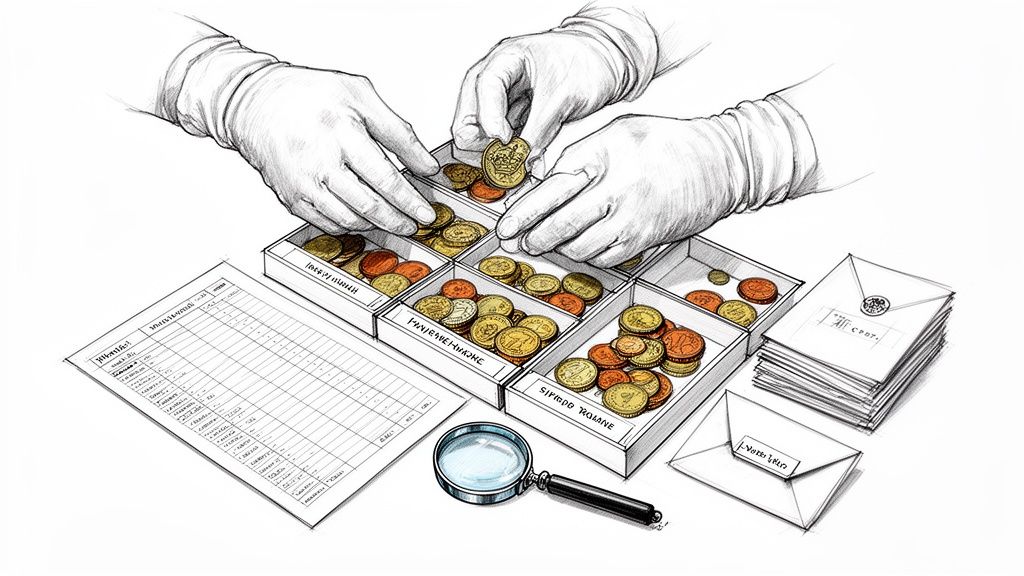
First things first, make a simple list of what you've got. You don't need any fancy software for this – a spreadsheet or even a humble notebook will do the job perfectly. The goal here is to document your collection, which helps massively when you start talking to potential buyers and makes sure no hidden gems get overlooked.
For each coin, just try to jot down the basics:
- Country of Origin: Where the coin is from.
- Denomination: The face value (e.g., One Penny, 50 Cents).
- Year: The date stamped on the coin.
- Metal (if obvious): Note if it's clearly gold, silver, or copper.
- General Condition: A simple note like 'shiny', 'worn', or 'tarnished' is all you need for now.
This simple inventory transforms a jumbled box of coins into an organised asset. It signals to buyers that you're serious and gives you a solid foundation for the next step: valuation. Trust me, a buyer is always more confident dealing with a seller who knows their stuff.
Understand Coin Condition And Grading
A coin’s condition, or 'grade', is one of the biggest factors driving its value. It’s a bit like buying a used car; a pristine model with low mileage will fetch a much higher price than the same car covered in dents with a knackered engine. In the world of coins, that difference can be astronomical. A common Victorian penny in average shape might be worth a few quid, but a perfect, uncirculated version could be worth hundreds.
Key Takeaway: Whatever you do, never clean your coins. Polishing them or using any kind of abrasive cleaner can strip away the coin's natural patina and instantly destroy most of its numismatic value. Even a quick wipe with a cloth can leave microscopic scratches, which will drastically lower its grade.
It pays to get your head around some basic grading terms. A coin described as Fine (F) will show quite a bit of wear, whereas an Extremely Fine (EF) coin has only light wear on its highest points. An Uncirculated (UNC) coin looks just as it did the day it was minted. Understanding these terms will help you set realistic expectations. To get a better feel for it, check out these expert coin collection valuation tips for UK coins and see how the pros do it.
Get A Professional Appraisal When Necessary
While you can do a lot of your own research online, a professional appraisal is priceless, especially for collections that might contain high-value pieces. A quick search online can give you a ballpark figure, but an expert appraiser provides a definitive valuation based on years of experience and up-to-the-minute market data. This is particularly crucial if you've inherited a collection and have no idea about its history.
You should seriously consider an appraisal if:
- You have coins made of precious metals like gold or silver.
- Your collection contains any rare dates or mint marks you've spotted.
- You simply want the peace of mind that comes with an expert's opinion.
A formal appraisal gives you documentation that adds a layer of credibility. It can seriously strengthen your negotiating position, making sure you know exactly what your collection is worth before you decide where to sell it.
Comparing Your Selling Options: Dealers, Auctions, And Online Marketplaces
Choosing where to sell your coin collection is probably the biggest decision you'll make in this entire process. Each route offers a different mix of speed, price potential, and the amount of effort you'll need to put in. For most sellers in the UK, it boils down to three main paths: specialist coin dealers, established auction houses, and the bustling world of online marketplaces.
Getting to grips with what makes each one tick will help you pick the right fit for your specific collection, your timeline, and just how hands-on you want to be. It's a bit like selling a house – you could sell it fast to a property developer for a guaranteed price, put it to auction for a potentially higher (but less certain) outcome, or list it yourself online and manage everything from start to finish.
At A Glance Comparing Coin Selling Channels
To help you see the key differences quickly, here’s a simple breakdown of the main pros and cons for each selling channel.
| Selling Channel | Best For | Sale Speed | Price Potential | Typical Fees |
|---|---|---|---|---|
| Coin Dealer | Quick, hassle-free sales; inherited collections; lower-value coins. | Very Fast (often same-day) | Lower (wholesale price) | None (price offered is net) |
| Auction House | High-value rarities; certified coins; historically significant items. | Slow (several months) | Highest | High (15-25%+ total) |
| Online Marketplace | Sellers with good knowledge; direct access to a global market. | Moderate (days to weeks) | High | Moderate (platform fees, etc.) |
As you can see, there’s a clear trade-off between speed, convenience, and the final price you’ll achieve. Let's dig into the details of each option.
Selling To A Specialist Coin Dealer
Going directly to a specialist coin dealer is, without a doubt, the fastest and most straightforward way to sell. This is the perfect option if you've inherited a collection, need a quick sale for any reason, or simply prefer a simple, expert-led transaction.
- Pros: The biggest draws here are speed and simplicity. A reputable dealer can look over your collection and make you an offer on the spot, with payment often happening immediately. There are no hidden fees to worry about, as their valuation is part of the service. It’s a secure, one-to-one deal.
- Cons: The trade-off for all that convenience is the price. Dealers are running a business and need to make a profit, so their offer will naturally be below the full retail market value. For common or lower-value collections, this is often a very fair exchange for saving you a huge amount of time and effort.
This route is ideal for anyone who values a guaranteed, quick result over trying to squeeze every last pound out of their collection.
Using An Auction House
If your collection is home to authenticated rarities, high-grade coins, or pieces with real historical importance, an auction house can be the key to unlocking their maximum value. Auctions create a competitive buzz where passionate collectors bid against each other, sometimes pushing prices far higher than anyone expected.
But this potential for a huge return comes with a few things to consider. The auction process is slow – it can often take several months from the moment you hand over your coins to when you actually get paid. And, critically, auction houses charge significant fees.
A Critical Calculation: Always remember to factor in the auction house's commission. This includes a 'buyer's premium' and a 'seller's commission', which can easily add up to 15% to 25% (or even more) of the final hammer price. Your net return will be quite a bit less than the headline sale figure.
This path is best saved for truly top-tier collections, where the chance of a record-breaking price makes the long wait and substantial fees worthwhile.
Listing On Online Marketplaces
Platforms like eBay give you direct access to a massive, global audience of collectors. This DIY approach gives you the most control over your pricing and how you present your coins, but it also demands the most effort from you.
You'll be responsible for absolutely everything:
- Taking high-quality, well-lit photos that honestly show each coin's condition.
- Writing detailed, accurate descriptions with the right keywords to attract buyers.
- Researching prices to set a competitive starting bid or a 'Buy It Now' figure.
- Handling questions, payments, and the secure packing and shipping of every item.
While this route can maximise your profit by cutting out the middleman, it’s not without its risks. Platform fees will eat into your margins, and dealing with non-paying bidders or disputes requires a lot of patience. What's more, some platforms like Facebook Marketplace have strict policies that can mistakenly flag coin listings as selling currency, leading to frustrating restrictions. This method is best for sellers who are confident in their numismatic knowledge and actually enjoy the selling process.
Selling Directly To A Specialist Coin Dealer
For a lot of people, especially if you've inherited a collection or just want a quick, straightforward sale, going to a specialist coin dealer is your best bet. Think of a dealer as a professional buyer who knows the market inside and out. They buy collections planning to resell them, making their profit on the difference. This route is a fantastic blend of expertise, security, and speed that’s tough to beat elsewhere.
When you bring your collection in, a dealer will look at it with a trained eye, assessing several key things. They’re checking the rarity, the condition (or grade), and the metal content of each coin. But they're also weighing up the current market demand and what they already have in their own stock. If they're flush with a certain type of coin, their offer might be a bit lower, whereas a coin that fills a gap for them could fetch a much better price.
The Key Advantages Of A Direct Sale
Selling straight to a dealer has a unique set of benefits, particularly for sellers who value simplicity and certainty. The whole process is transparent, efficient, and cuts out many of the headaches you’d find with other selling methods.
Here are the main benefits:
- Immediate Payment: This is hands-down the fastest way to turn your coins into cash. Most of the time, a dealer will look over your collection and make an offer on the spot, with payment happening the very same day.
- No Hidden Fees: Unlike auctions, you don't have to worry about seller’s commissions, buyer’s premiums, or any listing fees. The price a dealer offers is exactly what you walk away with.
- Expert Valuation Included: Any reputable dealer provides a free, informal valuation as part of their offer. You get the benefit of their professional knowledge without having to pay for a separate appraisal.
- Unmatched Security: Dealing face-to-face with an established professional in a secure shop eliminates the risks that come with online transactions and shipping valuable items.
This little guide is a simple visual to help you figure out which path is right for you.
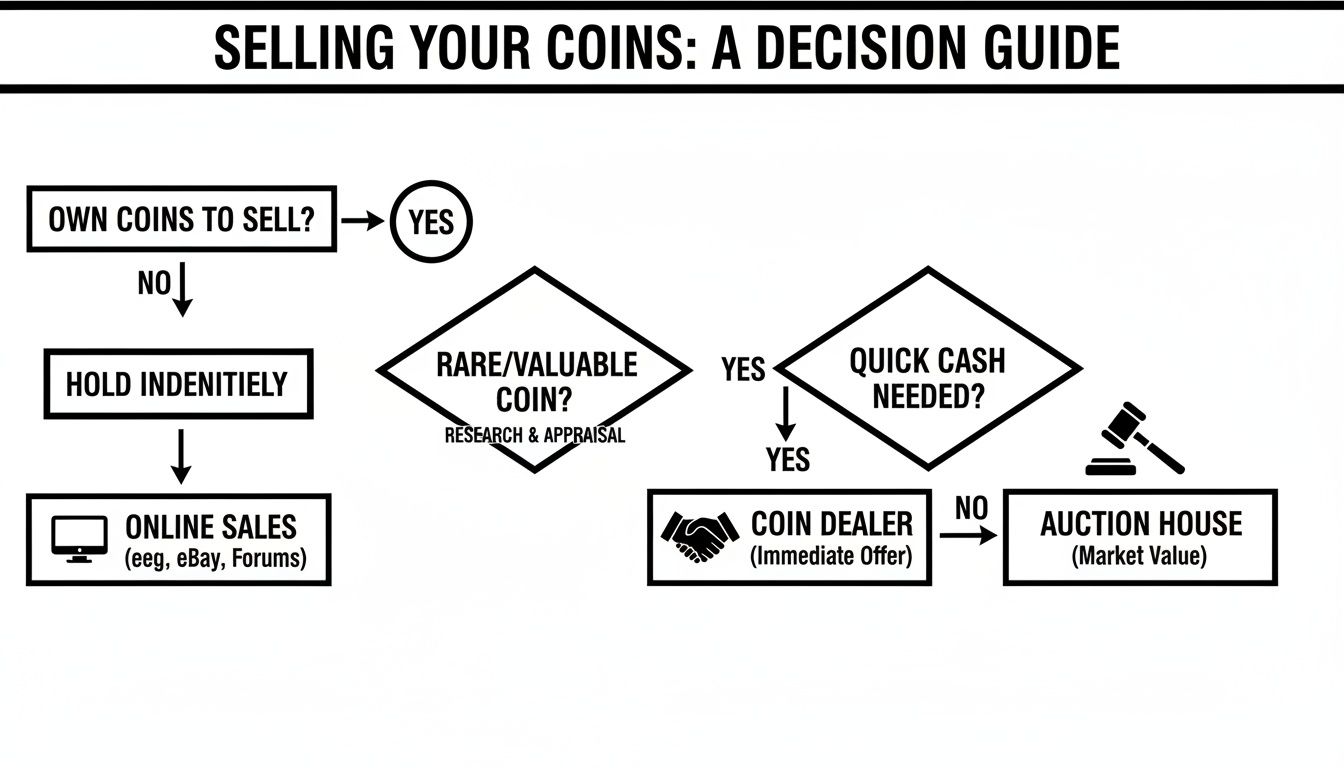
As you can see, for anyone who puts speed and convenience first, a dealer is the most direct route to a successful sale.
Finding And Vetting A Reputable UK Dealer
The success of selling directly all comes down to finding a dealer who is both trustworthy and knowledgeable. A good dealer will be completely open about how they value your coins and will never pressure you into selling. Start by looking for established businesses with a physical shop or a strong, professional online presence.
Expert Insight: A reputable dealer should be a member of a recognised trade organisation, such as the British Numismatic Trade Association (BNTA). Membership is a good sign they stick to a strict code of ethics, which gives you an extra layer of confidence and protection.
Before you decide on anything, it’s always a good idea to speak with a few different experts. Getting multiple offers gives you a much clearer picture of your collection's wholesale market value. For a bit more on this, our detailed article on how to find rare coin dealers near you has some great practical advice for UK sellers.
When you meet a dealer, don't be shy about asking questions. A true professional will be happy to walk you through their valuation process. Ask them to point out the key coins and explain what makes them valuable (or not). That kind of transparency is the hallmark of a dealer you can trust, ensuring you feel confident and well-informed from start to finish.
Navigating The World Of UK Coin Auctions
If you’re sitting on a collection with authenticated rarities, high-grade coins, or pieces with real historical weight, an auction house might be your best bet for unlocking its true value. Think of it as putting your coins on a competitive stage where passionate collectors and serious investors go head-to-head. This can drive prices far beyond what you might expect, especially for top-tier numismatic treasures where a record-breaking sale is a real possibility.
But let’s be clear, the auction world isn’t a straightforward sale to a dealer. It’s a more involved process that demands patience and a solid understanding of the costs. The journey from handing over your coins to seeing the final hammer price is a structured one, but for the right collection, it can be incredibly rewarding.
Is Your Collection Auction Worthy?
Not every coin is cut out for the auction block. Auction houses are incredibly selective, carefully curating their sales to attract serious buyers. They’re looking for items that will generate a buzz and get people bidding competitively.
Your collection could be a great fit for an auction if it features:
- Certified High-Grade Coins: We’re talking about coins professionally graded by services like PCGS or NGC, especially those hitting high grades like MS65 or better.
- Key Date or Rare Varieties: These are the coins from a low mintage year or those with sought-after errors that get collectors very excited.
- Gold and Silver Rarities: Historic gold sovereigns, crowns, or other precious metal coins that have numismatic value far beyond their simple bullion weight.
- Collections with Provenance: Anything with a documented history, perhaps from a well-known collector, adds a story and a layer of appeal that buyers love.
If you think you have coins that tick these boxes, your first move should be to get in touch with the numismatic department of a reputable auction house. They’ll give you an expert opinion on whether your coins are suitable and provide an estimated sale price.
Understanding The Auction Process And Fees
Once an auction house agrees to take on your collection, you’ll sign a consignment agreement. This is the legal document that lays out all the terms—the auction date, estimated prices, and, crucially, the fee structure. It's vital to read this document carefully, as the costs will have a big impact on what you ultimately receive.
Major UK auctioneers like Sotheby’s, Bonhams, and Spink & Son have impressive track records, with some lots fetching five or even six-figure sums. But these results don't come for free. Auction houses typically charge commissions and fees that fall somewhere between 15% and 25% of the final hammer price. This means your net payment will be significantly lower than the headline sale price, a critical detail to factor into your expectations. If you want to dig deeper into how the market works, you can discover insights on the coin collection market.
A Real-World Example: Let’s say a rare British coin sells for a hammer price of £10,000. If the auction house's total commission is 20%, they will deduct £2,000. The payment you receive would be £8,000, and that's before any other potential costs like insurance or photography are factored in.
The Excitement Of The Hammer Price
Despite the fees and the longer timescale—it can often take several months from consignment to payment—the auction route offers potential that’s hard to match. The thrill of a bidding war can push the final price well beyond what any single dealer would offer.
For truly exceptional coins, an auction puts your items in front of a global audience of the most serious buyers out there. It’s the best possible chance to see what the true market value really is. This is why, if you're looking to sell my coin collection and you believe it holds pieces of genuine numismatic importance, an auction is the premier choice.
Mastering Online Marketplaces To Sell Your Coins
If you're someone who likes to be in the driving seat, online marketplaces can be the perfect route. Platforms like eBay and specialist numismatic forums throw open the doors to a massive global audience, giving you a direct line to millions of potential buyers. The big advantage here is the chance to achieve full market value by cutting out the middleman.
Of course, this path demands the most hands-on effort. You're not just the seller; you're also the photographer, copywriter, packer, and customer service rep all rolled into one. It’s a hugely rewarding way to go and can definitely maximise your profits, but your success really hinges on how well you can present your collection.
Creating Listings That Attract Buyers
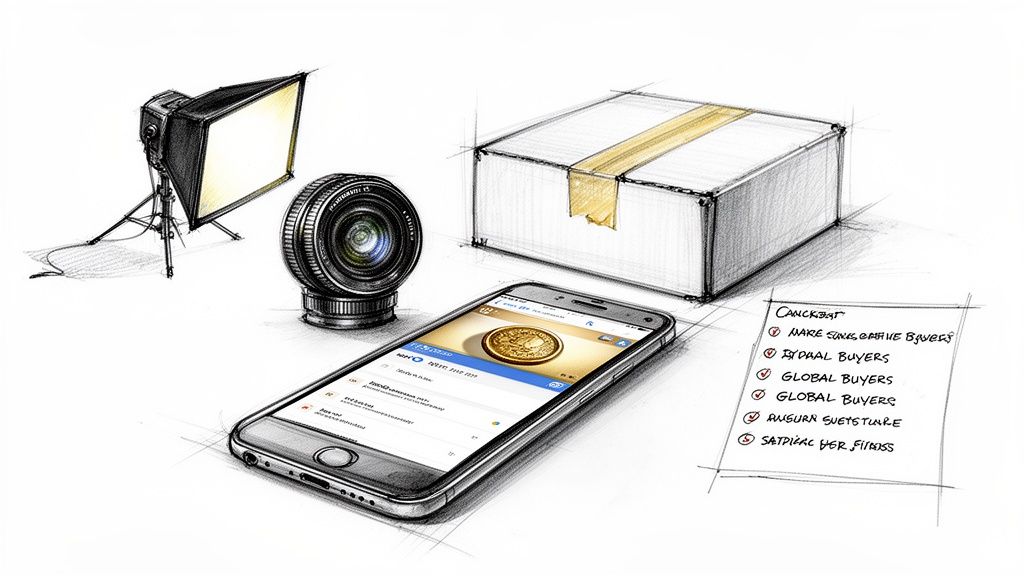
Think of your online listing as your digital shop window. To catch a buyer's eye in a crowded marketplace, every little detail needs to be spot-on, and it all starts with photography.
Clear, high-resolution photos are simply non-negotiable. A potential buyer wants to see every single detail, flaws and all, before they can feel confident enough to place a bid.
- Use good lighting: Natural daylight is your best friend, but if that's not possible, a well-lit setup against a plain background works wonders. Just watch out for harsh shadows that can obscure important details.
- Show both sides: Always, always include crisp shots of the obverse (heads) and the reverse (tails).
- Capture the edge: For chunkier coins, a photo of the edge can provide crucial information for serious collectors.
- Don't edit heavily: Your photos need to be an honest representation. Over-editing can look suspicious and put buyers off.
Your written description is every bit as important as the pictures. This is your chance to tell the coin's story and highlight what makes it special. To get this right, it's worth reading up on some Essential Tips for Writing Compelling Web Copy.
Pricing Strategy And Platform Fees
Deciding on a price is one of the most critical steps. On platforms like eBay, you’ve generally got two main choices: a fixed-price 'Buy It Now' listing or a good old-fashioned auction.
For particularly desirable coins, an auction with a low starting bid can generate a real buzz and drive the final price up through competitive bidding. On the other hand, a fixed-price listing offers certainty for both you and the buyer. The best way to find the sweet spot is to research what similar coins have recently sold for—this gives you a real-time gauge of the market.
A Word on Platform Policies: Just be aware that some of the big marketplaces, like Facebook, use automated systems that can mistakenly flag coin listings. They sometimes get confused and think you're trying to sell currency, failing to distinguish between legal tender and a numismatic collectible. It can be a bit frustrating.
Finally, don't forget to factor in the platform fees. These can include listing fees, final value fees (usually a percentage of the total sale price, including postage), and payment processing fees. These costs come directly out of your profit margin, so make sure you've accounted for them from the get-go. For a more detailed look at this, our guide on how to sell coins on eBay successfully is a great resource.
Secure Packing And Shipping
Once your coin sells, the job isn't quite finished. Getting the item packed and shipped securely is vital for a smooth transaction and a happy customer. You'll want to use protective coin holders, plenty of bubble wrap, and a sturdy padded envelope or a small box.
For UK sellers, the online route is more popular than ever. By the mid-2020s, it had become the fastest-growing channel for coin collecting, with market research pointing towards continued strong growth. With a huge collector base right here in the UK and across Europe, online platforms are an incredibly efficient way to turn your collection into cash.
Always use a tracked and insured shipping service, especially for more valuable items. This gives both you and the buyer complete peace of mind and protects everyone if something goes astray in transit.
Common Questions About Selling Your Coin Collection
When you first decide to sell a coin collection, a few questions almost always pop up. It's completely normal. Getting these sorted out from the start gives you the confidence to move forward and get the best result for your coins. Let's tackle some of the most common queries we hear from sellers.
How Can I Get A Free Coin Valuation In The UK?
Understanding what your collection is worth is the essential first step. In the UK, you generally have two options for getting a valuation, and each serves a different purpose.
Your first route is a free, informal valuation, which is what most specialist coin dealers offer. You bring your collection in, they have a look, and give you an estimate as part of their offer to buy. Think of this as an expert's opinion of its current wholesale value. It’s fast, straightforward, and ideal if you're simply looking to sell.
The second is a paid, formal appraisal. This is a much more detailed, written assessment from a professional appraiser, for which you'll pay a fee. This is the path to take if you need a valuation for insurance purposes, or if you suspect you have a very high-value collection and want an official document to back up its price at a major auction.
Should I Sell Coins Individually Or As A Collection?
This is a great strategic question, and the answer really comes down to what's in your collection. Selling everything as a single lot is easily the simplest and quickest way. It's especially appealing to dealers who can process the whole lot efficiently, and it works well for collections of fairly common coins where the overall value is the main consideration.
However, if you've got a few "star" coins in the mix—maybe a rare date, a high-grade sovereign, or a key commemorative piece—it often makes sense to sell these individually. By pulling out the most valuable items, you can market them directly to serious collectors, perhaps through an auction or a specialised listing where they can fetch their true top price. The rest of the more common coins can then be sold together as a single lot.
Key Insight: It’s a bit like selling a house full of antique furniture. You'd sell the house and most of its contents as one package, but you would almost certainly sell a rare grandfather clock separately to an antique specialist to realise its proper worth.
What Are The Biggest Mistakes To Avoid When Selling?
Selling a coin collection can be a fantastic experience, but a few common slip-ups can prove costly. Just being aware of these pitfalls is the best way to protect the value you've built up.
Here are the top three errors to steer clear of:
- Improper Cleaning: Whatever you do, never clean your coins. Using polish, abrasives, or even just a soft cloth can strip away the natural patina and create microscopic scratches. This can instantly destroy most of a coin's numismatic value.
- Poor Photography and Descriptions: If you're selling online, blurry photos and vague descriptions are your worst enemies. A potential buyer needs to see every tiny detail to feel confident. It's well worth investing the time to take sharp, well-lit pictures of both sides of your key coins.
- Accepting the First Offer Blindly: The first offer you get might be a perfectly fair one, but it's always smart to get a second or even a third opinion. Try getting estimates from different types of buyers, like another dealer or an auction house. A little bit of homework ensures you know the real market value before shaking hands on a price.
At Cavalier Coins Ltd, we provide expert advice and fair, transparent offers for collections of all sizes. Whether you are ready to sell or just need guidance on your next steps, we are here to help. Visit our website to learn more about selling your collection with us.