
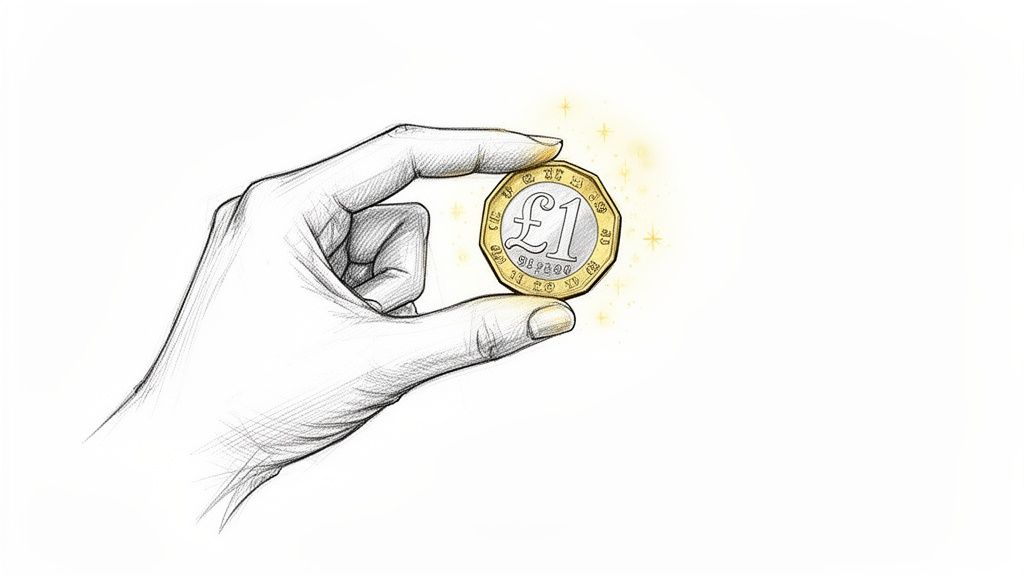
Ever sifted through your change and wondered if that £1 coin is worth more than, well, a quid? For certain coins, the answer is a resounding yes. Take the rarest circulating round pound, the 2011 Edinburgh City coin—it often sells for over £10. Some unusual minting errors? They can fetch hundreds.
Unlocking the Value in Your Pocket Change
Think of this guide as your treasure map for turning everyday change into an exciting hunt. We're going to dive into the key ingredients that make certain £1 coins worth money, from tiny production runs and unique designs to fascinating mistakes made at the mint. It’s like learning the secret language that collectors speak.
A coin's value isn't just about how old it is. It’s a story told through its scarcity, its history, and sometimes, its beautiful flaws. When The Royal Mint produces a smaller batch of a particular coin—what collectors call a low ‘mintage’—it automatically becomes harder to find and more desirable. The same goes for coins with quirky errors that happened during the striking process.
Why Your Change Is Worth a Second Look
The big switch from the familiar 'round pound' to the modern 12-sided coin in 2017 was a game-changer for collectors. This transition period was a hotbed for special editions and oddities, adding a whole new layer to the hobby. Getting to grips with these details is the first step to spotting a hidden gem in your hand.
So, what should you be looking for? The main factors that can pump up a pound coin's value include:
- Low Mintage Figures: Some designs were simply made in much smaller numbers, making them genuinely scarce. The 2011 Edinburgh City coin, for example, had a mintage of just 935,000.
- Minting Errors: Mistakes are where the real fun is. Mismatched designs (called 'mules') or off-centre strikes are highly prized by collectors who love the unusual.
- Commemorative Designs: Special editions celebrating UK cities, countries, or major events often have lower production numbers from the get-go.
- Coin Condition: It almost goes without saying, but a shiny, uncirculated coin will always be worth more than one that's been rattling around in pockets for years.
By learning to spot these key features, you stop just spending money and start discovering little pieces of numismatic history. Each coin tells a part of a much bigger story, and you can explore more of that rich timeline in our brief history of British coins.
This quick table breaks down the main types of valuable £1 coins you might come across.
Quick Guide to Valuable £1 Coin Categories
| Coin Category | Reason for High Value | Potential Value Range |
|---|---|---|
| Low Mintage Circulated | Very few were made for public use, making them hard to find. | £3 - £50+ |
| Commemorative Designs | Special editions, often with lower production numbers. | £2 - £25 |
| Minting Errors (Mules, etc.) | Mistakes during production create unique, rare variations. | £50 - £1,000+ |
| Uncirculated / Proof Coins | Kept in pristine condition, never used as money. | £5 - £100+ |
Keep this in mind next time you get some change. You're now ready to look at your coins with a fresh, curious perspective, prepared to find the valuable treasures hiding in plain sight.
What Makes One Pound Coin More Valuable Than Another
Ever pulled two £1 coins from your pocket and wondered why one might be worth a fortune while the other is just... a pound? The secret isn't always about age. It’s a fascinating story told through three key elements: rarity, condition, and those little quirks that make a coin unique.
Getting your head around these factors is the first real step in making the leap from someone who just spends coins to a collector who can spot hidden value.
The biggest driver of value is, without a doubt, scarcity. This comes down to a coin's mintage—a simple term for how many of a particular coin The Royal Mint actually made. Think of it like a limited-edition art print. If millions are made, it's common. But if the mintage drops below a million, collectors start paying very close attention.
The Power of Low Production Numbers
Take the 2022 £1 coin, for example. It's the rarest one currently in circulation here in the UK. The Royal Mint confirmed a mintage of just 7.735 million. That might sound like a lot, but it’s a drop in the ocean compared to the more than 2 billion new 12-sided pounds struck since 2017.
That tiny production run, plus the fact it was the last £1 design to feature Queen Elizabeth II's portrait, makes it a modern prize. Checking out lists like Cash4Coins' guide to valuable £1 coins in 2025 really drives home how much mintage matters. This is what makes coin hunting so exciting; it turns your change into a numbers game where finding the right date can mean a serious payoff.
Beautiful Mistakes and Perfect Condition
Beyond scarcity, minting errors are where you find the true treasures. These are the beautiful mistakes, the happy accidents that happen during production, turning a standard coin into a one-of-a-kind oddity. It’s like finding a stamp printed with an upside-down plane; the flaw is what makes it so valuable.
These fantastic flaws include things like:
- Mules: A famous and very rare error where a coin is struck with the wrong 'heads' (obverse) and 'tails' (reverse) designs.
- Off-Centre Strikes: The design isn't properly aligned with the coin blank, leaving parts of it completely missing.
- Die Cracks: A tiny crack in the metal stamp (the die) leaves a raised, lightning-bolt-like line on the finished coin's surface.
A coin with a dramatic and verifiable error is often significantly more valuable than even a low-mintage coin. These imperfections tell a unique story about the coin's journey through the minting process, making them exceptionally sought after.
Finally, there’s the coin's physical state, or what we call its grade. This plays a massive part in what a coin is ultimately worth. A bright, shiny coin with crisp, sharp details that looks like it just fell out of the press will always fetch a higher price than one that’s been rattling around in pockets and tills for years, leaving it scratched and worn.
If you want to get serious about assessing condition, our expert guide to British coin grading in the UK is the perfect place to start.
The Most Valuable UK Pound Coins by Date and Design
Right, let's get to the good stuff—the specific coins that could actually be worth more than a quid. Millions of pound coins are minted every year, but only a handful of dates and designs are genuinely scarce. The key to finding treasure in your change is simply knowing what to look for.
Some of the most interesting finds come from the original 'round pound' series, which was in our pockets from 1983 until 2016. These coins featured designs celebrating the four home nations, but the number of coins minted each year varied wildly. This inconsistency is precisely what created some modern-day classics for collectors.
To spot a valuable coin, you need to know what makes one special. It really boils down to three things: how rare it is (its mintage), any mistakes made when it was minted (errors), and its physical condition. This visual guide sums it up nicely.
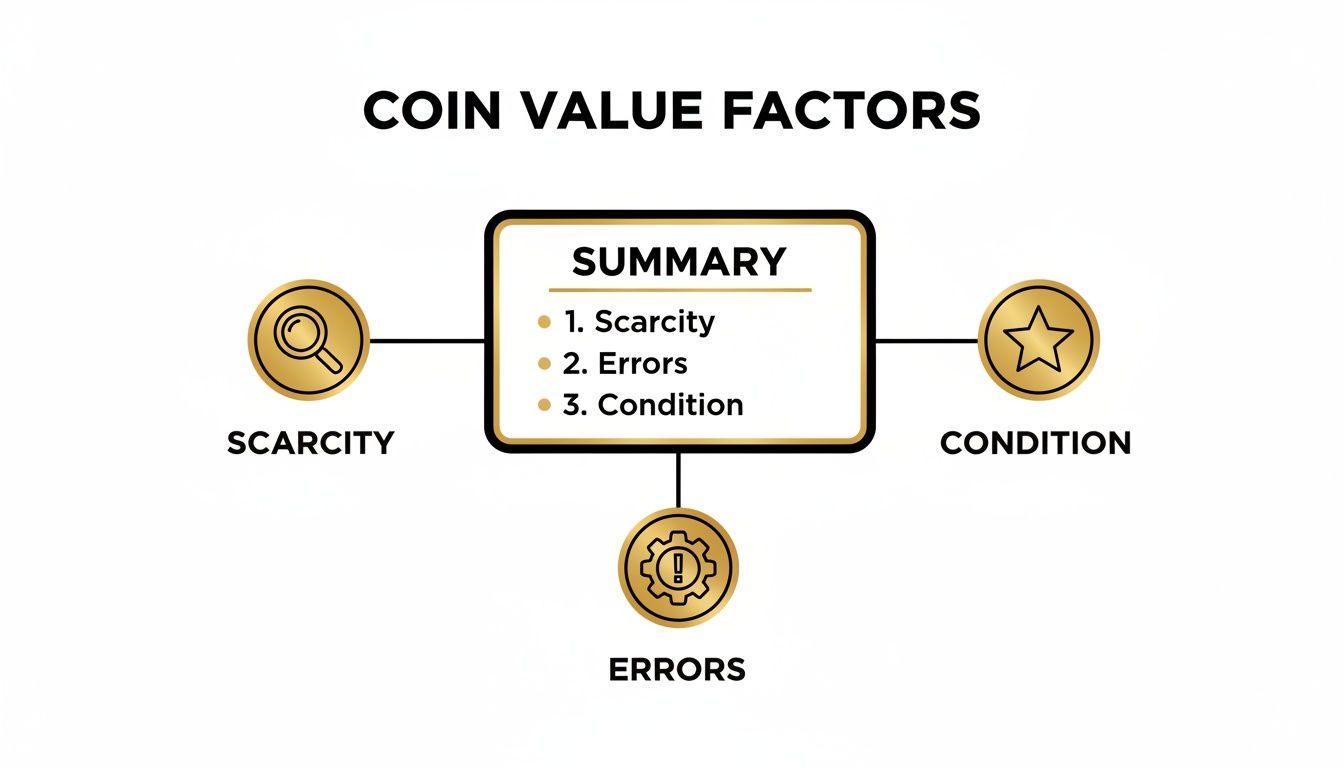
As you can see, the sweet spot is a coin with low production numbers, a unique flaw, and great preservation. That's the combination that gets collectors excited.
To help you get started, here's a quick look at some of the top round pounds you might actually find. This isn't an exhaustive list, but these are the big ones to keep an eye out for.
Top 5 Most Valuable £1 Coins to Find
| Coin (Year & Design) | Mintage Figure | Key Identifying Feature | Estimated Circulated Value |
|---|---|---|---|
| Edinburgh City (2011) | 935,000 | Coat of Arms of Edinburgh | £10 - £20 |
| Cardiff City (2011) | 1,615,000 | Coat of Arms of Cardiff | £8 - £15 |
| London City (2010) | 2,635,000 | Coat of Arms of the City of London | £5 - £10 |
| Belfast City (2010) | 6,205,000 | Coat of Arms of Belfast | £3 - £6 |
| Royal Arms (1988) | 7,118,825 | Royal Arms Shield | £3 - £5 |
Remember, these values are just estimates for coins you'd find in circulation. A coin in pristine, uncirculated condition will always be worth more to a serious collector.
The Famous Low Mintage Round Pounds
The undisputed champion of rare round pounds is the 2011 Edinburgh City coin. With a mintage of just 935,000, it's the rarest round £1 coin ever released for UK-wide circulation. Finding one of these in your change is a genuinely rare event, and they can easily sell for over £10 if they're in decent shape.
Other coins from that "Capital Cities" series are also highly sought after. Be on the lookout for:
- 2011 Cardiff City: The second-rarest in the set, with a mintage of 1,615,000.
- 2010 London City: Another tough one to find, with only 2,635,000 minted for circulation.
These coins are valuable for one simple reason: hardly any were made compared to common designs like the Royal Arms, which had mintages in the hundreds of millions. In the world of coin collecting, scarcity is everything.
Rare 12-Sided Pound Coins to Watch For
When the new 12-sided coin appeared in 2017, it created its own set of rarities. While most of the new pounds are extremely common, certain years have had surprisingly low production runs. The 2022 Nations of the Crown £1 is the current scarcity leader for the new design, with just 7.735 million released. That makes it the rarest 12-sided pound in circulation today.
But the transition period itself produced some real gems. For example, there's an ultra-rare 2016 £1 variety with a unique edge inscription. The Royal Mint confirmed it deliberately struck only 1,000 of these as part of its testing for the new coin—one of the lowest intentional mintages for any modern UK coin. You can discover more about these six new £1 coin varieties and what makes them so special.
These examples show that whether you're sifting through old round pounds or the newer 12-sided coins, paying close attention to the date and design is what matters. You just never know when one of these scarce 1 pound coins that are worth money might turn up in your change.
Hunting for Rare and Valuable Minting Errors
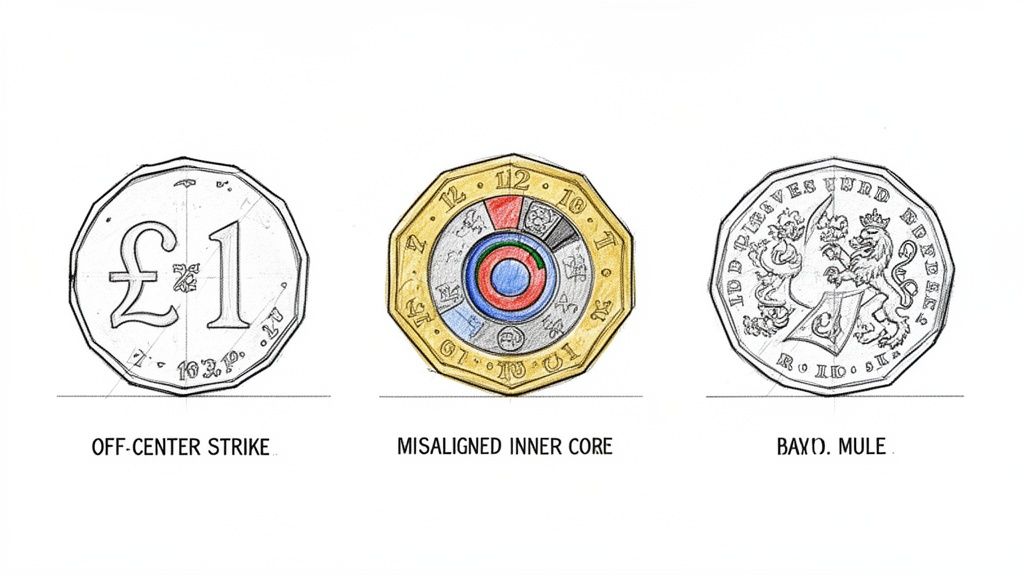
While low mintage numbers are a good starting point for rarity, the real thrill—and often the biggest values—come from finding minting errors. These are the happy accidents of the coin world, unique imperfections born during the production process that can turn a standard pound coin into a collector's prize.
Think of The Royal Mint as a high-precision factory, churning out millions of identical coins. But every so often, a tiny glitch in the machinery creates a one-off. These aren't just damaged coins; they are genuine mistakes that escaped the mint's quality control, making them incredibly rare and desirable. Spotting them is what separates the seasoned collector from the person just spending their change.
Key Minting Errors to Look For
The world of coin errors is vast, but there are a few classic mistakes to keep an eye out for on 1 pound coins that are worth money. Perhaps the most famous is the mule coin. This happens when a coin is struck with a heads (obverse) die and a tails (reverse) die that were never meant to be used together.
For the modern 12-sided bi-metallic pound, errors involving the two metal parts are quite common. Be on the lookout for:
- Misaligned Inner Core: This is when the silver-coloured centre plug is noticeably off-centre within the gold-coloured outer ring. The more dramatic the misalignment, the more valuable the coin.
- Rotated Dies: Hold the coin with the Queen's head facing up, then flip it over from top to bottom. The design on the back should also be upright. If it’s twisted at an angle, you've found a rotated die error.
- Partial Collar Errors: This mistake occurs when the retaining collar slips during the strike, causing the coin’s edge to look uneven, often with a raised 'lip'.
These are the kinds of imperfections an untrained eye would easily miss. But to a collector, they can be worth hundreds, and in some cases, even thousands of pounds.
The Famous 2017 Transitional Errors
The changeover from the old round pound to the new 12-sided design was a chaotic time for the mint, and a goldmine for error collectors. Any error £1 coin from this period is highly sought-after.
Mules like the infamous 2016 obverse paired with a 2017 reverse have fetched up to £3,000. These mix-ups happened during the frantic switchover, a change driven by the fact that roughly 1 in 30 of the old round pounds were fakes. You can read more about these rare transitional coins and how they were spotted.
A key takeaway for any collector is that periods of significant change in a nation's coinage often produce the most interesting and valuable errors. Always pay extra attention to the first few years of a new coin design.
Hunting for these treasures takes patience and a sharp eye. It means getting into the habit of carefully checking every coin that passes through your hands, looking for anything that seems a bit… off. The odds of finding a major error might be slim, but the potential reward is what makes the search so exciting. It turns sifting through your change from a chore into a genuine treasure hunt.
How to Value and Sell Your Rare Pound Coins
Finding a potentially valuable coin in your pocket money is a genuine thrill, but what you do next is what really counts. Turning that discovery into actual cash means you need to know a little about judging its condition, finding the right buyers, and making sure it looks its best. Think of this as your field guide to the final, and most rewarding, part of the treasure hunt.
The first thing to get your head around is grading. It sounds technical, but it’s really just the official term for a coin's physical condition. The grade has a massive impact on what a coin is ultimately worth. A shiny, uncirculated coin with crisp, sharp details will sit at the top of the value scale, while a heavily worn, scratched-up coin will be right at the bottom. Even a common date can be worth a bit more if it’s in almost perfect shape.
Getting Your Coin Ready for Sale
Before you even think about listing it anywhere, handling your coin properly is vital to protect its value. The biggest rule of thumb? Never, ever clean your coins. Wiping them down, even with the softest cloth, creates tiny, microscopic scratches that will instantly torpedo its grade and make it far less desirable to a collector.
To keep it in the best possible condition:
- Handle with care: Always hold a coin by its edges, pinched between your thumb and forefinger.
- Store it safely: Pop it into a proper coin flip or a small, soft, acid-free envelope. Don't just let it jangle around in a pot with other coins.
The golden rule is simple: the less you touch it, the better. Any damage you cause, including from cleaning, is permanent and can slash the selling price of your find.
Deciding Where to Sell Your Pound Coins
Once you’ve got your valuable £1 coins sorted, learning how to price items for resale and turn clutter into cash is the natural next step to monetise your finds. You've got a few different avenues to go down, and each has its own upsides and downsides.
Online Marketplaces: Platforms like eBay are fantastic for reaching a huge number of potential buyers. The trick to doing well here is taking brilliant, crystal-clear photos in good light, showing both sides of the coin. You also need to write a detailed and honest description. Critically, look at what similar coins have actually sold for—not the ambitious asking prices—to set a realistic value.
Specialist Coin Dealers: A reputable coin dealer can give you a fair price on the spot. You might get a little less than you would in a private sale, but you get a quick, straightforward transaction with a professional who knows the market inside and out.
Auction Houses: If you’ve stumbled upon something exceptionally rare or a particularly high-value error coin, a specialist coin auction is probably your best bet. These houses have established networks of serious collectors who are prepared to pay top-tier prices for the best items.
Whichever route you take, getting to grips with the basics of how rare coin pricing works will give you the confidence to get the best possible return on your discovery.
Your Top Questions About Valuable £1 Coins Answered
When you first dip your toes into collecting valuable £1 coins, it's natural to have a lot of questions. It’s a hobby filled with fascinating stories, a few myths, and some genuinely exciting finds, so getting straight answers is the best way to start building a collection you can be proud of.
We’ve pulled together some of the most common queries we hear to help you get started on the right foot and sidestep the usual mistakes. Think of this as your personal cheat sheet, cutting through the chatter to give you the information that really matters.
Which Round £1 Coin Is the Rarest?
Without a doubt, the scarcest of all the old 'round pounds' is the 2011 Edinburgh City £1 coin. What makes it so special? It all comes down to numbers. Only 935,000 were ever struck for general circulation in the UK, a tiny figure in the world of modern coins.
To put that into perspective, most other designs were minted in the tens of millions. This makes finding an Edinburgh City coin in your change a truly rare event and is the main reason its value is consistently well above its face value among collectors.
Are All 12-Sided £1 Coins from 2016 Valuable?
This is a really common point of confusion, but the short answer is no. Ahead of the new coin's official launch in 2017, The Royal Mint did issue over 200,000 trial pieces of the 12-sided design dated 2016. These were sent out to businesses to help them calibrate their vending machines and equipment.
While these trial coins are interesting, they aren't the high-value pieces many think they are. The really valuable coins from this crossover period are the rare errors that slipped through the cracks during the transition. A standard 12-sided coin with a 2016 date is not a major find; the real prizes are the 'mules' or other dramatic mistakes that happened as the mint switched over its production lines.
The crucial thing to remember is the difference between a planned trial piece and a genuine minting error. One was made on purpose, the other is a happy accident and far more valuable.
How Much Is a Pound Coin with a Minting Error Worth?
This is where coin collecting gets really exciting, because the value of an error coin can be all over the place. Its worth depends entirely on what the error is, how obvious it is, and just how rare it is.
- Minor Flaws: Small things like a slightly off-centre strike or a faint die crack might only add a few pounds to the coin’s value. They’re interesting, but not game-changing.
- Significant Errors: More noticeable mistakes, like a die that was rotated significantly or a 'lipped' rim caused by a collar error, can push the value up to £50 or £100, sometimes more.
- Dramatic Errors: The holy grail for error collectors. Things like a 'mule' coin (struck with two different dies that should never have been paired) are exceptionally rare and can fetch hundreds or even thousands of pounds.
Ultimately, the market sets the price. A unique, verifiable, and dramatic error will always get the most attention and command the highest price from serious collectors.
Where Is the Best Place to Find Rare £1 Coins?
You might think you need to head straight to a specialist dealer, but you’d be surprised! The best hunting grounds for 1 pound coins that are worth money are often the places you least expect. Your best bets are:
- Your Everyday Change: The simplest and most rewarding way. Get into the habit of glancing at every coin you handle.
- Coin Rolls from the Bank: Pop into your local bank and ask for a few sealed bags or rolls of £1 coins. It's a great way to search through a lot of coins at once.
- That Forgotten Coin Jar: We all have one! That jar of loose change sitting on a shelf could be hiding a real treasure.
- Car Boot Sales and Flea Markets: You can often find old coin collections or piggy banks that someone is clearing out, which can be a goldmine.
The real thrill is knowing that a rare coin could pop up anywhere, at any time. All it takes is a little knowledge and a sharp eye.
At Cavalier Coins Ltd, we're passionate about helping both new and experienced collectors find those hidden gems. Whether you're searching for a specific low-mintage coin or a unique error, our curated collection has something for everyone. Explore our extensive selection of rare coins and banknotes from around the world at https://www.cavaliercoins.com.