

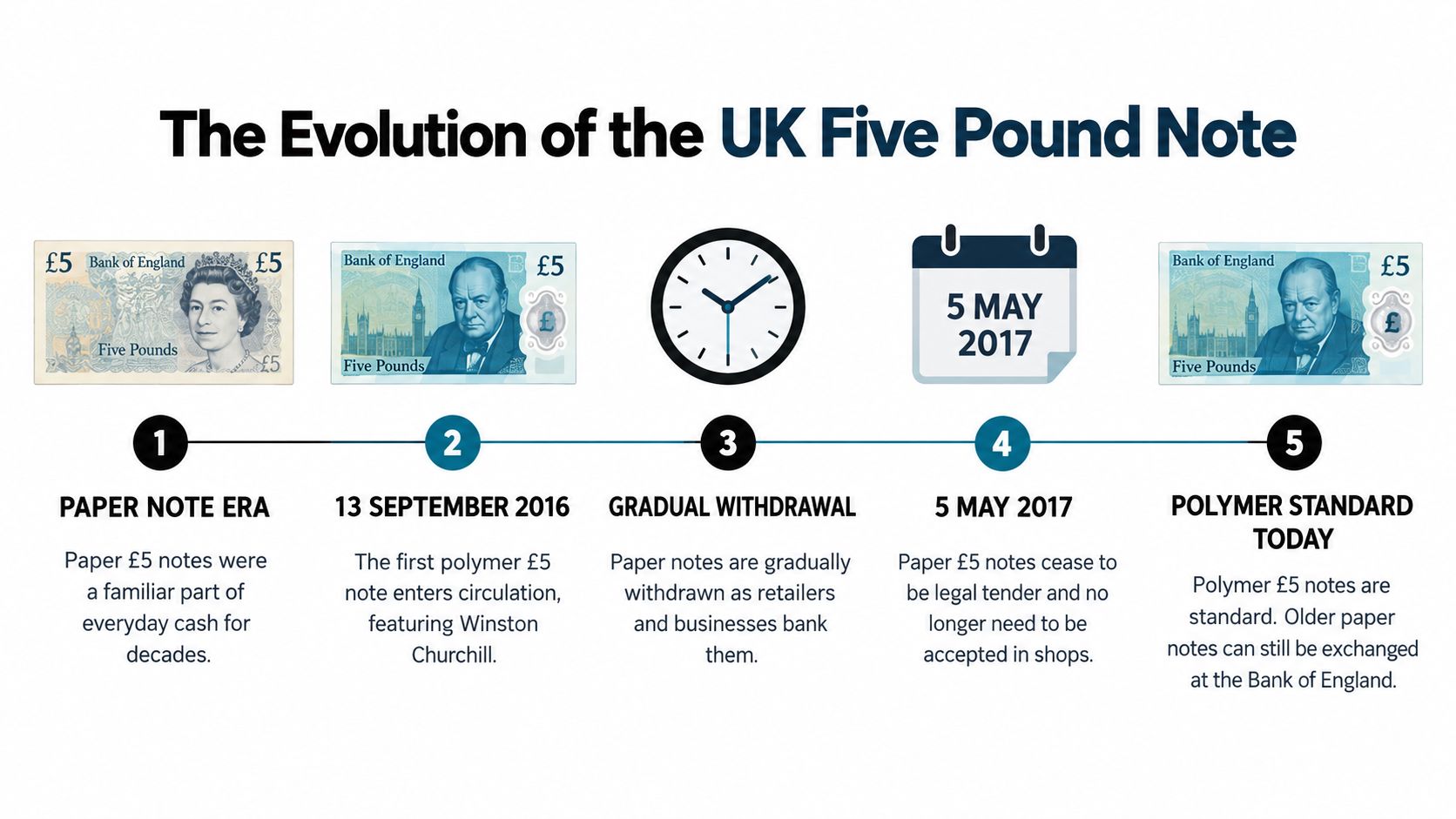
The new UK polymer £5 entered circulation on 13 September 2016. It was the Bank of England's first polymer banknote, and it replaced the paper Elizabeth Fry £5, which ceased to be legal tender on 5 May 2017.
For a collector, “new five pound note” can mean more than one thing: the polymer format, a particular portrait, an unusual serial number, or a note in especially crisp condition. Those are different questions, and each calls for different evidence. Start by identifying the note and checking that it's genuine; then assess condition, look for meaningful variations, and only after that consider what a buyer might pay.
Why the UK Switched to a New Polymer Five Pound Note
The Churchill polymer £5 was issued on 13 September 2016. The launch put 440 million notes into circulation through cash machines and bank branches across the UK, while the older paper £5 featuring Elizabeth Fry remained usable until 5 May 2017. That phased change gave the public time to spend or exchange the paper note rather than requiring an immediate swap. The Bank of England's launch announcement records the release and the design's place in the Bank's banknote history.
Durability drove the decision. Paper £5 notes lasted an average of 22 months in everyday circulation, while the Bank expected polymer notes to last at least two-and-a-half times longer. For the new £5, the operational lifespan was estimated at around five years. Polymer resists the dirt and moisture that break paper fibres down, so the material change worked a bit like switching a much-used map from paper to laminated stock: the object survives the handling rather than absorbing it.
Security ran alongside longevity. The transparent window gave the public a fast, visible checkpoint that paper could not offer, and the switch only worked if people knew to use it. The Bank reported that 87% of the public knew about the new banknotes when the first polymer £5s were issued, and its account of the banknote design and launch process explains how awareness, durability, and security were treated as one project rather than separate goals.
The phased 2016-2017 changeover is why collectors encounter both formats side by side. A paper Fry £5 found today is a withdrawn note, while the polymer Churchill £5 beside it is still circulating currency. Knowing which note you hold changes what it can be worth, so format identification comes before every other question.
Design and Physical Features of the New Polymer Five
The modern Bank of England £5 is a compact polymer note measuring 125 mm by 65 mm. It's about 15% smaller than the paper £5 it replaced, so the difference is noticeable when comparing the two side by side. Its thin, flexible plastic substrate also behaves differently from cotton-based paper: it bends readily, and its resistance to dirt and moisture helps it stay usable in circulation. The Bank's guidance on polymer notes for businesses gives the measurements and explains the material's practical properties.
Look first at the overall layout rather than hunting for small details. The note is associated with Sir Winston Churchill, whose portrait appears on the reverse; the front features the Queen's portrait and imagery connected with the Elizabeth Tower. The blue-green colour palette and clear window make the design visually distinct from the preceding paper Fry £5. The window isn't an added decoration: it's part of the polymer format and plays a role in checking the note.
Raised intaglio print gives parts of the note a tactile quality. When you handle a genuine example, notice the raised areas rather than judging the whole surface by touch alone. A note that feels different from paper isn't automatically unusual or damaged; polymer has its own handling characteristics, and wear can affect how crisp the surface feels.
Collector's eye: Compare the note's proportions, transparent window and substrate before you focus on the portrait. Those broad features help you tell the polymer issue from the older paper design without specialist equipment.
If you're building a collection around material as well as design, this guide to polymer banknotes offers another way to explore how plastic notes differ from traditional paper issues. For this £5, keep your first description practical: record the format, portrait, dimensions and visible condition before making claims about rarity.
Security Features and a Collector's Authentication Checklist
Authenticating a polymer £5 means looking for several features that work together. Don't rely on a single detail, such as the note's colour or a convincing-looking portrait. A genuine note combines transparent areas, optically variable foil, raised printing and elements that react under ultraviolet light. The Bank describes these security features in its polymer £5 guidance for businesses, which is also useful for collectors learning what to inspect.
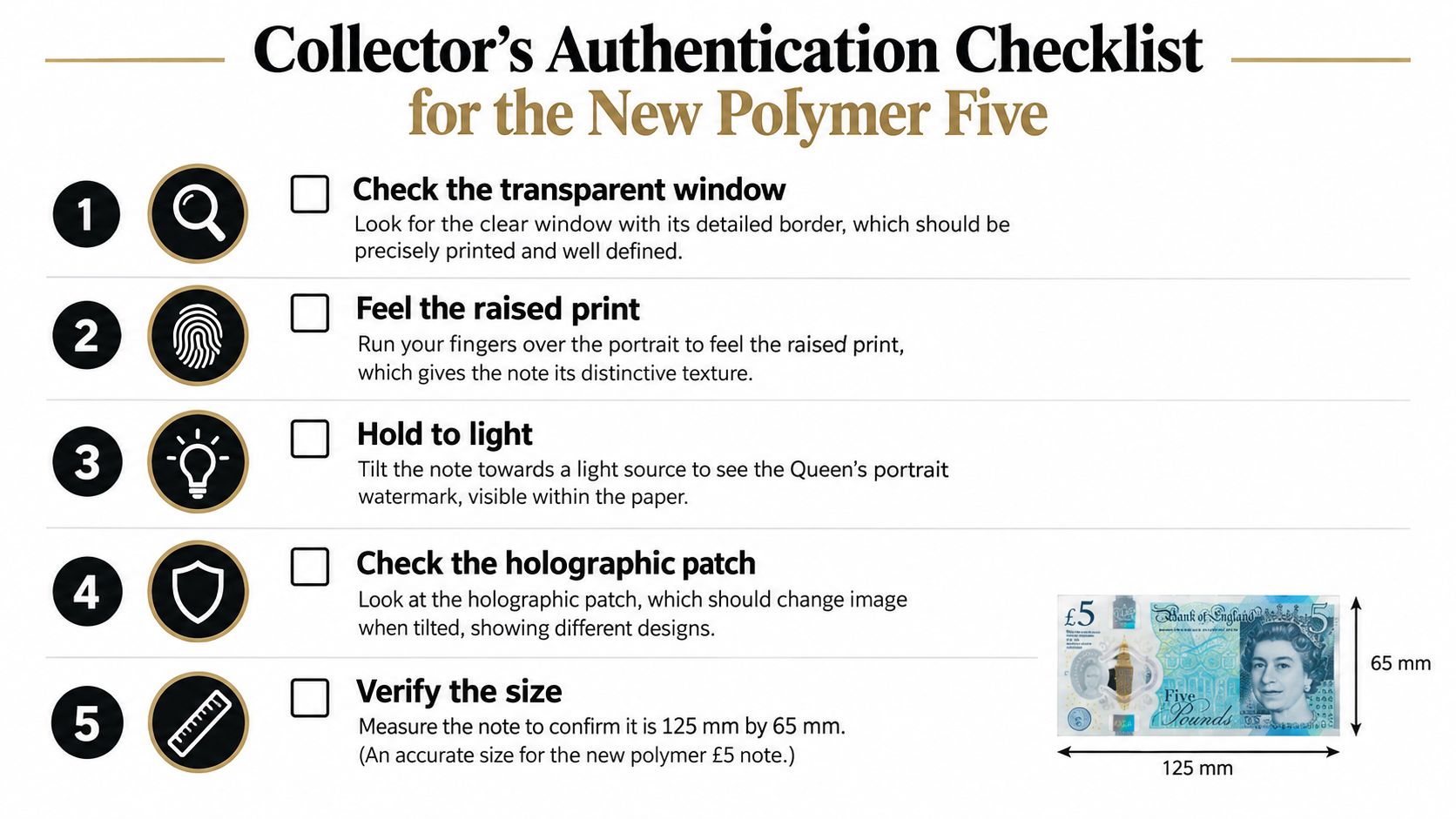
Use this checklist in order:
- Check the dimensions. The note should measure 125 mm by 65 mm. A ruler gives you a straightforward first check, though matching dimensions alone can't prove authenticity.
- Inspect the transparent window. Look for the defined monarch portrait within the large clear window. Check that the edges and details appear deliberate rather than crudely printed.
- Tilt the note. The metallic image over the window appears gold on the front and silver on the reverse, with a multicoloured rainbow effect as the angle changes.
- Feel the raised print. Run a finger gently over the raised intaglio areas. You're checking for tactile printing, not trying to judge authenticity by feel alone.
- Use suitable UV light. Under ultraviolet light, the numeral 5 appears bright red and green against a duller background.
Micro-lettering is another element, but it's too small to assess reliably with the naked eye. Use magnification if you're examining it closely, and avoid treating a weak or damaged feature in isolation as a final verdict. For a broader primer on how banknote features work together, see this guide to essential banknote security features.
A consistent routine is more dependable than a quick glance. If one feature looks wrong, pause and compare the whole note with official guidance before buying, selling or accepting it. The Bank notes that no banknote is completely counterfeit-proof, so the aim is to combine checks rather than assume one test settles the question.
Variants, Error Notes, and Portrait Changes
Not every visible difference represents a new £5 design. The clearest distinction is between the withdrawn paper Elizabeth Fry note and the polymer Churchill note: they're different formats and designs. Within the polymer series, Queen Elizabeth II and King Charles III portrait versions circulate, and the Bank says they share the same security features. A different monarch portrait matters to collectors as a design variation, but it doesn't, by itself, mean you're looking at a completely different banknote series. The Bank of England's banknote FAQ confirms that both monarch versions circulate and share their security features.
Error claims need a more cautious eye. A genuine production error might involve an abnormal printing or alignment issue, but marks, missing-looking details or altered foil can also result from damage or deliberate tampering. A note that looks odd isn't automatically a valuable error; compare it with a normal example and seek an independent opinion before paying a premium.
Serial numbers and prefixes can attract interest, especially when a sequence appears unusual or memorable. But a low-looking number or an appealing pattern isn't proof of scarcity. Collectors should ask what makes the example distinctive, whether that feature is verifiable, and whether comparable sales support the asking price.
A useful comparison is to separate design variation from condition or production anomaly:
- Portrait: A Queen Elizabeth II or King Charles III portrait is a visible variation within the polymer £5, not evidence of a different denomination.
- Prefix or serial number: These may influence collector interest, but their appeal depends on evidence and buyer demand.
- Possible error: Treat the claim as unconfirmed until the feature has been checked against an undamaged note and assessed by someone experienced.
That approach protects newcomers from confusing novelty with rarity. If you're unsure, photograph both sides clearly, note exactly what seems different, and ask for an assessment before describing the note as an error.
Collectibility, Condition Grading, and Market Value
A polymer £5 has a face value and, separately, a collector value, and the two need different evidence. Grading answers one question: what physical state is the note in? Pricing answers another: what have similar examples sold for? Collectors who merge those steps tend to overpay, so work through them in order.
Start with condition. Dealers use grades such as uncirculated, about uncirculated, extremely fine, very fine and fine, but the labels are not standardised. Learn what a seller means by a grade, then examine the note's surface and corners yourself. This banknote grading guide can help you build a consistent vocabulary before you rely on anyone else's.
Polymer tolerates handling well, and flexibility does not erase signs of circulation. Check for creases, scuffs, dirt, writing and any loss of crispness. A note that lies flat can still have been handled, so inspect both sides in good light. Treat any listing that offers a grade label without clear photographs as unverified.
What can influence a premium
| Factor | Impact on value | Example |
|---|---|---|
| Condition | Strong condition can make a note more appealing to collectors. | Clean surfaces and sharp corners compared with visible folds and marks. |
| Serial number | A memorable sequence may interest some buyers, but interest isn't guaranteed. | A number that appears unusually patterned should be assessed against comparable sales. |
| Prefix | Some prefixes attract attention, though a prefix alone doesn't establish rarity. | A seller should explain the basis for calling a prefix special. |
| Portrait issue | The monarch portrait can be relevant to a collection focused on design changes. | A collector may choose to keep one example of each portrait. |
| Claimed error | A verified production anomaly may be sought after; damage or alteration can undermine a claim. | Ask for an expert assessment before treating a feature as a confirmed error. |
No single price band applies to every example. Asking prices, completed sales, condition and buyer interest all differ, so compare like with like: the same format, similar grade and a serial or error feature of comparable type. A high listing price reflects an asking figure rather than a completed sale.
That evidence produces a simple decision. An ordinary circulated note is realistically worth face value. A crisp note with a verifiable feature deserves individual assessment against completed sales. A claim resting only on the seller's description calls for more evidence before any premium is paid.
Charities and people handling mixed donations face the same choice at scale. Separate ordinary circulated notes from examples that appear unusually crisp or distinctive. Bulk lots suit speed and simplicity; individual assessment suits notes with a verifiable feature. In both cases, ground expectations in condition and evidence rather than online claims of automatic premiums.
Care, Handling, and Storage Best Practices
Polymer is more resistant to dirt and moisture than paper, but it can still be damaged. Handle a collectible by its edges with clean, dry hands, and avoid folding it, writing on it, stapling it or clipping it. Each crease or mark can change how the note presents to a future collector.
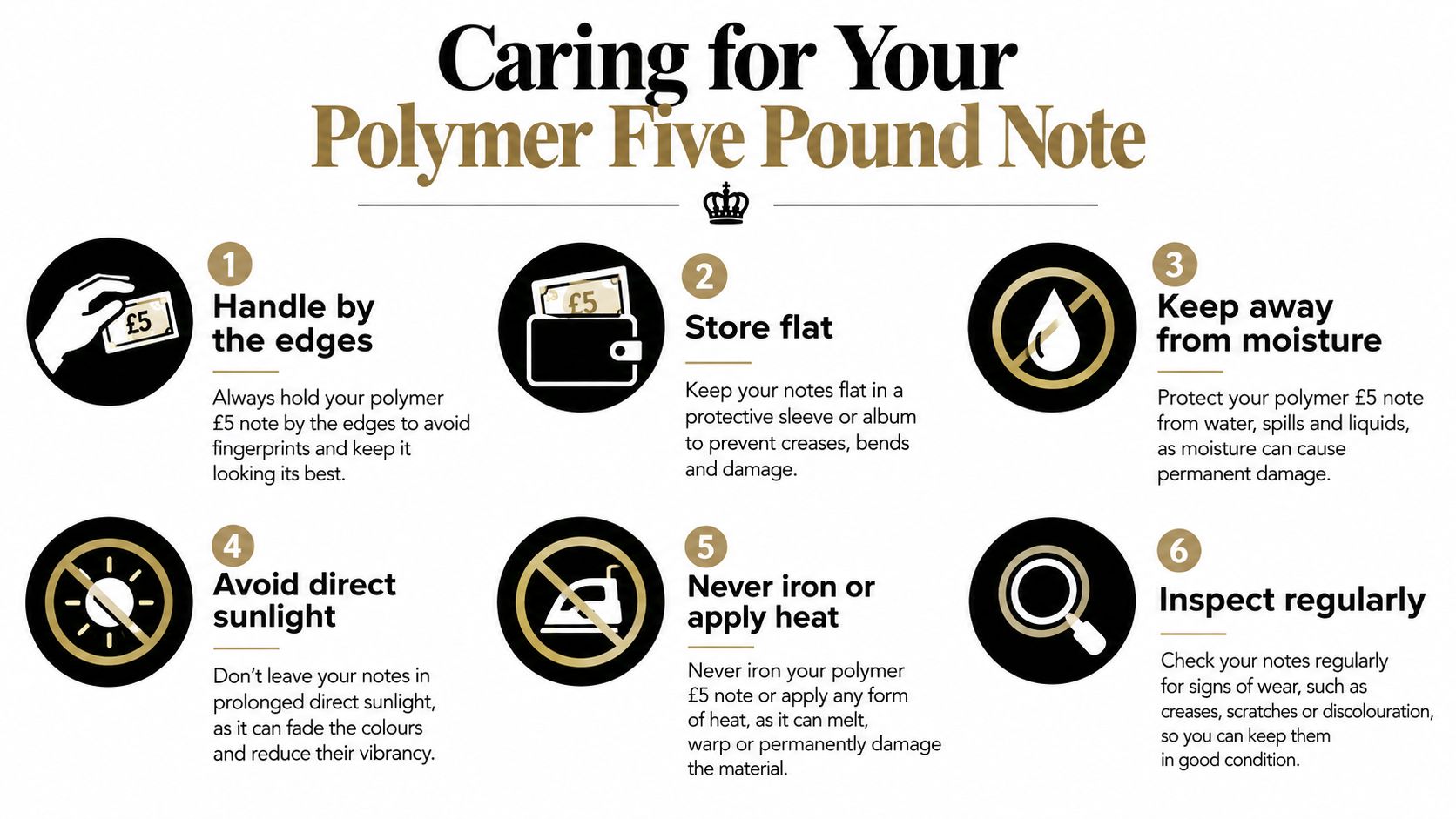
For a note you're keeping as a collectible, use an archival-quality sleeve or a rigid currency holder designed for banknotes. Acid-free albums can help organise a collection while keeping notes protected from routine handling. Avoid sleeves made with PVC, which may harm stored items, and don't laminate a banknote. Lamination is difficult to reverse and can destroy the note's collectible condition.
Storage conditions matter too. Keep notes away from liquids, prolonged direct sunlight and unstable temperatures. Don't iron a polymer note or apply heat to flatten it. If a note is already creased or warped, avoid home repairs; altering it may make the condition worse rather than improve it.
Choose storage to match how you use the notes:
- For a personal collection: Place individual examples in suitable sleeves or holders, and handle them only when needed.
- For notes kept in circulation: Use a wallet that holds the note flat rather than repeatedly folding it into a small pocket.
- For donated or resale stock: Keep notes dry, organised and separated from coins, paper clips and other items that can mark them.
Inspect stored notes occasionally for signs of wear or changes in appearance. Good care won't make an ordinary note rare, but it helps preserve the condition you have.
Where to Buy, Sell, and Donate UK Five Pound Notes
Choose a trading route based on your goal. If you're buying a straightforward example, a fixed-price retailer makes it easier to compare the listing, photographs and stated condition before deciding. Look for clear images of both sides and specific descriptions rather than broad claims about rarity.
Auctions suit buyers and sellers who want competitive bidding on distinctive pieces. They can be useful for unusual serial numbers or claimed errors, but a buyer should still set a limit based on condition and comparable completed sales. Specialist banknote dealers offer another route, particularly when you want an appraisal or need to handle a larger collection.
Cavalier Coins Ltd is one option among these channels: it sells coins and banknotes through fixed-price listings, runs weekly eBay auctions, offers discounted direct purchases for bulk buyers, and purchases bulk currency collections from charities. The right fit depends on whether you prioritise expert input, a predictable listed price, auction exposure or converting donated notes into fundraising income.
Before sending money or a note, check the seller's reputation, listing photographs, returns information and postage arrangements. For higher-value transactions, use tracked delivery and keep records of the item's condition and serial number where appropriate. When selling, photograph the note in even light and describe only features you can verify. Don't call a note “rare” solely because a listing or social media post uses that word.
Charities can sort donated currency into ordinary circulated notes and examples that merit closer review. Ask a specialist about bulk options if the goal is to raise funds without individually listing every note. That keeps the process practical while preserving the chance to identify an example that deserves separate attention.
Accessibility, Authentication Questions, and Final Takeaways
The £5's tactile design differs from the £10, £20 and £50. It has no raised-dot cluster in the upper-left corner; that absence is part of the denomination's identification system, not evidence that a note is defective. The Bank considered Braille but didn't adopt it because many partially sighted people don't read Braille and Braille is language-specific. The Bank's banknote FAQ provides guidance on accessibility and the design differences between denominations.
Treat touch like the first label on a museum case: it tells you which object you are holding, not whether the object is genuine. Someone sorting mixed cash donations may feel a smooth corner and assume a feature is missing, but on the £5 that smooth corner is expected. Raised print can still give tactile information, while dots separate other denominations by feel.
A few practical answers settle common doubts:
- Does a new portrait mean a new security system? No. Both portrait versions use the same window, foil and UV features, so the authentication routine stays identical whichever monarch appears.
- Can touch alone authenticate a note? No. Combine physical inspection with checks of the window, foil, print and UV response.
- Is a corner without tactile dots a defect? No. On the £5, that absence is deliberate.
Keep the decision in order: identify the design, authenticate with several features, grade the visible condition, then test any claimed variant or premium against evidence. Each stage asks a different question. Authentication asks whether the note is genuine, grading asks how much wear it shows, variant spotting asks whether it differs from standard issue, and pricing asks what comparable notes have brought.
For a Churchill polymer £5 or another banknote to add to your collection, explore the fixed-price listings and weekly auctions at Cavalier Coins Ltd. If you're handling donated or bulk currency, contact the team to discuss purchasing options and how your collection could support fundraising.