

Picture this: you've just stumbled upon an old biscuit tin full of forgotten coins while clearing out the loft. Not too long ago, your next step would have been to spend hours leafing through hefty catalogues, trying to match your finds to blurry pictures.
Thankfully, those days are over. Today, a coin valuation app can do the initial heavy lifting for you, bringing the world of numismatics right to your smartphone.
Your Digital Magnifying Glass for Coin Collecting
These apps are powerful tools, giving you instant, data-driven insights with just a quick photo. They’re making coin collecting more accessible than ever, whether you’re a curious beginner or a seasoned pro trying to sort a new haul.
This guide will demystify how these apps work, from the clever image recognition that spots tiny details to the real-time market data that powers their value estimates. More importantly, we'll talk frankly about what these digital tools are brilliant at – and what they simply can't do.
Understanding the App's Role
The best way to think of a coin valuation app is as your first point of reference, not the final word. It's a fantastic triage tool. Its main jobs are to:
- Instantly identify a coin's country of origin, denomination, and year.
- Provide a ballpark market value based on recent sales data.
- Help you catalogue and organise your collection digitally.
A valuation from an app is a brilliant starting point. It gives you an immediate baseline, helping you sort the common currency from the potentially valuable pieces that deserve a proper look. But it can never replace the trained eye and nuanced assessment of a human expert.
We'll walk you through how to use these apps to your advantage, showing you how to read their results, understand their limits, and spot the signs that mean it's time to seek a professional appraisal. By the end, you'll know exactly how to use this technology to become a much smarter, more informed collector.
How a Coin Valuation App Actually Works
Ever wondered what’s really going on in the few seconds after you snap a picture of a coin with an app? It’s not magic, but it is impressive. Think of it as having a high-speed numismatic researcher on call, working through a sophisticated three-step process to give you a near-instant identification and market estimate.
This simple process shows how a coin valuation app turns a photo into useful data. It’s a sequence: first image, then identification, and finally, a market value. The key thing to remember is that one step logically follows the next to arrive at a conclusion.
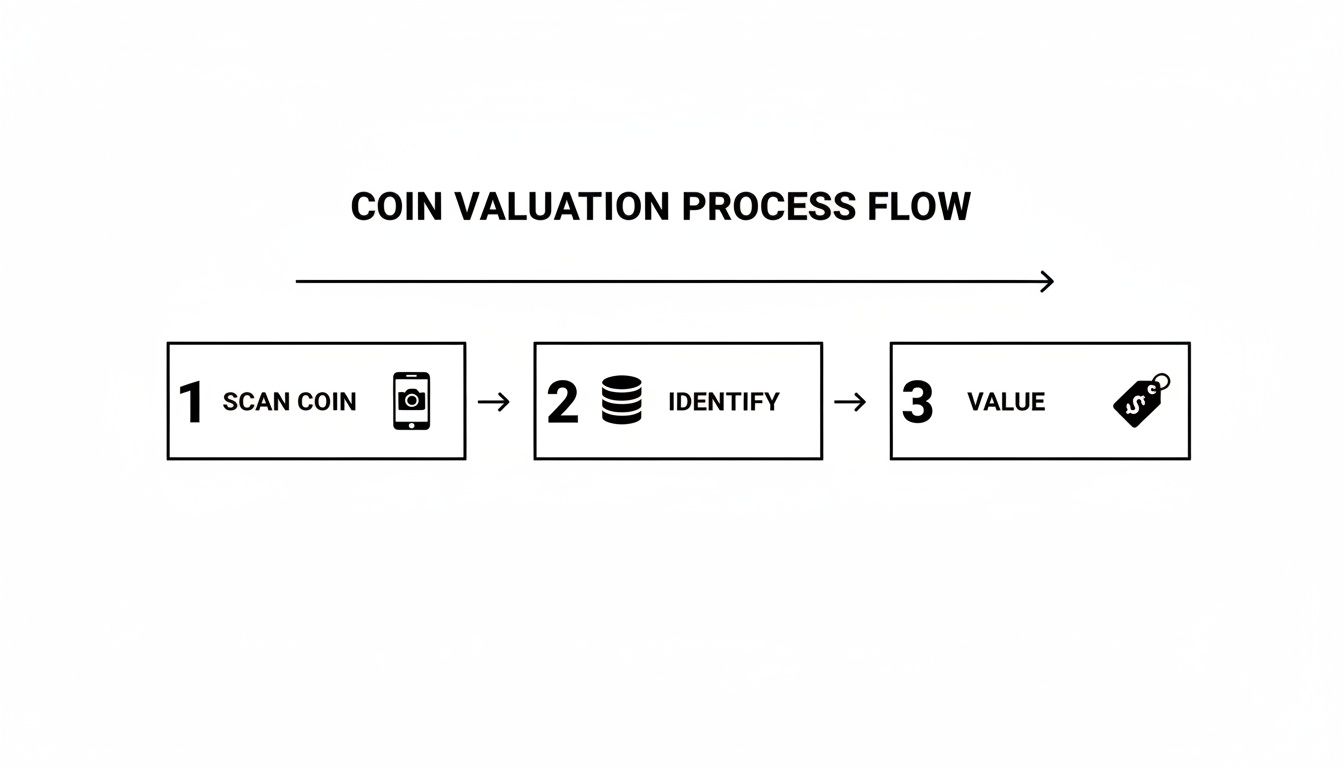
This workflow makes it clear that the valuation isn't just one action, but the result of accurate identification and data comparison working together.
Step 1: Image Recognition
It all starts the moment you take the photo. The app’s advanced AI-powered image recognition gets to work, acting like a digital detective with a perfect memory. It quickly scans your coin, analysing key features like the monarch’s portrait, the date, specific design elements, and any mint marks it can see.
For this stage to work well, a crisp, well-lit photograph is absolutely essential. Our guide on how to photograph coins like a pro shares some expert secrets that can make a huge difference to your results. Simply put, the clearer the picture, the more accurate the initial identification.
Step 2: Database Matching
Once the AI has a handle on the visual markers, it moves on to the second stage: the database match. Here, the app cross-references the details from your photo against its huge internal library. This digital encyclopaedia is packed with vital information.
- Mintage Figures: It knows how many coins of that specific year and mint were ever made.
- Historical Details: It holds key information about the coin's series, history, and design.
- Known Varieties: It’s aware of rare errors or variations that can dramatically affect a coin’s value.
This is the step that separates a common coin from a potentially rare treasure, all based on established numismatic records.
Step 3: Market Data Aggregation
The final step is where the money comes in. The app performs market data aggregation, which is a fancy way of saying it scours the internet for real-time sales information. It pulls data from online auction sites, dealers' fixed-price listings, and other sales platforms to figure out a current market rate.
It's crucial to understand that this figure is an algorithm-driven estimate. It’s a snapshot of what similar coins are selling for right now, but it can’t see the unique physical condition of your specific coin. Things like its grade, lustre, toning, or any hidden damage are invisible to the app. This is why its valuation is a brilliant starting point, but it's never the final word.
The Power and Pitfalls of Instant Valuations
A modern coin valuation app offers a level of convenience that would have been unimaginable just a few years ago. With a quick snap from your phone’s camera, you get an instant identification and a ballpark figure for what your coin might be worth. This speed is their greatest strength.
They also make brilliant digital catalogues, letting you organise what you own and get an immediate baseline value for your entire collection. It's a fantastic screening tool, helping you quickly sort through a large pile of coins to separate the common from the potentially interesting.
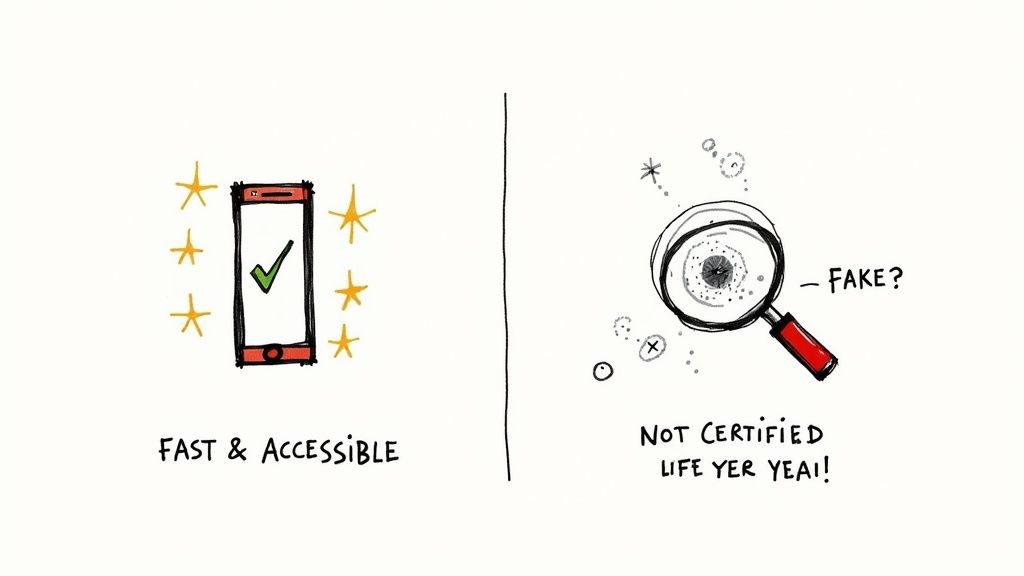
However, it’s absolutely crucial to understand their significant limitations. The estimated value is just that—an estimate. An app’s algorithm has fundamental blind spots that can lead to major inaccuracies.
The Critical Details an App Can't See
The biggest pitfall lies in a coin’s physical condition, known in the trade as its grade. An app simply cannot reliably distinguish between a pristine, uncirculated MS-65 coin and a slightly worn MS-63. That subtle difference, completely invisible to an algorithm, can represent a value gap of hundreds or even thousands of pounds for a rare piece.
On top of that, these apps struggle with nuances that really need a human eye:
- Subtle Damage: Fine scratches, evidence of cleaning, or environmental damage can slash a coin's value, but they often go completely undetected by a camera scan.
- Authenticity: Sophisticated fakes can easily fool an app's image recognition. You can find out more about the detailed process of verifying coins with our guide on how to check if your money is real.
- Unique Characteristics: Desirable toning, mint errors, or rare die varieties are specialist details an app isn't programmed to recognise, let alone value correctly.
Think of a coin valuation app like a GP; it's brilliant for a quick, general diagnosis of what you have. But for anything that appears serious or valuable, you absolutely need to consult a specialist—a professional numismatist—for an accurate assessment.
Finding the Right Digital Tool
Despite these limitations, a good app is still an invaluable part of any collector's toolkit. In the UK, the Check Your Change app stands as the original pioneer, covering all mainland decimal coins with over 900 entries and valuations for both used and new conditions.
With frequent updates, it has earned praise in over 1,250 reviews for its depth and reasonable £3.99 annual fee. Users highlight its powerful filters and current market pricing, with one collector even calling it the best option after ditching pricier monthly subscriptions. You can find out more by exploring the details on the Google Play store.
Ultimately, the key is to use the app as a powerful first-step tool, not as a certified appraiser. Use it to identify and organise your coins, but always approach its valuation with a healthy dose of scepticism, ready to investigate any promising finds further.
Using App Results to Become a Smarter Collector
Getting that instant valuation from an app is always a bit of a thrill, but it's crucial to see it as the start of your research, not the end. The real skill of a savvy collector isn’t just scanning a coin; it’s knowing how to verify and interpret that initial digital estimate.
Think of the app's result as a promising lead, not a final verdict. This mindset shift is what turns you from a passive user into an active, informed collector. It’s not about distrusting the app, but about adding the essential human layer of verification that an algorithm simply can't replicate.
Let's walk through the logical steps to build on that initial scan and get a much clearer picture of your coin's true worth.
Step 1: Cross-Reference with Real-World Sales Data
First things first: check the app’s valuation against what similar coins are actually selling for. An app pulls data from all over, but the market can turn on a sixpence. The key is to look at sold listings, not just what people are asking for—asking prices can be wildly optimistic.
- Auction House Archives: For higher-value coins, websites like Heritage Auctions are the gold standard. They have huge, searchable databases of past sales, showing exactly what people have paid.
- eBay's "Sold Items" Filter: This is an invaluable tool for more common coins. Search for your coin, then tick the "Sold Items" box. This filters out the dreamers and shows you what buyers have genuinely paid in the recent past.
This simple check grounds the app's estimate in the reality of the current market, giving you a much more reliable price range.
An app provides a market snapshot; sold listings provide market proof. The difference is crucial. An app's algorithm can't account for the bidding excitement on a specific auction or a collector's desire to fill a gap in their set, factors that heavily influence final sale prices.
Step 2: Perform a Basic Manual Grade Check
Next up, you need to get your eye in for a coin's condition, or grade. This is where apps often struggle, but you can do a basic visual check yourself. Professional grading services like PCGS offer fantastic free online resources, like PCGS Photograde, which shows high-resolution images of coins at every specific grade.
Put your coin next to these reference images. Pay close attention to:
- High Points: Look at the parts of the design that would wear down first—think of the monarch’s cheek or the highest points of a shield.
- Lustre: Does your coin still have its original mint shine, or is it dull and worn?
- Marks: Note any obvious scratches, knocks to the rim, or signs of cleaning.
This comparison helps you understand why two seemingly identical coins can have vastly different values. In the UK, the rise of tools like the Check Your Change app has completely changed how people approach their collections. It was the first app to offer detailed valuation data for over 900 different decimal coins, making the hobby more accessible than ever. This digital shift has opened up the initial valuation process for a nation with a deep numismatic history.
Step 3: Know When to Consult an Expert
Finally, the smartest collectors know their limits. After you've done your cross-referencing and a basic grade check, certain red flags should tell you it's time to call in a professional.
If the app flags a coin as potentially high-value, if your own research suggests it's a rare variety, or if you have any doubts about its authenticity, stop what you're doing and seek expert help. A professional appraisal is the only way to get a definitive, trustworthy valuation for insurance, a potential sale, or just for your own peace of mind.
When Your Collection Needs More Than an App
While a coin valuation app is a fantastic tool for getting a first look and doing some initial sorting, there's a point where its algorithm just can't go any further. This is the moment a savvy collector knows to switch from DIY curiosity to seeking out professional expertise. It’s the best way to make sure a potential treasure isn’t being missed or, worse, undervalued.
Think of the app as a powerful first-pass filter. Its job is to flag the coins that deserve a closer, human look. If the app spits out a surprisingly high estimate for any of your coins, that’s your cue to stop scanning and start talking to an expert.
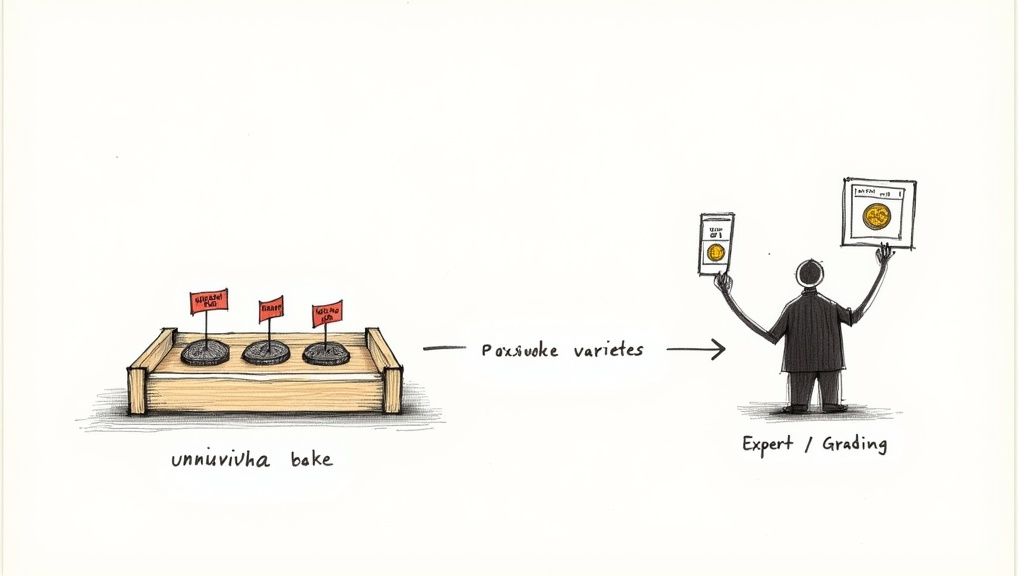
Key Triggers for Professional Appraisal
Some situations are clear red flags, signalling that an app’s estimate just isn’t going to cut it. You should always seek a professional opinion in these circumstances:
- High-Value Finds: Any coin the app flags as being particularly valuable needs immediate human verification.
- Large or Inherited Collections: Sifting through dozens or even hundreds of coins to find the key dates and rare varieties is a job for an expert eye.
- Questions of Authenticity: If you have even the slightest doubt about whether a coin is genuine, only a hands-on inspection by a professional can settle it.
- Official Valuations: For insurance, inheritance, or estate purposes, an app's estimate holds no official or legal weight whatsoever. You need a certified valuation.
An app gives you data; an expert provides judgement. A professional numismatist can assess the subtleties like lustre, strike quality, and overall eye appeal. These are nuanced factors that can create huge differences in value and are completely invisible to an algorithm.
What a Professional Service Offers
Moving beyond an app opens up a whole new world of assurance and opportunity. A trusted coin expert provides services that technology simply can’t replicate. This starts with precise, in-person grading to determine a coin's exact condition.
For anyone serious about maximising value, understanding how to get coins graded by leading services like PCGS or NGC is a crucial next step.
What's more, a professional can make you a direct purchase offer, consign your coins to auction, or give you expert guidance on managing your collection. This turns a simple valuation into a secure, strategic plan for your assets.
Your Coin App Questions Answered
Getting that instant result from a coin app is exciting, but it often opens up a whole new set of questions. It's a brilliant place to start, for sure, but it’s only natural to wonder just how much you can trust that digital valuation and what you should do next. Let's dig into some of the most common queries we hear.
How Accurate Are Coin Valuation Apps?
When it comes to identification, they’re remarkably good. An app can usually nail the exact type, year, and mint mark of a common coin with impressive precision, saving you what could be hours of sifting through catalogues.
But for valuation, it's a different story. The price you see is purely a market estimate. An app can't hold your coin. It can't feel the surface, catch the light to check the lustre, or spot the tiny, almost invisible signs of wear and tear that determine its true grade. This is crucial, as grading can be the difference between a coin worth a few quid and one worth several hundred pounds.
Can These Apps Spot a Fake Coin?
In a word, no. The vast majority of apps simply can't tell the difference between a genuine coin and a convincing fake. Modern counterfeiters are skilled, and their work can easily fool basic image recognition software that's only looking for a matching design.
An app’s camera is no substitute for a trained eye. Authenticity requires a hands-on inspection by an expert who can check a coin's weight, metallic composition, and other microscopic details. For any coin with real value, getting it professionally verified isn't just a good idea—it's essential.
Which App Is Best for UK Coins?
For collectors focused on British coins, apps like Check Your Change and Coins UK are popular choices, mainly because they have deep databases specifically for our coinage.
Ultimately, the best app is the one that feels right for you. But no matter which one you choose, the strategy should be the same. Use it as a first-pass screening tool to get a rough idea, then cross-reference its findings with real-world sales data. And when the stakes are high, always seek a professional opinion. This way, you get the benefit of the tech without being caught out by its limitations.
Ready to get a definitive valuation and move beyond the app estimate? For a professional appraisal or a direct offer to sell your collection, the experts at Cavalier Coins Ltd are here to help. Contact us for a friendly chat and a no-obligation quote.