
Ever wondered if that old 50p piece rattling around in a drawer could be worth a small fortune? The truth is, the number stamped on a coin—its face value—is often the least interesting part of its story. The most valuable coins are often those with low mintage numbers, minting errors, or significant historical importance.
Rarity and condition are the key drivers that can transform a simple piece of currency into a sought-after treasure worth thousands, sometimes even millions, of pounds. To really spot which coins are valuable, you have to learn to look beyond the obvious.
Think of it like a rare first-edition book. It might have originally sold for a few quid, but its scarcity and historical context can make it worth a fortune today. The very same principles apply in numismatics, the study and collection of coins.
The Core Drivers of Coin Value
Several key elements work in tandem to determine a coin's true market worth. Getting a handle on these is the first step to becoming a savvy collector.
- Rarity: Simply put, how many were made? The fewer coins that were originally minted, the higher the potential value. The famous 1933 George V Penny is a perfect example; with only a handful known to exist, it’s one of Britain's most coveted coins.
- Condition (or Grade): How well has the coin survived over the years? A coin that looks like it just left the mint, with crisp details and no scratches, will always fetch a much higher price than one that’s been worn down from years in circulation.
- Historical Significance: Does the coin commemorate a major event, represent a short-lived monarch's reign, or feature a design that was quickly retired? Coins that tell a unique story are incredibly desirable to collectors.
- Minting Errors: Mistakes happen, even at The Royal Mint. Coins struck with errors—like a doubled image, the wrong metal, or a misaligned design—are often exceptionally rare and, therefore, very valuable.
- Demand: At the end of the day, a coin is only worth what someone is willing to pay for it. Coins from popular series or those with iconic designs often have a large and active collector base, which naturally drives up prices.
This quick-reference table breaks down these primary drivers, helping you assess your collection's potential at a glance.
Key Factors That Determine Coin Value
| Factor | What It Means | Impact on Value |
|---|---|---|
| Rarity | The number of coins minted and surviving. | Low numbers drastically increase value. The fewer that exist, the more a collector will pay. |
| Condition | The physical state of the coin, from Mint State to Poor. | A coin's grade is critical. An uncirculated coin can be worth hundreds of times more than a worn one. |
| History | The story behind the coin—who issued it, when, and why. | Coins tied to famous events, monarchs, or pivotal moments in history command a premium. |
| Errors | Mistakes made during the minting process. | Unique errors create one-of-a-kind collectibles, making them highly sought after and valuable. |
| Demand | The level of interest from other collectors. | High collector demand for a specific coin or series can push prices up significantly, regardless of other factors. |
Understanding these factors is the foundation of successful coin collecting. Each one adds another layer to a coin's story and its ultimate worth.
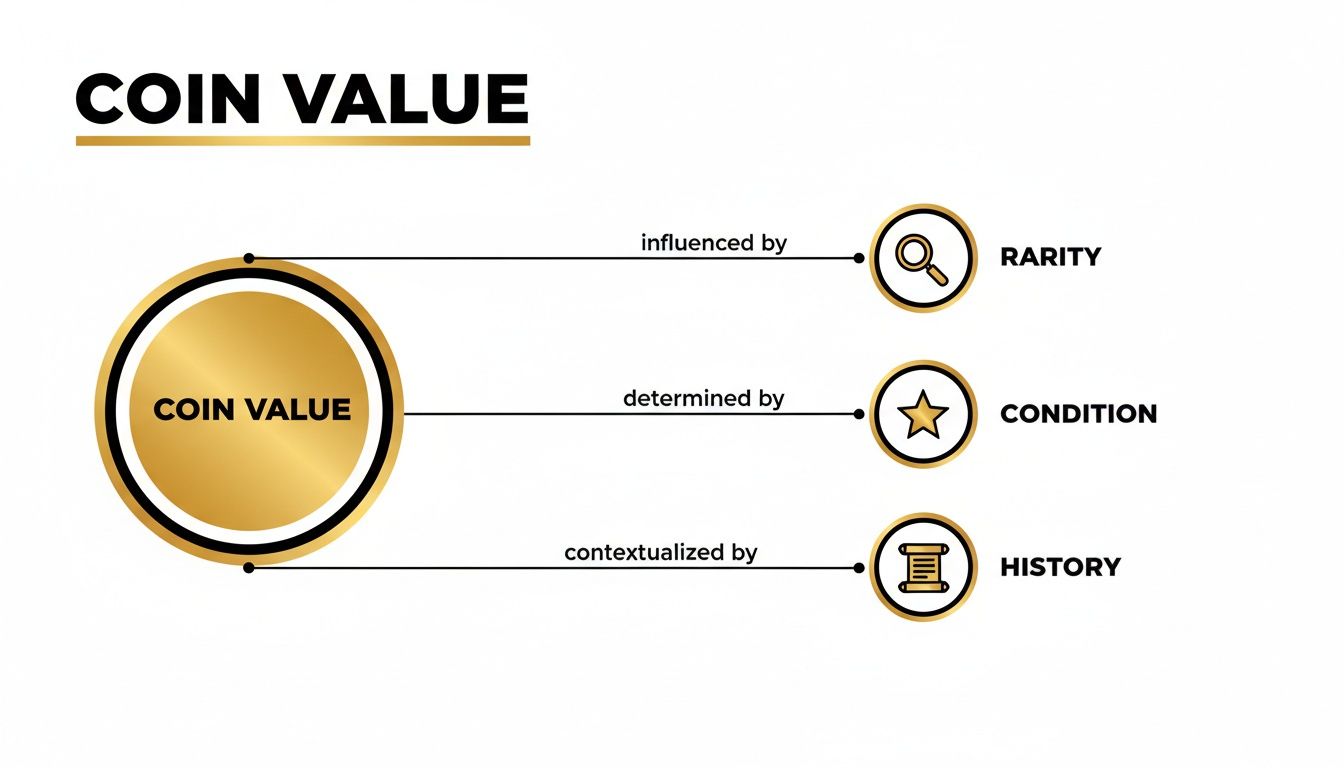
As you can see, a coin’s journey to becoming valuable starts with its rarity, is defined by its physical condition, and is enriched by the story it tells. Grasping these concepts is the first real step in learning how to spot a treasure.
For a deeper dive into the basics, you can learn more about what face value means and why it's just the starting point. Mastering these fundamentals will give you the confidence to evaluate any coin you come across, turning a simple hobby into a thrilling hunt for hidden gems.
Legendary British Coins You Should Know
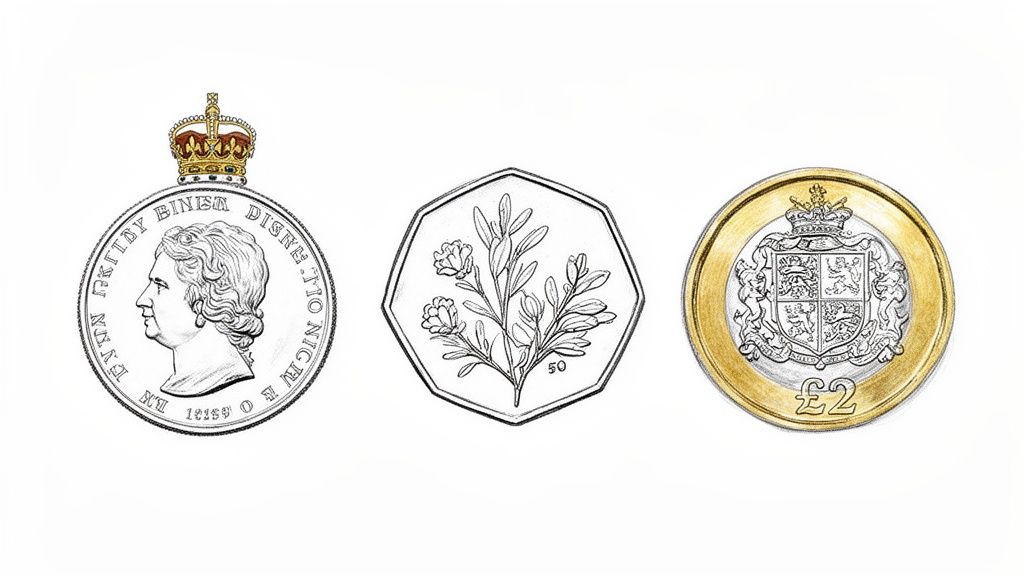 To get a real feel for what makes a coin valuable, it’s best to look at the legends—the coins that get collectors buzzing. British history is full of these treasures, and each one tells a fascinating story of rarity, unusual circumstances, or pure artistry.
By exploring a few of these iconic pieces, you can start to train your eye. Seeing how scarcity and historical context work together in the real world is the best way to learn how to spot the difference between pocket change and a serious collector's find.
The Kew Gardens 50p: A Modern Classic
The 2009 Kew Gardens 50p is probably the most famous modern British coin out there, and it’s a perfect example of how a low mintage can create a superstar. It was made to celebrate the 250th anniversary of the Royal Botanic Gardens, and only 210,000 were ever released for circulation.
That tiny number makes it the rarest commemorative 50p by an absolute mile. While millions of other designs were being minted, the Kew Gardens piece became an instant legend. Today, even a circulated one can sell for over £150, showing how scarcity alone can transform everyday money into one of the most sought-after coins that are valuable to today's collectors.
The Kew Gardens 50p offers a vital lesson for anyone starting out: always check the mintage figures. A coin's scarcity is often the biggest single driver of its value on the secondary market, especially with modern coins.
The Undated 20p: A Fortunate Mistake
Sometimes, value is created by a simple mistake. Back in 2008, The Royal Mint accidentally struck a batch of 20p coins using the wrong combination of dies. This resulted in an "undated" 20p—a coin missing its year of issue for the first time in over 300 years.
This kind of error is called a mule coin, a hybrid created when the front and back dies for different coins get mixed up. It's thought that somewhere between 50,000 and 200,000 of these slipped into circulation before anyone noticed. Their novelty and rarity have made them a hit with collectors, and they often sell for around £50-£70.
The Legendary 1933 George V Penny
At the very top of British coin collecting sits a piece that's almost mythical. The 1933 George V Penny is the ultimate prize for collectors, with only six or seven known to exist anywhere in the world.
During the Great Depression, the Royal Mint only produced a tiny handful, mostly for archival purposes. One top-quality example fetched £72,000 back in 2016, but private sales are rumoured to have passed the £100,000 mark. It's a powerful reminder of how extreme rarity can elevate a coin to legendary status. You can find more insights on rare UK coins over at CavalierCoins.com.
These examples show the different ways a coin can become valuable:
- Intentional Rarity: Like the low-mintage Kew Gardens 50p.
- Accidental Rarity: Such as the Undated 20p mule error.
- Historical Rarity: Embodied by the legendary 1933 Penny.
Each one reinforces the core principles of what makes a coin worth more than its face value. By learning their stories, you’ll get much better at spotting the key signs of a potential treasure in your own collection.
The Elite World of Proofs and Pattern Coins
Step away from the coins made for wallets and tills, and you’ll find an exclusive tier of numismatic treasures—pieces so special they were never meant for circulation at all. This is the realm of proof and pattern coins, the absolute crown jewels for any serious collector. Getting to grips with these special issues is your ticket to understanding the highest tier of coins that are valuable.
Think of a pattern coin like an artist's original sketch versus a mass-produced print. These are the experimental pieces, the prototypes struck by a mint to test out a brand new design, metal, or size. Because they are just trials, they’re produced in tiny numbers, making them exceptionally rare from the moment they’re struck.
What Defines a Proof Coin
Proof coins, on the other hand, are all about minting perfection. They aren’t a different design; they are a superior, spectacular finish. A proof coin is struck multiple times with specially polished dies on a hand-polished blank, creating a flawless, mirror-like background that makes the frosted, detailed design pop. They're made purely for collectors, not for commerce, representing the pinnacle of the minter's craft.
The real magic of proof and pattern coins lies in their deliberate rarity and artistic soul. They are the mint's showcase pieces, flaunting designs and finishes often too delicate or expensive for a general release. This is exactly what makes them so sought-after.
Can you imagine holding a coin that never saw a single shop till but sold for over £2 million? That’s the incredible story of the 1937 Edward VIII 5-pound pattern coin. Only a handful were minted as trial pieces during his short 326-day reign before he abdicated. This extreme rarity led one example to fetch a jaw-dropping $2,280,000 at auction. Market data shows these incredible pieces have appreciated by over 300% in the last decade alone.
Why They Command Such High Prices
The immense value of these coins really comes down to a few key ingredients that create the perfect recipe for collectors and investors. The main drivers are:
- Extreme Rarity: With mintage numbers often in the single or double digits, the supply is almost non-existent.
- Historical Importance: Pattern coins give us a unique peek behind the curtain at the minting process and designs that nearly were.
- Superb Condition: Proof coins are preserved in pristine condition from day one, so they naturally meet the highest grading standards.
- Artistic Merit: They are, quite simply, the most beautiful versions of a coin's design you will ever see.
Because of this unique combination, proof and pattern coins are often the stars of major auctions, fetching prices that can easily run into the millions. They aren't just collectibles; they are historical artefacts that represent the very peak of numismatic art. To dive deeper into the specifics, check out our collector's guide to the UK's finest proof coins.
How to Find Valuable Coins in Your Pocket Change
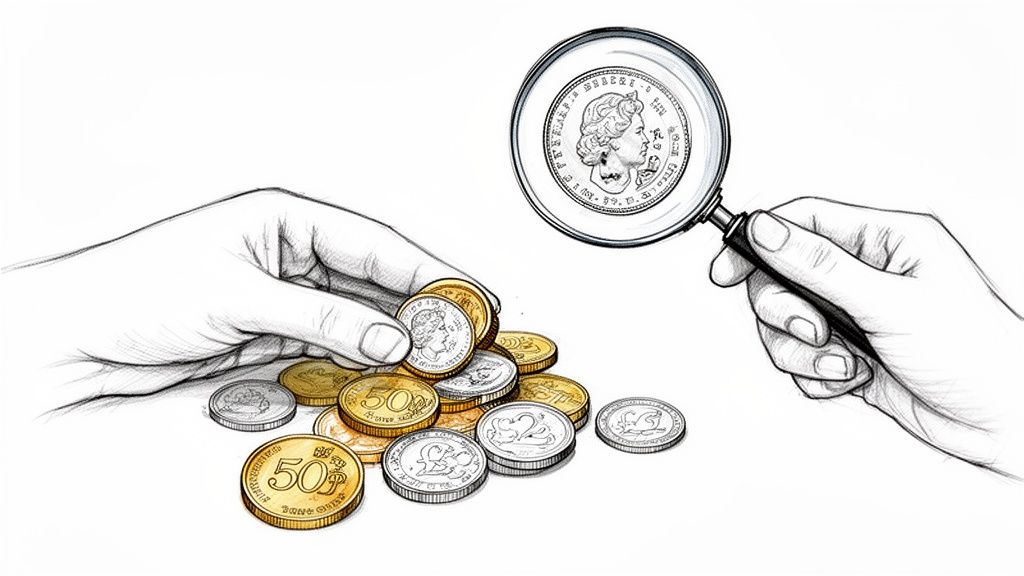
You don't need to stumble upon a buried hoard to find treasure. Some of the most exciting and valuable coins are hiding in plain sight, just waiting to be spotted in your wallet, the change jar on your counter, or even the till at your local shop. This is the heart of 'coin hunting', and it's by far the most accessible way for anyone to start building a collection.
The trick is simply knowing what you’re looking for. Modern coins in circulation, especially the commemorative ones, can become surprisingly valuable almost overnight. This is usually down to one key factor: low mintage figures. The perfect example, of course, is the legendary 2009 Kew Gardens 50p. With a tiny mintage of just 210,000, its rarity has turned it into a modern classic, transforming 50p into well over £150 for keen collectors.
Spotting Low Mintage Modern Coins
It's not all about the Kew Gardens piece, though. Plenty of other modern coins are well worth keeping an eye out for. The Royal Mint regularly releases new commemorative designs, particularly on 50p and £2 coins, and their production numbers can vary wildly. A lower mintage figure almost always means higher demand from collectors, which in turn pushes up the value.
To be a good coin hunter, you need to get familiar with these less common designs. Here are a few popular low-mintage coins you should always be looking for:
- 2002 Commonwealth Games £2 (Northern Ireland): Of the four different Commonwealth designs, this is the one to find. Its mintage was below 500,000, making it the rarest of the set.
- The Olympic 50p Series (2011): While the whole series is collectible, the coin explaining the football ‘offside rule’ is the standout piece and particularly sought after.
- The Beatrix Potter 50p Series (2016-2018): Characters like Jemima Puddle-Duck and Flopsy Bunny were minted in smaller numbers and are incredibly popular with collectors.
The real secret to successful coin hunting is a combination of patience and a keen eye. You have to accept that most of the change you check will be perfectly ordinary. The thrill comes from sifting through hundreds of common coins to find that one rare gem.
Identifying Valuable Minting Errors
Sometimes, a coin becomes valuable not because of its intended design, but because something went wrong when it was made. These minting errors create fascinating and often very rare varieties. While some mistakes are dramatic and obvious, many are subtle and require a good eye or even a magnifying glass to spot.
One of the most famous types is a mule coin. This happens when the dies (stamps) for two different coins are incorrectly paired up. The undated 20p from 2008 is a fantastic example of this. Another error to look for is die rotation, where the Queen’s head isn't perfectly aligned with the design on the other side when you flip the coin. Even tiny imperfections can add significant value, turning a bit of pocket change into a prized find.
How to Value and Sell Your Coin Collection
That heart-pounding moment when you realise you might be holding one of the UK’s most valuable coins is just the beginning. The next steps are what really count. Turning that potential into profit isn’t about luck; it’s about having a clear, smart strategy for getting it valued and sold.
Let’s walk through how to get your collection properly appraised and then take it to market, making sure you get the best possible price for your find.
The very first step is getting a handle on its true worth, and that means seeking out a professional appraisal. It's crucial to understand the difference between an independent appraisal and a dealer's offer. An appraisal is an unbiased assessment of your coin's market value. A dealer's offer, on the other hand, is the price they’re willing to pay you for it, which will always factor in their own profit margin.
Getting a Professional Appraisal
To get a truly accurate picture of what your coin is worth, you need an expert eye. Your best bet is to find a member of a recognised trade body like the British Numismatic Trade Association (BNTA). These professionals operate under a strict code of ethics and have the deep expertise needed to grade your coin’s condition and pinpoint its exact variety.
For any high-value piece, don't just stop at one opinion. Getting two or three appraisals from different experts will give you a much more solid understanding of the coin's market value. This helps you set realistic expectations before you even think about selling. For more detailed guidance, you can learn about the coin valuation process in our in-depth article.
Choosing the Right Selling Method
Once you have a good idea of what your coins are worth, you've got a few different paths you can take to sell them. Each option comes with its own pros and cons, so the best choice really depends on what you’re trying to achieve—are you after the absolute maximum price, a quick and easy sale, or something in between?
Here’s a look at the most common options:
- Direct Sale to a Dealer: This is often the quickest and most straightforward way to sell. A reputable dealer can make you a cash offer on the spot. It’s incredibly convenient, but remember, their offer will be below retail value to cover their overheads and make a profit.
- Online Marketplaces (e.g., eBay): Selling online opens your collection up to a massive global audience of collectors. The trade-off is that you have to do the work yourself—taking high-quality photos, writing compelling descriptions, and managing the shipping. Also, keep a close eye on platform fees, as they can take a surprising chunk out of your final sale price.
- Specialist Coin Auctions: For truly rare or exceptionally valuable coins, an auction house is almost always the way to go. They have direct access to serious, high-end collectors who are prepared to pay top prices. For instance, the stunning 1839 Victoria gold proof pattern 5-pound coin fetched an incredible $1,440,000 (about £1.1 million) at a Monaco auction in 2020.
The right selling path is a balance of time, effort, and desired return. For a collection of moderate value, a direct sale might be perfect. For a single, show-stopping coin, the competitive environment of an auction will almost certainly yield a better result.
When you're preparing to sell or move a valuable coin collection, its safety is paramount. The process often requires specialised handling and proper storage to protect your investment. Looking into secure storage solutions can give you peace of mind during this critical period, especially when dealing with high-value items ahead of an auction or a private sale.
Common Questions About Valuable Coins
Diving into the world of coin collecting is exciting, but it naturally brings up a lot of questions. Whether you're just starting out, sifting through an old jar of change, or you're a seasoned collector eyeing a significant purchase, getting clear answers is key. Let’s walk through some of the most common queries to give you a bit more confidence on your collecting journey.
Should I Clean My Old Coins Before Selling Them?
This is probably the most critical question we get, and the answer is a very firm no. It's one of the easiest—and most costly—mistakes a newcomer can make. Cleaning a coin, no matter how gently you think you're doing it, will permanently damage its surface.
The process strips away the coin's natural patina, which is the subtle and often beautiful toning that develops over many decades. It also creates tiny, microscopic scratches that collectors call "hairlines." A professional grader can spot a cleaned coin in a heartbeat, and it will almost certainly be labelled as damaged. This can absolutely tank its value, sometimes by as much as 90%. A coin's original, untouched state is a huge part of its history and something serious collectors value highly.
What Is the Difference Between a Coin's Value and Price?
People often use these words interchangeably, but in the coin world, they mean two different things. It helps to think of "value" as the theoretical, on-paper worth and "price" as what it actually sells for in the real world.
- Value: This is what you might see in a price guide or catalogue. It’s an estimated figure based on recent auction results, dealer price lists, and official grading guides. It gives you a solid benchmark for what a coin should be worth in a typical market.
- Price: This is the actual amount of money that someone pays for the coin in a specific sale. The final price can swing up or down based on all sorts of factors, like a seller needing a quick sale, a buyer being particularly desperate to complete a set, or just the buzz of a competitive auction.
So, while a coin has a book value, the final sale price can often be higher or lower depending on the specific circumstances of the transaction.
How Do I Get My Coins Professionally Graded?
Getting a coin professionally graded provides an impartial, expert assessment of its authenticity and condition. The process is often called "slabbing," and it involves sending your coin to a trusted, third-party grading service like the Professional Coin Grading Service (PCGS) or the Numismatic Guaranty Company (NGC).
These experts will authenticate your coin, carefully assess its condition using the internationally accepted 1 to 70 Sheldon scale, and then encapsulate it in a secure, sonically-sealed plastic holder. This "slab" includes a label detailing all the coin's key information. While it does cost money, professional grading can dramatically increase the value and desirability of rare or high-grade coins because it gives buyers total confidence.
Getting a coin graded is like getting a diamond certified. It removes all doubt about its quality and authenticity, making it a much more attractive asset to serious buyers and investors.
Are Coins from Certain Countries More Valuable?
Not inherently, no. A coin's value is driven by the universal principles of rarity, condition, and demand from collectors—not the flag it was minted under. While it's true that countries with huge and active collector bases, like the UK or the USA, often have strong demand for their own coinage, true rarity is global.
An incredibly rare, low-mintage coin from a smaller or even a short-lived nation can be immensely valuable to the right specialist collector. It’s always best to focus on the core factors—rarity, history, and condition—rather than getting too hung up on the country of origin.
At Cavalier Coins Ltd, we are passionate about helping you build, understand, and monetise your collection. Whether you're searching for a rare piece or need expert advice, explore our extensive selection and resources at https://www.cavaliercoins.com.