
There's no single guinea value: a genuine UK guinea's worth depends on its monarch, date, variety, condition and rarity, with collector prices ranging from a few hundred to several thousand pounds. Its historical value was £1.05, but that figure describes the old denomination, not what a surviving coin will fetch today.
You might have found one in a family jewellery box, spotted a gold-coloured coin at a market stall or inherited a mixed collection. The first question is whether it is a guinea, and the next is how its history and condition affect its collector appeal. Gold content matters, but it is only one part of the valuation.
Why a Guinea Is Worth More Than a Pound
An auction catalogue lists a guinea at a price far above a pound, while an explanation of the denomination gives a much smaller figure. Both describe value, but they answer different questions. The historical denomination explains what the coin represented in everyday payments; the auction price reflects what collectors will pay for that surviving example.
The guinea began under Charles II in 1663 at 20 shillings, rose in exchange value to more than 30 shillings as gold became dearer, and was formally fixed in 1717, following advice associated with Master of the Mint Sir Isaac Newton, at 21 shillings, equivalent to £1 1s, or £1.05 in decimal currency; the sovereign replaced it as the principal pound gold coin in 1817 (Royal Mint Museum account of the guinea).
That decimal equivalent works like the printed price on an old ticket: it records an earlier monetary value without setting today's collector price.
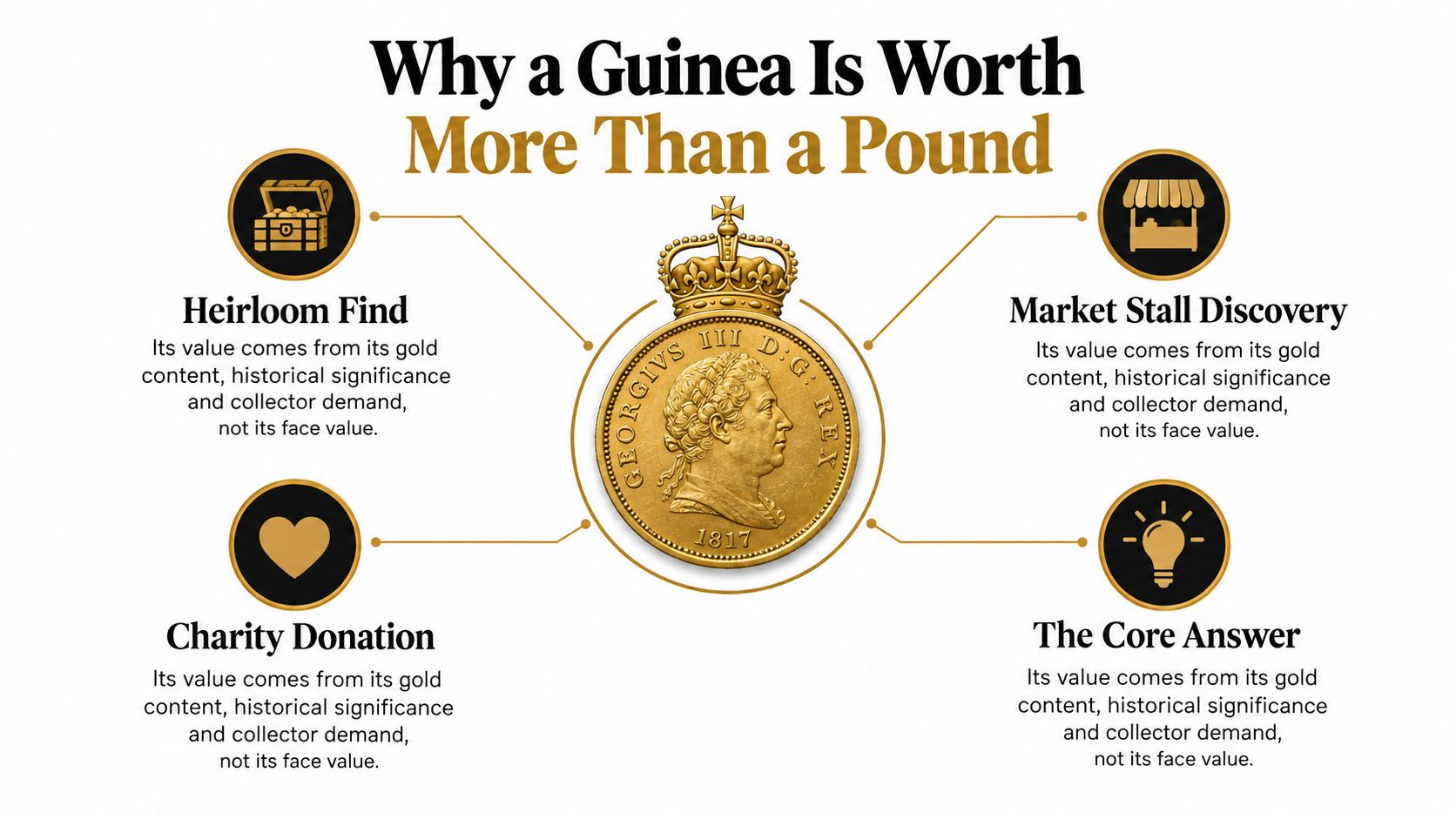
Gold content provides part of a guinea's value. Collector demand adds another layer. Two examples with similar gold content can attract very different bids because one has a scarcer date, a sought-after variety or better-preserved detail. Rarity, variety and condition can outweigh the metal alone, so a gold-based estimate leaves much of the valuation unexplained.
The Royal Mint Museum describes the guinea as the leading British gold coin of the seventeenth and eighteenth centuries. Its denomination sat awkwardly beside the standard pound, yet “guinea” survived in professional fees, auctions and luxury services after the coin ceased circulating. That lasting name helps explain the confusion: a historical unit of account and a collectable gold coin can share a name while carrying very different values.
A Short History Every Collector Should Know
A guinea's date places it within a changing story of royal designs, gold shortages and wartime payments. That history works like a family tree: it groups related issues while leaving room for differences between individual coins. It also explains why a famous issue deserves closer attention without giving it an automatic auction premium.
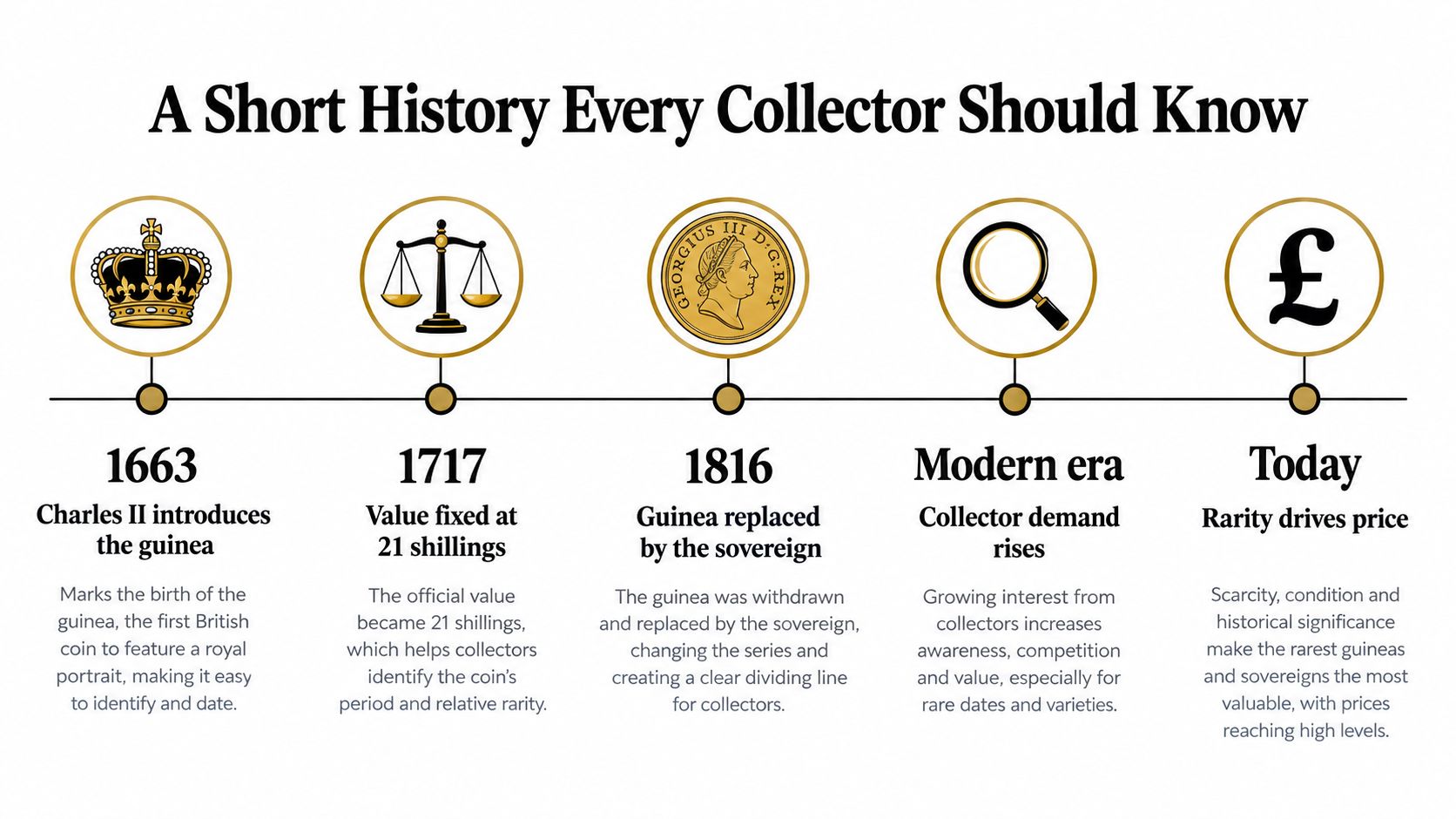
- 1663, Charles II introduces the guinea. The denomination begins here, with the designs of Charles II's reign forming the earliest branch of its history.
- 1717, the value becomes 21 shillings. This milestone established the guinea's lasting monetary identity. For collectors, it marks a change in its official value rather than a guide to present-day bidding.
- 1761 to 1799, regular production under George III. Guineas and half-guineas were struck regularly during much of his reign, leaving a broad range of issues for collectors to compare.
- 1799, gold striking stops. Wars with France disrupted overseas gold supplies, bringing production to a halt. The gap helps explain why the later military issue occupies a distinct place in the series.
- 1813 and 1817, the final issue and the replacement. The final guinea was struck to pay Wellington's army during the Peninsular War; about 360,000 were produced, before the sovereign replaced the guinea as the 20-shilling gold coin in 1817 (Royal Mint Museum account of George III's coinage).
Why the timeline matters
The 1813 military guinea stands out as the last issue, struck for a specific military purpose. The Museum account also identifies it as the only guinea struck at the Royal Mint's new Tower Hill premises. Those details explain its historical interest. Its auction value still depends on rarity, variety and condition, which can outweigh gold content alone.
History provides context, not a price tag.
The same Museum account describes a 1774 Act setting minimum legal weights after gold had been removed through filing or rubbing. For a collector, that is a practical warning: worn or altered edges deserve attention, and weight alone cannot settle authenticity or value.
For the wider setting across different reigns and denominations, see this brief history of British coins. That context helps distinguish an interesting historical story from the evidence needed to value a particular coin.
Identifying the Monarch, Date and Variety
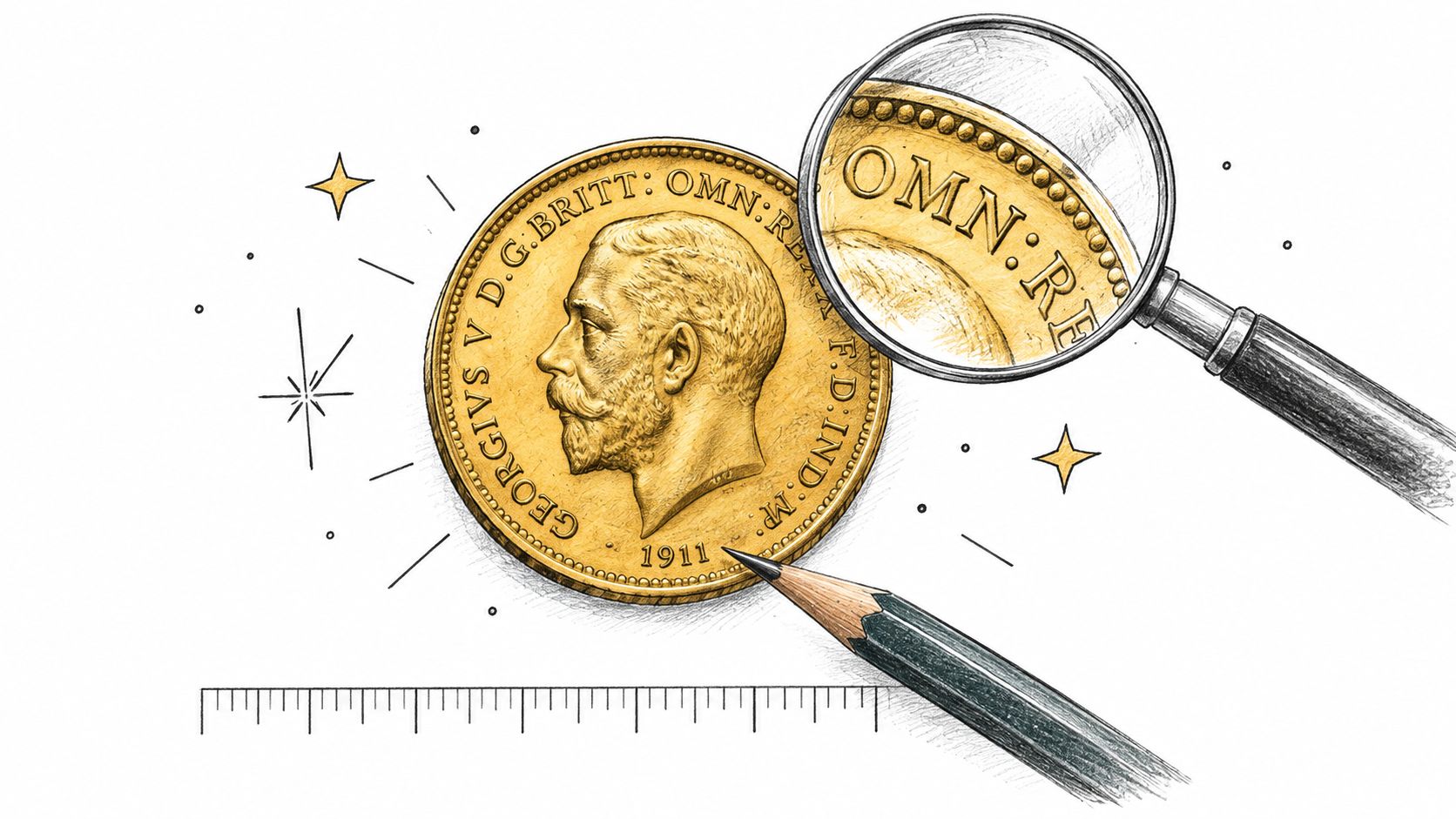
Begin with the portrait and the surrounding inscription on the obverse, the side showing the monarch. The face and lettering can help you identify the ruler, while the date is usually the quickest way to narrow down the issue. Don't assume every feature will be crisp: circulation wear, damage and cleaning can obscure details.
Read the coin from the outside in
Turn it over and check the reverse design and date. The combination of monarch, year and design is more useful than any one clue on its own. If the date appears to have been altered, or the numerals seem to overlap, photograph the area clearly rather than trying to clean or polish it.
A documented variety such as a 1741/39 George II guinea has an overdate: the date reflects one numeral struck over another. That feature can help distinguish the coin from a more ordinary issue, but it needs careful inspection and attribution. A less common date or variety may attract collector interest, yet the effect depends on the coin's condition and how confidently the variety can be identified.
Practical rule: Don't assign a rare variety from a quick glance. Record what you can see, then compare clear photographs with a specialist's attribution.
Check denomination and edge
A mixed group may include a half-guinea as well as a full guinea. Read the coin's inscriptions and compare its overall design and proportions with reliable numismatic references rather than relying on size alone. If you're unsure, photograph the coin beside a ruler for a dealer or auction specialist to review.
Inspect the edge too. Edge design can provide useful evidence for attribution and authentication, particularly if it's worn, damaged or unusual. A coin's surface and edge may show signs of clipping, testing or later alteration, so take photographs of both faces and the edge before asking for an estimate. The clearer your description of monarch, date, denomination and visible features, the easier it is for a specialist to assess what you have.
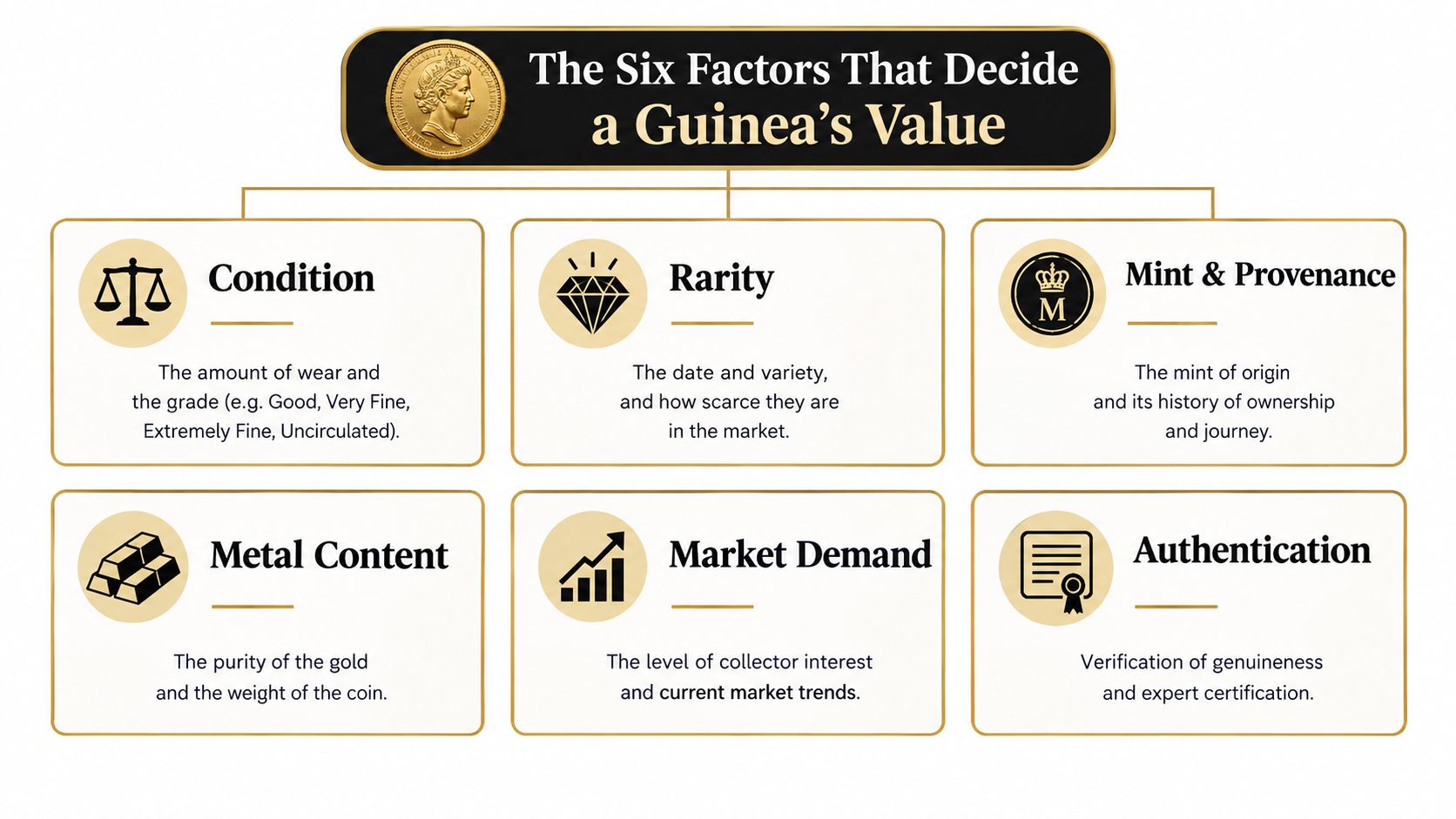
The Six Factors That Decide a Guinea's Value
Two guineas with similar gold weights can receive very different valuations. Gold provides a starting point, much like the materials in an antique watch; collectors also pay for the particular example and how well it has survived. A guinea's historical monetary value therefore offers little guidance to its modern auction price.
Six factors help explain the difference:
- Condition: Look at the detail remaining, the surfaces and any damage or cleaning. Sharper features can increase collector appeal, but surface problems matter too. A coin with clear lettering may still have scratches or alterations that affect its desirability.
- Rarity: The date and variety influence how readily collectors can find another example. Scarcity can support a higher valuation, provided the attribution is sound. A suspected variety needs confirmation before you compare it with a documented rarity.
- Mint and provenance: A distinctive mark or credible ownership history can help identify the coin and give it context. Record these details without assuming they add value. Their significance depends on what a specialist can establish.
- Metal content: Gold contributes to value, while an intact collectible coin may command more than its metal alone. Similar weights are a useful comparison point, not a complete valuation.
- Market demand: Collector interest differs between issues and between individual examples. Closely comparable sales help show what buyers will pay, especially when the condition and variety match.
- Authentication: Weight is one piece of evidence. Specialists also assess the design, die details, edge and signs of alteration before treating a coin as genuine.
What auction comparisons can teach you
The 1741/39 George II guinea and 1761 George III guinea in the Spink auction record illustrate why similar gold weights can accompany very different results. Compare the whole coin, rather than letting one feature decide its worth. The 1713 Anne guinea, from the same Spink sale, also illustrates why an estimate, a realised price and the buyer's total cost need to be kept separate.
Preservation matters before any valuation.
Clipping, cleaning or mounting can reduce collector appeal even when the gold remains measurable. A coin altered for jewellery may be less desirable than an unmounted example with original surfaces. Keep it as found while seeking an opinion; polishing can remove evidence a specialist needs.
What Genuine Guineas Have Sold For Recently
A guinea's historical £1.05 value answers a different question from its auction value: what will collectors pay for this particular coin? Auction results show how far rarity, variety and condition can carry a price beyond the gold content.
These examples appear in the Spink sale record for the guinea examples:
| Coin | Weight | Grade | Realised price |
|---|---|---|---|
| 1741/39 George II guinea | 8.29 g | NGC VF Details | £1,600 |
| 1761 George III guinea | 8.374 g | NGC AU58 | £6,000 |
| 1713 Anne guinea | Not provided | Not provided | £560 |
The two George guineas have similar weights, yet their results sit far apart. The overdate identifies a particular variety; the George III example is described as rare and has a different grade. These are separate influences, so the price gap cannot establish an overdate premium by itself. To estimate that premium, you would need comparable examples with and without the overdate, in similar condition.
An auction result is a reference point, not a transferable price tag.
The Anne guinea, from the same sale record, had an estimate of £600–£700 and sold below that range. Its stated 20% buyer's premium plus VAT also meant the buyer's bill exceeded the £560 realised price. Keep those three amounts separate: expectation, auction outcome and total cost.
The comparable-sales guide explains how to choose useful matches. A close match in monarch, variety and grade carries more weight than a sale sharing only the word “guinea.”
Your Step-by-Step Valuation Checklist
Before contacting a dealer or auction house, gather observations without cleaning or altering the coin. You don't need to decide its grade yourself; accurate photographs and measurements give a specialist a better starting point.
- Photograph both faces. Use natural, even light and keep the camera steady. Include the full coin in each picture, then take closer images of the portrait, date and any unusual marks.
- Record the date and monarch. Write down the inscription if it's legible. Note any apparent overdate or design feature, but mark uncertain observations as uncertain.
- Weigh and measure carefully. Record the weight and diameter using suitable measuring tools. Treat these as useful observations, not proof of authenticity. A clipped, damaged or counterfeit coin may still have a plausible weight.
- Inspect the edge. Photograph it all the way around if possible. Note worn lettering, clipping, testing marks, filing or other visible changes.
- Describe the condition as you see it. Record scratches, dents, uneven wear, possible cleaning or jewellery mounts. Don't try to improve its appearance before an expert examines it.
- Check the denomination and any marks. Include the coin's apparent denomination, visible mint or provenance marks and any documentation that came with it.
A clear record is more useful than a confident guess. If you can't read a feature, say so and let the specialist assess the photograph.
When you make an enquiry, send the images and your notes together. Ask whether the estimate is an indicative buying price, an auction estimate or a formal valuation, and whether fees or other charges apply. Those distinctions matter: they describe different outcomes, not interchangeable versions of one price.
Where to Get a Reliable Price or Professional Appraisal
Choose the next step based on what you need to know. If you want a quick route to a possible sale, contact a reputable coin dealer and ask for an offer based on photographs. If you're unsure whether the coin is genuine or whether a variety has been identified correctly, seek an authentication or grading opinion from a specialist service.
For a possible auction sale, compare recent realised prices for the same or closely related coins, then ask an auction house about its estimate, buyer and seller charges, and sale process. Auction records can help you understand previous outcomes, but no single result guarantees what your coin will sell for. For historical questions about the denomination and production, the Royal Mint Museum is a useful reference; it doesn't provide a universal current retail price.
A fixed-price listing may suit a coin with a clear attribution and a seller prepared to wait for a buyer. An auction can offer access to interested collectors, but the result and net proceeds aren't certain. For bulk charity donations, ask the organisation or its coin-buying partner how the collection will be assessed and whether a potentially significant coin should be valued separately.
For a practical overview of appraisal routes, read this guide to where to get coins valued. Pick one immediate action: request a dealer's estimate for a quick selling indication, arrange specialist authentication if genuineness is uncertain, or approach an auction house if you want to explore a collector sale. Cavalier Coins Ltd offers fixed-price coins and banknotes, runs weekly eBay auctions, and purchases bulk coin collections from charities. If you're comparing options for a guinea or another numismatic find, visit Cavalier Coins Ltd to browse its listings and learn about its buying services.
If you're assessing a guinea, start by recording its date, monarch, condition and clear photographs before deciding how to sell. Cavalier Coins Ltd offers fixed-price listings, weekly eBay auctions and bulk coin collection purchases for charities. Visit Cavalier Coins Ltd to explore its coin and banknote listings or enquire about its services.