
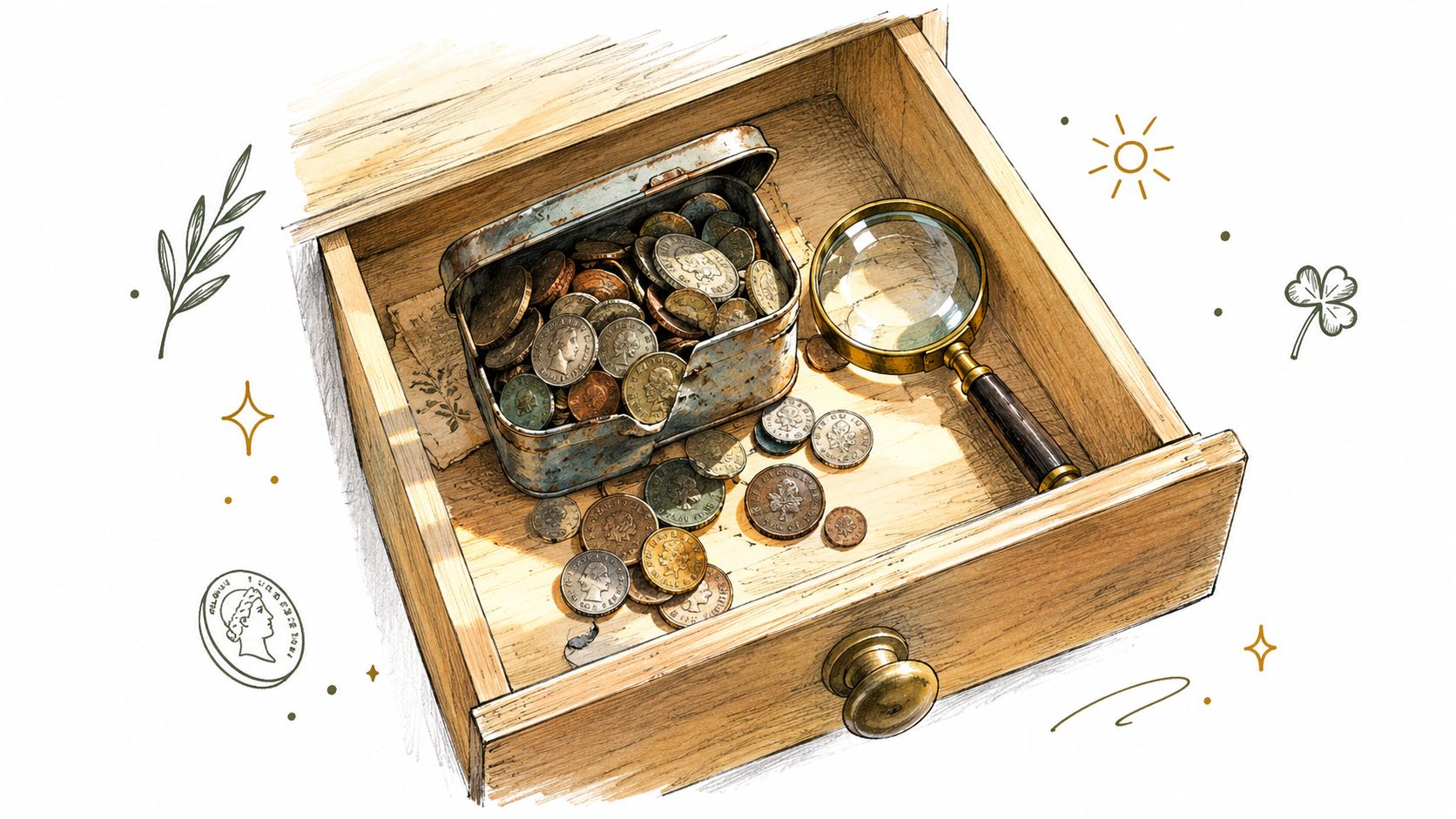
You find an old coin in a drawer, inherited collection or jar of loose change. It looks different enough to trigger hope, so you search the date online and see an ambitious asking price. Before you decide that you've found a treasure, ask a better question than "what is this worth?" Ask is my coin rare in the market that buys it?
A coin's age, unusual appearance or low official mintage can point towards scarcity, but none of those factors guarantees a strong sale price. Rarity is a combination of production numbers, surviving availability, condition, authenticity, design demand and provenance. A disciplined assessment starts with evidence, not the highest listing you can find.
Identifying Potential Rarity in Your Coin Collection
We've all opened a tin of inherited coins expecting a forgotten prize. Most pieces turn out to be ordinary, but the sorting process still matters because a familiar-looking coin can hide a scarce date, variety or error. Age alone doesn't settle the question. An old coin may have survived in large numbers, while a modern circulation issue can be scarce because relatively few examples were released.
Start by treating the coin as an identification problem. Record the country, denomination, monarch or portrait, date, design, edge and mint mark before thinking about price. A photograph from only one side often leads to the wrong conclusion, especially when a small inscription or edge detail separates a standard issue from a specialist variety.
Rarity has more than one meaning
Collectors use “rare” loosely, but several different conditions can sit behind the word:
- Low-mintage rarity: relatively few coins were produced for circulation.
- Survival rarity: many of the original coins may have been lost, melted, damaged or removed from circulation.
- Condition rarity: examples exist, but very few remain in excellent preservation.
- Variety rarity: a small design or lettering difference distinguishes a scarce version.
- Market rarity: buyers actively seek the coin, while available examples are limited.
These categories overlap, but they don't always produce the same result. A low-mintage coin that many people saved can be easier to obtain than a higher-mintage issue in exceptional condition. A technically scarce design may also attract limited interest if few collectors pursue that series.
Practical rule: Don't use age, appearance or an online asking price as your first proof of rarity. Identify the exact coin first.
The useful question is therefore not whether your coin is old or unusual. It's whether the exact combination of date, denomination, variety, grade and authenticity makes your example difficult for collectors to replace. That distinction prevents the most common mistake in coin valuation, confusing a visually interesting object with a scarce and desirable one.
Checking Mintage Figures and Denomination
Mintage means the number of coins produced for circulation. It's one of the strongest starting points for a UK rarity check, but it's only a starting point. A low figure tells you that the original supply was limited. It doesn't tell you how many examples survive, how many collectors want them or what condition your coin is in.
First, identify the denomination and date. Then record the monarch or portrait, reverse design, edge lettering or milling, and any mint mark. Compare those details with the Royal Mint's official 50p mintage figures, rather than relying on a seller's description.
Use official figures as a filter
The Royal Mint identifies the 2009 Kew Gardens 50p as a major modern UK scarcity benchmark, with only 210,000 issued for circulation. That unusually small release helps explain its popularity among collectors, but it still doesn't establish a guaranteed selling price.
The 1992–1993 50p, commemorating the UK presidency of the European Council and completion of the Single Market, had an even lower circulation mintage of 109,000. The Royal Mint describes this as the lowest number of 50p coins issued into circulation. Its historical subject, design and collector demand still matter alongside that figure.
A comparison with other denominations shows why you must never judge a date without its denomination. The first 5p coins, introduced in 1968, had nearly 99 million pieces enter circulation, while the rarest 5p issue followed in 1977 with just over 4 million released, according to Royal Mint Museum information on rare circulating coins. The year changes the assessment even though both coins may look like ordinary 5p pieces.
| Check | Why it matters |
|---|---|
| Denomination | Different denominations have very different production histories |
| Date | A single year can have a markedly different mintage |
| Design | Commemorative and standard reverses may have separate records |
| Minting status | Circulation, proof and unissued pieces aren't directly comparable |
| Physical coin | The recorded figure must match the coin in your hand |
A scarce official figure can still mislead. Collectors may have preserved many examples, making the coin relatively obtainable. Conversely, a higher-mintage coin may be hard to locate in excellent condition. Use mintage to decide whether further research is worthwhile, then compare the exact variety, preservation and authentication before discussing value. For broader examples of dates that deserve closer examination, Cavalier Coins' guide to key date coins provides a useful research starting point.
Assessing Condition and Professional Grading
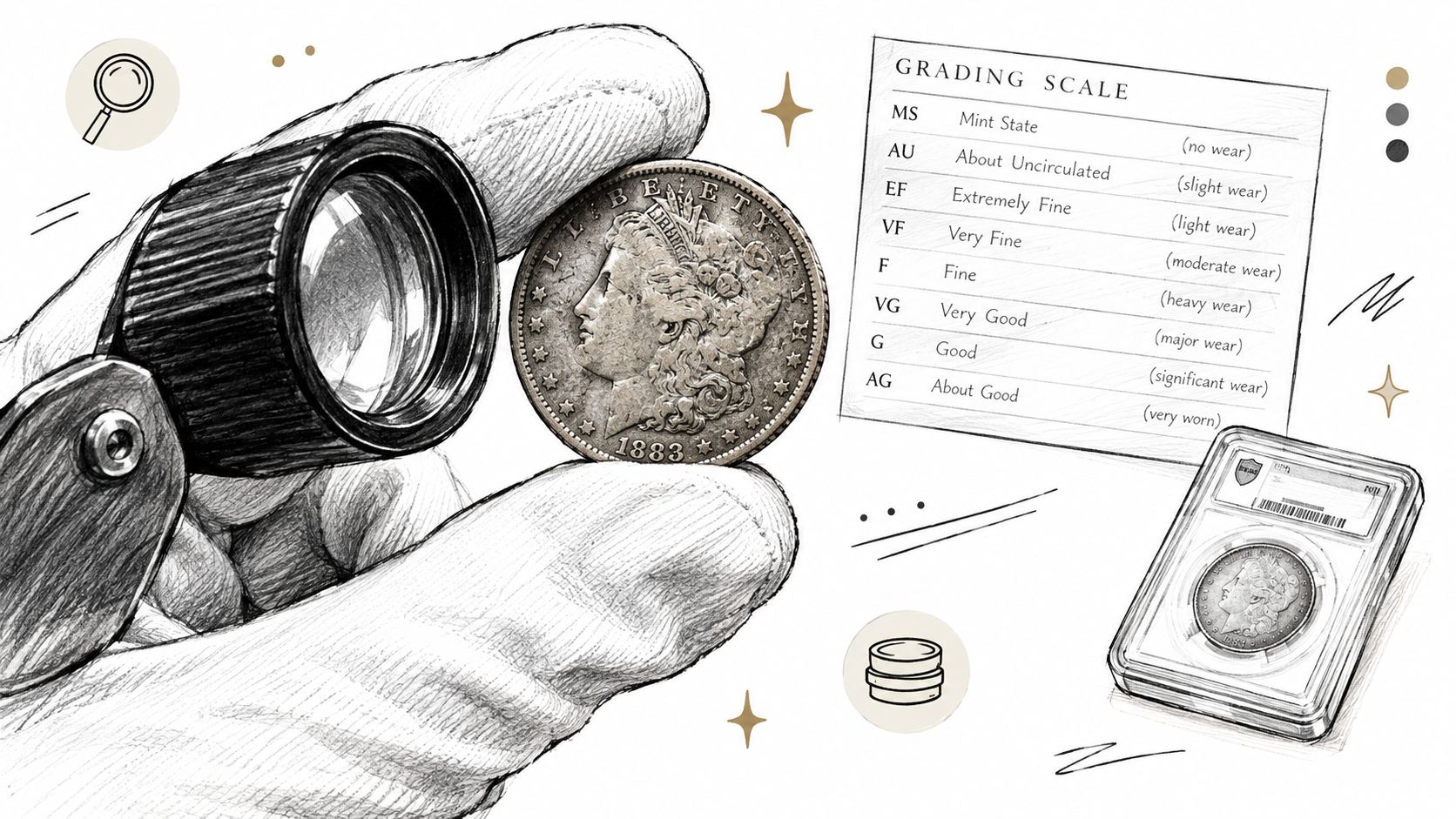
Two coins with the same date and mintage can have very different prospects because condition changes scarcity. A coin that circulated heavily may be common in worn grades, while a sharp, original example can be difficult to find. In practice, buyers pay close attention to the surfaces, high points, lustre, marks and overall eye appeal.
Handle the coin by its edges over a clean, soft surface. Use a bright, indirect light and a magnifier, but don't rub the surface to make it shine. Look first at the highest parts of the design. Flattened detail, smooth patches and dull fields usually indicate wear. A coin with crisp lettering, original lustre and minimal contact marks may deserve closer attention, although only a qualified assessment can confirm a formal grade.
Separate wear from damage
A scratch isn't the same as ordinary circulation wear. Cleaning can leave hairline marks across the fields, while polishing can remove the natural surface that collectors expect. Dents, corrosion, rim damage and harsh chemical treatment can also reduce appeal, even when the date is scarce.
Use this preliminary inspection:
- Check the high points. Look for loss of detail on portraits, lettering and raised design elements.
- Study the fields. Search for scratches, spots, residue and unnatural brightness.
- Inspect the rim and edge. Damage there can affect authenticity and grade.
- Compare both sides. Uneven wear or inconsistent colour may deserve professional attention.
- Photograph before handling further. Clear images preserve a record for a dealer or grading service.
Professional grading makes the most sense when the coin appears scarce, valuable or difficult to authenticate. The cost and time involved may not suit an ordinary circulated piece, particularly when condition is clearly poor. It can be worthwhile when a consistent, independent description would help buyers understand the coin or distinguish a genuine example from an altered one.
A grading service doesn't create rarity. It documents condition and, depending on the service, may provide authentication and encapsulation. Read Cavalier Coins' practical guide on how to get coins graded before sending anything away.
Protect the evidence: Never clean or polish a potentially scarce coin. Surface alteration can permanently reduce collector appeal.
Your own inspection should produce a cautious description, not an inflated grade. Terms such as “uncirculated” and “mint state” have specific implications, so avoid using them just because a coin looks bright. A specialist can tell you whether the apparent quality comes from original preservation or later cleaning.
Spotting Varieties and Minting Errors
A coin can look familiar and still be a scarce variety. The key is to compare exact wording, date, portrait, lettering, edge detail and design placement against a confirmed standard example. Don't assume that every unusual mark is an error. Many apparent errors are damage, die wear, machine doubling or ordinary variation with no meaningful collector premium.
The UK 2p offers a clear lesson. More than 1.4 billion 1971 2p coins carried the inscription “NEW PENCE”, so that inscription on a 1971 example is generally common rather than rare, as explained by the Royal Mint Museum's guidance on coin enquiries. The genuinely scarce case is the 1983 2p that incorrectly carried “NEW PENCE” instead of “TWO PENCE.”
The difference is only a few words, but the context changes everything. A familiar inscription on the expected date can be ordinary. The same inscription appearing on a later issue where the wording should have changed can indicate a significant variety. That's why internet searches based on one photograph often produce disappointing results. The listing may show a scarce version, while your coin is a standard issue that merely resembles it.
Examine the details systematically
Work from broad identification to fine comparison:
- Date and portrait: Confirm the date and monarch before comparing the reverse.
- Inscription: Read every word and compare its position, spacing and style.
- Design elements: Check borders, lettering sizes, ornament, date alignment and symbols.
- Edge features: Inspect lettering, reeding, milling and any unusual seam or strike.
- Strike quality: Look for genuine off-centre striking or missing design detail, not post-mint damage.
- Surface marks: Treat scratches, gouges and filed areas as damage until evidence proves otherwise.
Use magnification and photograph the same area on both sides. A specialist reference or established dealer can help distinguish a recognised variety from a coin that has been altered. Authenticity matters especially when a tiny difference carries the entire premium. Counterfeiters and casual sellers can imitate lettering, modify dates or misdescribe ordinary coins.
A visually unusual coin can still be common. A tiny textual difference can matter greatly.
Before discussing price, confirm four things: the exact variety, whether specialists recognise it, whether the coin is genuine and whether its condition supports collector demand. Even a legitimate scarce variety doesn't guarantee a specific sale price. Grade, provenance and the number of interested buyers still determine what someone will pay.
Evaluating Market Demand and Provenance
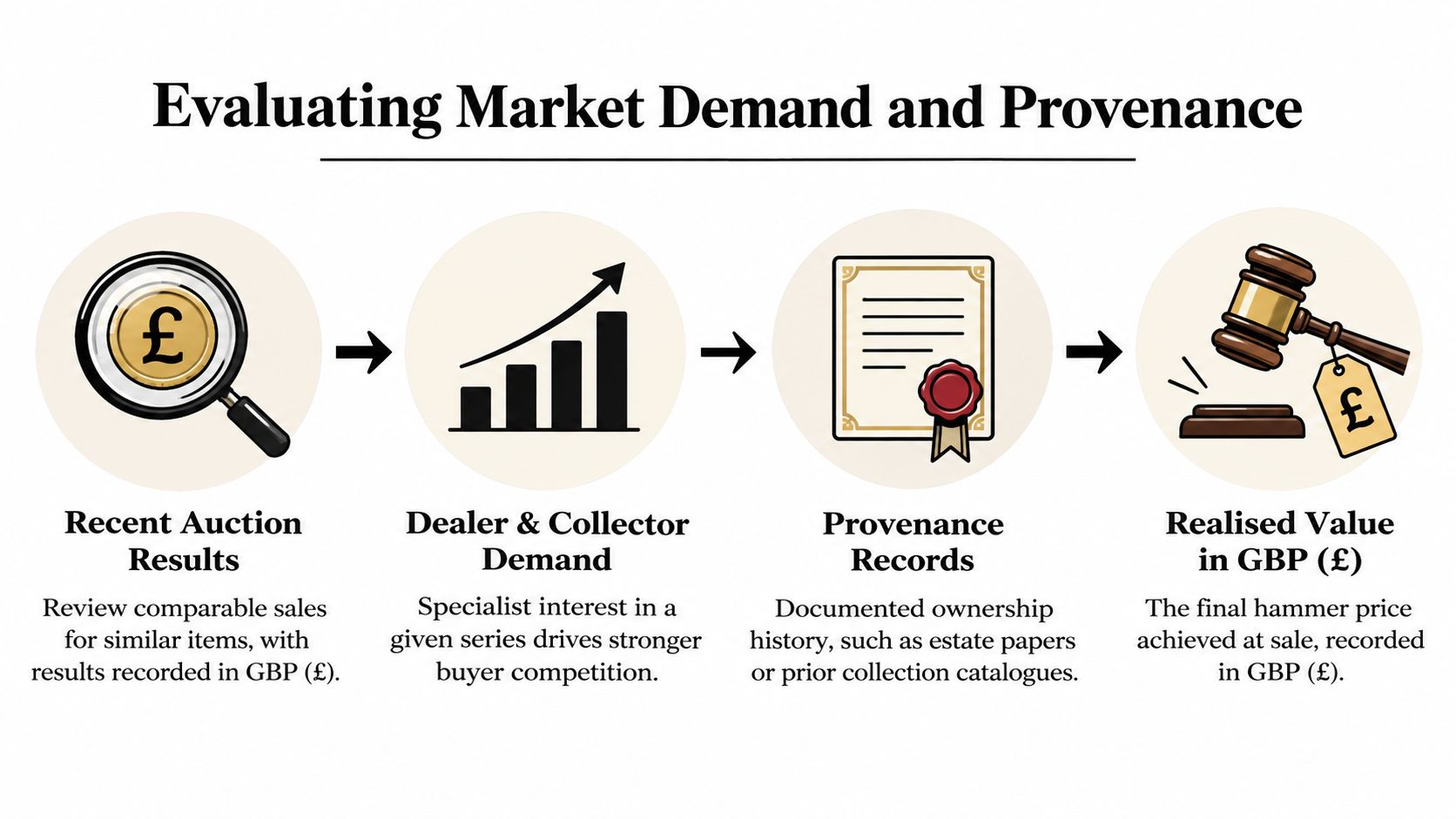
A scarce coin isn't automatically a valuable coin. Demand converts scarcity into competition. Collectors may pursue a historically important series, a memorable design or a recognised variety more actively than an obscure issue with similar production numbers. That difference explains why two low-mintage coins can attract very different levels of interest.
Look for comparable completed sales rather than optimistic asking prices. An unsold listing proves only that a seller wanted a particular amount. A completed auction or dealer transaction provides stronger evidence, although you still need to compare grade, authenticity, packaging and exact variety.
Four questions shape the market result
Who wants it? A popular series gives a scarce coin a larger potential audience. A niche issue may need a specialist buyer, which can make selling slower.
What condition is available? If most examples are worn, a well-preserved specimen can stand apart. If many high-grade examples were saved, the same official mintage may have less practical scarcity.
Can the history be supported? Provenance can include estate papers, earlier collection catalogues, invoices or a credible chain of ownership. It doesn't replace authentication, but documented history can support confidence, particularly for important or expensive coins.
What sold? Compare realised prices for the same variety and similar condition. Don't compare a certified coin with an unverified listing or a proof with a circulation strike.
A coin's provenance should be recorded carefully rather than embellished. State what you know, preserve supporting documents and separate family stories from verifiable records. A long ownership history can be interesting without proving rarity.
Authentication remains essential because scarce varieties create an incentive for alteration and counterfeit. Weigh and measure the coin against published specifications, inspect both faces and photograph edge details before seeking advice. A professional assessment should address identity, authenticity, condition and marketability, not just attach an exciting price.
The practical conclusion is straightforward: mintage establishes potential scarcity, condition establishes quality, and demand establishes liquidity. Provenance strengthens the case when it is credible, while realised sales reveal whether buyers agree with the description.
Practical Steps for Collectors to Verify Rarity
When someone asks “is my coin rare?”, the quickest responsible answer comes from a fixed sequence. Record the evidence before searching for a valuation.
- Identify the coin. Note the country, denomination, monarch or portrait, date, reverse design and mint mark.
- Read every inscription. Compare the wording and lettering with a confirmed standard example.
- Check official records. Use the relevant Royal Mint information or a respected specialist reference for the exact issue.
- Inspect the physical details. Examine both sides, the rim and the edge under magnification.
- Assess preservation. Record wear, scratches, cleaning, corrosion, rim damage and remaining lustre.
- Test authenticity. Weigh and measure the coin against published specifications, especially when a scarce variety is suspected.
- Compare completed sales. Match denomination, date, variety, condition and certification, not just the headline image.
- Seek an appraisal when justified. A specialist can help when the coin appears scarce, unusual, valuable or difficult to authenticate.
Take photographs in neutral light, including close-ups of the date, inscriptions and edge. Keep the coin in a suitable holder and don't clean it. The Cavalier Coins guide to where to get coins valued can help you decide what information to prepare before approaching a professional.
A low mintage is a reason to investigate, not a promise of wealth. The strongest assessment combines exact identification, official production evidence, surviving availability, condition, authenticity and demonstrated buyer demand.
Cavalier Coins Ltd offers identification and valuation guidance for collectors, and it buys and sells coins and banknotes, including unusual and limited-availability pieces. Visit Cavalier Coins Ltd with clear photographs and the coin's recorded details if you'd like to explore its rarity or potential market.