
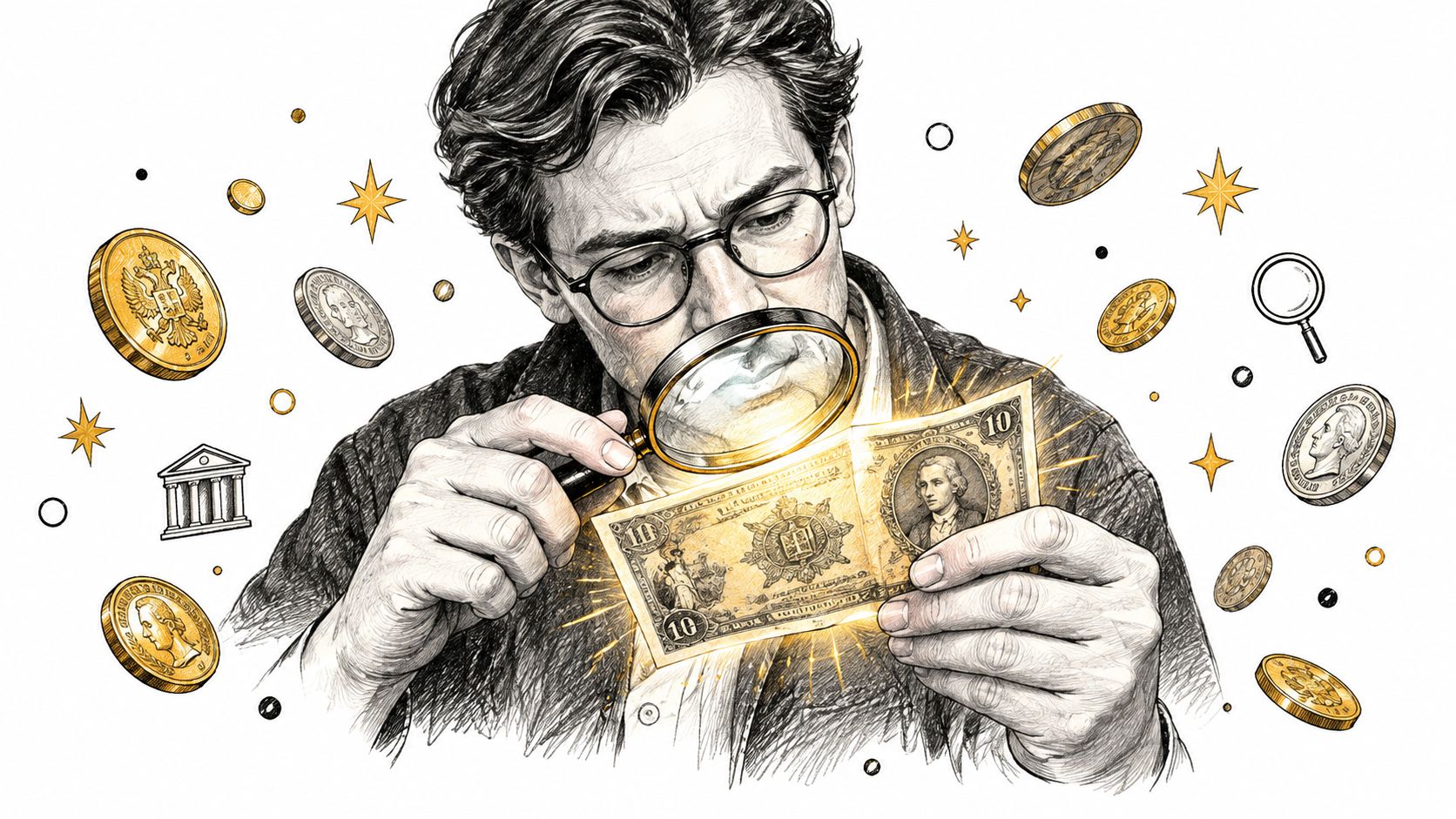
A collector once brought two apparently similar old notes to a dealer. One had age but heavy folds and worn edges. The other came from a scarcer issue and had survived in remarkably clean condition, making the second note the more serious purchase.
What Makes Rare Banknotes Deserve Attention
The rare banknotes for sale market rewards close observation, not guesswork. A note's age may attract attention, but age alone doesn't establish rarity. Buyers need to consider the note's issue, original production, surviving examples, condition, and the historical circumstances that shaped its circulation.
UK banknotes provide a useful example. The history of Bank of England note issues reaches back to 1694, when the Bank began issuing notes. It first used handwritten notes, moved to pre-printed notes in 1725, and adopted fully printed notes in 1855. These changes created distinct collecting categories, including early issues, white notes, and transitional series.
The structure of issuance matters because a note's story often begins before it reaches a collector's album. A note from a limited or unusual issue may have had a small audience, a restricted circulation route, or a specific institutional purpose. A common note from the same broad period may survive in much larger numbers and attract less interest.
Read the listing before the headline
A reliable listing should identify more than the denomination. Look for:
- Issuer and location: A branch, town, or issuing authority can separate one variety from another.
- Issue details: Check the date, signature combination, serial format, and whether the note is a specimen or a circulated example.
- Condition language: Terms such as Very Fine, About Uncirculated, and Choice Uncirculated describe preservation, not age.
- Photographic evidence: Images should show the front, back, margins, corners, serial numbers, and any repairs.
The auction record provides a practical warning. London Coins has described Treasury and early English issues as “exceptionally rare” in high grade, including one note with a printing of 11,000 notes. The same auction evidence includes a 100-year-old Manchester branch issue that sold as Very Fine for £600. Those examples show why a buyer shouldn't use age as a shortcut for value. Auction records for Treasury and early English notes show how scarcity and condition operate together.
Dealer's rule: Treat every description as a set of claims to verify. The photograph, grade, provenance, and issue details matter more than the word “rare” in a title.
Banknote Identification and Valuation Basics
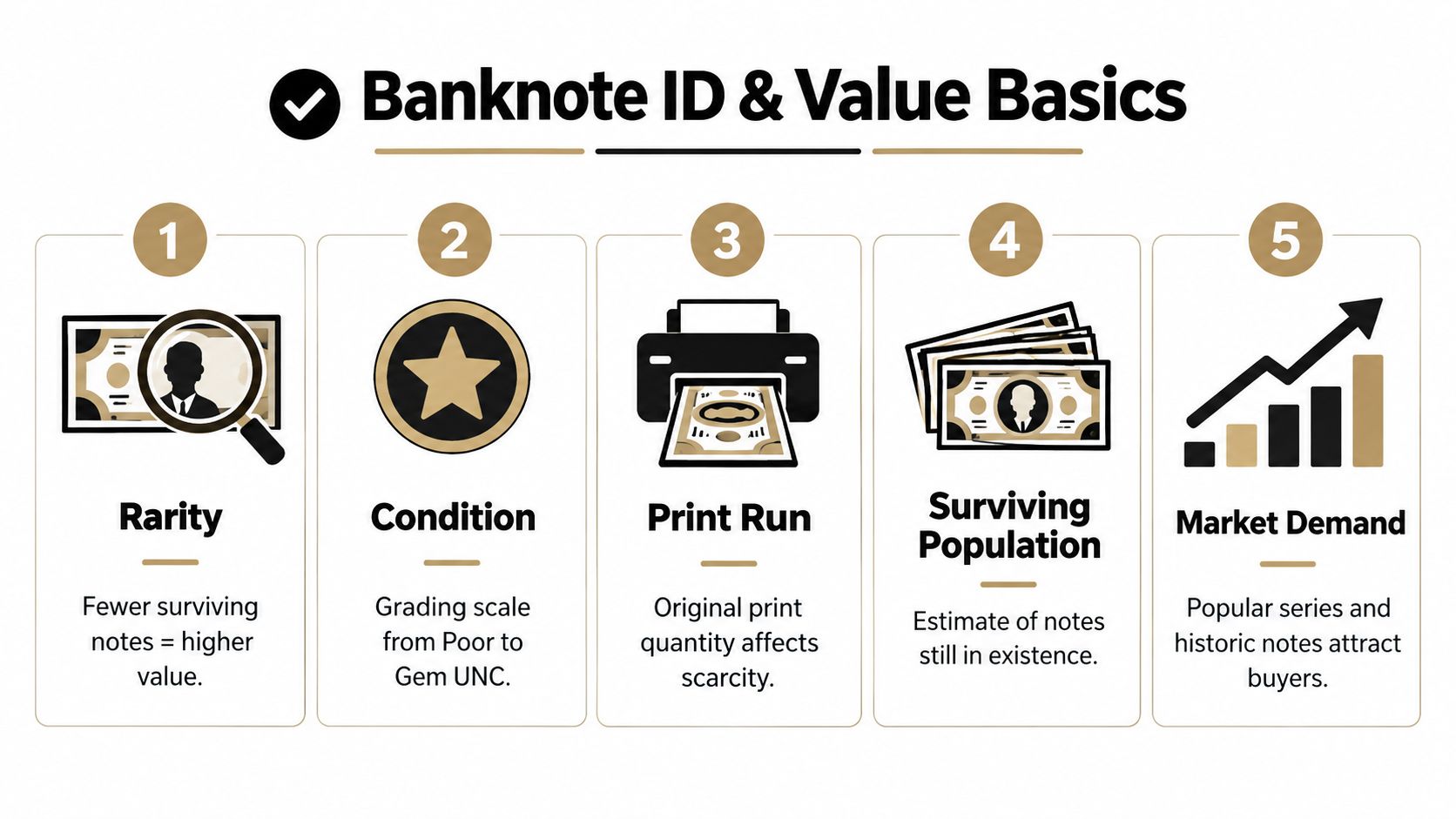
Start with identification, then assess value. A collector who skips the first step can compare the wrong note with the wrong market and form an unrealistic expectation.
Five questions to ask
Who issued it? Identify the bank, country, branch, or authority. In the UK, the distinction between Bank of England issues and branch or Treasury material can be central to collectability.
What exactly is the issue? Record the denomination, date, signature, serial format, design, and any visible variety. Small details can define a specific type, especially where several issues look broadly alike.
How scarce is it? Original print quantity provides a starting point, but it isn't the same as the number surviving today. Notes can be lost, destroyed, damaged, or removed from collections, so the surviving population may be much smaller than the original issue.
What condition is it in? A clean, original note with sharp corners and strong paper quality can command far more attention than a heavily handled example of the same issue. Folds, pinholes, stains, trimming, pressing, and repairs all need to be recorded.
Who wants it? Demand varies by series, historical connection, design, denomination, and completeness of a collection. A technically scarce note may remain difficult to sell if few collectors pursue that category.
Why print run and condition must be read together
A low print run makes a note worth investigating, not automatically valuable. The auction evidence cited above demonstrates the point. A limited issue with few surviving high-grade examples can become highly competitive, while a worn example may appeal mainly to buyers who need a representative piece.
Conversely, an older note with substantial wear may be historically fascinating but commercially modest. Collectors often prefer an attractive, problem-free example over a much older note with damage. For a broader explanation of how age, rarity, condition, and demand interact, see this guide to the value of old paper money.
A practical valuation record
Create a simple inventory before contacting a dealer or auction house. Note the issuer, denomination, date, serial information, visible defects, and any ownership history. Photograph both sides in neutral light, without flattening or cleaning the note.
The modern UK transition also creates a clear collecting boundary. The Bank of England's polymer era began with the £5 Sir Winston Churchill note issued on 13 September 2016, and the new series was completed with the £50 note on 23 June 2021, according to the Bank of England note issue history. Polymer notes aren't automatically rare, but early issues, special serials, varieties, and complete sets can attract a different type of demand from pre-polymer paper currency.
Where to Find Rare Banknotes for Sale
The buying channel changes the balance between access, expertise, convenience, and risk. There isn't one route that suits every collector. A focused beginner may value guidance and transparent pricing, while an experienced notaphilist may accept more uncertainty to reach an exceptional auction lot.
Specialist dealers
A specialist dealer offers a curated stock, direct discussion, and a clear seller attached to the description. That can be valuable when you need help distinguishing an ordinary issue from a scarce variety or when condition is difficult to judge from photographs.
The trade-off is price. A fixed-price listing normally includes the dealer's sourcing, authentication, overheads, and margin. You may pay more than the winning hammer price at an auction, but you're also avoiding bidding competition, uncertain final cost, and some of the work involved in assessing a raw note.
Auction houses
Auctions provide access to material that may never appear in ordinary retail stock. They're particularly useful for unusual denominations, branch issues, specimens, and notes with established provenance. Published auction descriptions can also help you compare issue details and grading language.
The risk is behavioural. A live room or online countdown can encourage emotional bidding, especially when two collectors want the same lot. Add the buyer's premium, postage, insurance, and any applicable taxes before deciding your ceiling. A low opening bid doesn't mean the final cost will remain low.
Online marketplaces
Marketplaces offer volume and international reach, but listing quality varies sharply. Some sellers provide detailed scans and accurate descriptions. Others use generic photographs, vague grades, or unsupported rarity claims.
Use online marketplaces for research as well as purchasing. Compare serial formats, margins, paper quality, and completed sales where available. Ask for additional images before paying, and avoid any seller who refuses to show the note clearly or gives an answer that conflicts with the listing.
Match the channel to the purchase
| Buying route | Main advantage | Main risk |
|---|---|---|
| Specialist dealer | Expertise and clear fixed pricing | Retail margin |
| Auction house | Access to exceptional material | Overbidding and added charges |
| Online marketplace | Broad choice and convenience | Authentication and description risk |
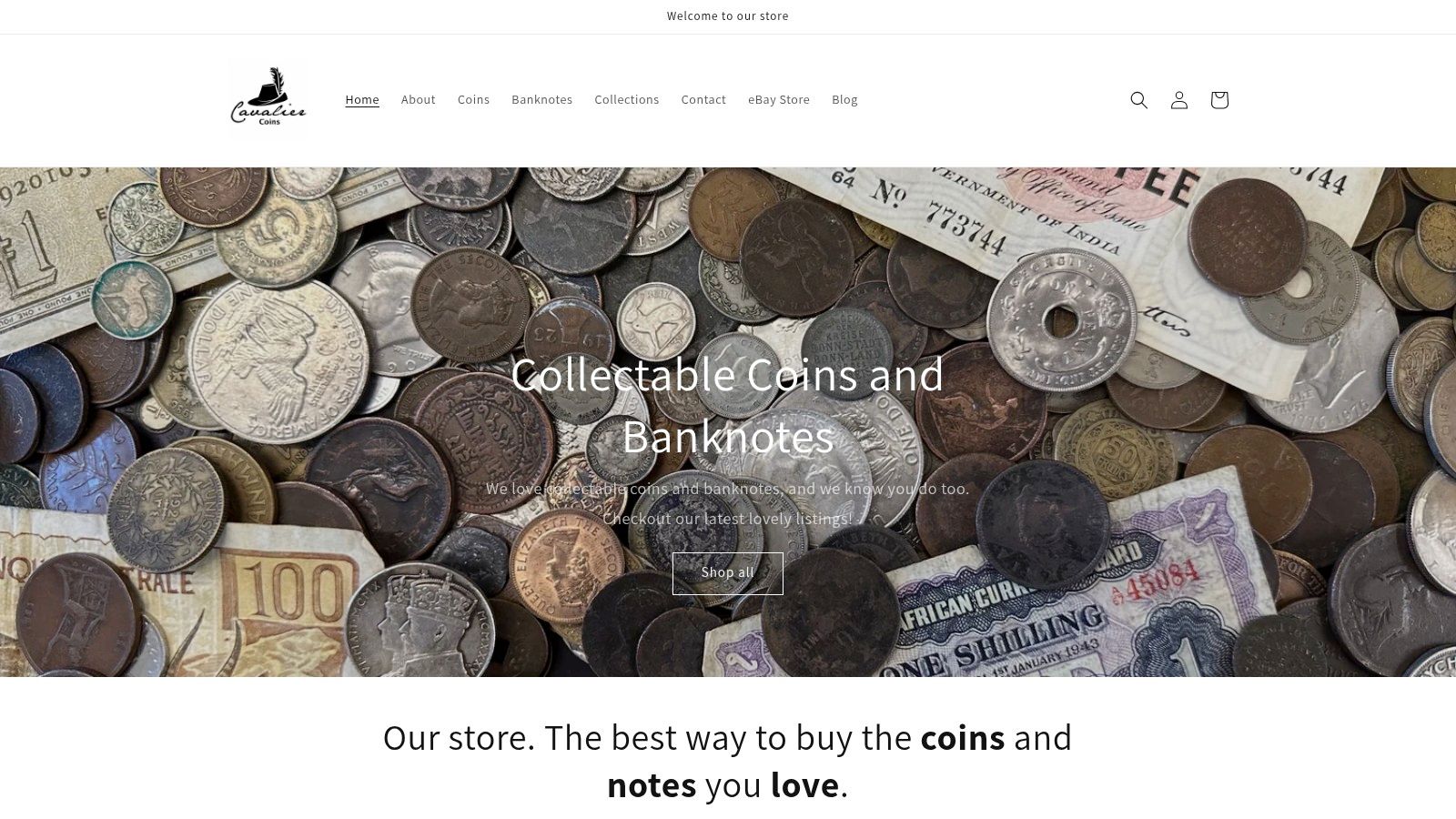
Cavalier Coins is an online retailer for collectors of coins and banknotes from around the world. It offers rare and unusual world banknotes and coins, themed sets, fixed-price listings, weekly eBay auctions, and special bulk pricing. The company also purchases bulk coin collections from charities seeking to raise funds through donated coins and notes. Its world banknotes for sale in the UK material is relevant to buyers comparing international stock and collecting themes.
How Certification and Provenance Influence Price
Certification matters most when the note is valuable enough for disagreement over authenticity or grade to affect the sale. A third-party holder doesn't make an ordinary note rare, but it can give buyers a consistent basis for judging a scarce one.
The high-end UK market shows how several attributes work together. Auction coverage of the Lou Manzi collection records a 1902–18 Great Britain £100 Portsmouth specimen graded PMG 63 Choice Uncirculated EPQ and a 1934–43 Bank of England £1,000 London issue graded PMG 50 About Uncirculated EPQ. The PMG highlights from the Lou Manzi collection demonstrate that price analysis must include more than denomination and age.
What certification answers
A recognised grading service can address three buyer concerns:
- Authenticity: The note has passed an examination intended to identify counterfeits and alterations.
- Condition: The grade communicates preservation through a standardised framework.
- Integrity: A sealed holder makes later handling, substitution, or casual alteration more difficult.
Certification is especially useful for a rare note, a high denomination, a specimen, or an issue with a meaningful premium between grades. It can also make resale easier because buyers don't need to rely entirely on the seller's description.
Provenance adds context
Provenance records where a note came from and how it moved through ownership. An auction catalogue, prior invoice, collection reference, or institutional history can support confidence in an unusual piece. Provenance doesn't replace authentication, and an impressive story without documentation shouldn't command a premium by itself.
Branch and location details can be decisive. Portsmouth and London aren't interchangeable references in the examples above. Serial format, specimen status, denomination, and branch information help collectors identify the exact object being offered, which is why a listing that omits them is incomplete.
Raw versus certified
Raw notes can represent good buying opportunities when the seller is trusted, the condition is clear, and the price reflects the uncertainty. Certification can add cost, and not every note benefits enough from that cost to justify submission.
For practical grading habits, compare your own observations with this guide to how to grade banknotes. If you're buying a note where a small grade difference could materially change the price, certification is usually the safer route.
Authentication, Negotiation and Smart Bidding
A disciplined purchase combines authentication with a financial limit. Treat those as connected decisions, not separate chores. You shouldn't negotiate confidently until you know what you're negotiating over.
Start with evidence
Ask for clear images of both sides, corners, margins, serial numbers, signatures, and any repairs. Compare the note with a reliable reference or auction description. Inconsistent colour, unnaturally sharp printing, altered serials, trimmed margins, or unexplained surface gloss deserve closer examination.
A seller's response is evidence too. A serious dealer should be able to explain the issue, grade, purchase history, and reason for the asking price. If the answers stay vague, walk away rather than trying to rescue the transaction with a lower offer.
Practical rule: A bargain with unresolved authenticity questions isn't a bargain. It's an unpaid research project with financial risk.
Set the ceiling before the excitement
For a fixed-price purchase, decide the maximum delivered price after adding postage, insurance, and any taxes. For an auction, write down the maximum hammer bid before bidding begins. Don't raise it because another bidder has entered the room.
A useful bidding note includes the lot reference, your target grade, known defects, comparable descriptions, and your walk-away figure. If the auction catalogue leaves out a key detail, treat that omission as a reason to reduce your ceiling, not as permission to assume the best.
Negotiate on specifics
Dealers are more likely to respond constructively to a precise question than to a broad demand for a discount. Point to a crease, repair, missing provenance, or unclear grade, then ask whether the price reflects it. If the note is correctly described and attractively priced, the seller may have little reason to move.
Never clean, press, tape, or iron a note to improve its appearance before negotiation. Alterations can reduce collector confidence and may erase the evidence needed for a fair assessment.
Preserving Banknotes After Purchase
A purchase can lose appeal quickly if storage introduces folds, fading, staining, or chemical damage. Banknotes need protection from handling and unstable surroundings, but collectors don't need laboratory equipment to do the basics well.
Use safe holders
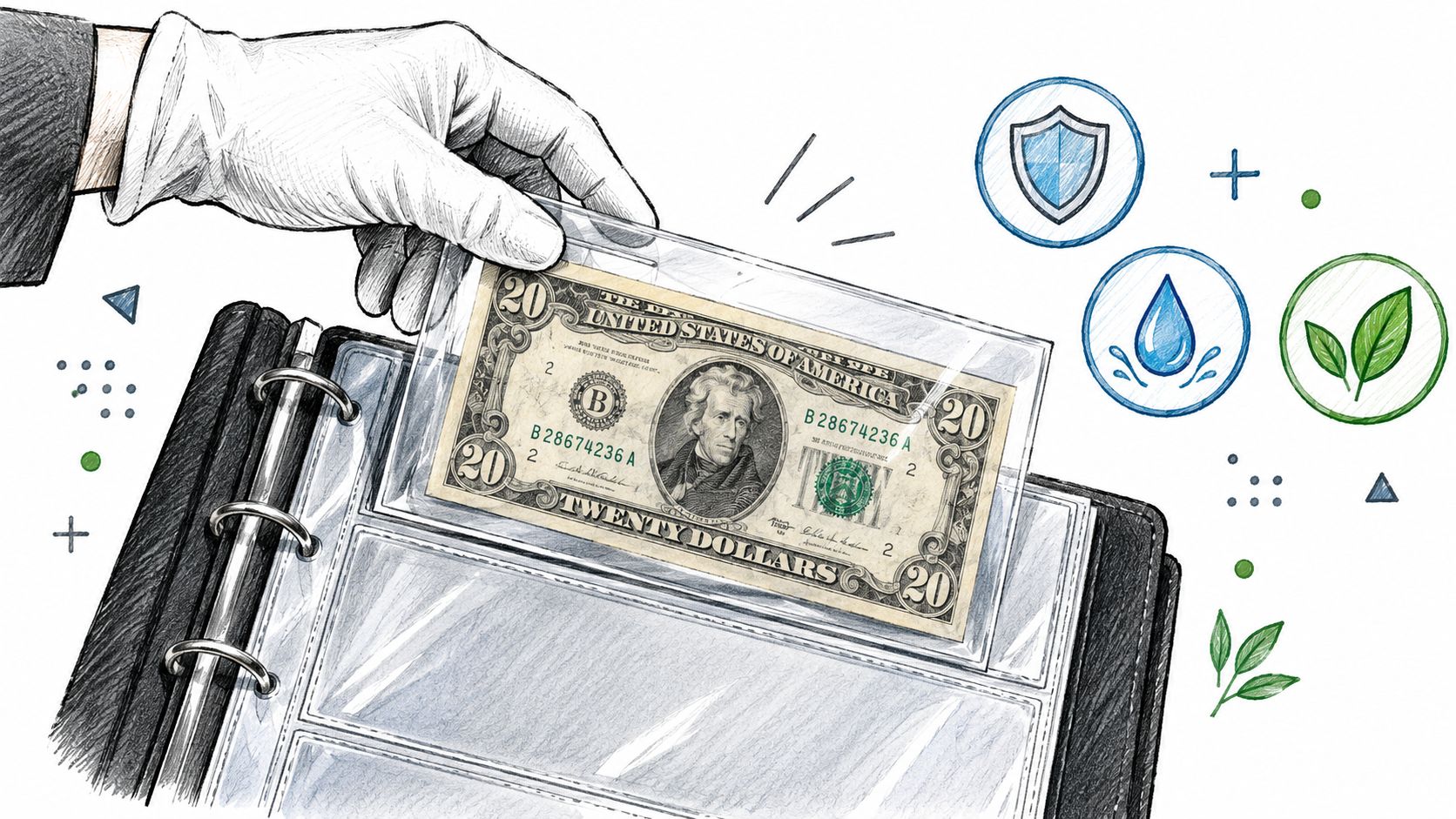
Choose acid-free, PVC-free archival sleeves made from a stable material such as polyester. The note should lie flat without being forced into an undersized pocket. Avoid ordinary office plastic, adhesive pages, laminating, and pressure-sensitive tape.
Store each note so you can remove it without dragging a corner across the holder. Keep labels and notes separate where inks or adhesives could touch the paper.
Control handling and environment
Hold a note by its edges with clean, dry hands. Cotton gloves can reduce fingerprints, but they can also reduce grip, so careful handling matters more than appearances. Never write on the holder while the note is inside.
Keep the collection away from direct sunlight, damp rooms, heat sources, and rapid changes in temperature or humidity. A stable drawer, cabinet, or album in a lived-in room is generally more sensible than an attic or basement.
Preserve the record
Keep invoices, certificates, auction descriptions, and correspondence with the note's inventory record. Documentation can support future insurance, valuation, or resale decisions, particularly when the item has a specialised issue history.
Legal Considerations and Resale Pathways
Before selling, distinguish a collector's item from currency being offered for exchange. A note may be obsolete, withdrawn, or outside ordinary circulation while still holding a collectible market. Don't promise that a buyer can redeem it unless the issuer confirms that position.
Tax treatment depends on your circumstances, the nature of the transaction, and your local rules. Keep purchase records, sale invoices, postage costs, and valuation documents, then ask a qualified tax adviser if the collection is substantial or sales are regular.
Selling privately, using a dealer, and consigning to auction each produce different obligations and costs. Read the seller agreement carefully, especially commission, insurance, reserve, payment timing, and responsibility for returns.
Charities can also use donated coins and notes as fundraising inventory. Cavalier Coins purchases bulk coin collections from charities, helping organisations raise funds through donated coins and notes. A charity should record what it receives, confirm its internal acceptance policy, and obtain suitable documentation for the transfer rather than treating an informal handover as a complete audit trail.
Next Steps for Collectors and Sellers
A new collector should choose a narrow starting point. A single UK series, a defined historical period, or a theme such as branch issues creates a manageable research path and makes comparisons more meaningful. Buy fewer notes, but record each one properly.
An experienced notaphilist can improve the collection by upgrading condition, closing gaps in issue varieties, and separating raw material from pieces that justify certification. Recheck labels and provenance before selling or trading. A clean inventory makes it easier to identify duplicates and recognise where the collection lacks depth.
Sellers should sort before asking for offers. Separate modern circulated notes, older paper issues, specimens, branch material, and anything with an unusual serial format. Photograph the front and back, list visible faults, and preserve every receipt or catalogue reference.
Charities and bulk sellers should create lots that a buyer can assess efficiently. Mixed material can be convenient, but clear grouping by country, period, or type usually produces a more useful valuation conversation. Don't discard worn or obsolete notes without checking them first, since their collector value may have little connection with face value.
The immediate plan is simple:
- Inventory the collection: Record issuer, denomination, date, serial details, condition, and provenance.
- Research comparable issues: Use specialist references and auction descriptions, not unsupported online claims.
- Choose the right route: Compare a dealer's certainty with an auction's reach and a marketplace's additional risk.
- Protect the notes: Move them into archival-safe holders before further handling.
- Set a decision point: Decide whether you're building, upgrading, selling, or donating.
Cavalier Coins Ltd offers rare and unusual banknotes, coins, themed sets, fixed-price listings, weekly eBay auctions, and bulk purchasing options for collections and charitable donations. Visit Cavalier Coins Ltd to review current stock or discuss a collection, resale lot, or donation.