

Proper storage for coins isn't just a matter of being organised. Frankly, it's the single most critical thing you can do to preserve their value, their history, and their physical integrity. Without the right protection, a beautiful coin can degrade surprisingly quickly, stripping it of both its financial worth and the story it tells.
Why You Can't Afford to Get Coin Storage Wrong
Think of your coin collection less like a hobby and more like a private museum of miniature historical artefacts. Every single piece, whether it’s a 2,000-year-old Roman denarius or a shiny new commemorative fifty-pence piece, is vulnerable to its environment. The wrong storage can kick off chemical reactions that cause irreversible harm, turning a treasured piece into little more than damaged metal.
The risks aren’t just theoretical; they are a constant, real-world threat to any unprotected collection. Just tossing coins into a standard plastic tub or an old wooden drawer is asking for trouble. It exposes them to a cocktail of chemicals and physical dangers. This is why getting to grips with archival-quality storage is a fundamental skill for every collector, no matter how big or small their collection.
The Hidden Dangers of Poor Storage
Cutting corners on storage can lead to a whole host of problems, each one capable of knocking a coin’s grade and appeal right down. These threats are often silent assassins, doing their damage slowly over months or even years before you notice.
Here are the main culprits to watch out for:
- PVC Damage: That soft, flexible plastic in many cheap flips contains Polyvinyl Chloride (PVC). Over time, it leaches out acidic gunk, leaving a sticky, green residue that literally eats into the coin's surface.
- Environmental Corrosion: High humidity is the enemy. It speeds up oxidation, causing ugly spotting, toning, or even rust on certain metals. Big swings in temperature only make things worse.
- Physical Scratches and Abrasions: Letting coins jumble together or slide around on hard surfaces is a recipe for disaster. It leads to scratches, dings on the rim, and general wear that permanently mars the coin's design.
The golden rule I always tell new collectors is simple: the container should preserve the coin, not become part of it. Choosing inert, archival-safe materials is the only way to guarantee your collection stays safe for the long haul.
At the end of the day, investing in proper storage for coins is just as important as buying the coins in the first place. It’s what ensures your collection remains a source of pride—and a stable asset—for you and whoever comes after you.
Choosing Your First Line of Defence: Coin Holders
Your first step in proper storage for coins is picking the right individual holder. Think of these as personal bodyguards for each coin in your collection, providing that essential, frontline protection against knocks, scrapes, and environmental nasties. The market has plenty of excellent options, and each one has its own strengths depending on the coin’s value and your budget.
For many new collectors, the journey starts with the humble 2x2 cardboard flip. They're cheap, cheerful, and you can jot down important details on the cardboard surround. But a word of warning: you absolutely must choose flips with a Mylar window. Mylar is a stable, inert plastic. The cheaper, softer-feeling flips often contain PVC, a chemical villain that will, without a doubt, cause irreversible damage to your coins over time.
If you’ve got more valuable coins, or simply want to appreciate them in all their glory, rigid plastic capsules are a fantastic step up. You might hear them called by the brand name 'Air-Tite'. These are two-piece holders that snap together, creating a snug, secure, and almost airtight seal. They offer far superior protection from both handling and the atmosphere.
Comparing Your Holder Options
To make the right choice, it really helps to see how these options stack up against each other. Every method has its place in a well-thought-out collection. Some are brilliant for storing coins in bulk, while others are designed for giving maximum protection to a single, prized specimen.
When it comes to the material your holders are made from, the decision is actually very simple.

The takeaway here couldn't be clearer: any storage material that contains PVC is a one-way ticket to damaging your coins. Stick to archival-safe materials, and you'll ensure their long-term preservation.
From Bulk Storage to Professional Grading
But what if you have a big pile of identical, lower-value coins, like a bag of old pennies you’ve saved up? This is where coin tubes shine. These are simple plastic cylinders, made to hold a whole roll of a specific coin. They provide an efficient, cheap, and easily stackable storage solution that stops the coins from rattling against each other.
At the very top end of the storage world are the professionally graded slabs. When you send a coin to a third-party grading service like PCGS or NGC, they don't just authenticate and grade it. They also sonically seal it inside a tamper-evident, inert plastic holder. This slab offers the ultimate in physical protection and, just as importantly, certifies the coin's grade and authenticity—something that's non-negotiable for truly high-value pieces.
Choosing the right holder is all about matching the level of protection to the coin's value and your own collecting goals. A common penny doesn't need a £30 slab, but a rare sovereign should never be left to languish in a cheap PVC flip.
To help you decide what's best for your collection, here's a direct comparison of the most common options. You can also explore a great range of these products and get more tips from fellow numismatists in this detailed guide on coin collecting storage.
A Comparison of Individual Coin Storage Options
| Holder Type | Material | Pros | Cons | Best For |
|---|---|---|---|---|
| 2x2 Mylar Flip | Cardboard & Mylar | Inexpensive, easy to label, good for organisation. | Offers minimal protection from impact or air. | Low-to-mid value coins, building a catalogued collection. |
| Plastic Capsule | Hard, Inert Plastic | Excellent protection, great visibility, nearly airtight. | More expensive per coin, can be bulky. | High-grade uncirculated coins, valuable individual pieces. |
| Coin Tube | Inert Plastic | Very cheap for bulk, efficient for space, stackable. | Coins are not individually visible or protected. | Storing duplicate bullion or circulated world coins. |
| Graded Slab | Hard, Inert Plastic | Highest protection, certified grade and authenticity. | Expensive, requires professional service. | Rare, key-date, and high-value investment coins. |
Organising Your Collection With Albums and Folders
Once your individual coins are safely tucked away in their holders, the next logical step is to bring them all together. This is where coin albums and folders come in, transforming a loose assortment of pieces into a proper, browsable library. Think of them as the bookshelves for your miniature historical artefacts, giving you both structure and a fantastic way to admire your collection.
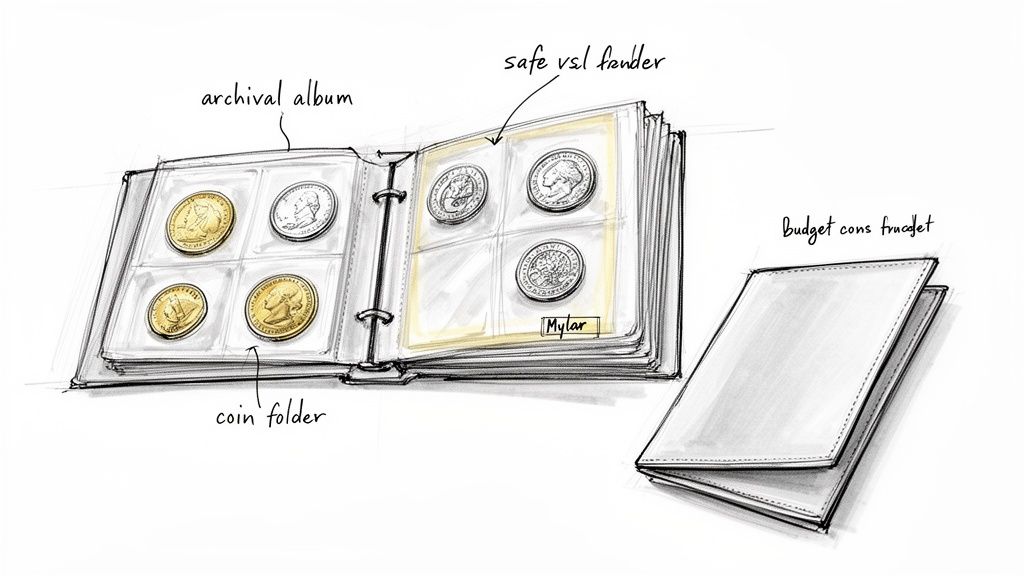
But hold on – not all albums are created equal. For many newcomers, a simple coin folder is their first port of call. These are usually single-piece cardboard displays with labelled slots for each coin in a particular series. They're affordable and great for getting started, but they press the coin directly against the cardboard, which offers very little long-term protection from the environment.
For more serious storage for coins, a high-quality album is definitely the way to go. These are usually binder-style systems with pages designed to hold individual holders, like 2x2 flips or plastic capsules. This setup provides a crucial double layer of protection, keeping the coin secure in its primary holder while organising everything neatly on a page.
Choosing Archival Quality Materials
Just as with individual holders, the materials used in your albums and pages are incredibly important. The absolute number one villain we need to avoid is PVC. Cheap, flimsy plastic pages often contain this nasty chemical, which will degrade over time and leave a damaging film on your coins. You must always seek out pages made from inert, archival-safe materials.
Here’s what you should be looking for:
- Polypropylene: A rigid, PVC-free plastic that is a popular and very safe choice for album pages.
- Mylar (Polyester): This is the same inert material used in high-quality flips, offering brilliant long-term stability and clarity.
- Acid-Free Paper/Card: This ensures that any paper elements in your storage system won't yellow or break down, preventing nasty chemical toning on your coins.
You'll find that many top-tier albums also come with a protective slipcase. This is essentially a sturdy cardboard or plastic box that the album slides neatly into, providing an extra shield against dust, light, and any accidental knocks. It’s a simple feature, but one that makes a huge difference to the long-term preservation of your collection.
Think of a basic folder as a paperback book—great for easy access but vulnerable to wear and tear. A high-quality album with a slipcase is the hardback, leather-bound edition, built to protect its valuable contents for generations.
Building a Collection That Grows With You
One of the best things about binder-style albums is their modularity. As your collection gets bigger, you can simply add new pages, shuffle your existing layout, or even move pages between different albums. This kind of flexibility means your organisational system can evolve right alongside your collecting interests, saving you from having to start from scratch every few years.
If you'd like to dive deeper into choosing the right system, you can find a wealth of information on different albums for coins and their specific benefits. By investing in a quality album system from the outset, you’re not just organising your coins; you’re creating a secure and beautiful home for your treasures that will truly stand the test of time.
Creating The Ideal Storage Environment for Your Coins
Once you've chosen the right holders and albums, the next step is looking at the bigger picture. The room where you store your collection plays a massive role in its long-term survival. Think of it like a wine cellar; the bottle is important, but it's the stable, cool, and dark conditions of the cellar itself that let the wine age gracefully. Your coin collection needs that same level of care.
The two biggest invisible threats are temperature and humidity. Big swings in temperature make the metal of a coin expand and contract, which can stress its surface over time. But high humidity is the real villain—it’s like an accelerant for chemical reactions. Moisture in the air can speed up toning, cause ugly spots, or lead to full-blown corrosion, basically putting your coin's decay on the fast track.
Mastering Climate Control
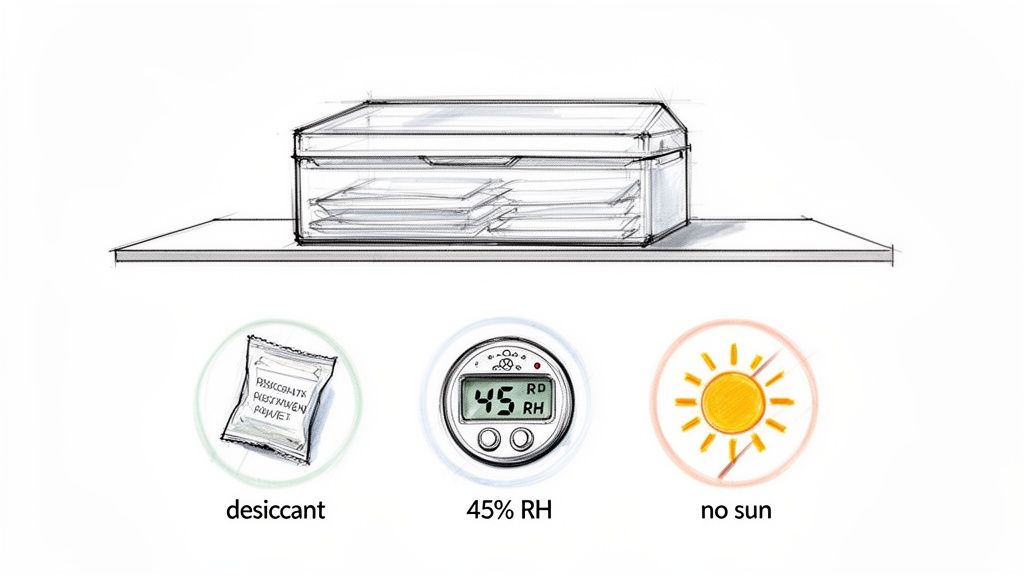
Creating a stable environment is all about avoiding extremes. Your goal is to find a spot that is consistently cool, dry, and dark. This is why attics, basements, and garages are usually terrible choices; they suffer from the most dramatic shifts in temperature and dampness as the seasons change.
Keeping the humidity in check is absolutely critical. To give your coins the best defence against moisture damage, it’s worth understanding how to reduce humidity in your home. For most collections, a relative humidity level between 45% and 55% is the sweet spot.
A stable, controlled environment does more to protect your coins over 50 years than the most expensive holder will over five years in a damp basement. Consistency is the ultimate preservative.
Practical Steps for a Stable Environment
The good news is you don't need a high-tech, bank-style vault to get this right. A few simple, smart choices can make a world of difference in protecting your collection from the environment.
Just follow these key principles:
- Avoid Exterior Walls: Always try to store your collection in an interior room. Exterior walls are much more affected by the weather outside, leading to bigger temperature swings.
- Use Desiccants: Pop a few silica gel packs inside your storage boxes or safe. These little packets are brilliant at absorbing excess moisture from the air, helping to keep the immediate area dry.
- Stay Out of the Light: Direct sunlight is a definite no-go, and even harsh indoor lighting can speed up toning and damage plastic holders over the years. A dark cupboard or a proper safe is the ideal solution.
By getting a handle on these environmental factors, you're essentially creating a protective bubble around your collection. This ensures your storage materials can do their job properly and your coins stay as pristine as the day they were minted.
Cataloging and Managing Your Growing Collection
Getting your storage for coins sorted is a huge step, but it’s really only half the story. How you actually document and keep track of your collection is just as important. A well-kept inventory turns a pile of coins from a simple hobby into a tangible, valuable asset. It helps you track what everything is worth, stops you from accidentally buying duplicates, and creates that all-important record you’ll need for insurance.
Making the leap from a physical notebook to a digital system is a game-changer. A basic spreadsheet is a perfectly fine place to start, but if you get serious, specialised numismatic software can be a godsend. These programmes are built from the ground up for collectors, with features that let you log every last detail about your coins and build a proper database of everything you own.
What to Record for Each Coin
Think of your inventory as a biography for each coin. To build a complete picture, you need to capture a few key bits of information every single time.
- Core Details: The basics – the coin's denomination, the year it was minted, and any specific mint marks.
- Condition and Grade: Make a note of the coin's grade. It could be your own honest assessment or, even better, a professional grade from a service like NGC or PCGS.
- Acquisition Information: Jot down when you bought it, how much you paid, and who the seller was.
- Provenance: This is the coin's ownership history. If you know it, record it. A good story can add serious value and interest.
This isn't some new-fangled idea; it's exactly how the world's major historical archives manage their own incredible collections. Just look at the Celtic Coin Index (CCI), which holds almost 85,000 records of Iron Age coins. It started back in 1961 as a physical card index but has since gone digital, proving how powerful modern cataloguing is for preserving and sharing our history. You can read more about its journey to become a digital database for Iron Age coins.
From Hobby to Documented Asset
Your catalogue is much more than a shopping list. It's a living, breathing tool that helps you see how your collection is growing and changing in value over time. With everything clearly laid out, you can spot at a glance which sets are nearly complete and which areas you might want to dive into next.
A detailed catalogue provides clarity. It’s the difference between saying "I have a few old pennies" and "I have a complete set of Queen Victoria pennies from 1860 to 1901, with a value that has increased 15% in the last two years."
This level of organisation is absolutely priceless, especially if you ever decide to sell, trade, or pass your collection on to the next generation. A well-kept inventory is your proof of ownership and gives a professional valuer everything they need. To get your own system up and running, take a look at our guide on how to catalog coins.
Protecting Your Investment With Safes and Insurance
Once your collection starts to grow in value, your thoughts on storage for coins will naturally turn towards much higher levels of security. When you’re dealing with a significant investment, relying on albums and boxes just won't cut it anymore. It's time to think about robust physical protection and a solid financial safety net. That’s where safes and specialised insurance come in.
A high-quality home safe is your first line of defence against theft and disaster, but it’s crucial to know that not all safes are created equal. When you’re shopping around, you need to pay close attention to its ratings for both burglary and fire. The burglary rating tells you how tough it is to break into, while the fire rating shows how long it can protect its contents from extreme heat—a vital detail when you're trying to preserve delicate metals and paper records.
For your coins, look for a safe with at least a 30-minute fire rating as a bare minimum. If you can stretch to one with a 60-minute rating or more, you'll be buying yourself some serious peace of mind. Also, make sure it’s either incredibly heavy or can be securely bolted to the floor. The last thing you want is a thief simply walking off with your entire safe.
Securing Your Collection Financially
Physical security is only half the battle. When it comes to insurance, your standard home policy is almost certainly not up to the job. Most of these policies have ridiculously low limits for "collectibles"—often just a few hundred pounds—which is nowhere near enough to cover a serious numismatic portfolio. This is precisely why specialised collectibles insurance is non-negotiable.
A dedicated policy gives you much broader coverage, protecting against risks like theft, fire, flood, and even accidental damage or loss while in transit. When looking into insurance, it's a good idea to understand what an insurance premium is and how it affects your yearly costs. This will help you find a policy that gives you comprehensive protection without breaking the bank.
A standard homeowner's policy is designed for furniture and electronics, not irreplaceable historical assets. Specialised insurance recognises the unique value of your collection and protects it accordingly.
Of course, there’s also the option of a bank safe deposit box. While they are incredibly secure from theft, they do have their downsides. You can only access your collection during banking hours, they offer zero protection from fire or flood, and—this is a big one—the contents are not insured by the bank. You would still need to take out your own private insurance policy. It's a classic trade-off: the convenience of having your collection at home versus the fortress-like security of an off-site vault.
Your Top Coin Storage Questions Answered
When you're starting out in the world of coin collecting, it’s natural to have questions. Getting the right answers from the get-go is the best way to dodge common mistakes and make sure your storage for coins is set up correctly. Let's tackle some of the most common queries we hear from fellow collectors.
What Is the Single Biggest Mistake to Avoid?
If there’s one thing you take away from this guide, let it be this: avoid materials containing Polyvinyl Chloride (PVC) at all costs. You’ll often find this chemical in those cheap, soft plastic flips and album pages. It seems harmless enough, but over time, PVC degrades and leaches an acidic, sticky green goo onto your coin's surface.
This residue causes what's known as "PVC damage"—a permanent corrosion that can utterly destroy a coin's numismatic value. Always, always check that your storage products are explicitly labelled as "PVC-free". Stick to proven, inert materials like Mylar or polypropylene. It’s a simple check that can save you a world of heartache.
How Often Should I Check on My Stored Coins?
Assuming your collection is housed in archival-quality holders and kept in a stable, climate-controlled spot, a quick visual check-up every 6 to 12 months will do the trick. You’re just looking for any early signs of unusual toning, spotting, or any breakdown of the holders themselves.
However, if your storage area experiences swings in temperature or humidity, it’s wise to be more vigilant. In that case, having a look every 3 to 4 months is a sensible precaution. And whenever you handle your coins, remember to wear soft cotton or nitrile gloves. The oils from your skin can cause more damage than you might think.
Can I Clean My Coins Before Storing Them?
This is a big one. The golden rule in numismatics is incredibly simple: do not clean your coins. It's tempting, I know, but cleaning strips away the coin’s original surface and the natural patina it has developed over decades or even centuries. That history and character are a huge part of its grade and value.
Any kind of abrasive polish or chemical cleaner will almost certainly tank its value. The only time you'd ever consider it is if there's an active, damaging contaminant on the coin, like that nasty PVC residue we talked about. Even then, it’s not a DIY job. This is a rare situation that calls for a professional coin conservator to handle the treatment.
At Cavalier Coins Ltd, we understand that proper storage is the foundation of any great collection. Explore our curated selection of archival-safe holders, albums, and accessories to give your treasures the protection they deserve. Visit us at https://www.cavaliercoins.com to find the perfect storage solutions for your coins today.