
Ever checked the change in your pocket and wondered if you’re holding a tiny treasure? While most pound coins are worth exactly that—one pound—a special few have quirks that make them valuable collectibles. For enthusiasts and numismatists, these rare finds can fetch some surprisingly high prices. It all boils down to a perfect storm of rarity, condition, and those little mistakes that make them unique.
What Turns a Pound Coin into a Treasure
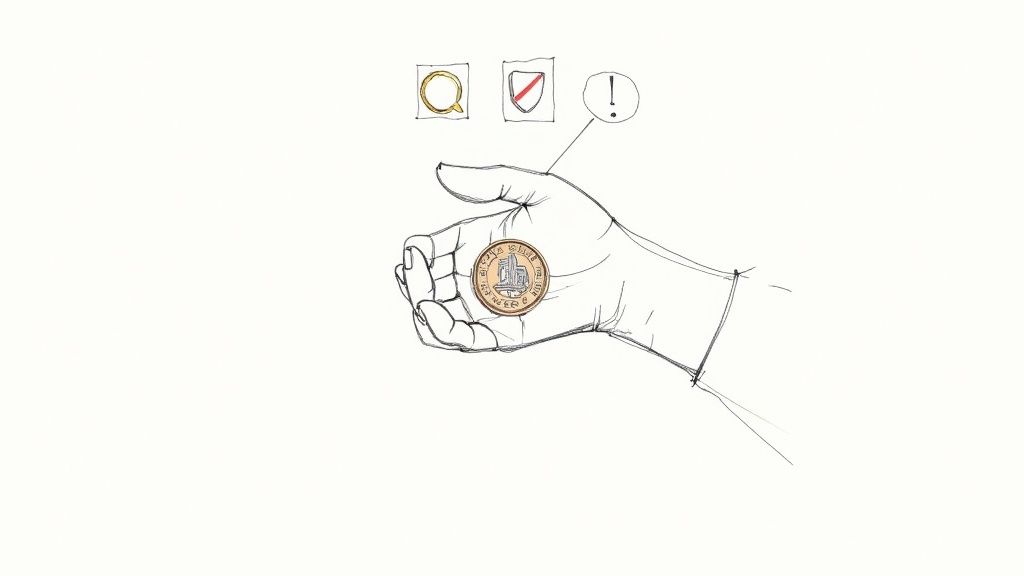
So, what separates everyday shrapnel from a sought-after prize? It's not just about being old. Think of it like a first-edition book; its value isn't just in the story but in how few were printed, its pristine condition, and maybe a famous typo on page 50. Valuable pound coins work on the very same principles.
A coin’s journey from simple currency to a collector's item is guided by a few core ideas. These factors create the scarcity and demand that drive the value of any collectible, and getting to grips with them is the first step on your own treasure hunt.
The Key Ingredients of Value
At its heart, a coin’s worth is a simple game of supply and demand. How many are out there versus how many people want one? Several key elements tip this balance.
To give you a quick overview, here are the main things collectors look for.
Quick Guide to a Pound Coin's Value
| Factor | What It Means | Impact on Value |
|---|---|---|
| Rarity | The number of coins minted for a specific year and design. | Low mintage numbers mean fewer coins exist, making them much more desirable. |
| Condition | The physical state of the coin—from heavily worn to flawless. | A coin that looks brand new (uncirculated) is always worth more than a scuffed one. |
| Minting Errors | Mistakes made during the coin's production at The Royal Mint. | Flaws create unique varieties that are often highly sought after by collectors. |
These are the fundamentals, but they combine in interesting ways to determine what a coin is really worth.
Now, let's break those down a bit more.
A Closer Look at What Matters
-
Rarity: This is the big one. A coin with a low mintage (the official number of coins produced) is naturally harder to find and, therefore, more desirable.
-
Condition (Grade): A coin that looks like it just rolled out of The Royal Mint, with zero scratches or signs of wear, will command a much higher price than one that’s been rattling around in pockets for years.
-
Minting Errors: Sometimes, mistakes happen. These production slip-ups can create incredibly rare and valuable varieties. A flaw that makes a coin different is often exactly what makes it special to a collector.
If you're curious about how these principles apply to other collectibles, this essential antique pricing guide is a great read. It covers the core ideas of age, condition, and provenance that apply across the board.
The core concept for collectors is simple: scarcity drives value. A coin isn't valuable just because it's old; it's valuable because it's hard to find, especially in excellent condition.
Once you learn to spot these key traits, you can start sifting through your change with a more discerning eye. You never know when you might find a hidden gem.
How Mintage Figures Make a Coin Rare
When it comes to figuring out what makes a pound coin valuable, nothing matters more than rarity. The most straightforward way to gauge this is by looking at its mintage figure—that's the official count of how many coins The Royal Mint produced for a specific design in a given year. It’s a bit like a limited-edition art print; the fewer that were made, the more they're worth to people who want one.
A low mintage number is the first big clue that a coin might become a collector's item down the line. We saw this with the now-legendary Kew Gardens 50p. With a tiny mintage of just 210,000, it quickly became one of the most hunted-for coins in the UK. The same simple rule of supply and demand applies to valuable pound coins. When you have millions of people looking for a coin that only had a small production run, its value has nowhere to go but up.
It's Not Just About How Many Were Made
The mintage figure tells us how many coins started their journey, but that’s not the full picture. A coin's true scarcity also hangs on how many have actually survived in decent condition over the years. Coins get lost down the back of sofas, damaged in washing machines, or simply taken out of circulation, shrinking the pool of collectible-grade examples even more.
This is exactly why finding a low-mintage coin in great shape is such a buzz for any collector. It’s not just about the numbers; it's about finding a survivor.
A coin's value is born from its mintage, but it matures through its survival. A low mintage creates the potential for rarity, but the number of well-preserved examples determines its true scarcity and ultimate worth to collectors.
The Rarest Circulating £1 Coin
A brilliant example of low mintage creating high value is the 2011 Edinburgh City £1 coin. This one holds the title for the rarest and most valuable of the original round pound series that was meant for everyday use. With a mintage of only 935,000, it’s the only circulating round £1 coin with a production figure under one million.
This scarcity has made it a top prize for collectors. It often fetches more than ten times its face value, and if you find one in pristine condition, it could sell for nearly £95 online. To get a better sense of how it stacks up against others, you can find more insights on the rarest £1 coins still in circulation from The Westminster Collection.
The key lesson here for any budding collector is simple: always check the mintage figures. You can find official data published by The Royal Mint. A quick search can be the difference between finding a common coin and discovering you're holding one of a select few.
Why Coin Condition and Grading Matter
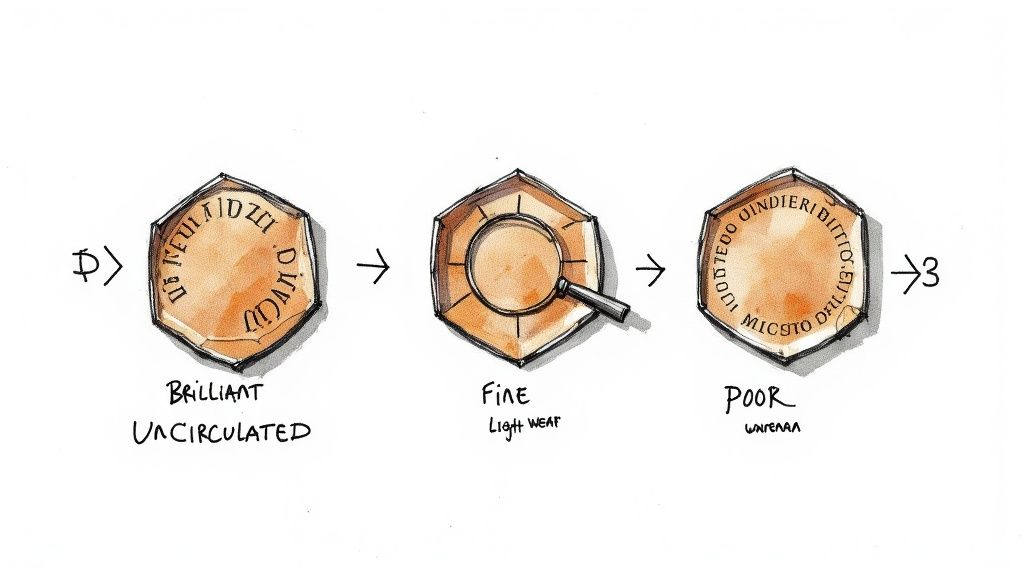
Picture this: you find two identical, low-mintage pound coins from the exact same year. One has clearly been knocking around in pockets and tills for years, picking up scratches and dings along the way. The other looks like it just rolled off the production line at The Royal Mint.
Even though they're technically the same coin, their values could be worlds apart. This massive difference all comes down to condition, or what collectors call its ‘grade’.
It’s a bit like finding a vintage comic book. A pristine copy with a crisp cover, sharp corners, and zero creases is a collector's dream. A tattered, well-read version of the same issue is still a great piece of history, but its monetary value will be much, much lower. For valuable pound coins, the principle is identical: the better the preservation, the higher the price.
Understanding the Coin Grading Scale
To keep things consistent, collectors use a specific scale to describe a coin’s condition. This creates a universal standard for valuation, so a buyer in London and a seller in Manchester are speaking the same language. While the full system is incredibly detailed, the basic levels are straightforward.
- Brilliant Uncirculated (BU): This is the pinnacle. A flawless coin with absolutely no signs of wear. It still has its original mint lustre and looks brand new, simply because it has never been in public circulation.
- Extremely Fine (EF): A coin with just a whisper of wear, usually only on its highest points. You'll find that most of the design details are still sharp and crystal clear.
- Very Fine (VF): Here, the coin shows more obvious signs of its journey through circulation, but the main features are still distinct. It's clearly been used, but remains in very decent collectible shape.
- Poor: This is the bottom of the ladder. The coin is so heavily worn that the date and main designs are barely readable.
A coin's grade is its CV. A Brilliant Uncirculated coin tells a story of perfect preservation, commanding respect—and a premium price—from collectors who value perfection above all else.
How to Protect Your Potential Treasure
Preserving a coin’s condition is everything, especially if you think you’ve stumbled upon something rare. It's a hard lesson to learn, but even a single fingerprint can cause permanent damage to a coin's surface over time, knocking down its grade and value.
For anyone getting serious about the hobby, learning how to get coins graded professionally is a vital step in both verifying and protecting a major find.
To start, just follow these two simple rules:
- Handle with Care: Always hold a coin by its edges, never by its flat faces. This stops the natural oils from your skin from tarnishing the surface.
- Store It Safely: Don't just chuck a potentially valuable coin into a jar with all the others. Use individual coin flips, capsules, or proper albums designed to protect it from scratches and the environment.
Finding Valuable Minting Errors and Varieties
While rarity and condition are huge drivers of value, some of the most exciting finds are born from simple mistakes. The Royal Mint is an incredibly precise operation, but with billions of coins being produced, it's inevitable that occasional errors slip through. For a collector, these aren't flaws; they're unique quirks that can turn a common coin into a treasure.
It’s a bit like finding a misprinted stamp or a book with a famous typo. The mistake itself creates a new, much smaller batch of the original item, instantly making it rare and highly collectible. This is the thrilling world of error coins, where you train your eye to spot profitable production glitches. Learning to identify these is a key skill for any serious numismatist.
Common Types of Minting Errors
The best way to find these hidden gems is to inspect your change like a detective. While there are many types of errors out there, a few key varieties are more commonly found and can significantly boost a coin's value. You can get into the nitty-gritty of how to discover valuable error coins and their hidden treasures in our dedicated guide.
This infographic breaks down three of the most significant error types to look for.
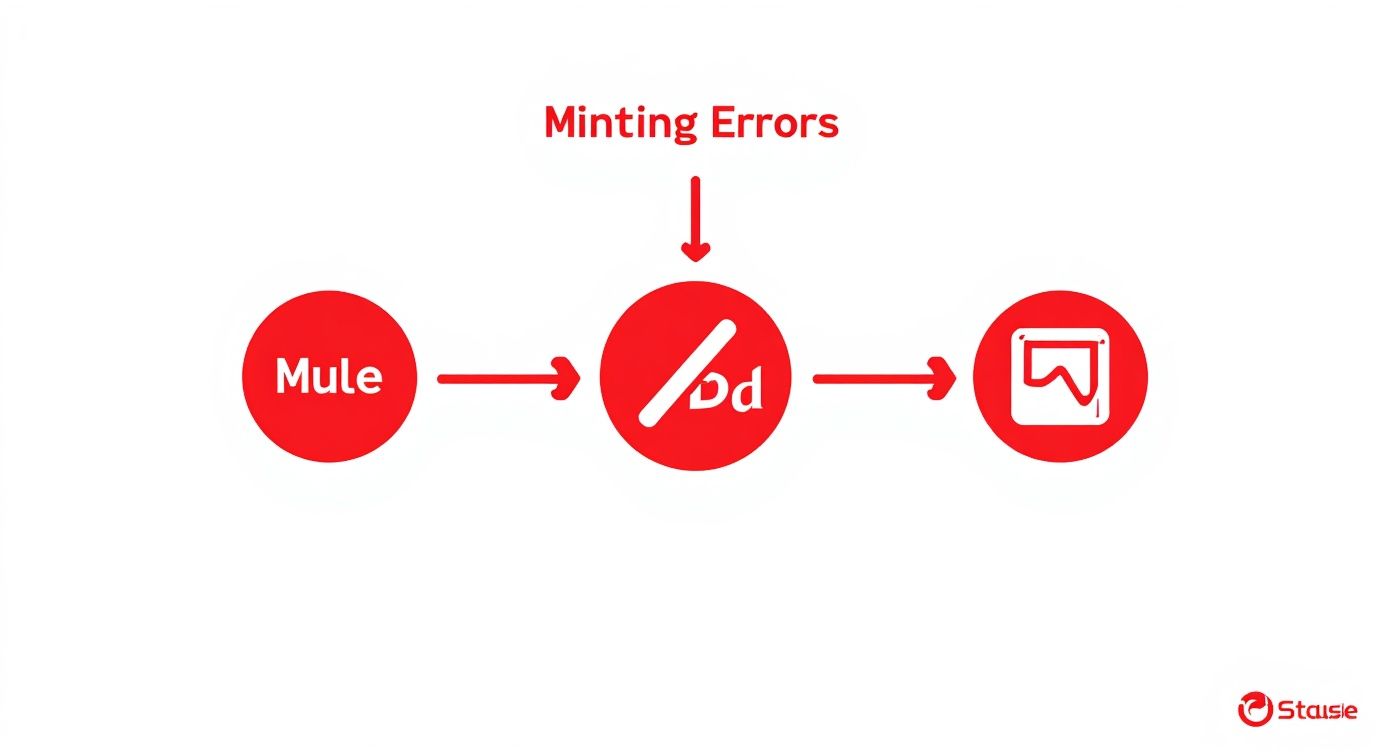
As you can see, errors like 'mules', off-centre strikes, and die cracks are distinct production flaws that create fascinating—and valuable—coin varieties.
A minting error is the coin world's equivalent of a happy accident. A small slip-up in the highly controlled production process can accidentally create a numismatic jackpot, prized for its unintended rarity.
For a perfect real-world example, just think of the famous undated 20p coin from 2008. When the design was updated, a batch was mistakenly struck using the old obverse die and the new reverse die, resulting in a coin with no date on either side. These ‘mule’ coins, born from a simple mismatch, became legendary and now sell for £50-£100.
This just goes to show how a simple production glitch can transform pocket change into a serious collectible. So, keep your eyes peeled; you never know what might turn up.
The Most Valuable Pound Coins to Look For
This is where the real fun begins. Now that you have a grasp of what drives a coin's value, you can start the hunt for specific treasures lurking in your change. While spotting a minting error takes a bit of a trained eye, finding a low-mintage coin is often as simple as checking the date and design on the reverse.
Many of the most sought-after £1 coins come from the original round pound series, which was officially replaced by the bimetallic version in 2017. Because these older coins are no longer being minted, the number of good-quality examples is naturally dwindling, making them prime targets for any serious collector.
Which Pound Coins Should I Be Looking For?
It's time to get specific. We've put together a handy table of some of the most talked-about valuable pound coins you might actually find in your day-to-day life. This includes both the classic round pounds and some of the newer 12-sided coins that had surprisingly low mintage figures.
Keep this list in mind the next time you get some shrapnel back from the shops!
Valuable UK £1 Coins to Find in Circulation
| Coin Description | Year | Mintage Figure | Estimated Value Range |
|---|---|---|---|
| Edinburgh City (Round Pound) | 2011 | 935,000 | £10 - £15 |
| Kew Gardens 50p (For Comparison) | 2009 | 210,000 | £150 - £200 |
| Cardiff City (Round Pound) | 2011 | 1,615,000 | £8 - £12 |
| London City (Round Pound) | 2010 | 2,635,000 | £5 - £8 |
| Royal Arms (Round Pound) | 2008 | 3,910,000 | £4 - £6 |
| Scotland: Thistle & Bluebell (Round Pound) | 2014 | 5,185,000 | £3 - £5 |
| England: Rose & Oak Branch (Round Pound) | 2013 | 5,266,000 | £3 - £5 |
| NI: Flax & Shamrock (Round Pound) | 2014 | 5,780,000 | £3 - £5 |
| Wales: Daffodil & Leek (Round Pound) | 2013 | 5,856,000 | £3 - £5 |
| Royal Shield (12-Sided) | 2022 | 10,565,000 | £1.50 - £3 |
As you can see, the coins from the 'Cities' and 'Countries of the UK' series are particularly scarce. They were minted in far smaller numbers than their counterparts, which makes them instant standouts. For a deeper dive, check out our guide on rare one pound coins to look out for.
Key Round Pounds to Find
Let's break down a few of the superstars from that list.
- 2011 Edinburgh City: With a mintage of just 935,000, this is the undisputed king of circulating round pounds. It’s the only one with a mintage figure below one million, making it the top prize for many enthusiasts.
- 2011 Cardiff City: Another one from the sought-after 2011 Cities series. The Cardiff pound had a mintage of 1,615,000, and while not as rare as its Edinburgh cousin, it's still a fantastic find.
- 2010 London City: The London design is another key piece for your collection, with a mintage of 2,635,000.
- 2008 Royal Arms: This one is a bit of a sleeper hit. The Royal Arms design is incredibly common, so most people don't give it a second glance. However, the 2008 version is the scarcest of its type, with only 3,910,000 minted.
Expert Tip: Always, always check the date on a Royal Arms £1 coin. While most are worth face value, the 2008 issue is a surprisingly tough one to find. Because it's so easily overlooked, it's a great coin to hunt for.
Beyond Pocket Change: A Glimpse into Serious Value
Finding a rare coin in your change is a thrill, but the world of UK numismatics goes much, much deeper. To understand what truly mind-boggling value looks like, we have to look beyond circulating currency to non-circulating, pound-denominated coins like the historic gold sovereign.
These coins are in a different league entirely, combining precious metal content with immense historical significance.
For instance, the rarest UK gold sovereigns fetch astronomical prices at auction. The 1937 Edward VIII gold sovereign is the stuff of legend; only six are known to exist, pushing its estimated value to a staggering £1,000,000. On a similar note, while over a million 1917 George V sovereigns were minted, very few survived being melted down, giving the remaining examples a collector value of around £30,000.
This just goes to show how history, scarcity, and story can elevate a simple piece of metal into an asset class all its own.
How Historical Significance Creates Extreme Value
Beyond the raw numbers of mintage figures and the odd production flaw, there’s another factor that can turn a simple coin into a legendary artefact: its story. When a piece of metal gets caught up in a major historical event or a key moment for the monarchy, its value can skyrocket.
This is the point where a coin becomes more than just currency. It transforms into a tangible piece of history you can actually hold in your hand, a direct link to a story that helped shape the nation. This powerful mix of a compelling narrative and extreme rarity creates a kind of demand that simple scarcity just can't compete with. These aren't the valuable pound coins you might find in your change; they are relics chased by the world's most dedicated collectors.
When a Coin Becomes a Legend
The most incredible examples often come from coins that were never really meant to exist in the first place. These are what we call pattern coins—essentially prototypes created to test a new design that was never officially released for circulation. When a monarch's reign is cut short unexpectedly, these patterns can become almost priceless.
Why? Because they capture a unique, frozen moment in time. They represent a future that never came to be, making them ghost coins from an alternate history. Their rarity is absolute, and their story is completely undeniable.
A coin's narrative is its most powerful multiplier. When extreme rarity is combined with a story of royal drama, political upheaval, or a reign that never was, its value can climb into the millions, transforming it from currency into a historical document.
The perfect example of this is the legendary 1937 Edward VIII £5 pattern coin. This piece has it all: ultimate rarity and a massive dose of historical drama. It was designed for the coronation of Edward VIII, but he famously abdicated the throne before any of his currency could be officially released.
Because of this, only a tiny handful of pattern pieces were ever made. It’s believed that just two examples are in private hands today, making it one of the rarest and most sought-after British coins in existence. Its incredible story and scarcity pushed it to a monumental price, selling for $2,280,000 at auction in 2021. You can find more fascinating insights on this and other top-tier British coins over at Paul Fraser Collectibles.
Common Questions About Valuable Pound Coins
As you dive into the thrilling hunt for valuable pound coins, you’re bound to have questions. The world of coin collecting can feel a bit overwhelming at first, but a few straightforward answers can make all the difference, giving you the confidence to spot a real treasure.
Let's clear up some of the most common queries we hear from new collectors. Getting these fundamentals right is the key to protecting your finds and truly understanding what they're worth.
Where Can I Find Reliable Mintage Figures?
When it comes to mintage figures, there's one source that stands above all others: The Royal Mint's official website. They publish the official data for all circulating coins, and this information is the bedrock for figuring out a coin's rarity.
Of course, you’ll also find this data compiled in respected coin collecting guides and annuals, like the Coin Yearbook. These resources often add extra analysis and context, which can be incredibly helpful for collectors just starting out.
Key Takeaway: Always go to the official source first. The Royal Mint’s numbers are the gold standard for verifying how many coins were made, which is your first clue to its potential scarcity.
How Can I Tell If a Rare Pound Coin Is Fake?
For the really big-ticket pound coins, the only way to be 100% certain is to have it professionally authenticated by a grading service. But for the coins you might find rattling around in your change, you can do a few quick checks yourself.
Pull up an image of a genuine coin online and compare it side-by-side with yours. Look closely at these things:
- Sharp, crisp design details. Fakes often look a bit soft or 'soapy', lacking the fine definition of a real coin.
- Correct and clear edge lettering. The inscription around the edge is a common stumbling block for counterfeiters. On a fake, it might be messy, poorly defined, or just plain wrong.
- Proper weight and dimensions. A genuine coin will match the official specifications to a tee.
I Think I Found a Valuable Coin What Is the Next Step?
First off, congratulations! Now, handle it with care—always hold it by the edges to avoid fingerprints, which can cause permanent damage over time. And whatever you do, do not clean the coin. This is a classic rookie mistake. Cleaning can strip away its natural surface (the patina) and crush its value to a serious collector.
Your next move is to grab a coin catalogue or use a trusted online resource to identify it properly and double-check those mintage figures. To get a feel for what it's actually worth, a brilliant trick is to search for the coin on eBay and then filter the results by ‘Sold Items’. This shows you what people have genuinely paid for it recently, not just the hopeful asking prices. If you suspect you've got a really high-value piece on your hands, your best bet is to consult a professional dealer for a proper appraisal.
Ready to start or expand your collection with confidence? At Cavalier Coins Ltd, we offer a curated selection of fascinating coins from the UK and around the world. Discover your next treasure by visiting us at https://www.cavaliercoins.com.