
So, you’ve decided to sell your old coins. The big question is, where? The UK has a thriving market, but finding the right place for your specific collection is key. Your best route will depend entirely on what you have, whether it’s a handful of inherited sovereigns or a meticulously curated set.
There are several excellent options available, from specialist dealers and trusted coin shops to major auction houses and sprawling online marketplaces. For those after a straightforward, expert-led sale, a direct buyer like Cavalier Coins offers a solid, hassle-free process.
Navigating the Best Places to Sell Your Old Coins
Deciding where to offload your coins can feel like a maze, but breaking down the options is the first step to getting the best possible price. The UK coin market is strong right now, making it a great time to monetise a collection.
Each selling channel really caters to different priorities. Are you after maximum value for a rare piece, or do you prioritise speed and convenience? Let’s look at the most common routes.
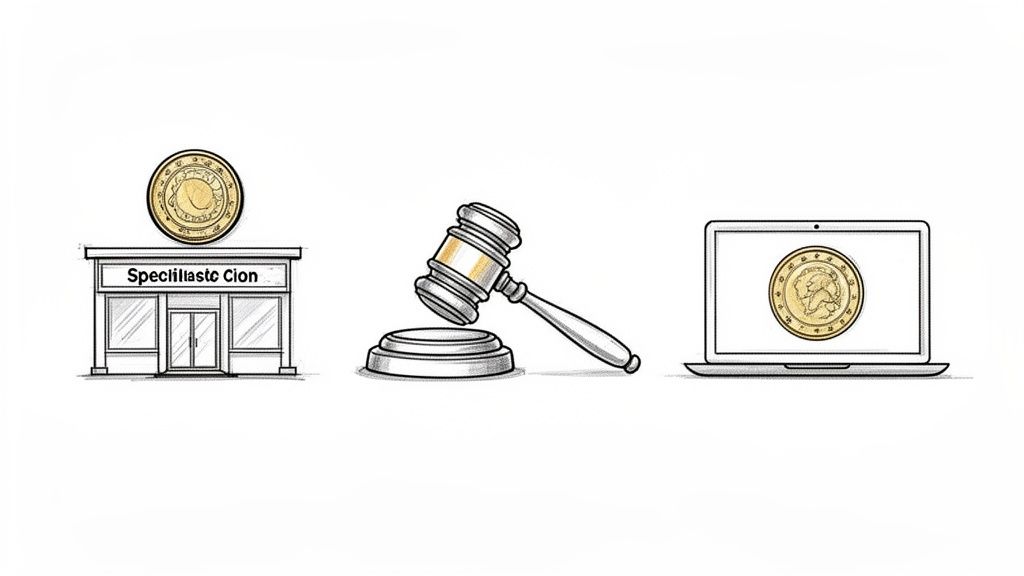
Quick Comparison of Coin Selling Channels
To help you decide at a glance, here’s a quick breakdown of the main avenues for selling your coins, comparing what they’re best for, the potential prices you can expect, and how fast the process is.
| Selling Channel | Best For | Potential Price | Speed of Sale | Typical Fees |
|---|---|---|---|---|
| Specialist Dealers | Expert valuations, direct sales, entire collections. | Fair market value. | Fast (often same-day). | None (price offered is net). |
| Local Coin Shops | Quick, in-person cash sales for common coins. | Lower (covers shop overheads). | Very Fast (immediate). | None. |
| Auction Houses | High-value, rare, and authenticated coins. | High (driven by bidding). | Slow (months). | High (15-25% seller’s premium). |
| Online Marketplaces | Common coins, reaching a wide audience. | Variable (depends on listing). | Moderate (days to weeks). | Moderate (10-15% in fees). |
This table gives you a starting point, but the best fit always comes down to the specifics of your collection and what you're hoping to achieve from the sale.
The Growing UK Coin Market
The UK’s appetite for coin collecting has exploded in recent years. It’s not just hobbyists; investors are increasingly turning to tangible assets like gold and silver coins amid economic jitters.
This isn't just a feeling—the numbers back it up. The Royal Mint has reported a huge jump in revenue from its precious metal coin sales, a clear signal of record demand from the public.
Market analysis shows that collection-type coins—think proofs, uncirculated sets, and special commemorative issues—are often the top sellers. Their limited mintages are a huge factor in driving up their value.
What this means for you is that there’s a healthy, active market for all sorts of coins, from old UK pennies to half crowns. The trick is simply matching what you have with the right selling platform to find those eager buyers. If you want to dig deeper, you can discover more insights about the UK coin collecting market projections and see how different coins are performing.
Getting Your Coins Ready and Properly Valued
Before you even consider where to sell your old coins, taking a few preparatory steps is the single best thing you can do to get a fair price. It might seem like a bit of faff, but this initial effort can add real value to your collection and save you from getting a disappointing offer down the line.
The golden rule, and it's an important one, is do not clean your coins. I can't stress this enough. It’s so tempting to want to polish them up and make them look shiny and new, but cleaning strips away the natural patina – that thin layer that builds up on the surface over many years. Collectors actively look for this patina, and removing it can absolutely tank a coin's value. Just handle them by their edges to keep oils from your skin off the surface.
A Bit of Sorting and Research
First things first, get organised. Start by grouping similar coins together. You could sort them by country, metal type, or denomination – for example, put all your silver shillings in one pile and all the copper pennies in another. This simple step transforms a messy jumble into something much more manageable.
Once they're sorted, you can start doing a little digging. A good magnifying glass will help you spot key details like the date, the mint mark (a tiny letter that tells you where the coin was made), and its general condition. You can then use online resources or coin catalogues to get a rough idea of what you're looking at. This initial research helps you pick out the potentially valuable pieces from the everyday currency.
If you want to go deeper into the specifics, take a look at our detailed guide on how to value old coins with expert tips for collectors.
To Grade or Not to Grade?
This is a question I get asked all the time. Professional grading services, like the Professional Coin Grading Service (PCGS), will authenticate your coin, grade its condition, and seal it in a protective plastic slab, all for a fee. For a genuinely rare or high-grade coin, this process can make a massive difference to its value and how easily you can sell it.
But let's be clear: professional grading isn't for every coin. The cost of getting a coin graded can easily be more than the coin is actually worth.
- Consider Grading If: You believe you have a coin that’s known to be rare, is in absolutely exceptional condition, or is a "key date" from a popular series (like the famous 1933 penny).
- Skip Grading If: Your coins are common, have been in circulation, or their main value comes from the metal they're made of (i.e., bullion).
A professional grade can be the difference between a £100 sale and a £1,000 sale for the right piece. But spending £30 to grade a common coin worth £5 is just throwing money away.
Create a Simple Inventory
Finally, put together a basic list of what you have. Nothing fancy is needed; a simple spreadsheet does the job perfectly. For each coin, jot down its year, denomination, country, mint mark, and a quick note on its condition.
This isn't just about keeping track of your collection. An organised inventory shows potential buyers that you're a serious seller who has done their homework. It immediately puts you in a stronger position and helps protect you from anyone trying to give you an opportunistic lowball offer.
Comparing Your Best Coin Selling Options
Once your collection is organised and you've got a rough idea of what it’s worth, you face the big question: where should you actually sell it? Each path has its own pros and cons, and the right choice really boils down to your personal goals, the kinds of coins you own, and how much effort you’re willing to put in.
It helps to think of it like selling a car. You could try for a private sale to get the best price, but that comes with a lot of hassle. You could trade it in for a quick, easy deal. Or, if it's a rare classic, you'd head straight to a specialist auction. Selling coins isn't so different—there’s no single "best" place, just the best place for you and your coins.
Local Coin Dealers and Shops
For a lot of people, the first port of call is the local coin shop. This can be a fantastic route for a quick and convenient sale, especially if you have more common coins or bullion. You can literally walk in with your coins and walk out with cash in hand.
The trade-off, of course, is the price. A brick-and-mortar shop has serious overheads to cover – rent, staff, security – and their offer has to reflect that. They're buying to resell, so they simply can't pay the full retail value. It's an excellent option if your main priority is a fast, no-fuss transaction.
Major Auction Houses
If you've unearthed something you believe is truly rare or historically important, a major auction house is the ultimate stage. We’re talking about the kind of places that handle fine art and priceless antiques. These institutions have a global network of serious collectors with deep pockets, all competing for the most exceptional pieces.
Be prepared for a slow process, though. It can often take months from the moment you consign your coin to the final sale. The fees are also significant, with a seller's premium of 15-25% being standard. But for a coin that could fetch six figures, the global exposure they offer is second to none. This is the path for the absolute cream of the crop in numismatics.
Online Marketplaces Like eBay
Platforms like eBay can put your coins in front of a huge international audience, which is a massive plus. You get total control over the listing, from the photos you take to the price you set. For a particularly popular coin, a well-run auction can spark a bidding war, pushing the final price far beyond what you'd get from a dealer.
That control, however, comes with a lot of responsibility. You’ll be the one taking photos, writing detailed descriptions, fielding questions from potential buyers, and handling the packing and shipping. The fees can sting, too, often adding up to around 13-15% of the final sale price once you factor in payment processing charges.
Selling on eBay is a trade-off. You might achieve a higher final price for an individual, in-demand coin, but you must be prepared to put in the work of a professional retailer.
Specialist Online Retailers
For those who have a sizeable collection or want an expert valuation without the hefty auction fees, a specialist online retailer like Cavalier Coins offers a great middle ground. These businesses buy collections directly, offering a fair market price that cuts out the uncertainty of an auction.
The process is generally fast, secure, and straightforward. It’s the perfect choice if you want to sell an entire collection in one go, or if you’d simply rather have an expert manage the whole transaction for you from start to finish.
This chart can help you visualise that first crucial decision when you start looking at your coins.
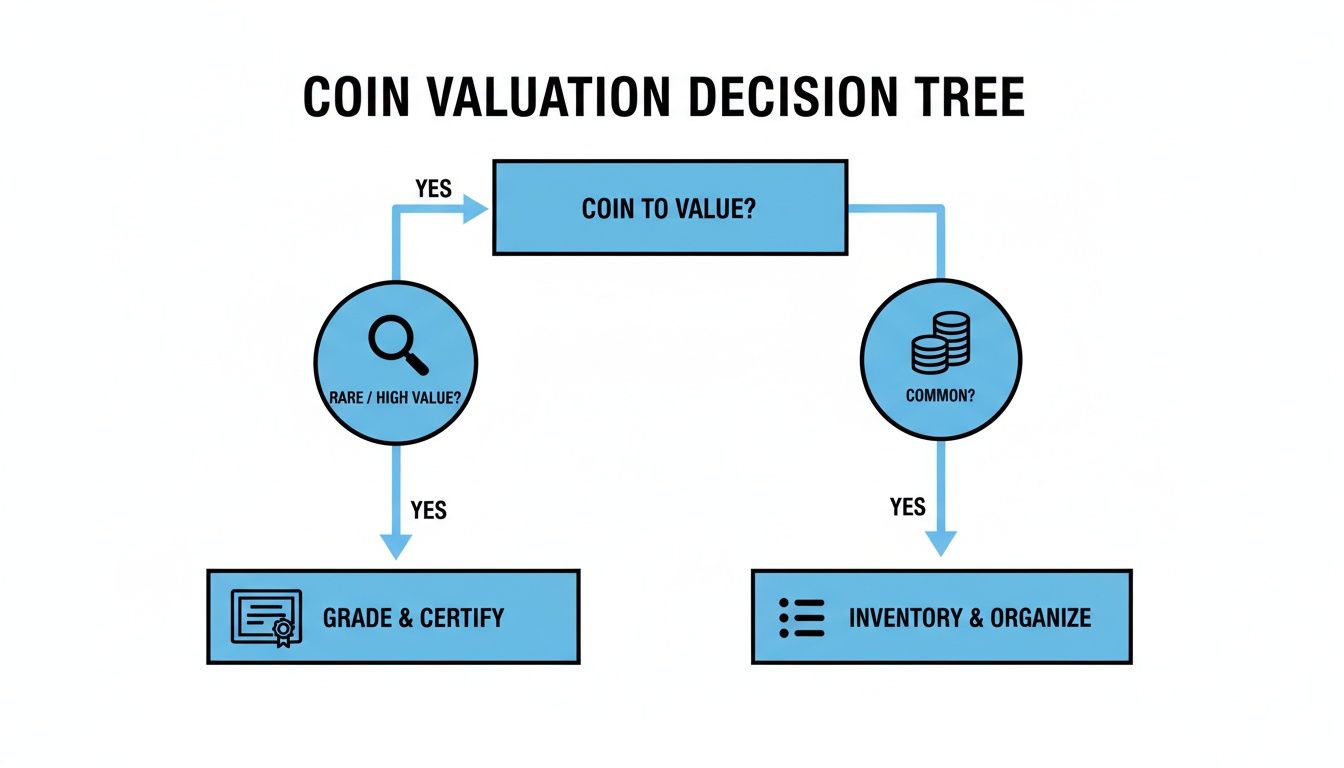
The UK is a major hub for coin collecting, and the online market is booming. Millions are spent by private collectors on everything from commemorative issues to ancient rarities. If you'd like to explore the auction world further, our guide to the top UK coin auction sites is a great place to start.
Creating Online Listings That Attract Serious Buyers
When you're selling coins online, your listing is everything. Think of it as your virtual salesperson. Unlike a face-to-face deal where someone can pick up the coin and inspect it, your photos and description have to do all the heavy lifting. A professional, detailed listing builds trust, and that's what convinces serious collectors to pay a fair price.
This is particularly true in today's crowded digital marketplace. It’s vital to understand how to make your product stand out when buyers are flicking through potentially hundreds of options at once.
The Art of High-Quality Coin Photography
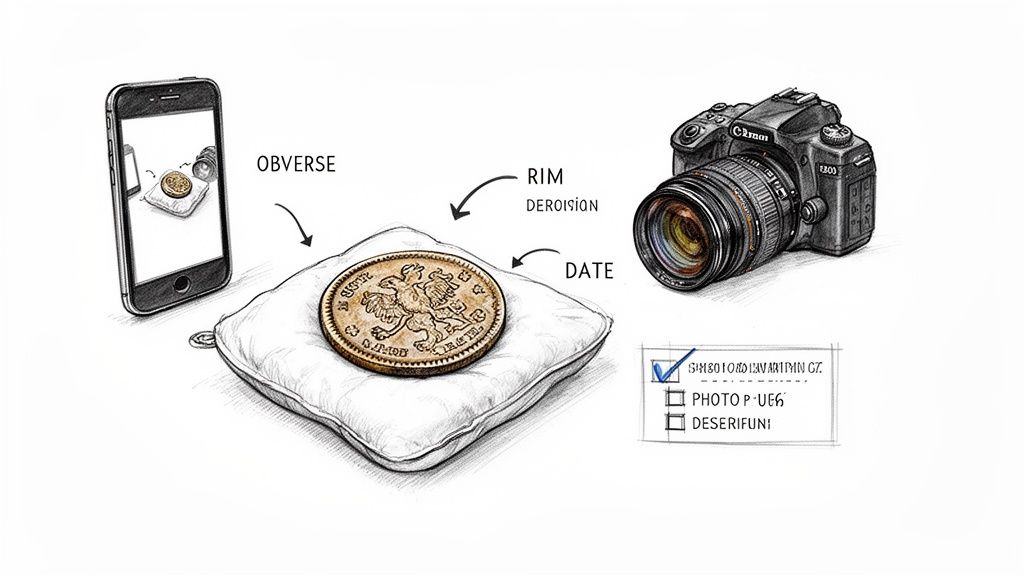
Let's be blunt: your photos are the single most important part of your online listing. Blurry, dark, or out-of-focus images will send potential buyers running. They need to see the coin’s condition clearly to feel confident enough to even consider making an offer.
The good news is you don’t need a professional studio. A modern smartphone, some good natural light (think near a window, but out of direct sun), and a simple, neutral background is all it takes to get started. Place the coin on a soft, non-reflective surface and take crisp, close-up shots of both the obverse (front) and reverse (back). For some more advanced pointers, our guide on how to photograph coins like a pro reveals some expert secrets to make your images truly pop.
Pro Tip: Don’t forget the edge! Always include a clear, focused shot of the coin's edge. On many coins, details like reeding, lettering, or other security features are key indicators of authenticity and can even pinpoint a specific variety, which can massively impact its value.
Writing Compelling and Honest Descriptions
Once your amazing photos have grabbed their attention, a solid description is what seals the deal. Honesty and detail are your best friends here. A great description should be a mini-dossier on the coin, leaving no room for questions or doubt in a buyer's mind.
Make sure your description always covers these key points:
- Denomination and Year: Simple and clear, like "George V Half Crown, 1921."
- Mint Mark: If it has one, note the location (e.g., "S" for San Francisco). This is crucial for value.
- Condition: Be upfront about any noticeable marks, scratches, or wear. You can use standard terms like "circulated" or "uncirculated" if you're sure, but it's best to avoid guessing a specific grade unless it has been professionally certified.
- Provenance: If you know anything about the coin's history—perhaps it was part of an old family collection—mention it! A good story can add real appeal.
Setting a Smart Price
Pricing can feel like a bit of a dark art. Go too high, and you'll scare buyers away. Go too low, and you're leaving money on the table. The best place to start is by researching "sold" listings on platforms like eBay for the exact same coin in a similar condition. This tells you what people are actually paying, which is far more useful than what sellers are asking for.
If you're going the auction route, setting a lower starting bid can generate more interest and get more people watching your listing from the get-go. For a fixed-price "Buy It Now" sale, price it competitively based on your research but consider enabling the "Best Offer" feature. That little bit of flexibility can often lead to a faster, smoother sale.
Handling Bulk Collections and Supporting Charities
Not every coin collection is a neat album of a few high-value pieces. Sometimes, you're faced with a much bigger challenge—an inherited jar brimming with assorted currency, a lifetime's worth of coins from travels abroad, or a pile of donations received by a charity.
In these situations, the idea of selling coins one by one is just not practical. It’s overwhelming. This is where specialist buyers come in, offering a much-needed service for anyone with a large, unsorted accumulation of coins.
For individuals, selling the entire lot in a single go is by far the most efficient way forward. You sidestep the monumental task of cataloguing hundreds of coins and creating individual listings. Instead, you get a fair market price for the collection as a whole, all wrapped up in one straightforward payment.
A Lifeline for Charities
Charities and non-profits, in particular, find this approach incredibly helpful. Donated coins, both from the UK and overseas, often just sit in a back room because turning them into actual funds seems far too complicated.
Specialist buyers like Cavalier Coins are set up to handle exactly these kinds of acquisitions.
The whole process is designed to be as simple as possible for the charity:
- First, the charity gets in touch to let us know what they have.
- We then arrange to have the bulk coins securely collected and transported.
- Once with us, the coins are meticulously sorted, identified, and valued by our professional team.
- Finally, we make an offer. As soon as it's accepted, we send the payment directly to the charity, turning those idle assets into vital funds they can put to good use.
This service completely removes the administrative headache from the charity’s shoulders, letting them focus on their core mission rather than trying to become amateur numismatists overnight.
For a non-profit, working with a specialist buyer transforms a logistical nightmare into a simple, effective fundraising activity. It’s the fastest way to turn a sack of donated coins into tangible financial support for their cause.
Thankfully, the UK coin collecting market is enjoying strong growth right now, which creates a healthy environment for these kinds of transactions. This ensures that even common coins hold value, empowering charities to unlock funds from assets they might have otherwise written off.
With billions in currency still stashed away in households across Europe, specialist buyers provide that crucial link to convert this untapped value into meaningful contributions. If you’re interested in the data behind this trend, you can explore the full research on the UK's coin collecting outlook.
Finalizing the Sale Safely and Avoiding Scams
You’ve found a buyer and agreed on a price – brilliant. But don't pop the cork just yet. The final steps, handling payment and delivery, are where you need to be most switched-on to make sure the deal closes smoothly and safely.
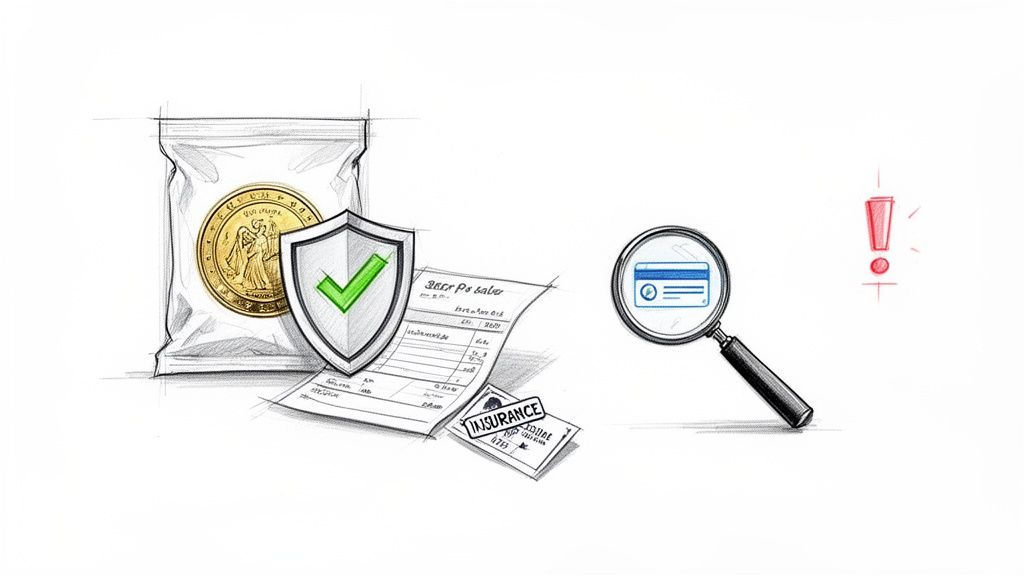
When it's time to post your coins, a standard envelope just won't do. You’ll want to use a padded mailer or a small, sturdy box. Make sure each coin is snug in its own protective holder, like a simple cardboard flip, so they aren't rattling against each other in transit.
Always, and I mean always, use a postal service that offers tracking and insurance. For anything of real value, Royal Mail Special Delivery is the go-to choice in the UK. The extra few quid for proper insurance is nothing compared to the potential heartbreak of a lost or damaged parcel.
Securing Payment and Spotting Red Flags
When it comes to getting paid, stick to methods you can trust and verify. If you're selling on a platform like eBay, their own payment system is your best bet. For a private sale, a direct bank transfer is usually the safest route, but never send anything until you see the money physically cleared in your account.
Unfortunately, scammers are a real risk, and they often use pressure tactics and strange requests to trip you up. Knowing the classic warning signs is your best defence.
Keep an eye out for buyers who:
- Offer you way more than your asking price, usually attached to a sob story or a complicated reason.
- Demand you use an obscure payment method you've never heard of, especially one that’s irreversible.
- Ask you to post the item to an address that doesn't match the one on their verified account.
- Try to lure you away from the marketplace's secure messaging or payment system to "do the deal direct".
If a deal feels too good to be true, it almost certainly is. A genuine buyer will respect your need for a secure payment and insured postage. Don't let anyone persuade you to cut corners on safety – your own caution is the best tool you have.
Common Questions About Selling Old Coins
Even after laying out a plan, you might still have a few questions rattling around. It's completely normal. Here, I'll tackle a couple of the most common queries we get from people looking to sell their collections.
Should I Clean My Old Coins Before I Sell Them?
In a word: no. Absolutely not.
I know it’s tempting to give them a bit of a polish to make them look their best, but cleaning old coins can be one of the most damaging things you can do. Using anything abrasive, even a cloth, can strip away the delicate patina that has built up over decades or even centuries.
Collectors prize that originality and natural toning. Wiping it away can instantly and drastically reduce a coin's value. The most you should ever do is use a very soft, dry artist's brush to gently flick away any loose dust or debris. Anything more is a risk not worth taking.
Is It Better to Sell My Coins Individually or as a Whole Collection?
This really comes down to what you've got in your hands.
If you’ve identified a few standout coins in your collection – perhaps a rare date, a high-grade sovereign, or a particularly sought-after commemorative piece – you'll almost certainly get the best return by selling those individually. They deserve their own spotlight.
On the other hand, if you're dealing with a larger accumulation of more common or mixed-value coins, selling the lot together to a specialist buyer is often the smartest move. It’s far more efficient, and a good dealer will give you a fair, comprehensive price for everything in one straightforward transaction.
Always look for a reputable dealer who is transparent about how they value your coins. A good sign is membership in an organisation like the British Numismatic Trade Association (BNTA), along with a history of positive online reviews from other sellers.
Ready to get a professional, no-obligation valuation for your collection? Cavalier Coins Ltd offers fair prices for individual coins and entire collections, providing a simple and secure selling process. Get in touch with our experts today!