
Before you even think about where to sell your old coins, a little prep work goes a long way. Getting the foundations right—knowing what you've got, handling it properly, and making a quick inventory—is absolutely vital. This isn't just about getting the best price; it's about giving you the confidence to deal with buyers and make smart choices.
Your Starting Point for Selling Old Coins
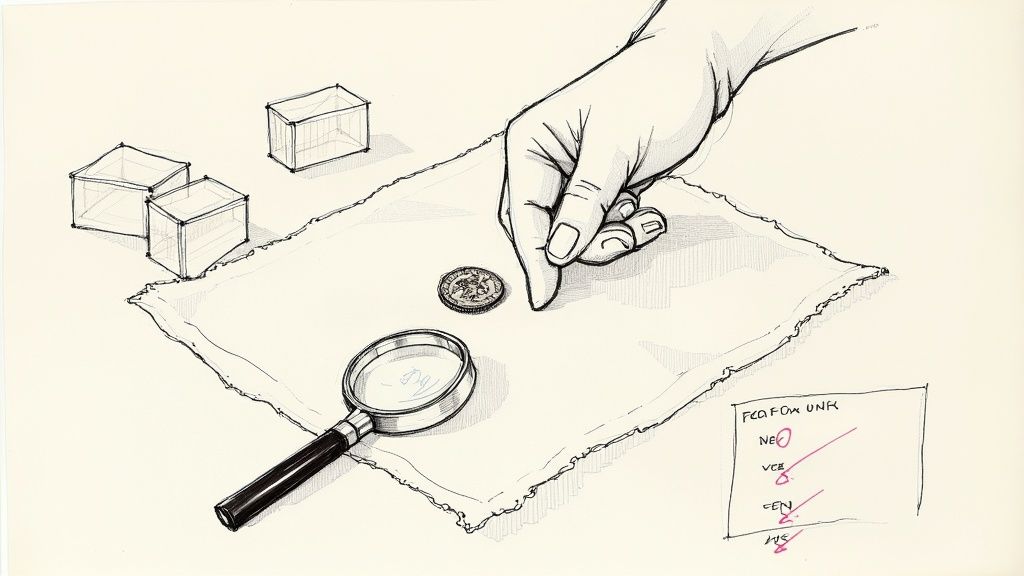
Whether you’ve found a dusty jar of old shillings in the attic or inherited a carefully assembled collection, the first steps are always the most crucial. It's so tempting to rush in, but selling without understanding what's in front of you is a classic mistake that often leads to disappointment. Good preparation helps you set realistic expectations and navigate the selling process without getting overwhelmed.
Don't underestimate the potential value tucked away in old coins. The UK coin market is a massive, growing field. As of mid-2025, the total value of notes and coins in circulation in the UK was hovering around £100 billion. That’s a huge pool of currency, and a lot of it ends up in private hands, waiting to be rediscovered.
Gently Identify What You Have
Your first job is to get a feel for the collection. You don't need to be an expert at this point. Just have a look for key details like dates, denominations, and any tiny letters that might be mint marks (these show where the coin was made). The idea is simply to sort them into logical piles.
For instance, you could group them like this:
- Pre-decimal British coins (shillings, old pennies, crowns)
- Modern decimal currency (the coins we use today)
- Foreign coins from holidays past
- Commemorative coins or special presentation sets
This first sort gives you a clear overview of what you're dealing with and helps you spot any interesting pieces that might need a closer look later on.
Handle with Extreme Care
This is a big one. So many people accidentally devalue their coins by handling them incorrectly. Fingerprints, tiny scratches, or well-intentioned but abrasive cleaning can slash a coin’s value in an instant.
Crucial Tip: Never, ever clean old coins. That natural toning, or patina, that develops over time is something collectors often prize. Wiping or polishing it off can leave microscopic scratches that any expert will spot immediately, ruining its appeal.
The correct way to handle a coin is by its edges, holding it between your thumb and forefinger. It's also a good idea to work over a soft surface, like a towel or a felt mat, just in case you drop one. For extra peace of mind, a pair of soft cotton gloves is perfect.
Create a Simple Inventory
With your coins sorted and your handling technique perfected, the next logical step is to create a basic list. You don’t need anything fancy; a simple spreadsheet or even just a notebook will do the job perfectly.
For each coin or group of similar coins, jot down:
- Country of Origin: Where it's from.
- Denomination: Its face value (e.g., One Shilling, 50 Pence).
- Year of Issue: The date on the coin.
- Quantity: How many you have of that exact coin.
- Brief Condition Note: Just a quick observation like "shiny," "very worn," or "dark."
This inventory is more useful than you might think. It keeps you organised, acts as a record for insurance, and gives you a professional-looking list you can show to potential buyers. After you've got your list together, you might find this guide on how to sell unwanted items useful for general selling tips.
By doing this groundwork, you transform yourself from someone who just has old coins into a well-prepared seller, ready to confidently explore your options.
How to Accurately Value Your Coin Collection
Before you even think about selling, you need a solid understanding of what your coins are actually worth. This is the single most important step in the entire process. It’s what stands between accepting a fair price and walking away feeling short-changed.
Getting a handle on your collection's value isn't some mysterious art. It's a logical process that empowers you to negotiate effectively and confidently when you decide where to sell old coins. Knowing the real value protects you from lowball offers and helps you set realistic expectations from the start.
The Three Types of Coin Value
Most people see a number stamped on a coin and assume that's its value—the face value. For a modern 50p piece, that's absolutely correct. But when you're dealing with old or collectible coins, the face value is usually the least important number of all.
Next up is the bullion value. This is the raw, intrinsic worth of the precious metal inside the coin. If you’ve got a gold Sovereign or a silver Crown, its base value is tied directly to the live market price of gold or silver, which changes daily.
This is a bigger deal than ever for sellers. According to reports from The Royal Mint, revenue from bullion coin sales jumped by 47% year-on-year, with the final quarter seeing a massive 197% increase. This tells us more people are turning to tangible assets like gold and silver coins, driving up interest.
Finally, we have the numismatic value. This is the collector's value—what an enthusiast is willing to pay over and above its face or metal content. It’s all about rarity, history, and condition. A common Roman bronze coin might only be worth a few pounds, but a rare date Victorian shilling in perfect condition could fetch hundreds.
Key Takeaway: A coin's final worth is a blend of its face, bullion, and numismatic values. For most old coins you're looking to sell, the numismatic and bullion values will be what truly matter.
Key Factors That Determine a Coin's Worth
Experts use a consistent set of criteria to grade and value coins. Getting familiar with these will give you a huge advantage when looking for a place to sell.
A coin's worth is determined by a blend of factors, from its physical state to its story. Here's a breakdown of what really matters to a potential buyer.
Factors Influencing Coin Value
| Factor | Description | Impact on Value |
|---|---|---|
| Rarity | The number of coins originally minted. Low mintage numbers or specific mint marks often create scarce and desirable variations. | High Impact: Fewer coins in existence means higher demand from collectors, driving up the price significantly. |
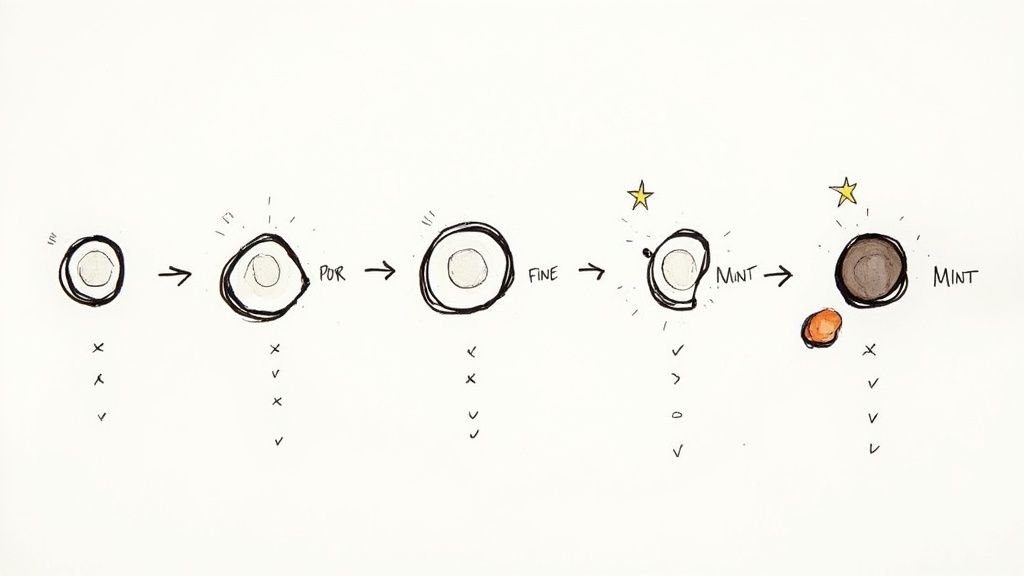
| Condition (Grading) | The physical state of the coin, graded on a scale from 'Poor' (worn smooth) to 'Mint State' (perfect). | Critical Impact: Even a small jump in grade, like from 'Fine' to 'Very Fine', can multiply a coin's value. |
| Historical Significance | Coins tied to a famous monarch, a major war, or a short-lived historical event often carry a premium. | Moderate Impact: A compelling story adds to a coin's appeal and can increase its price, especially among specialist collectors. |
| Demand | The popularity of a specific collecting area. For example, British hammered silver coins are consistently sought after. | Variable Impact: Market trends can shift, but coins from perennially popular areas tend to hold their value well. |
These core elements are your starting point. Truly understanding them is the first step, but putting it all into practice is where the real work begins.
We dive much deeper into this process in our detailed guide on how to value old coins offers expert tips for collectors.
Researching Your Coins
Once you've got a grip on these factors, it's time to start looking up your specific coins. Online price guides and recent auction results are your best friends here. Numismatic websites often have huge databases where you can search for your coin by date and type to see what similar examples have recently sold for.
Be honest with yourself about your coin's condition. It's easy to be optimistic, but you’ll get a much more realistic grade by comparing your coin side-by-side with high-quality photos in these online guides.
When to Seek Professional Grading
For most common coins, spending money on professional grading just isn't worth it. However, if your research suggests you have a particularly rare or high-value coin—something potentially worth several hundred pounds or more—then it can be a total game-changer.
A coin that has been professionally graded and "slabbed" (sealed in a protective case with its verified grade) by a top-tier service like NGC or PCGS removes all doubt for a potential buyer. It authenticates the coin and locks in its condition, often allowing it to sell for a much higher price at auction or to a serious dealer. This is a step to consider after you’ve done your initial homework and have a good reason to think you're holding something special.
Comparing the Best Places to Sell Your Coins
So, you've sorted through your collection and have a good idea of what it's worth. Now comes the big decision: where do you actually sell your coins? This is where the rubber meets the road. Every sales channel operates differently, with its own audience, fee structure, and pace. The right choice really comes down to what you're selling, how fast you need the money, and how much hands-on effort you want to put in.
In the UK, the landscape for selling coins has changed dramatically. Not so long ago, your options were pretty much limited to local shops or grand auction houses. Today, the game has moved online in a big way. Private collectors now hold a staggering 55% of the coin market share, and much of that trading happens on digital platforms. You can learn more about the current coin collection market share here.
Picking the right venue is crucial. You wouldn't take a rare gold Sovereign to a general marketplace where it won't attract serious bidders, just as you wouldn't bother a high-end auction house with a jar of common world coins. Let's break down the main contenders to help you match your collection to the perfect home.
Selling to Local Coin Dealers
For many, the local coin dealer is the default first stop. It's easy to see why. You get a straightforward, face-to-face transaction that’s often done and dusted in a single visit. A reputable dealer knows the market inside out and can give you an on-the-spot appraisal.
This option is a great fit for:
- Speed and Convenience: If you want a quick, no-fuss sale with cash in hand, a dealer is tough to beat.
- Lower-Value Collections: Got a big batch of common date silver or copper coins? A dealer can offer a fair price for the lot without the hassle and fees of listing each one individually online.
- Getting an Expert Opinion: A good dealer will walk you through their valuation, which is valuable insight even if you decide not to sell to them.
But there's always a trade-off. Remember, a dealer is running a business and needs to turn a profit. Their offer will be below the coin's retail value—typically around 50-70% of what they plan to sell it for. That's the price you pay for their expertise and the convenience of a quick sale. My advice? Always pop into a few different dealers to compare offers and get a feel for who you’re working with.
Using Auction Houses
Auction houses, from the prestigious national names to your smaller local salerooms, offer the potential for the highest prices. This is especially true for rare and high-value coins. Nothing drives a price up like a competitive bidding environment where two determined collectors are battling it out for the same prize.
Expert Insight: Auctions are where rarity and quality truly shine. A coin with a fantastic story, exceptional condition, or provenance from a well-known collection can spark a bidding war and smash records.
The downside is that the process is much slower and more involved. Your coins will need to be professionally catalogued, photographed, and marketed well before the sale date, which could be weeks or even months away. If your coin sells, expect to pay a seller's commission (usually 15-25%) and potentially other fees for things like insurance and photography. This makes auctions a poor choice for low-value coins, as the fees could easily wipe out any profit.
If this route sounds promising, our guide on the top coin auction sites is a great place to start comparing the different platforms out there.
Selling on Online Marketplaces Like eBay
Platforms like eBay put you firmly in the driver's seat, opening your collection up to a huge global audience. If you don't mind putting in the time and effort, you can often achieve a price much closer to the full retail value of your coins.
To do well on eBay, a top-notch listing is non-negotiable. That means:
- High-Quality Photos: Clear, well-lit pictures of both sides of the coin are a must. Don't forget close-ups of any key details or mint marks.
- An Accurate Description: Be precise. State the coin's date, denomination, and condition. Be honest about any flaws or imperfections—it builds trust with buyers.
- Smart Pricing: Do your homework. Look up what similar coins have recently sold for to set a realistic starting bid or a 'Buy It Now' price.
The main drawback here is the sheer amount of work involved. You're responsible for everything: creating the listing, answering questions from potential buyers, and then securely packing and posting the items. On top of that, eBay's fees—which include a final value fee around 10-13% plus payment processing charges—can definitely add up.
Specialist Online Buyers and Direct Sales
There's a growing middle ground offered by specialist online dealers, like us here at Cavalier Coins. We offer a direct sale model that blends the expertise of a traditional dealer with the convenience of an online process. You can simply submit details of your collection for a no-obligation quote, and if you're happy with the offer, payment is arranged quickly and securely.
This approach cuts out the uncertainty of auctions and the time-consuming hassle of creating individual online listings. It's an excellent option for people with significant collections who are looking for a fair, transparent offer from a trusted name in the industry. Whether you're selling one rare coin or an entire estate, it's a streamlined and secure way to get the job done.
Securing the Best Price for Your Coins
You've picked a place to sell your old coins – a huge step, but the work isn't over yet. How you actually present, price, and finalise the sale will make all the difference to your final payout. Getting these details right can be the difference between a good price and a truly great one.
It’s about more than just listing an item; you need to build trust and really showcase the coin's value. Whether you’re selling online to collectors across the globe or negotiating in person with a local dealer, your preparation is what will ultimately get you the best result.
This decision tree gives you a quick visual guide on how to choose the best path for your specific needs.
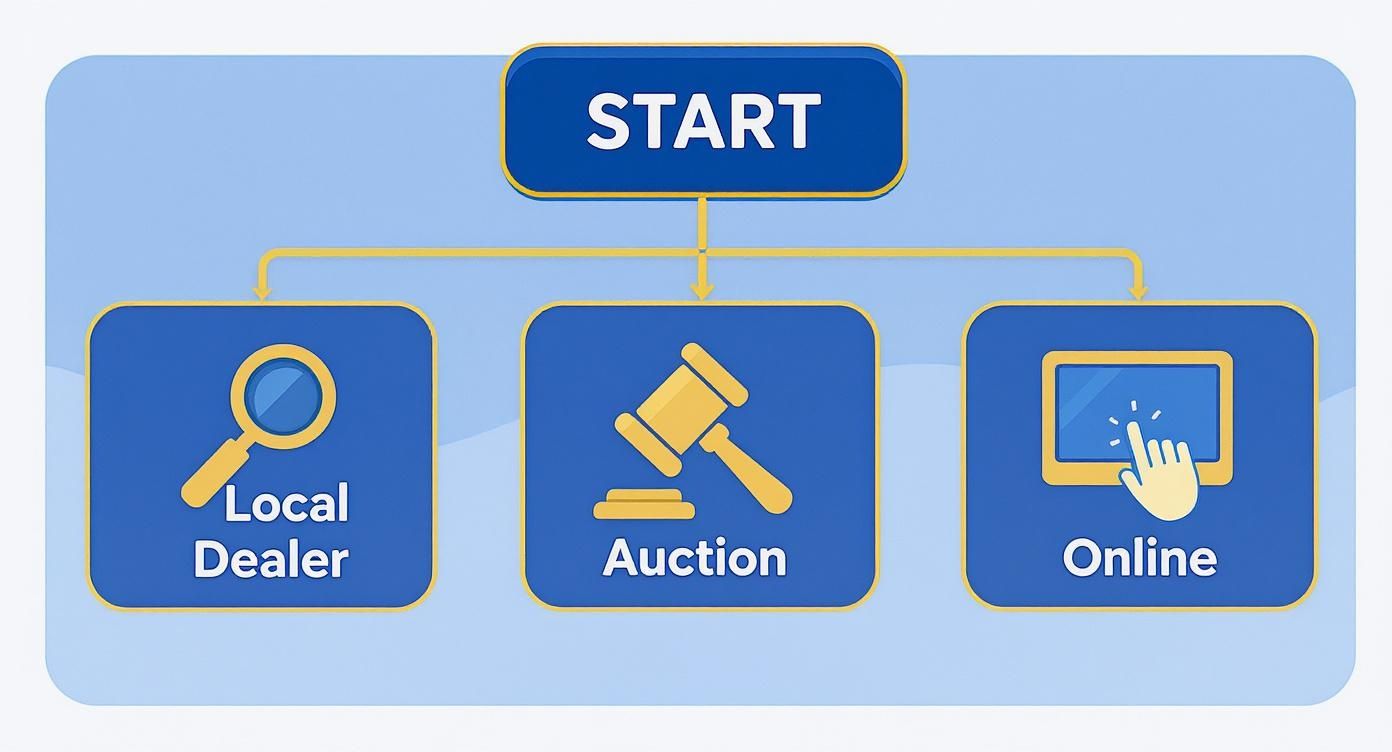
This flowchart helps you weigh up what's most important to you – speed, convenience, or getting the absolute maximum value for your coins.
Perfecting Your Presentation for Online Sales
When you sell online, your photos and description are your entire sales pitch. A buyer can't pick up the coin and inspect it, so your listing has to do all the talking. If you want to attract serious bidders and hit that top price, a high-quality presentation is simply non-negotiable.
Taking High-Quality Photographs
You don’t need a fancy camera; your phone is more than capable. The key is controlling the environment. Just follow these simple tips:
- Use Natural Light: Find a spot near a window with plenty of indirect sunlight. Direct, harsh light or a camera flash will only create glare and hide important details.
- Steady Your Shot: A shaky photo is an instant red flag for any serious buyer. Rest your phone on a stack of books or use a small tripod to keep it completely still and avoid any blur.
- Capture Every Angle: Take clear, focused shots of the front (obverse), the back (reverse), and even the thin edge of the coin. Buyers want to see everything.
- Use a Neutral Background: A plain white or black piece of card helps the coin stand out and gives your listing a much more professional look.
Writing Compelling Descriptions
Your description needs to be clear, honest, and packed with detail. Start with the basics: country of origin, denomination, and the year it was minted.
Then, add anything that tells its story or adds to its value. Mention a specific mint mark, a known error, or any history (provenance) you have for it. Be completely upfront about the coin's condition, pointing out any scratches or marks that are visible in your photos. Honesty builds trust and stops any potential disputes down the line.
For those looking to really nail their listings, our guide on how to sell rare coins offers even more detailed strategies to make your items stand out from the crowd.
Pricing and Negotiation Strategies
How you price your coin really depends on where you decide to sell it. On online marketplaces like eBay, you can either set a fixed "Buy It Now" price or let it run as an auction.
Auctions often work best for particularly rare or in-demand coins, as the competitive bidding can drive the final price well beyond what you might have expected. For more common coins, setting a fixed price based on what similar items have recently sold for is usually a safer bet.
When you're negotiating face-to-face with a dealer, it's important to remember they have a business to run and need to make a profit. Their offer will naturally be a percentage of the coin's retail value. Go in with a realistic price in mind, be ready to back it up with your research, and don't be afraid to politely walk away if the offer just feels too low.
Ensuring a Safe and Secure Transaction
Once you’ve agreed on a price, these final steps are just as crucial. A smooth, secure transaction protects both you and the buyer, leaving everyone with a positive experience.
For any online sale, your packaging is paramount. Never just drop a coin into a standard envelope. You should secure it in a protective holder, wrap it well in bubble wrap, and then place it inside a sturdy, padded mailer or a small box. The goal is to make sure it can't move around at all during transit.
In the UK, always use a tracked and insured service like Royal Mail Special Delivery Guaranteed. This gives you proof of postage, full tracking, and the right level of insurance for valuable items. Critically, never write words like "coins," "numismatics," or "valuable" on the outside of the package, as this can attract the wrong kind of attention. A quick message to your buyer with the tracking number as soon as it's posted is the final touch for a professional and successful sale.
Common Mistakes to Avoid When Selling Coins
Selling a coin collection can be a fantastic experience, but it’s a field littered with easy-to-make mistakes that can seriously hurt your final payout. I’ve seen it happen time and time again. Eager sellers, hoping for a quick and profitable sale, often stumble into the same few traps.
If you can get ahead of these common pitfalls, you’ll not only protect the value of your coins but also have a much smoother, more rewarding experience.
The biggest mistake? The one that makes dealers and collectors physically cringe? Cleaning your coins. It sounds so logical, doesn't it? Shine them up, make them look their best. But in numismatics, cleaning is the cardinal sin.
Expert Warning: Do not, under any circumstances, take polish, a brush, or any chemical cleaner to your old coins. That natural toning and patina that builds up over years isn’t dirt—it’s a crucial part of the coin's history and character. Collectors want to see that. Wiping it away can instantly demolish a coin's value by 50% or more, effectively turning a desirable collector's piece into scrap metal.
This one well-intentioned act creates thousands of tiny scratches, completely altering the coin's surface. Any experienced eye will spot it in a second, and the damage is irreversible.
Mishandling and Poor Storage
Damage isn't always as dramatic as a harsh cleaning. The way coins are handled and stored over the years is just as important. I’ve seen valuable collections stored in old biscuit tins or jumbled together in a drawer. The result is always the same: tiny scratches, dings, and dents that collectively drag down the coin's grade and, therefore, its price.
Even the simple act of picking up a coin can cause long-term damage. The oils and acids from your fingertips can transfer to the surface, leading to corrosion or ugly spots over time. The rule is simple: always hold a coin by its edges. For your best pieces, a pair of soft cotton gloves is a wise investment.
Setting Unrealistic Price Expectations
It's easy to get carried away. You see a coin that looks just like yours listed for thousands of pounds online and your heart skips a beat. But this is a classic rookie error. Assuming your coin is worth the same as a top-grade example without understanding the nuances is a recipe for disappointment.
In the coin world, condition is king. A tiny, almost invisible mint mark, a slight bit of wear on the highest points of the design—these details can be the difference between a £10 coin and a £1,000 one.
To keep your expectations grounded:
- Look at sold prices, not asking prices. See what coins in the exact same condition as yours have actually sold for.
- Be brutally honest with your grading. We all want our coins to be the best, but a realistic assessment is crucial for a successful sale.
- Understand how dealers work. If you're selling to a dealer, they are running a business. Their offer will be a wholesale price, allowing them a margin to clean, grade, and market the coin before selling it at retail.
Overlooking the Hidden Costs
Finally, it’s so important to look beyond the headline price. Many sellers get a great offer, only to be surprised when the final amount that hits their bank account is much lower. Fees and costs can take a significant bite out of your profit.
Auction houses, for instance, will charge a seller's premium, which is often between 15-25% of the hammer price. They might also have extra fees for photography or insurance. If you sell on a platform like eBay, you're looking at final value fees of around 10-13% on top of payment processing fees.
Don't forget the practicalities, either. Securely packaging your coins and paying for insured, tracked postage all adds up. Factoring in these costs from the start will give you a much clearer picture of what you’ll actually earn.
A Few Final Questions Answered
When you're figuring out the best place to sell old coins, a few questions always seem to pop up. It can feel like a complex world to navigate, but getting straight answers to these common queries will give you the confidence to move forward and get the best result for your collection.
Let's tackle them head-on.
How Can I Quickly Tell if an Old Coin Is Valuable?
At its core, a coin's value boils down to four things: rarity, condition, its precious metal content, and what the market is demanding right now. A rare coin in stunning condition, like an uncirculated Victorian Gothic Crown, could easily be worth thousands. On the other hand, a very common, heavily worn old penny might only be worth its face value.
For a quick initial check:
- Look at the date and mint mark. Some years saw far fewer coins minted than others, instantly making them rarer.
- Be honest about the condition. Can you see all the fine details clearly? How much wear is there?
- Compare with recent sales. Check what similar coins have actually sold for on auction sites, not just the optimistic asking prices.
If you find anything that looks promising after this quick assessment, your very next step should be getting a professional opinion. It's the safest and surest way to know what you have.
Should I Sell My Coins Individually or as a Collection?
This really depends on the makeup of your collection.
High-value, key-date coins will almost always achieve a better price when sold one by one. This is because you’re selling directly to collectors who are hunting for that one specific piece to fill a gap in their own collection.
But if you have a large number of common, lower-value coins, selling them together as a single ‘job lot’ is far more efficient. This approach often appeals to dealers or new collectors looking to build up their stock quickly.
A Quick Tip: The big exception here is a complete, assembled set. A full, unbroken run of coins—say, every British shilling from a particular monarch’s reign—is often worth more than the sum of its individual parts. Why? Because of the sheer difficulty and time it takes to put one together.
What Fees Should I Expect When Selling Old Coins?
The costs can vary wildly depending on the route you take. Coin dealers typically don't charge an upfront fee, but they build their profit into the price they offer you. You should expect their offer to be a percentage of the coin’s retail value—that’s their business model.
Online marketplaces like eBay will take a final value fee, which usually sits around 10-13%, plus separate payment processing fees on top. Auction houses charge a seller’s commission, which can range anywhere from 15-25%. They might also add charges for photography, insurance, or cataloguing.
Always, always ask for a clear, itemised breakdown of all costs upfront. No one likes a surprise on payday.
It’s also wise to be aware of any potential financial implications, especially if your sales result in a significant profit. Getting a basic understanding of capital gains taxes can be a very helpful step.
How Do I Safely Post Valuable Coins After a Sale?
Safe and secure postage is absolutely non-negotiable.
First, secure the coin in a proper holder. Then, wrap it well in bubble wrap and place it inside a sturdy, well-taped box where it can’t rattle around.
In the UK, you should only use a service like Royal Mail Special Delivery Guaranteed. This gives you full tracking and, crucially, the correct level of insurance cover for its value. And one last pro tip: never write words like ‘coins’, ‘bullion’, or ‘valuable’ on the outside of the package. It’s an open invitation for unwanted attention.
Ready to get a fair, expert valuation for your collection without the guesswork? The team at Cavalier Coins is here to help. We provide straightforward, no-obligation offers for collections of all sizes. Visit us today to learn how we can help you sell your coins.