
When you look at a silver coin, what really determines its price? It's a fascinating question, and the answer boils down to two core elements: its raw silver content (often called its bullion value) and its collectable appeal (its numismatic value). Getting a handle on both is the key to truly understanding what a coin is worth.
Decoding the True Worth of a Silver Coin
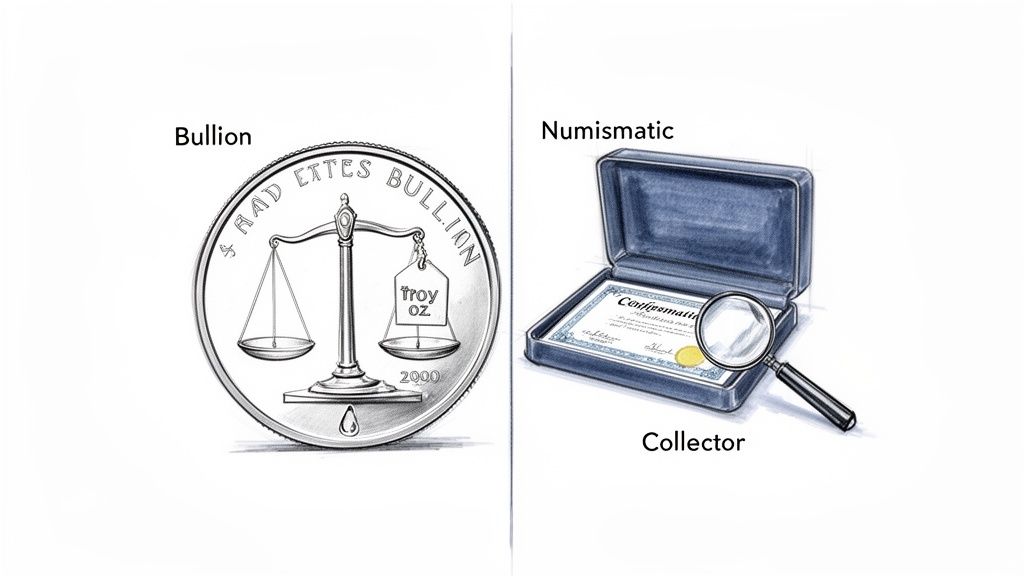
Think of it like a classic vintage car. The raw steel and parts have a certain scrap value, a baseline price you could get if you simply melted it down. But nobody does that, do they? The car’s real market price comes from its history, its rarity, and the pristine condition it's been kept in.
Silver coins are much the same.
Every single one has a foundational value based on the precious metal it contains. You can get into the nitty-gritty of figuring that out in our guide to determining a coin's silver content.
But that's just the start of the story. The coin's own history, its design, and how many are left in the world add layers of numismatic value on top of that metal price. This guide is your roadmap to understanding both sides of the coin, giving you the confidence to navigate the market, whether you're just starting your collection or you're a seasoned investor.
The Foundation: Understanding the Silver Spot Price
Before we dive into the finer points of coin valuation, we need to start with the absolute bedrock of all silver prices: the spot price.
Think of the spot price as the live, wholesale cost of pure silver itself—the raw metal. This is the price for one troy ounce as it’s being traded on global markets right now. It’s constantly on the move, reacting to everything from industrial demand and investor mood swings to major economic news. Getting your head around this number is the first and most critical step, as it forms the baseline value for any bullion silver coin you might own.
This live price is your starting point. While the market has its ups and downs, the long-term picture for silver has been one of remarkable growth, especially when you look at its journey from historic lows. You can see just how far it has come in this in-depth silver price history. Once you understand how to read and use the spot price, you've mastered the first essential skill in knowing what your silver is truly worth.
Unlocking a Coin's True Story: Numismatic Value
This is where things get really interesting. Numismatic value is what separates a simple piece of silver from a prized historical artefact. It's the premium a collector is willing to pay over and above the raw metal value, driven by factors like rarity, history, and pure artistry.
Think of it like this: you could have a modern paperback reprint of a classic novel, or you could have a signed, first-edition copy. Both tell the exact same story, but one is immensely more valuable to a collector. The same principle applies to coins. This is precisely why two coins with identical silver content can command wildly different prices on the market.
A coin's story is what gives it this special premium. Key drivers include:
- Low mintage figures (how many were made)
- Historical significance (was it minted during a famous war or reign?)
- Well-known minting errors (unique mistakes make for rare finds)
- A stunning, sought-after design
While numismatic factors add a premium, the journey always starts with the base price of silver itself. This is influenced by much larger global forces.
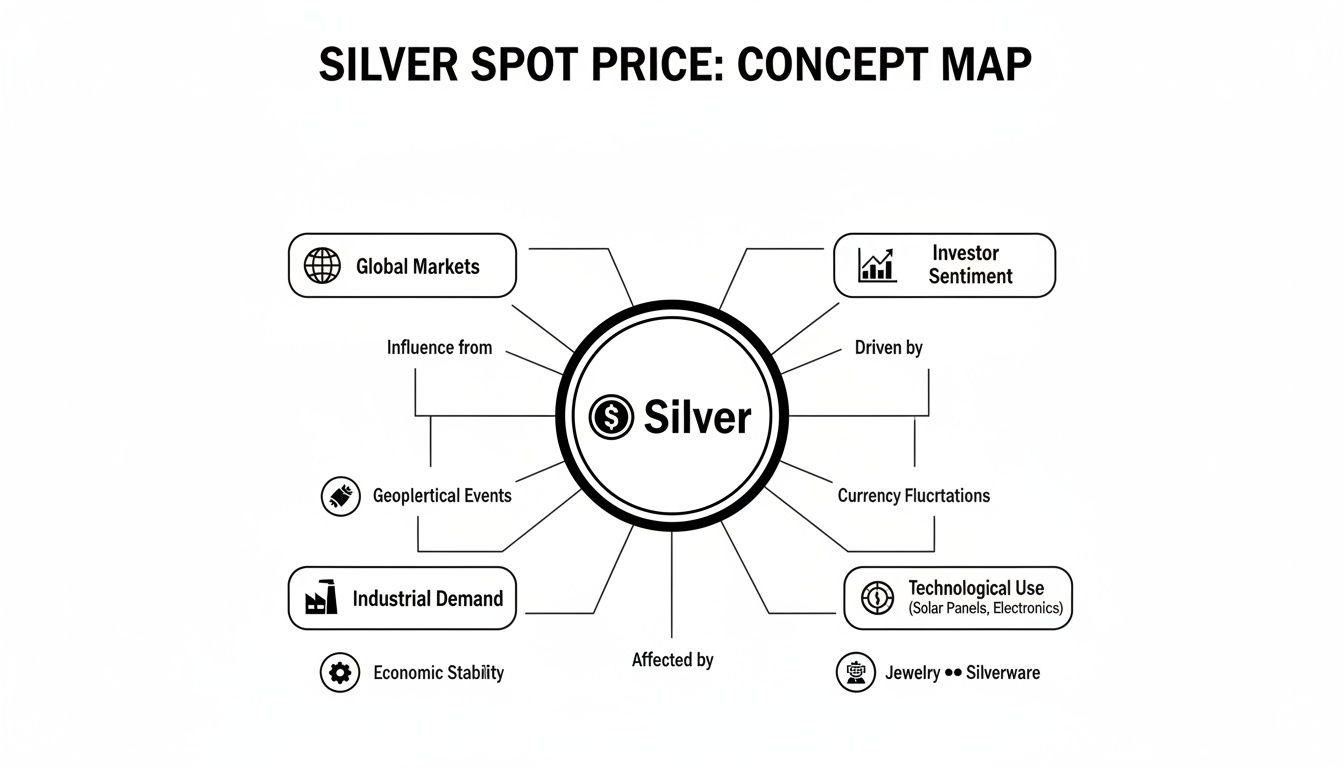
As you can see, the spot price is a constant balancing act between worldwide market activity, investor confidence, and industrial demand for the metal.
Bullion vs Numismatic Factors at a Glance
To make this clearer, let's break down how a bullion investor and a numismatic collector look at the same silver coin. Their priorities are worlds apart.
| Valuation Factor | Bullion Value Focus | Numismatic Value Focus |
|---|---|---|
| Purity & Weight | The primary concern. How much .999 silver is there? | Important, but secondary to other factors. |
| Rarity | Irrelevant. Mass-produced coins are preferred for liquidity. | Crucial. Low mintage numbers are a key driver of price. |
| Condition (Grade) | Minor impact, unless severely damaged. | Paramount. A higher grade can multiply a coin's value. |
| Historical Context | Not a factor. The metal is the focus. | Essential. The story behind the coin adds significant value. |
| Mint & Design | A recognised mint helps with trust, but design is secondary. | A famous mint or iconic design can create huge demand. |
Understanding this distinction is the first step to accurately pricing any silver coin. One side is trading a commodity; the other is acquiring a piece of history.
Why Condition Is the Most Critical Value Factor
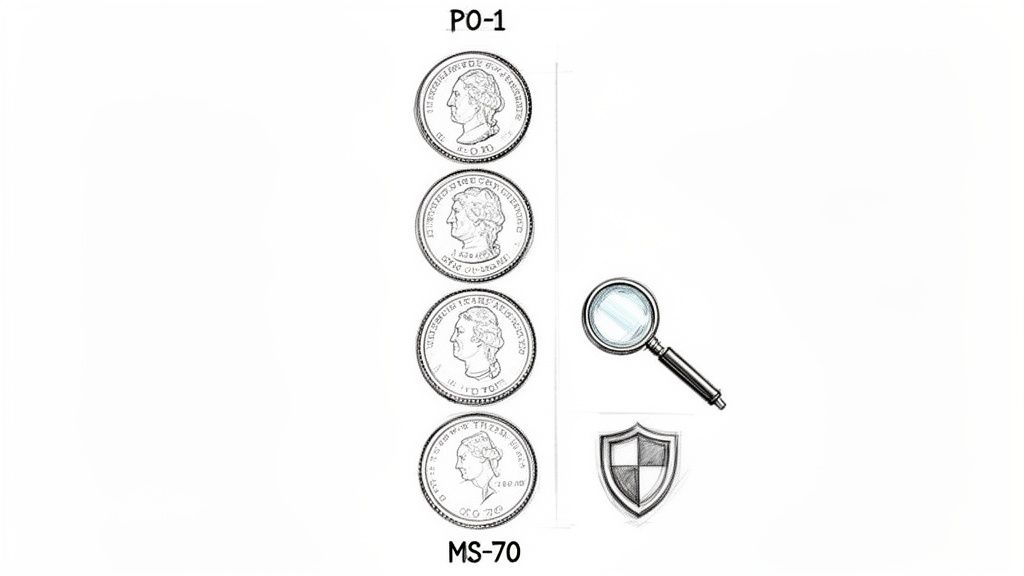
For any collectable, condition is king. Coins are absolutely no exception.
Think about it this way: imagine comparing a battered, well-read library book with a pristine, untouched copy still in its original shrink wrap. The difference in what someone would pay is immense. The very same logic applies to silver coins.
This state of preservation is professionally measured using a system we call grading. Even tiny, almost imperceptible differences in condition can create enormous price gaps between two otherwise identical coins.
For a serious collector, a coin's grade is often far more important than the raw value of the silver it contains. While the spot price of silver has seen steady but modest growth over the years, as this analysis of inflation-adjusted silver prices shows, a single step up in grade can multiply a numismatic coin's value overnight.
If you'd like to learn more about the specifics, have a look at our detailed guide on the grading of coins.
Putting It All Together: A Practical Guide to Valuing Your Silver Coins
Right, let's get down to business. Now that you have a handle on the theory, it's time to put that knowledge to work and figure out what your own coins are actually worth. Don't worry, there's a straightforward process for this, and anyone can get the hang of it.
We're going to walk through the exact steps you need to take. First, you'll play detective, identifying your coin's origin and date. From there, we'll pin down its precise silver content. Then comes the crucial part: assessing its condition with a keen, objective eye. Finally, you'll dive into the real-world market by checking recent auction results and trusted price guides.
Following these steps builds a complete, honest picture of your coin's value. It gives you the confidence to decide what to do next, whether that's holding on for the long term, selling smartly, or even hunting for the next piece to add to your collection.
Wrapping Up Your Journey into Silver Coin Pricing
You've now got the essentials down. You understand that a silver coin's price isn't just one number, but a fascinating blend of the live spot price, its own unique history, and of course, its physical condition.
By getting to grips with these three pillars—market value, numismatic premium, and grade—you’re well on your way to making sharper decisions, whether you’re buying, selling, or simply adding to your collection. But this is just the beginning.
Now it’s time to put what you’ve learned into practice. Start exploring, ask questions, and keep building on that knowledge. You’re no longer just looking at a piece of silver; you’re equipped to see its true value and engage with the market on a much deeper, more rewarding level.
Your Silver Coin Questions Answered
Still have a few things you're wondering about when it comes to silver coin prices? You're not alone. We've put together some clear, straightforward answers to the most common questions we hear from both new and seasoned collectors looking to get a better handle on valuing their silver.